 CLASHBASE.ONLINEFarming
About this Town Hall 16 base
Copy this base to Clash of Clans
Tap the button below. Clash of Clans will open so you can place this layout in an available base slot.
Copy base to the gameClash of Clans must be installed on this device.Rate this layout
Share a useful, honest experience. One review is stored per visitor for this item.
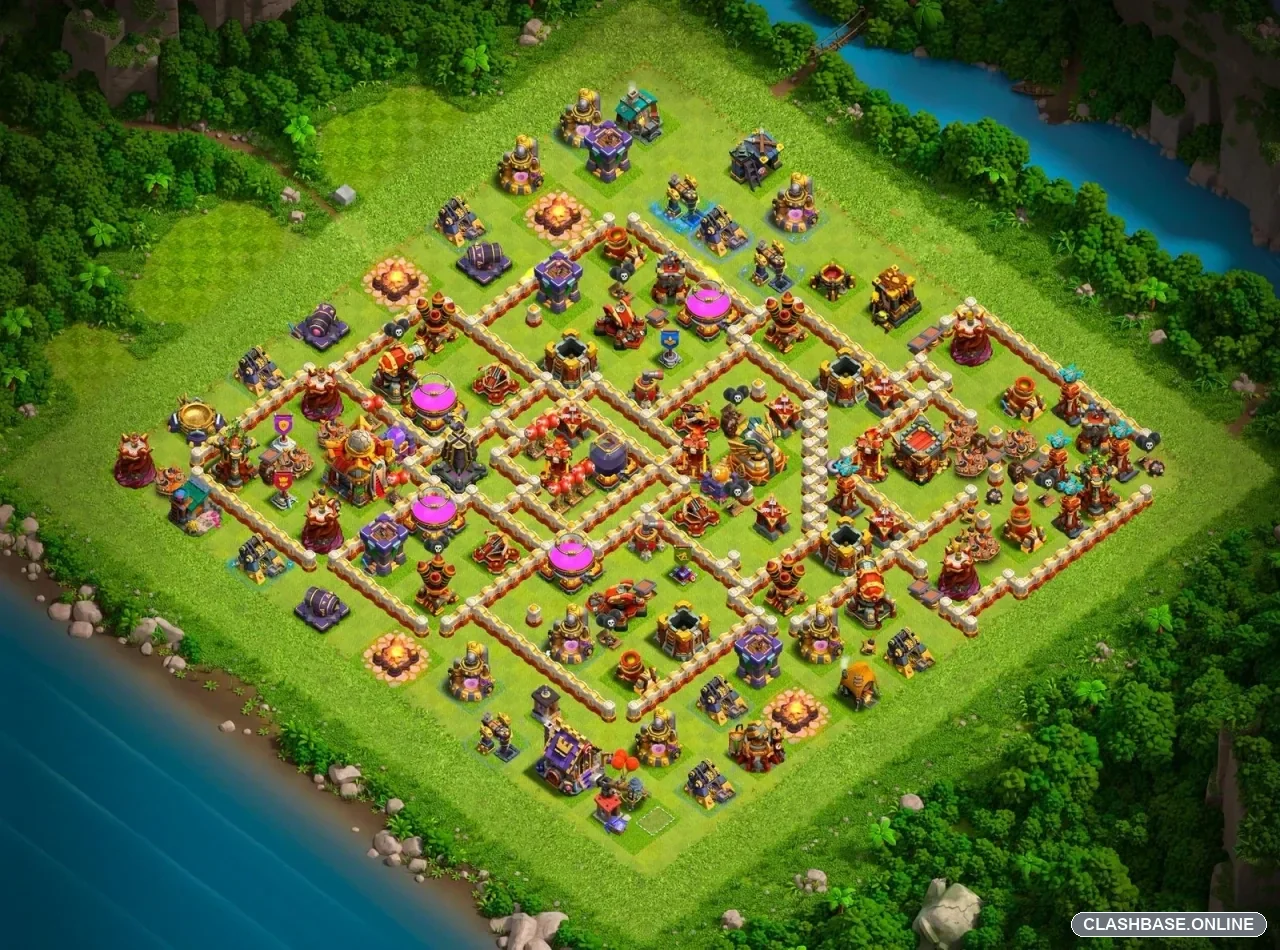
TH16 Farming Base #27: Broken-Ring Resource Defense with Split Loot Paths
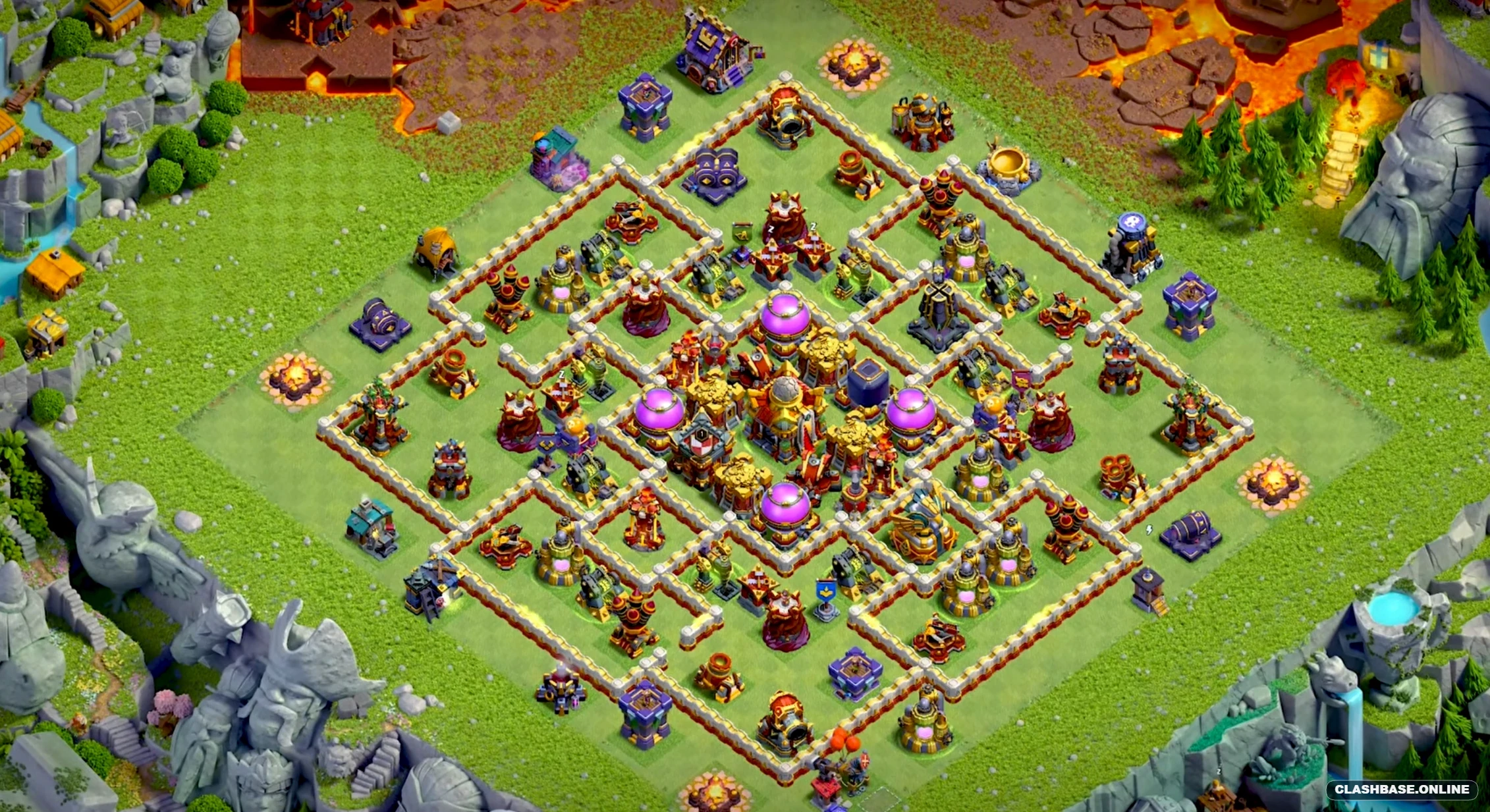
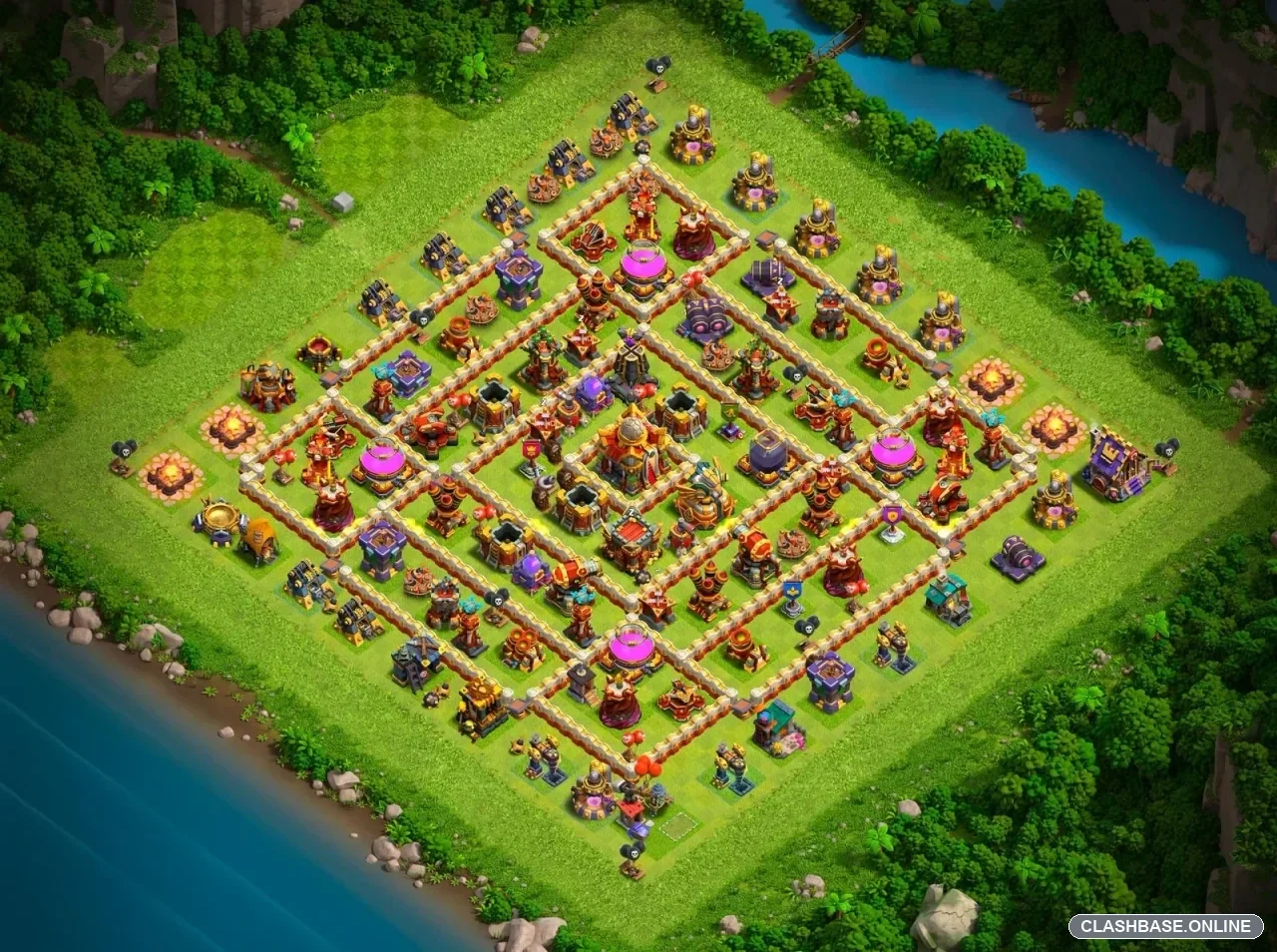
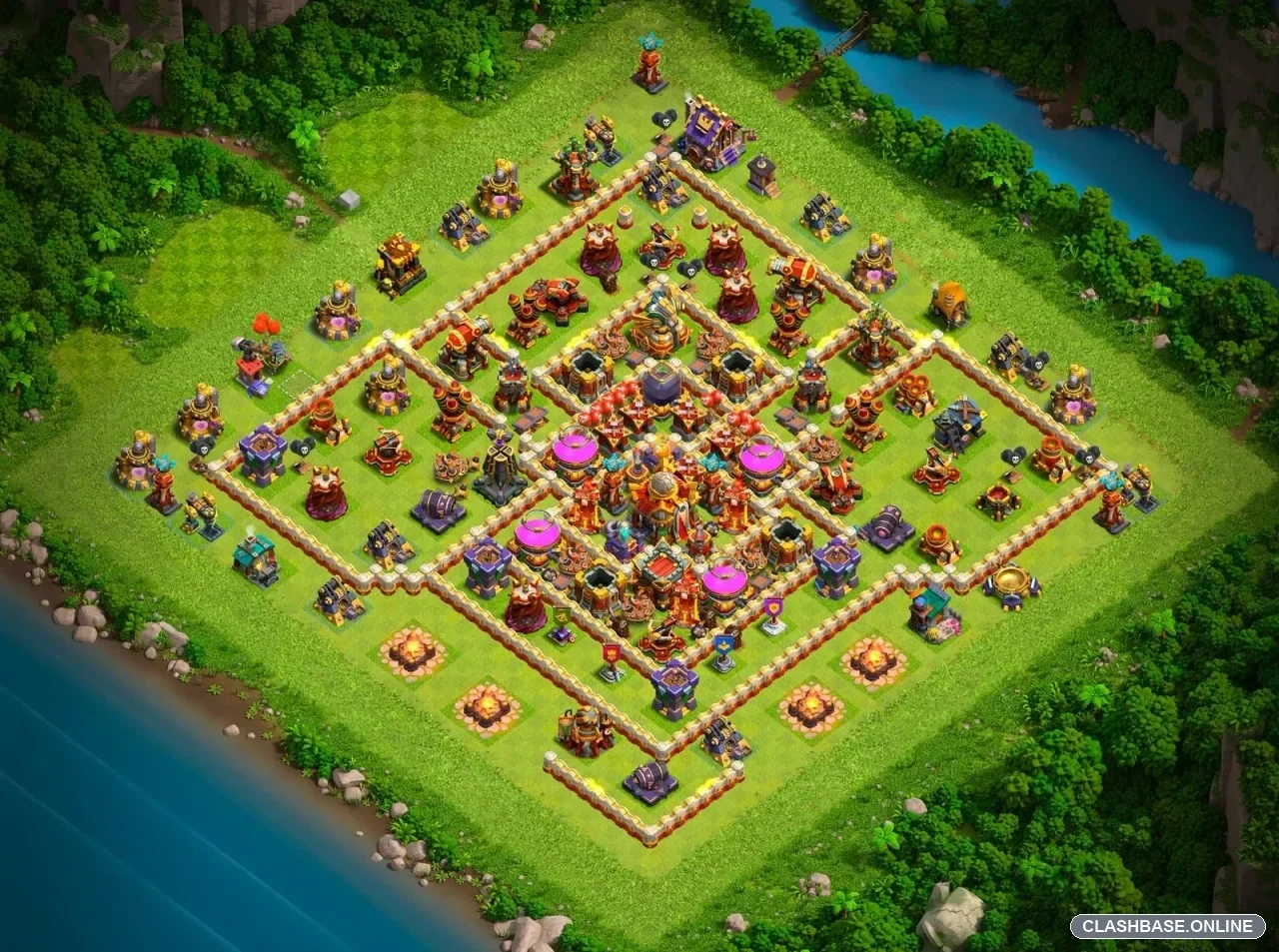
Town Hall 16 Farming Layout #27 is built around a broken-ring structure that tries to make resource collection inconvenient rather than simply hiding everything behind one giant wall. The Town Hall sits close to the middle of the village, positioned behind part of the main storage line, while Gold and Elixir value is spread across several separate sections. That distinction matters. An attacker may reach one valuable pocket fairly quickly, but moving from that first success to the rest of the loot requires another route, more wall access, or a wider commitment of troops.
At first glance, the layout looks compact. The center is busy, several defenses overlap around the Town Hall, and the inner storages are close enough to benefit from shared protection. Follow the walls more carefully, though, and the base does not behave like one closed square. The ring is interrupted in several places, creating side compartments and possible turns that can pull troops away from the central objective.
That is probably the most interesting part of the design.
Why the lower-left entry stands out
The lower-left edge, roughly around seven or eight o’clock, appears to offer the most comfortable funnel. There are enough outside structures to remove without immediately committing the entire army, and a Queen or small group of funnel troops could shape that corner before the main push begins.
Still, opening the side too aggressively may work against the attacker.
A very wide funnel can expose multiple compartments at the same time. Root Riders or another heavy ground group might continue toward the center while the Queen follows buildings along the outside. At first, this split can look productive. Percentage rises, defenses fall, and two parts of the village are being cleared at once.
A little later, the problem becomes obvious. The main force reaches the Town Hall area without all of its hero support, while another group is still working around the edge. Rage, Heal, Freeze, or Overgrowth spells then cover only part of the army instead of strengthening one compact push.
That is where the broken-ring concept earns its value.
The main weakness: interrupting the ring cleanly
The layout is not without an obvious weakness. A controlled lower-left entry that removes the correct corner buildings can interrupt the ring before troops start circling around it.
If that happens, the attacker may create a much shorter route into the center.
Root Riders or another heavy ground smash composition would probably be one of the first strategies worth testing. These armies are less dependent on traditional wall openings, so once the outside funnel is established, they can push through the central structure fairly quickly. The base therefore relies more on pathing and defensive spacing than on walls alone.
Queen Charge Hybrid offers a more controlled alternative. A Queen could clear the lower-left section first, remove one defensive pocket, and close off the outside lane. Miners and Hog Riders could then be sent through a more predictable route toward the Town Hall.
The tradeoff is time. If the Queen walks farther around the edge than planned, spends too long on a storage, or gets delayed opening the next compartment, the Hybrid phase may begin late. That matters on this design because the remaining storages are spread out. A strong attack can still reach the Town Hall and good percentage while leaving one valuable resource pocket standing simply because cleanup starts too late.
Air attacks need a second-phase plan
Air attackers have options too, although the layout does not present one obvious air-defense cluster.
The Air Defenses appear positioned to cover crossing lanes rather than protecting only one side. Inferno Towers also sit apart from one another, acting as separate high-value targets. That spacing may force the attacker to decide which threat deserves spell support first.
Dragons could potentially enter from the lower-left after a careful funnel. A relatively narrow deployment would likely be more reliable than spreading them across the whole edge. If several Dragons follow outside buildings while the main group moves toward the Town Hall, the central push can arrive with less damage than expected.
LavaLoon gives better control over target selection, but the raid still needs a plan beyond the first Air Defense. Removing one threat does not automatically open every important storage. The attacker has to think about the Town Hall, surviving Inferno coverage, and where the remaining Balloons will finish.
Why this layout works as a farming base
The strongest farming idea here is the separation between getting some loot and getting all of it.
A casual raider may take collectors, one storage, and perhaps the Town Hall without committing the full army. But Gold, Elixir, and other valuable buildings are not all offered on one comfortable line. Reaching the next resource section requires more travel and usually another change in direction.
That is a realistic defensive goal. No TH16 farming layout should be described as impossible to clear against a well-planned army. The more useful question is whether a rushed attacker can take every important resource building efficiently.