 CLASHBASE.ONLINERanked
About this Town Hall 16 base
Copy this base to Clash of Clans
Tap the button below. Clash of Clans will open so you can place this layout in an available base slot.
Copy base to the gameClash of Clans must be installed on this device.Rate this layout
Share a useful, honest experience. One review is stored per visitor for this item.
TH16 Ranked Base #1: Compact Core with a Right-Side Entry and Strong Central Pressure
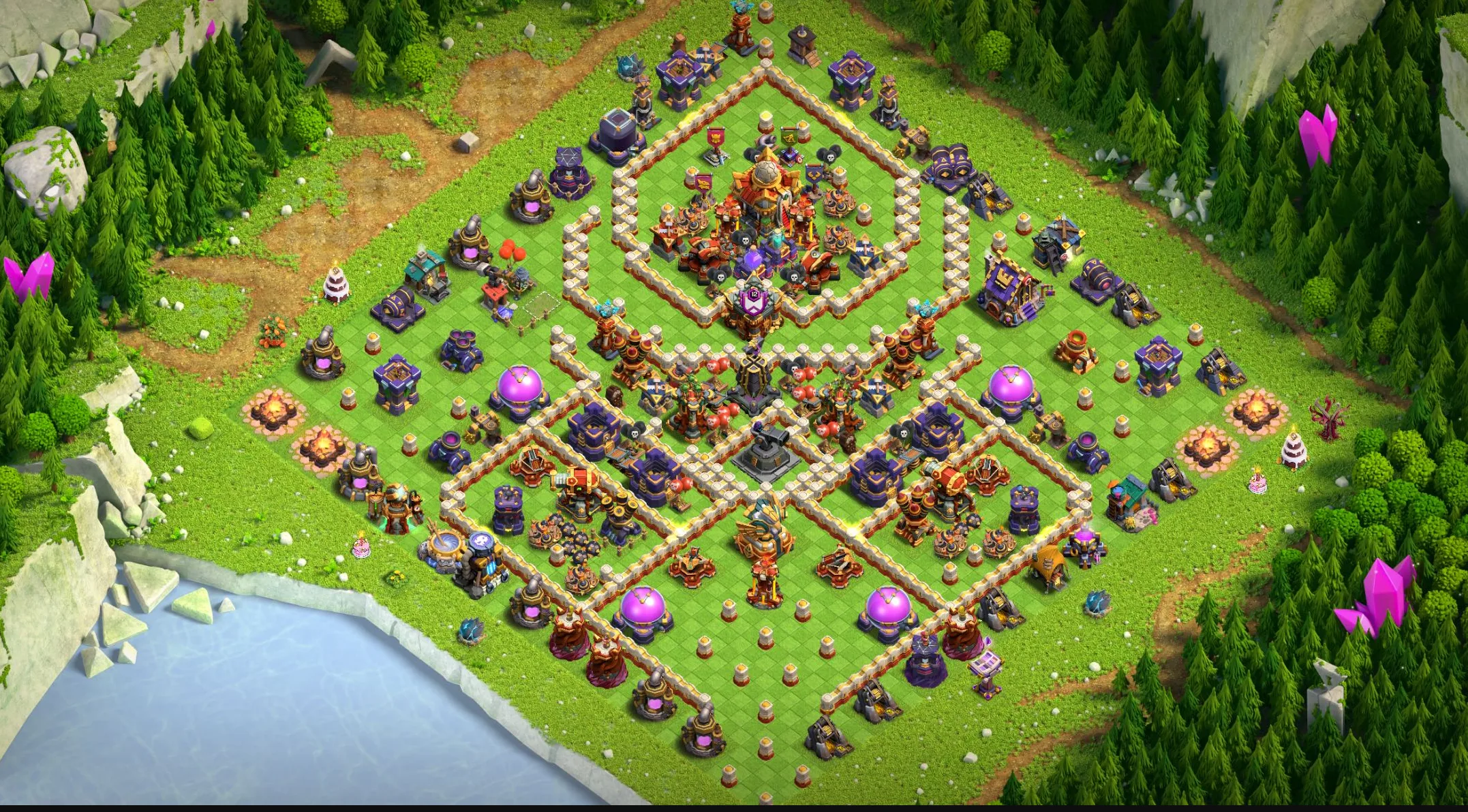
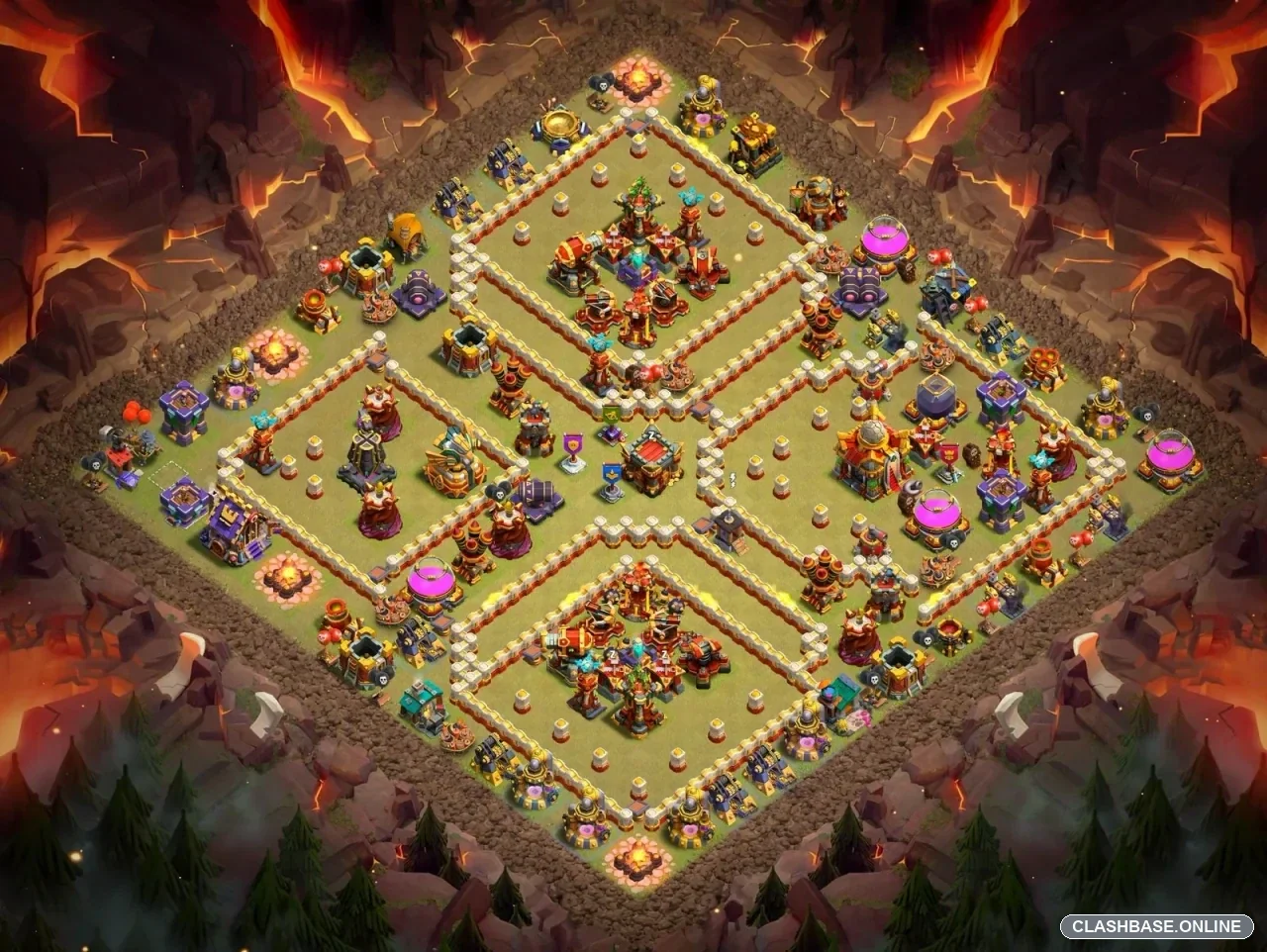
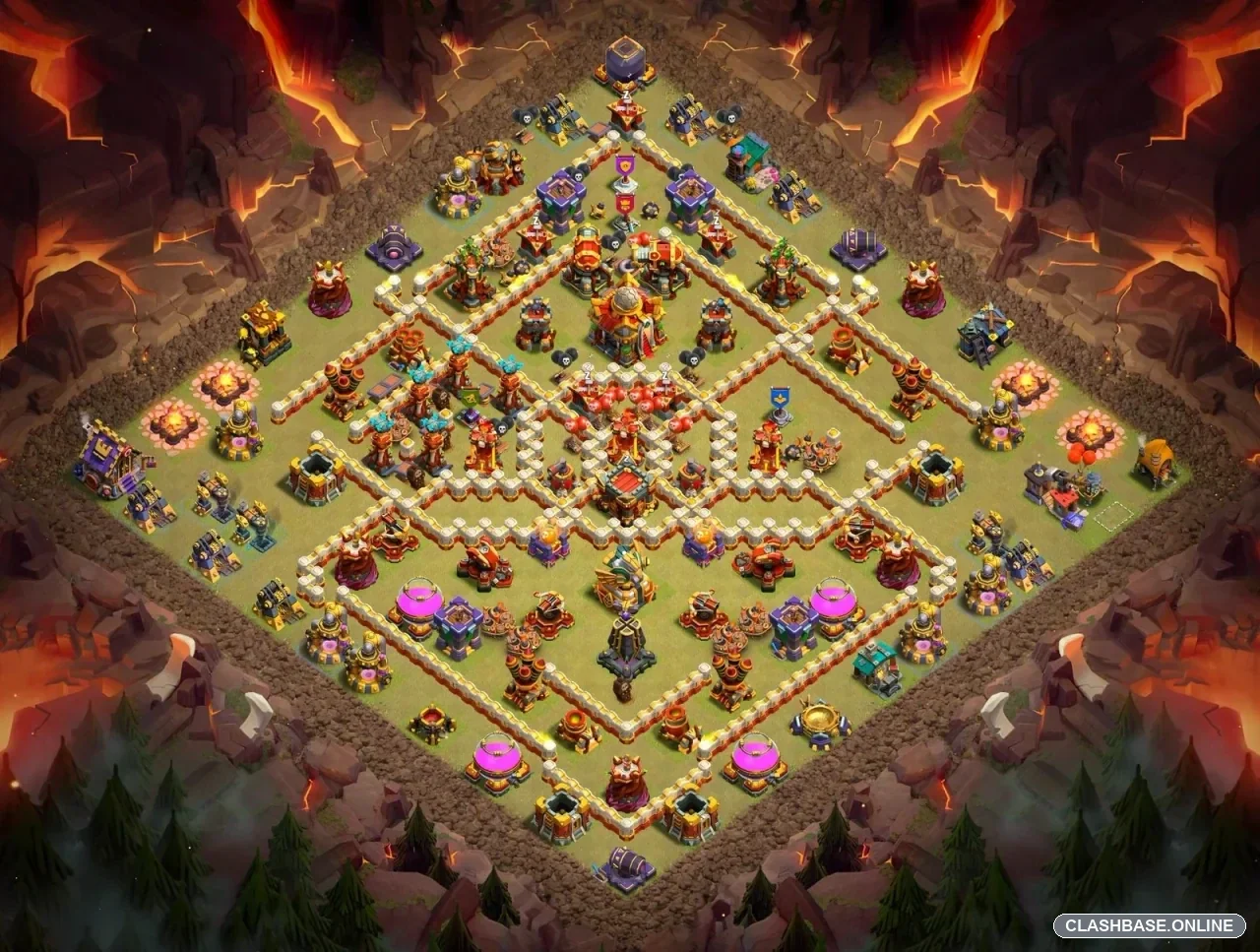
Town Hall 16 Ranked Layout #1 is built around a compact central structure, but it is not quite as symmetrical as it first appears. The Town Hall sits a little toward the right side of the core, surrounded by several high-value defenses and smaller compartments that can change troop pathing once the first walls are opened. From the scouting screen, the layout looks fairly readable. The difficult part is not finding a possible entry; it is keeping the attack organized after that entry starts working.
The right edge, roughly around three or four o’clock, is the first side I would study. It offers enough outside buildings to shape a funnel without spending too much of the army before the main push. Because the Town Hall is slightly right of center, this side also gives the attacker a fairly natural line toward the objective.
That sounds convenient, but I would not clear the entire right side automatically.
An oversized funnel may create too many possible targets once the army crosses the first wall. Root Riders or another heavy ground group could begin moving toward the core while the Queen stays closer to the outside. For the first twenty seconds, that split might actually look useful. Percentage rises quickly, several defenses fall at once, and both groups may remain healthy.
The problem tends to show up later.
Once the main group reaches the Town Hall area, the Queen or supporting troops may be several tiles away. At that point, spell efficiency drops. A Rage, Heal, Freeze, Overgrowth, or another control spell that should support one concentrated army is suddenly helping only part of it. That can turn a clean-looking opening into a much less comfortable central fight.
Why the compact core matters
The central area is probably the most important part of this layout. Several meaningful defenses sit close enough together that they can create heavy pressure on an army entering without proper support. At the same time, that defensive concentration produces the base’s clearest weakness: high spell value.
A disciplined attacker who reaches the core with most spells intact may be able to control several defenses from one general area. One well-timed Freeze can reduce pressure during the Town Hall phase, while a Rage helps the main force move through multiple targets before the defense has time to recover.
So the layout creates an interesting contradiction. The core looks dangerous because so much defensive value is concentrated there, but that concentration can also reward a player who prepares the entry properly.
For me, this means the real defensive battle happens before the Town Hall.
If the base forces the attacker to use important spells early because the funnel goes wrong, the core becomes substantially harder. If the attacker reaches the middle with a compact formation and nearly a full spell inventory, the opposite is true.
Ground attacks and the right-side funnel
Root Riders or another heavy ground smash army seem like realistic counters. These troops should be able to handle the walls, so simply keeping them outside is unlikely to be enough. The defense needs troop pathing to do part of the work.
A narrow right-side entry would be more dangerous than a broad deployment. Keeping Root Riders, heroes, healers, and support units in one lane means the attacker can concentrate damage and spell coverage. If the formation stays together all the way into the core, the Town Hall section could fall quickly.
A wider push may create more problems for the attacker. Troops can peel into adjacent compartments, and even a small split can matter when the core fight begins. The army might still take the Town Hall, but the remaining percentage can become awkward because surviving troops finish in different parts of the base.
Queen Charge Hybrid as a controlled option
Queen Charge Hybrid is another approach that makes sense here. A Queen starting from the right side could remove one outer defensive pocket and clear the buildings most likely to interfere with the main route. That would make the Hybrid phase more predictable and reduce the chance of Miners and Hog Riders drifting into unnecessary compartments.
Still, the setup has a familiar weakness: time.
A Queen that follows one unexpected building can easily add several seconds to the attack. A slow wall opening does the same. Neither problem necessarily destroys the raid, but Ranked attacks often come down to the final cleanup. The Town Hall may fall, the percentage may already be high, and yet one group of surviving troops can end up travelling across the village instead of attacking.
That is exactly the kind of delay this layout seems designed to create.
How air armies might approach it
The air setup is not concentrated into one obvious cluster. Air Defenses and Inferno Towers appear separated enough that the attacker has to decide which threat should be controlled first rather than using one spell sequence to solve everything at once.
Dragons could probably work from the right after the funnel is shaped. I would prefer a tighter deployment rather than spreading them across the whole edge. A wide Dragon line may send part of the army around the outside while the stronger group enters the core. That leaves fewer Dragons available during the Town Hall phase, where concentrated damage matters most.
LavaLoon gives better control over target selection, but the route needs to be planned beyond the first Air Defense. Removing one threat does not seem to open the entire base automatically. The attacker still needs a clean transition through the center and enough surviving Balloons for whatever defensive pocket becomes the back end.
Why this layout makes sense for Ranked play
What gives TH16 Ranked Layout #1 its Ranked identity is the pressure it puts on several goals at once.
The attacker wants the Town Hall, but also needs percentage. They want a fast entry, but not such a wide one that troops split. They want to use spells efficiently, yet the strongest spell value appears to be inside the core. And after all of that, enough time still has to remain for cleanup.
A direct right-side push may reach the objective quickly, but some buildings can remain outside the natural exit path. A wider percentage-focused approach improves early destruction, though it may weaken the Town Hall phase or stretch the timer.
That balance is much more relevant to Ranked play than simple resource protection.
The layout is certainly beatable, and the central concentration could become a genuine weakness against a player who reaches it with a healthy army and several spells available. Still, that is not the same as saying the base is easy. The right-side entry has to be shaped carefully, and the transition into the compact core needs to stay controlled.