 CLASHBASE.ONLINERanked
About this Town Hall 16 base
Copy this base to Clash of Clans
Tap the button below. Clash of Clans will open so you can place this layout in an available base slot.
Copy base to the gameClash of Clans must be installed on this device.Rate this layout
Share a useful, honest experience. One review is stored per visitor for this item.
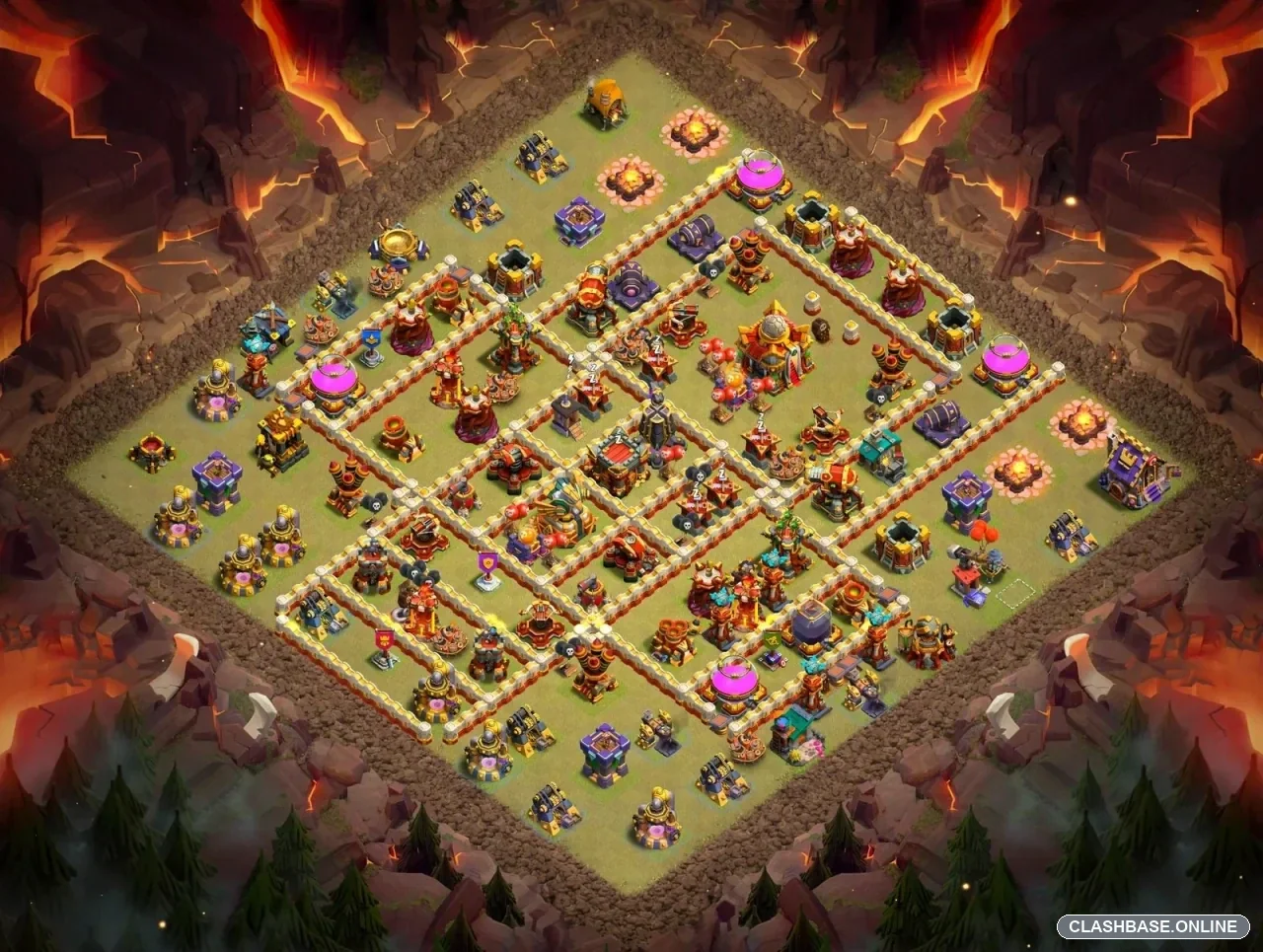
TH16 Ranked Base #15: Central Town Hall with a Compact Core and Right-Side Pressure
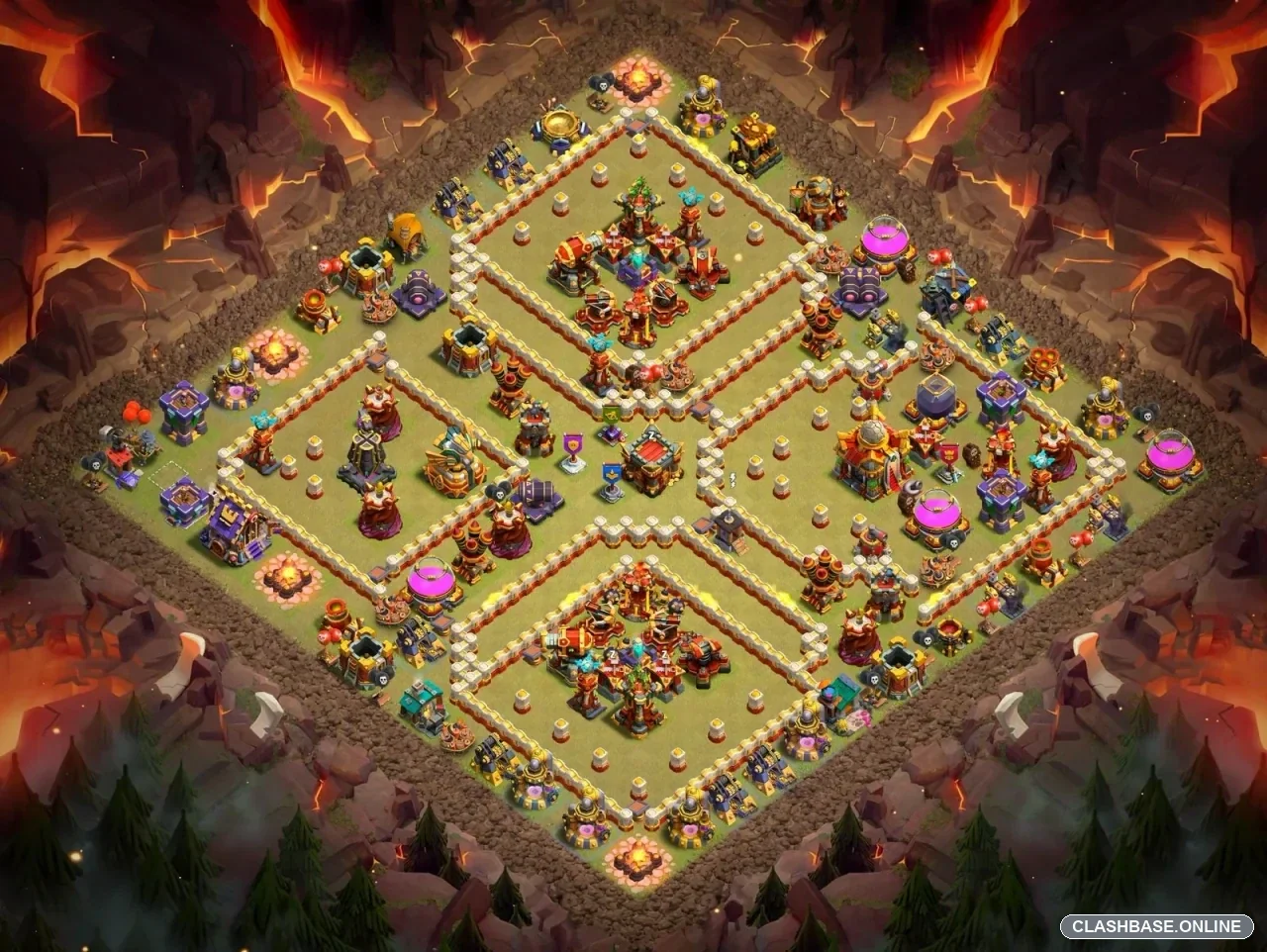
Town Hall 16 Ranked Layout #15 is built around a compact central area rather than a Town Hall pushed toward one edge. The Town Hall sits inside the primary defensive core, surrounded by several important defenses and a wall structure that forces attackers to commit before they can reach the objective comfortably. From the scouting screen, the base looks fairly readable. The harder part is deciding how to enter without wasting too many troops or spells before the army reaches the middle.
The right edge, around three or four o’clock, looks like the most natural starting point. There is enough open space to remove a few exterior structures and establish a funnel before the main army is deployed. That side may give an attacker the cleanest approach, although it is not necessarily a free route. Once the outer buildings disappear, several compartments become available, and troops can start choosing targets that do not line up perfectly with the Town Hall.
That is where pathing becomes important.
A Root Rider or other heavy ground smash could make quick progress from the right. The first wall layers probably will not stop a strong TH16 army for very long. What matters more is whether the main force stays connected to the heroes and support troops behind it. A narrow entry can keep the formation compact, allowing Rage, Heal, Freeze, Overgrowth, or similar spells to cover several important units at the same time.
A wider funnel may create the opposite result. Root Riders could continue toward the center while the Queen follows defenses closer to the outer-right compartment. For a few seconds, that split might actually look useful because several areas are falling at once. Later, though, the central push may reach the Town Hall without enough support, forcing the attacker to use spells earlier than planned.
The compact core creates both defensive strength and a very noticeable weakness. Several important defenses sit close enough together that a carefully placed spell could influence multiple threats. That gives the attacker potentially high central spell value. If the army reaches the middle with heroes healthy and several spells still available, the core may collapse faster than its defensive density suggests.
The difficult part is arriving there in that condition.
An attacker who spends a Freeze or Rage early because the funnel went wrong loses part of the advantage offered by the central grouping. A cleaner opening does the opposite. It allows the player to preserve the strongest spell combination for the exact moment when the Town Hall and nearby defenses are applying maximum pressure.
Queen Charge Hybrid looks like a particularly controlled counter. A Queen beginning from the right could remove an outer defensive section, take away buildings that might drag the main army sideways, and create a narrower path for Miners and Hog Riders. If her route works as intended, the Hybrid portion may reach the center with fewer pathing problems than a straightforward spam attack.
Still, there is a timing risk. A Queen that follows one unexpected outside building can easily add several seconds to the setup. A slow wall break has the same effect. The attack may continue successfully, but Ranked layouts benefit from those delays because finishing percentage can matter almost as much as reaching the Town Hall.
The central Town Hall also changes how the attacker has to think about percentage. There is no simple edge grab that secures the objective while leaving the entire army free for cleanup. Reaching the Town Hall requires a meaningful commitment through the defensive core. Going directly toward it may leave exterior buildings alive on the opposite side. Clearing more percentage before entering the middle creates a safer cleanup route, but the central defenses remain active for longer.
That tension suits Ranked play well.
Air attacks are possible, although the defensive spacing creates its own set of decisions. The Air Defenses and Inferno Towers do not appear to form one neat cluster. Instead, they are positioned as separate threats, making it harder for an attacker to use one simple spell sequence and consider the air-defense problem solved.
Dragons could probably approach from the right after a careful funnel. I would expect a tighter deployment to perform better than spreading the army across the whole edge. If several Dragons continue around outside buildings while the stronger group moves toward the Town Hall, the core ends up fighting only part of the attack.
LavaLoon offers more precise control over individual targets, but it also requires a clearer plan for the second half. Removing the first Air Defense is only one step. The attacker still needs to decide how to cross the central section, which high-value defense should be handled next, and where the Balloons are supposed to finish once the Town Hall area is cleared.
The most interesting thing about Layout #15 is that the same compact core that makes it dangerous can also become its biggest weakness. Concentrating defensive value around the Town Hall increases pressure on a poorly prepared attack, but it also rewards an attacker who reaches that zone with the correct spells still available.
That makes the opening especially important. The right edge may look comfortable, yet a sloppy funnel from that side can force early spell use or split the army before the core. A disciplined entry can preserve everything needed to exploit the concentrated defenses.