 CLASHBASE.ONLINERanked
About this Town Hall 16 base
Copy this base to Clash of Clans
Tap the button below. Clash of Clans will open so you can place this layout in an available base slot.
Copy base to the gameClash of Clans must be installed on this device.Rate this layout
Share a useful, honest experience. One review is stored per visitor for this item.
TH16 Ranked Base #17: Compact Core with Central Spell Value and a Left-Side Opening
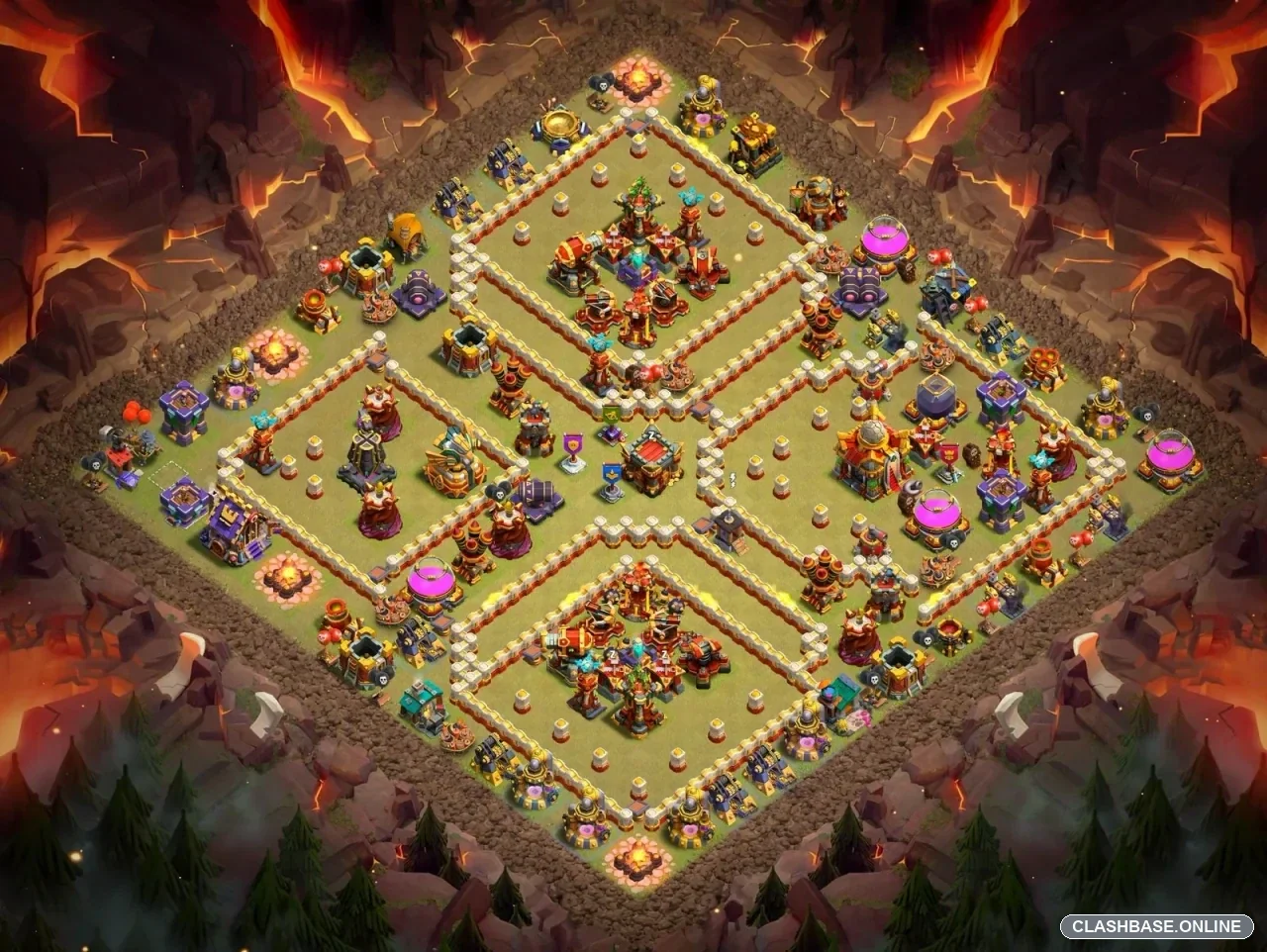
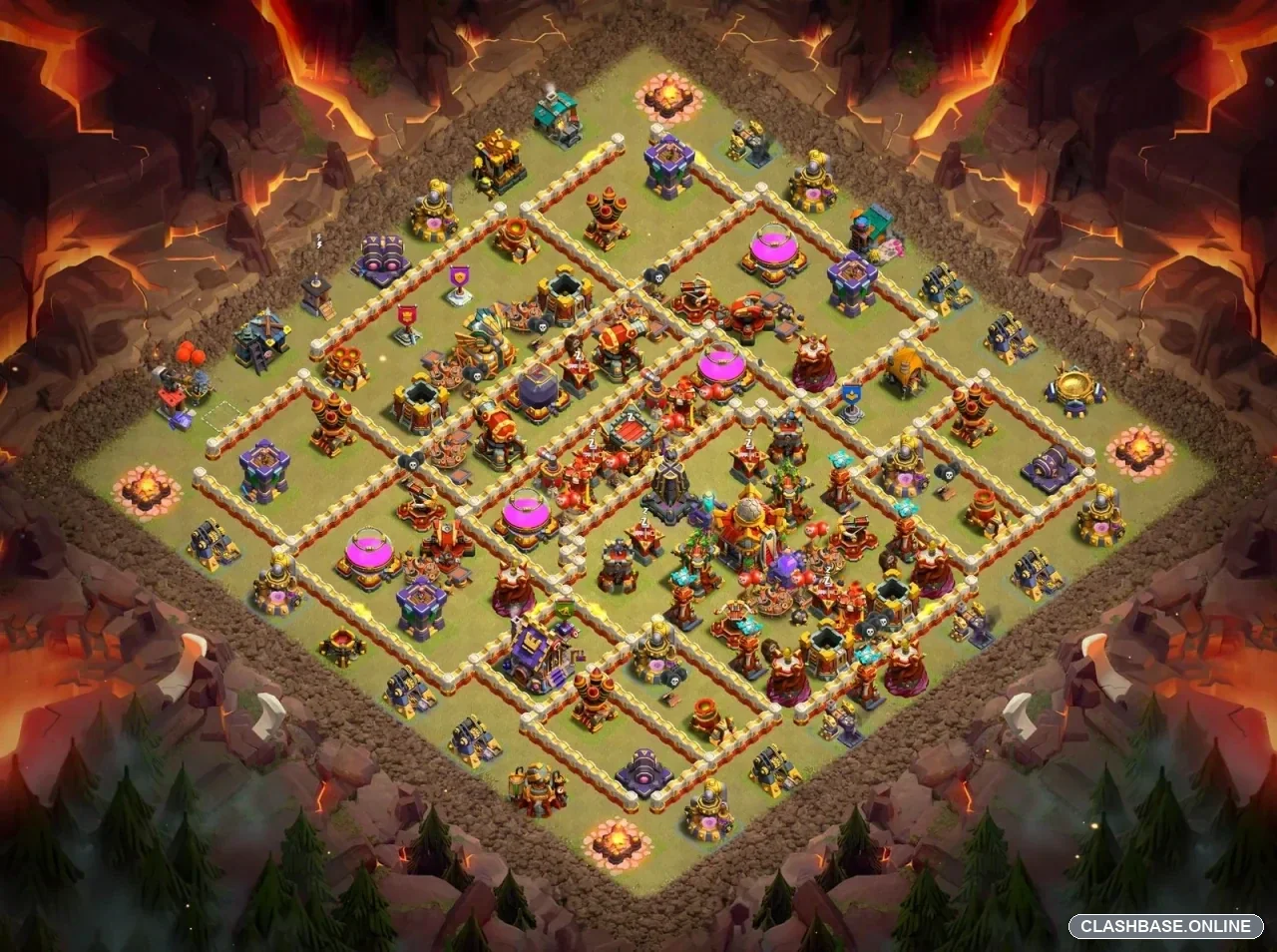
Town Hall 16 Ranked Layout #17 looks fairly readable from the scouting screen, which can be misleading. The walls form a compact central structure surrounded by several longer compartments, while the Town Hall sits slightly to the right of the visual center. At first, it feels like the sort of base where you could pick one edge, build a funnel, and simply drive toward the objective. Once you trace the defensive lanes more carefully, though, the route becomes less comfortable.
The Town Hall placement is one of the first details worth noticing. It is not buried at the exact center, but it is still deep enough that an attacker has to commit meaningful troops to reach it. Because it leans toward the right side, a push from the opposite edge may collect useful percentage on the way in without automatically lining up perfectly with the Town Hall. That creates a small but important decision: take the clean percentage route first, or shape a more aggressive path toward the objective.
The left edge appears to be the easiest place to start. Around eight or nine o’clock, there is enough room to remove a few exterior buildings and establish a controlled funnel. I would be cautious about clearing too much, though. The wall structure offers several nearby compartments, and a very wide opening could give heroes and support troops different targets before the main army reaches the center.
That kind of split may not look dangerous immediately.
Imagine a Root Rider or heavy ground smash beginning from the left. The main tanks move inward while the Queen continues following buildings along a neighboring lane. Both groups may stay healthy for a while, so the attack still looks good. Percentage climbs, outer defenses disappear, and there is no obvious panic. Then the central group arrives at the Town Hall section without all of its support nearby.
That is where the base can become annoying.
The compact core contains several important defenses close enough together to produce intense pressure in a relatively small space. Interestingly, that concentration is also the layout’s clearest weakness. A well-timed spell can potentially influence several high-value targets at once. If an attacker reaches the center with Rage, Freeze, Overgrowth, or other control spells still available, the core may fall much faster than its defensive density suggests.
So the real battle may happen before the army even reaches the Town Hall.
A sloppy funnel could force the attacker to spend spells early just to keep troops alive or redirect the push. That removes the advantage of the central spell value. A cleaner entry does the opposite: the army arrives compact, heroes stay with the front line, and the attacker can save the strongest spell combination for the exact moment multiple core defenses are active.
Queen Charge Hybrid looks like a sensible way to control that setup. A Queen starting from the left could remove one defensive pocket and clear buildings that might otherwise pull Miners and Hog Riders sideways. If she creates the intended funnel, the Hybrid phase gets a much more predictable route through the middle.
The obvious downside is time. Queen Charges can become awkward over one small pathing decision. A storage or defensive building that takes longer than expected may delay the main phase, and an outside target can send the Queen walking in the wrong direction. The attack may still secure the Town Hall, but Ranked layouts benefit from those lost seconds because percentage and cleanup matter too.
A Root Rider smash is faster, but probably less controlled. The army has enough strength to break through walls and absorb early damage, yet that does not guarantee the formation stays together. On this layout, a compact push is likely to perform much better than a broad deployment. Once the army spreads between neighboring compartments, spells lose value and the Town Hall group may become isolated from its support.
Air attackers face a different version of the same problem. The Air Defenses and Inferno Towers do not appear to form one neat cluster that can be solved with a single early spell combination. Their spacing forces the attacker to decide which threat deserves attention first.
Dragons could work from the left after the funnel is shaped, especially if the outside buildings are trimmed carefully. I would avoid spreading them across too much of the edge. A wide Dragon line may cause some units to follow exterior structures while the stronger group heads toward the core. That looks harmless until the central defenses begin focusing on a smaller group than the attacker intended.
LavaLoon offers better control over target order, but it needs a clear sequence. Removing the first Air Defense is only the opening step. The attacker still has to decide how to cross the central compartments, when to commit toward the Town Hall, and which surviving defensive section should become the back end.
What makes TH16 Ranked Layout #17 interesting is that it pressures several goals at once. The attacker wants the Town Hall, obviously, but also needs safe percentage and enough surviving troops for cleanup. Pushing directly toward the objective may leave outer sections alive. Spending too much time clearing those areas first gives the central defenses longer to work.
That tension is where the Ranked label fits.
The base is not relying on one surprise trap or an impossible Town Hall compartment. Its defense appears to come from route management. The left side offers an understandable entry, but the attacker still has to control the funnel, preserve spells for the core, and keep the army moving in one direction after the Town Hall falls.
The biggest vulnerability is central spell value. If several important defenses can be controlled from one area and the attacker arrives there with a healthy army, the core could collapse quickly. That is why a disciplined left-side entry is likely to be much more dangerous than simple spam.