 CLASHBASE.ONLINERanked
About this Town Hall 16 base
Copy this base to Clash of Clans
Tap the button below. Clash of Clans will open so you can place this layout in an available base slot.
Copy base to the gameClash of Clans must be installed on this device.Rate this layout
Share a useful, honest experience. One review is stored per visitor for this item.
TH16 Ranked Base #25: Multi-Compartment Core with a Tempting Bottom Entry
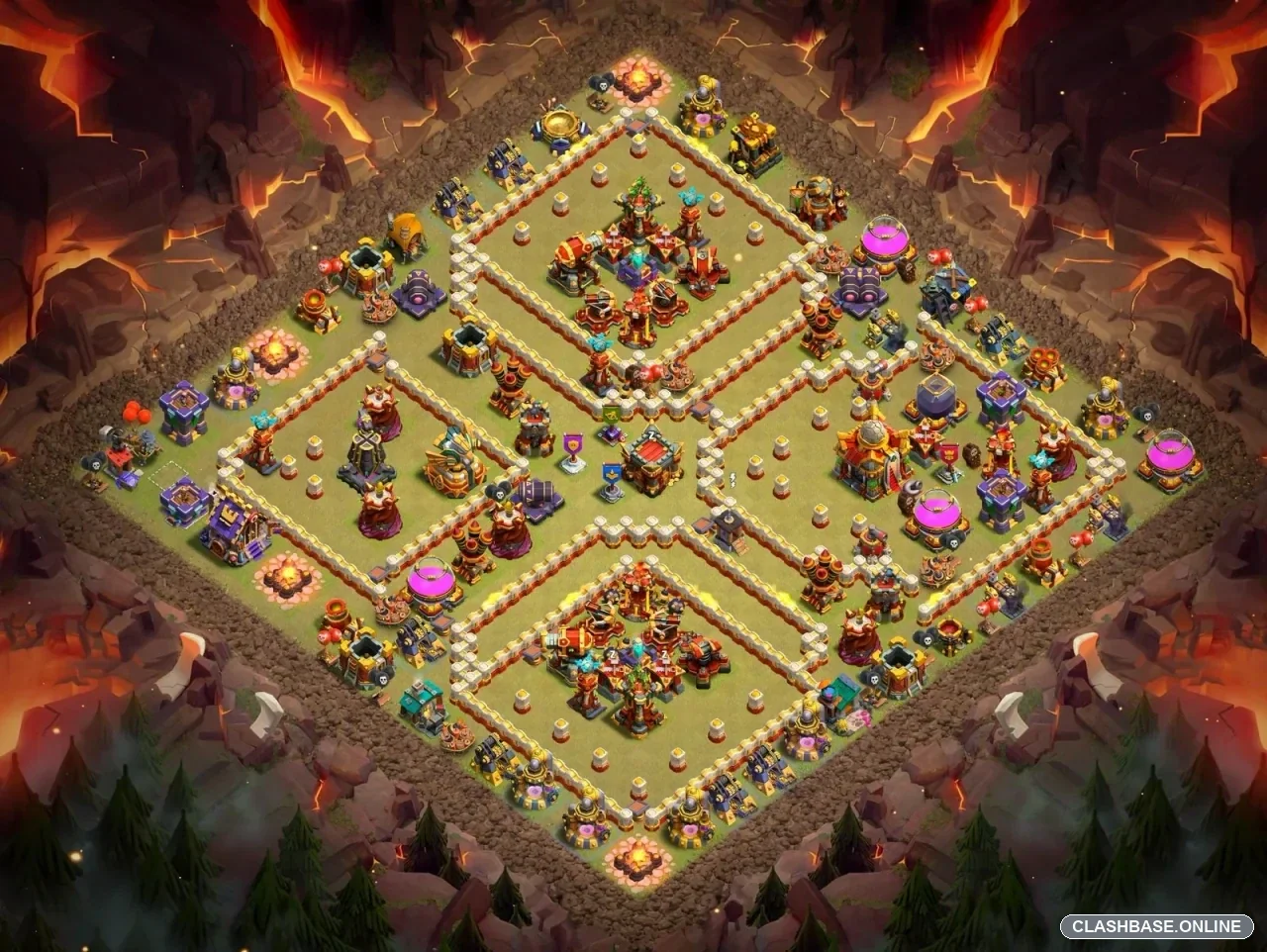
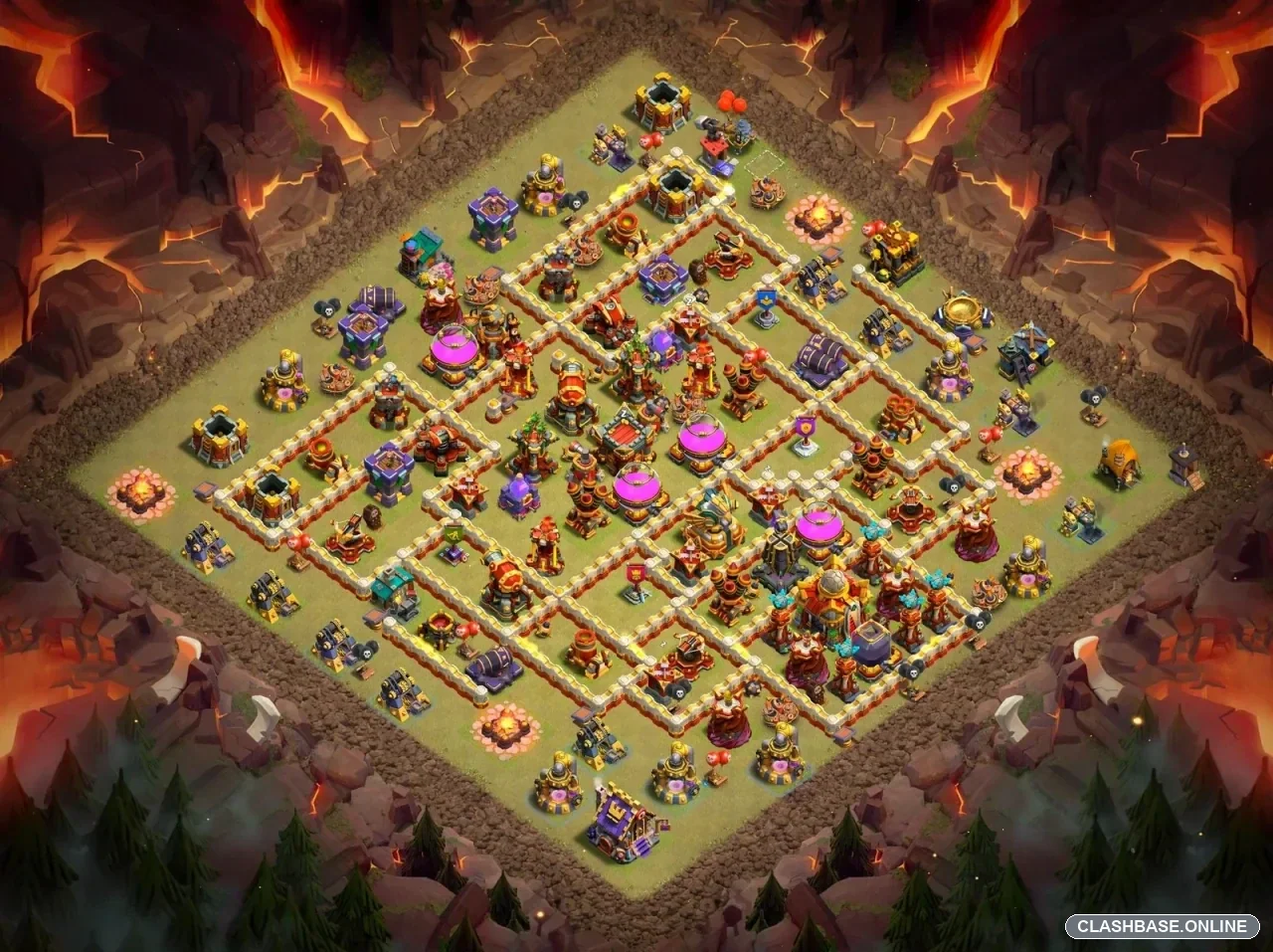
Town Hall 16 Ranked Layout #25 is the sort of base that looks manageable until you start tracing where the army is supposed to go after the first compartment falls. The Town Hall sits slightly left of the visual center, surrounded by a web of connected sections rather than one oversized core. That offset is small, but it changes the attack quite a bit. A player can build a route toward the Town Hall, yet that same route does not naturally clear everything needed for an easy finish.
The bottom edge, around five to seven o’clock, immediately looks like the most practical place to begin. There is enough space to remove a few outside buildings and shape the entry before committing the main force. At first glance, that feels like good news for the attacker. The problem is that clearing too much of the bottom can make the funnel wider than intended.
That matters on this layout because the inner compartments sit close enough to offer several attractive targets at once.
Imagine a Root Rider or heavy smash army entering from six o’clock. The first group may head toward the Town Hall, while the Queen or supporting troops notice defenses slightly to the left or right and peel away. For a short time, the attack can actually look better because two sections are being cleared simultaneously. Percentage rises quickly and the army still seems healthy. Then the central group reaches the strongest defenses without enough support, and the attack starts becoming much harder to manage.
This is probably the layout’s most believable defensive strength: it does not need to stop the army immediately; it only needs to make the army split at the wrong moment.
A narrow funnel would be far more dangerous to the base. If Root Riders, heroes, healers, and supporting troops remain inside one clear lane, the attacker can get much better value from Rage, Heal, Freeze, Overgrowth, or other control spells. The walls themselves are unlikely to be the main obstacle for a strong TH16 ground composition. Pathing is the bigger issue.
Queen Charge Hybrid also looks like a sensible counter. A Queen starting from the bottom could remove one defensive pocket and close off part of the funnel before Miners and Hog Riders enter. That gives the attacker more control over the route instead of hoping the main army chooses the correct compartment automatically.
The catch is time. If the Queen spends too long on a high-hitpoint target, takes an unexpected wall route, or continues along the outside instead of turning inward, the Hybrid phase may start later than planned. Ranked attacks often punish that kind of delay. The Town Hall may still fall and the percentage may look respectable, but cleanup can become uncomfortable when surviving buildings are scattered across several sections.
The Town Hall's mild left-side offset adds another layer to the decision. An attacker coming from the bottom can aim for it, but the objective is not sitting at the end of a perfectly straight corridor. Going too directly toward the Town Hall may leave the right-side compartments relatively healthy. Clearing more of the base first gives better percentage, yet it keeps the Town Hall active longer.
That tradeoff is one reason this design feels appropriate for Ranked play.
Air attackers have their own pathing problem. The Air Defenses are spread across different parts of the inner base rather than stacked into one easy cluster, while the Inferno Towers support separate routes into the core. That means a Dragon or LavaLoon player has to think beyond the first spell placement.
Dragons could still attack from the bottom after a careful funnel. I would expect a tighter deployment to work better than a broad line. Spread the Dragons too widely and some may follow outside buildings while the stronger group goes toward the Town Hall. Once the formation separates, the central defenses are fighting a smaller force than the attacker intended.
LavaLoon gives more control over target order, but the route needs to be planned in stages. Removing one Air Defense does not appear to open the entire village. The attacker still has to account for the Town Hall section, surviving Inferno coverage, and whichever compartment becomes the back end.
The biggest weakness in Layout #25 is also fairly clear: time pressure caused by a wide funnel. If the army splits between adjacent sections, the attack may still reach high percentage without actually finishing cleanly. One group can end near the Town Hall, another can finish on the opposite side, and the final thirty seconds are spent travelling rather than attacking.
That is exactly the sort of mistake Ranked layouts can punish well.
A disciplined player may avoid most of that by keeping the bottom entry narrow and forcing the army through one controlled route. If that happens, the central compartments could open faster than intended. Queen Charge Hybrid and compact Root Rider attacks seem especially suited to testing that weakness.
Still, the base has a clear defensive identity. It is not relying on one surprise trap or a single overloaded kill zone. Its strength comes from the combination of a slightly offset Town Hall, multi-compartment pathing, spread-out air coverage, and a bottom entry that looks easier than the cleanup that follows.