 CLASHBASE.ONLINERanked
About this Town Hall 16 base
Copy this base to Clash of Clans
Tap the button below. Clash of Clans will open so you can place this layout in an available base slot.
Copy base to the gameClash of Clans must be installed on this device.Rate this layout
Share a useful, honest experience. One review is stored per visitor for this item.
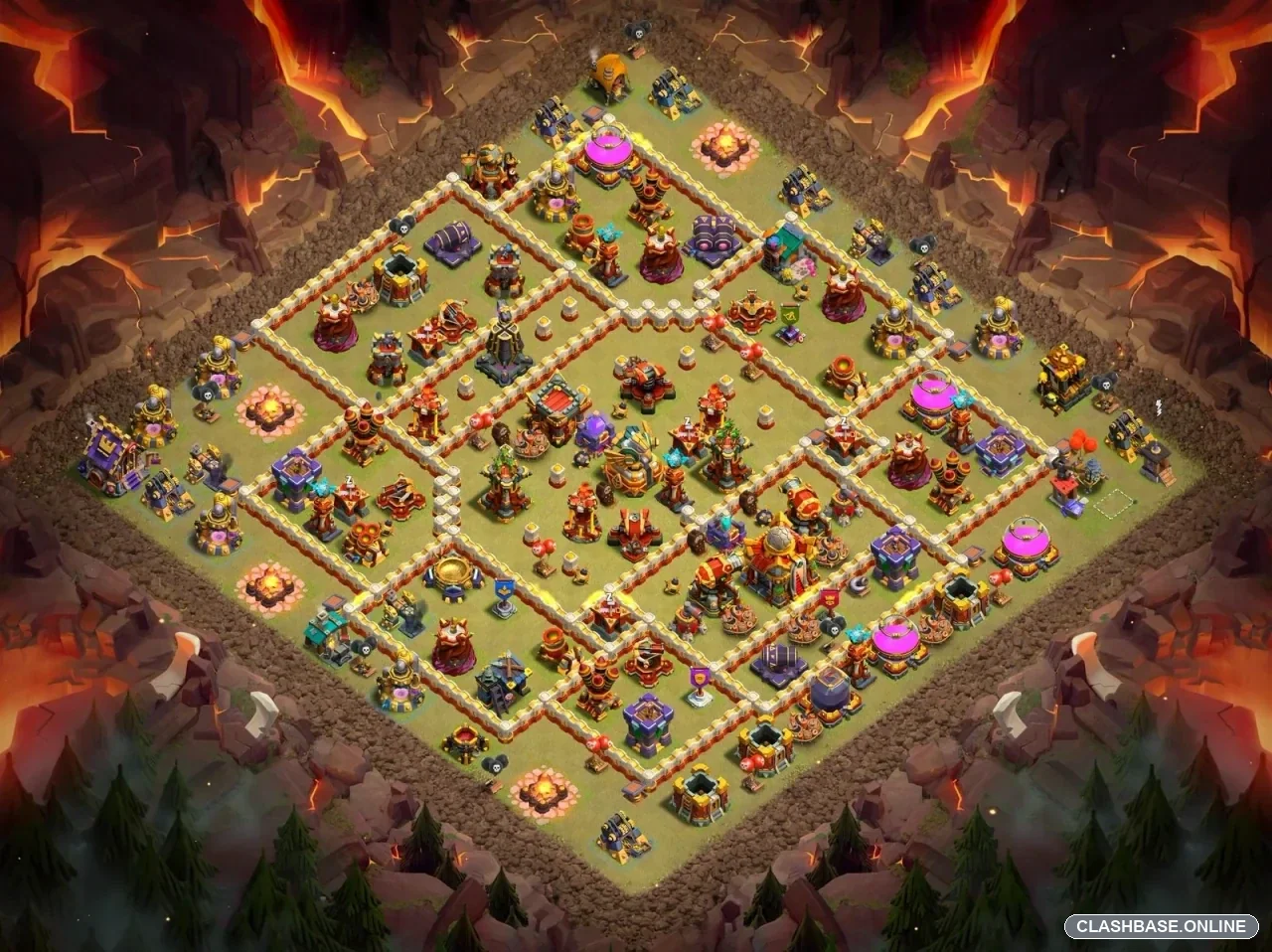
TH16 Ranked Base #29: Multi-Compartment Core with a Contested Bottom Entry
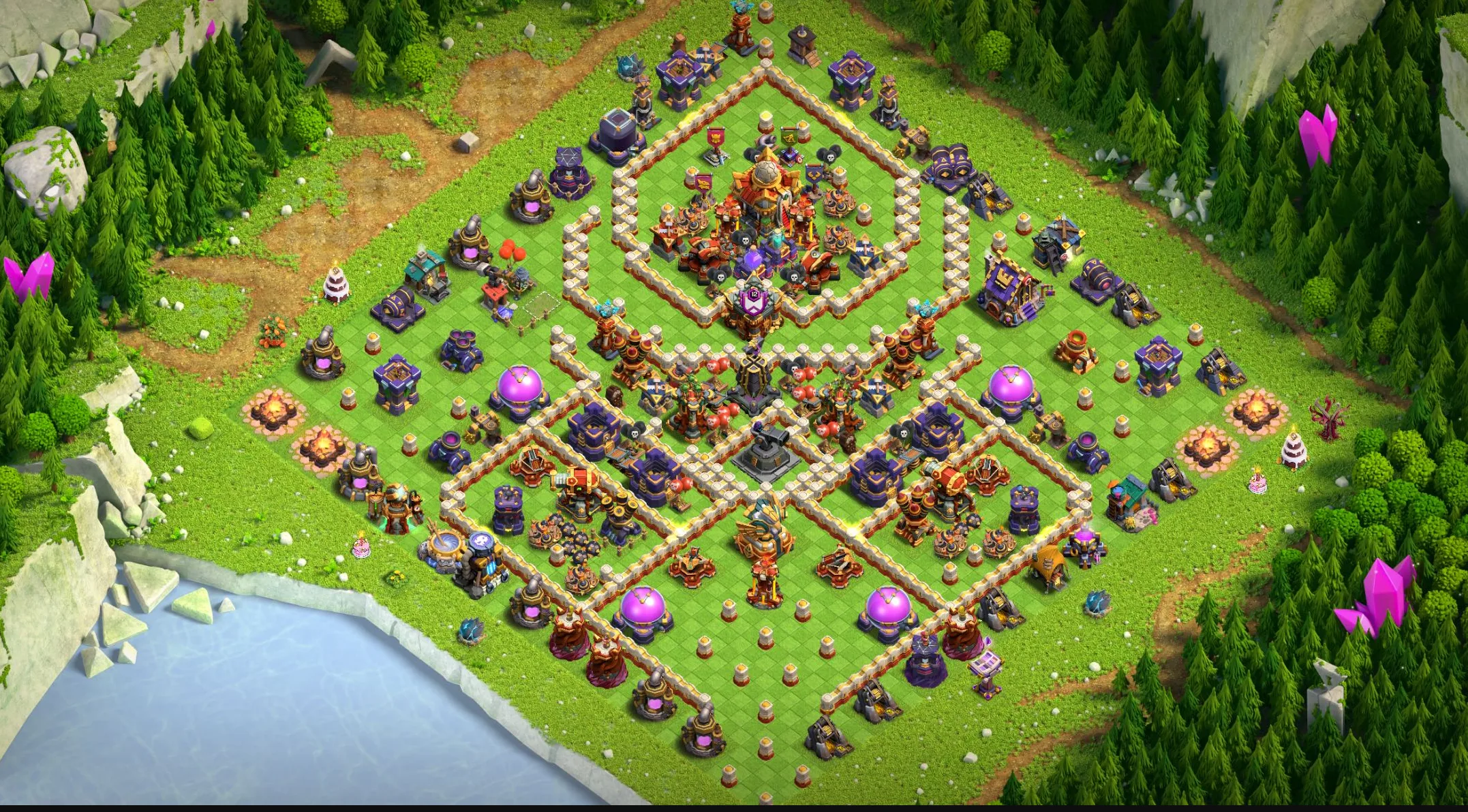
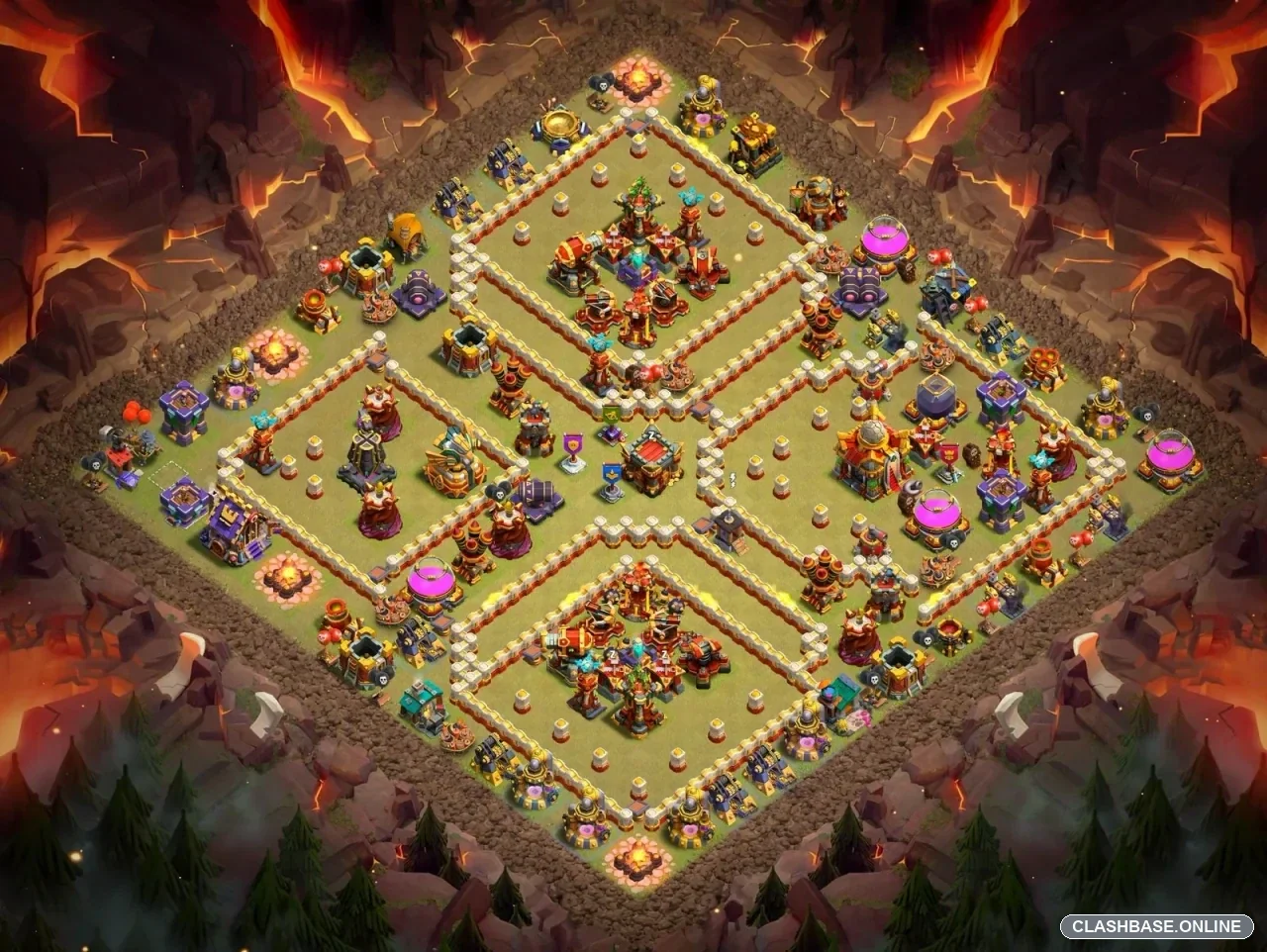
Town Hall 16 Ranked Layout #29 looks fairly open from the bottom, which is probably the first thing most attackers will notice. There are several accessible buildings around six o’clock, and the initial percentage looks easier to collect there than through the tighter upper sections. That first impression is useful, but it does not tell the whole story. Once troops move past the outer layer, the base breaks into several compartments, and the route toward the Town Hall becomes much less direct.
The Town Hall sits inside the primary defensive core rather than being pushed toward an edge. For Ranked play, that changes the attack quite a bit. An attacker cannot simply grab the main objective with a quick hero dive and then spend the rest of the raid collecting percentage. Reaching the Town Hall requires a meaningful commitment through the inner structure, while several outside sections can remain available for cleanup afterward.
If I were scouting this layout, I would probably start at the bottom. The space around five to seven o’clock gives enough room to establish a funnel and remove a few exterior targets before the main army goes in. I would resist the temptation to clear the whole bottom edge, though. This base seems more dangerous when the attacker creates too much space rather than too little.
A wide funnel can expose several compartments at roughly the same time. Root Riders or another heavy ground group may head toward the central core while heroes and support troops drift toward a neighboring lane. For the first thirty seconds, that can actually look like a successful attack. Buildings disappear on both sides, percentage climbs quickly, and the army still seems healthy. The problem often appears later, when the strongest group reaches the Town Hall without all of its support.
That troop split is probably the most believable weakness for the attacker—and one of the layout’s best defensive ideas.
A narrow ground entry would be much more threatening. Root Riders or another smash-style army should have enough power to cross the walls, so raw wall strength is unlikely to decide the attack. Pathing matters more. If the front line, heroes, healers, and support troops remain together, Rage, Heal, Freeze, Overgrowth, or similar spells can cover a much larger part of the army.
Once the formation stretches across two compartments, every spell becomes less efficient. The attacker may have to choose between supporting the Town Hall group or saving another section that is losing momentum elsewhere. That is where an apparently easy Ranked attack can turn into a rushed finish.
Queen Charge Hybrid also looks like a sensible counter. A Queen starting near the bottom could remove one defensive pocket first and eliminate buildings that might pull Miners and Hog Riders away from the center. That would create a more predictable route toward the Town Hall.
The catch is timing. The Queen may spend longer than expected on one high-hitpoint building, change direction after a wall opening, or continue along the outside instead of turning inward. None of those mistakes necessarily destroys the attack immediately. They simply cost seconds. On a layout with several separated cleanup sections, those seconds can matter a lot near the end.
The air setup adds another layer. Air Defenses appear staggered around the central area rather than grouped into one easy cluster, while the Inferno Towers behave more like separate high-value threats. That means an air attacker may have to decide which threat deserves spell support first instead of solving everything with one early combination.
Dragons could potentially work from the bottom after the funnel has been shaped. A tight deployment should help keep the group moving toward the core. Spread them across too much of the bottom edge, though, and some Dragons may follow outside buildings while the stronger group moves toward the Town Hall. That split can leave the central push short of damage at exactly the wrong time.
LavaLoon offers better control over target order, but the route still needs to be planned beyond the first Air Defense. Removing one threat does not appear to open the entire village. The attacker still has to manage the Town Hall section, surviving Inferno coverage, and whichever compartment becomes the back end.
What makes Layout #29 feel appropriate for Ranked play is the tension between safe percentage and direct objective access. The bottom edge can provide percentage fairly quickly, but clearing too much of it may weaken the funnel. Going directly toward the Town Hall keeps the attack focused, yet several outside buildings can remain untouched and become a cleanup problem later.
That balance is easy to underestimate. A player might enter the final minute with the Town Hall secured and strong percentage, then realize the surviving troops are spread across opposite sides of the base. At that point, the problem is not defensive damage anymore. It is travel time.
The central multi-compartment design supports that kind of finish. Troops can enter the core successfully and still leave it in different directions. For Ranked defense, that is useful because a high-percentage attack can still become less efficient than expected if the final buildings survive long enough.
The bottom entry is clearly the first route worth testing. A disciplined attacker who keeps the funnel narrow and enters with most of the army together could open the core more efficiently than intended. Root Riders, Queen Charge Hybrid, Dragons, and LavaLoon all look plausible depending on execution.
Still, the base has a clear defensive identity. It is not relying on one surprise trap or one oversized kill zone. Instead, it uses a central Town Hall, staggered air coverage, multiple compartments, and a tempting bottom approach to pressure the attacker’s pathing and remaining time.