 CLASHBASE.ONLINERanked
About this Town Hall 16 base
Copy this base to Clash of Clans
Tap the button below. Clash of Clans will open so you can place this layout in an available base slot.
Copy base to the gameClash of Clans must be installed on this device.Rate this layout
Share a useful, honest experience. One review is stored per visitor for this item.
TH16 Ranked Base #35: Compact Core with High Central Spell Value
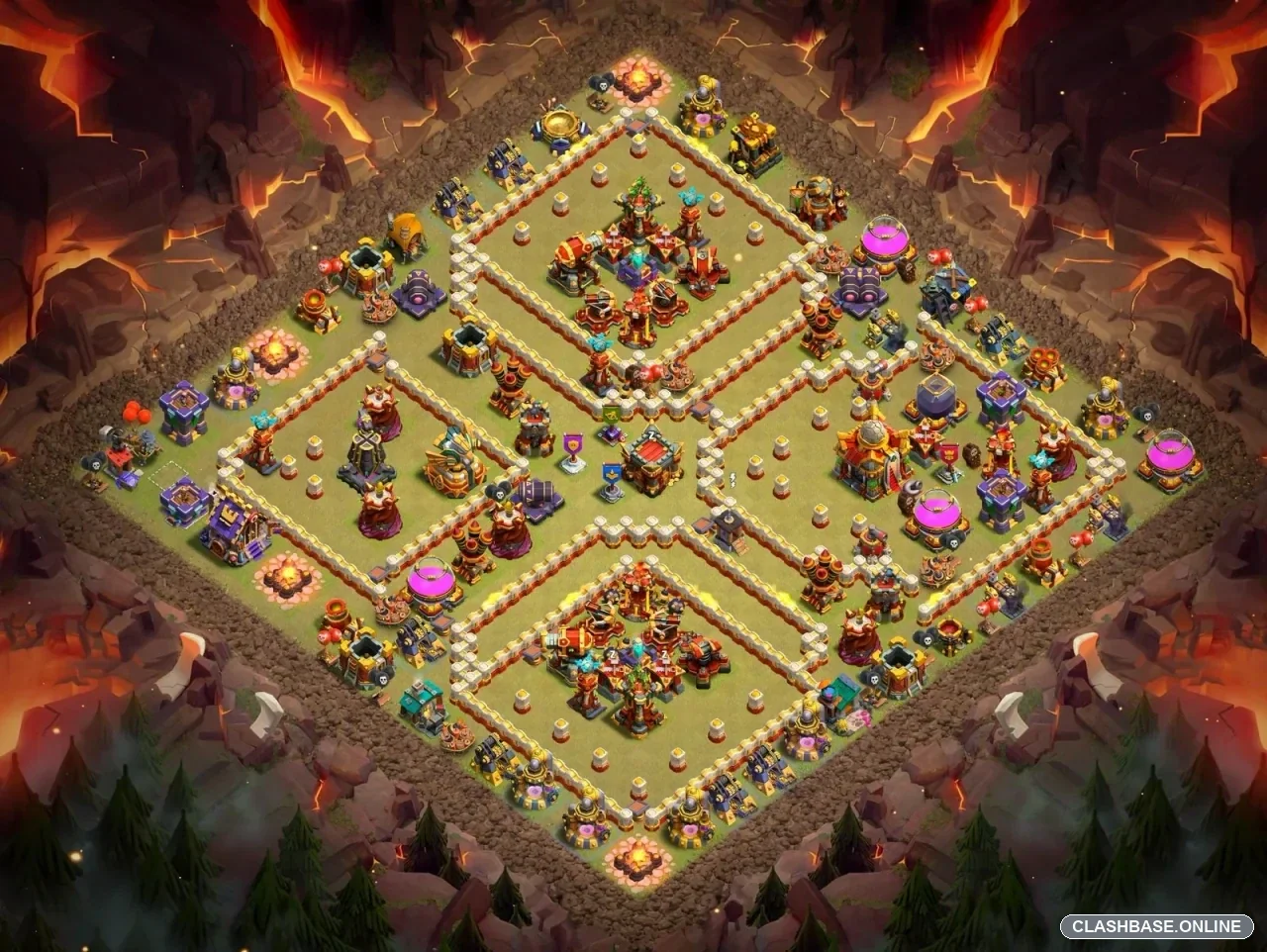
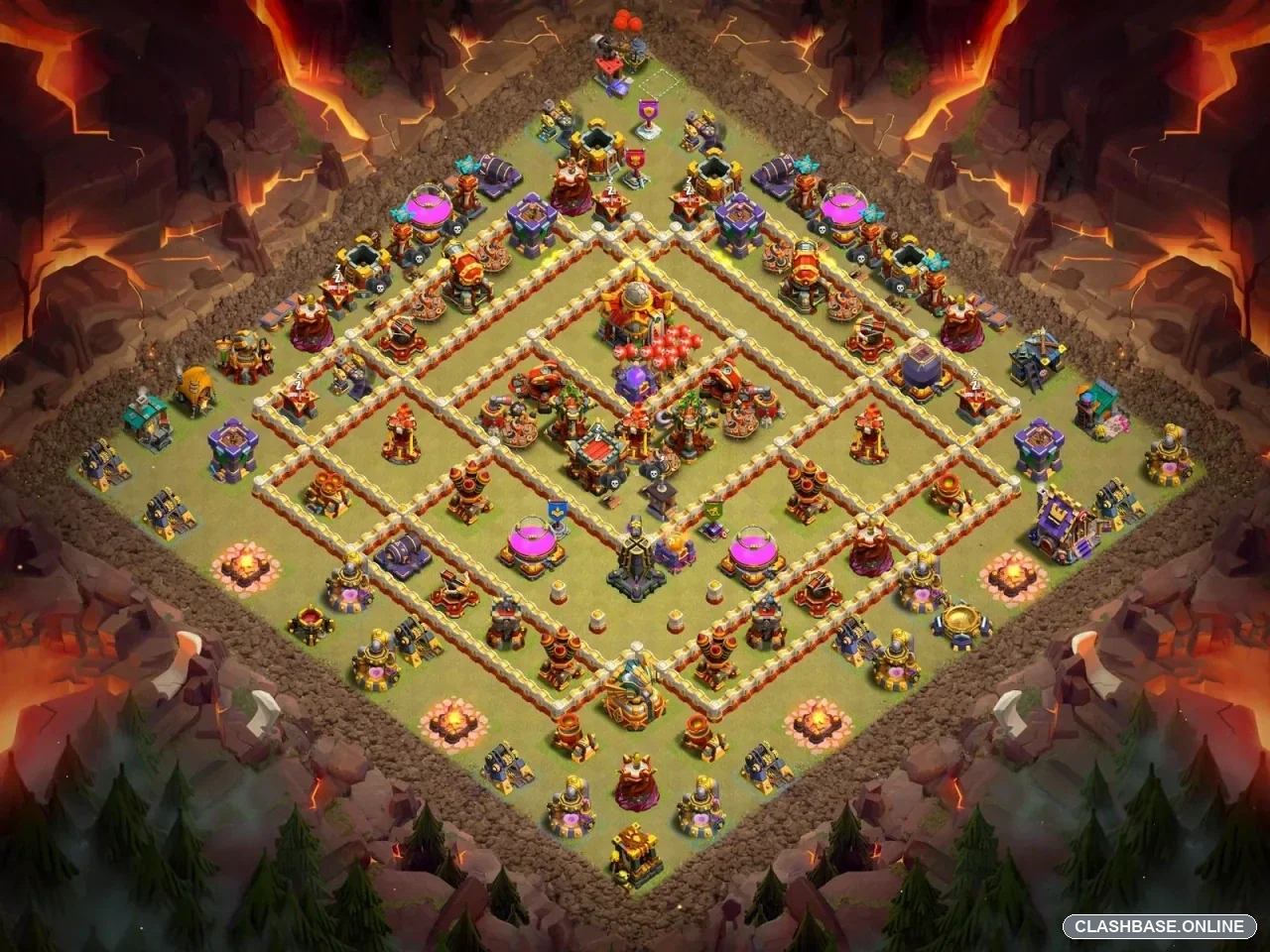
Town Hall 16 Ranked Layout #35 has a surprisingly clean appearance from the outside, but the center is where the real difficulty begins. The Town Hall sits inside the primary defensive core rather than being pushed toward an edge, and the surrounding walls form a fairly compact square with several smaller sections feeding into it. At first glance, this makes the base look predictable. Once you start planning an actual attack, though, the number of competing routes around the middle becomes much more noticeable.
The left edge, around eight or nine o’clock, looks like the most practical place to begin shaping a funnel. There is enough room to remove a few exterior buildings without immediately committing the whole army, and the nearby wall structure gives a ground attacker a believable route toward the core. I would still avoid clearing the entire side. A very wide funnel could create several available targets at once and make heroes or support troops wander away from the intended line.
That pathing issue may be more important than the first wall break itself.
A Root Rider or heavy ground smash army could make fast progress from the left. The walls probably will not slow those troops for very long, so the defensive value comes from what happens after they enter. If Root Riders, heroes, healers, and support troops stay together, the attacker can move through the central compartments with strong spell coverage. If the formation separates, the same attack becomes much less efficient.
Imagine the main group moving toward the Town Hall while the Queen continues along a side compartment. For twenty seconds, that might look perfectly fine. Multiple defenses are falling, percentage rises, and the raid still feels under control. Then the main force reaches the core and the attacker realizes the Queen and part of the support army are several tiles away. A Rage, Heal, Freeze, or other control spell that should support one compact push suddenly covers only half of it.
The central placement of the Town Hall also changes the usual Ranked decision. An attacker cannot simply take the objective from the outside and then worry about percentage later. Reaching the Town Hall means entering a meaningful part of the defensive network. That can be good for the defender because the attacker has to commit real troops and spells before the objective is secured.
At the same time, the compact center has a clear weakness: high spell value.
Several important defenses appear close enough together that a well-timed spell could influence more than one threat. That does not automatically make the core weak, but it gives a disciplined attacker an opportunity. If the army reaches the middle with Rage, Freeze, Overgrowth, or other control spells still available, a large portion of the defensive pressure could be reduced in a short window.
That makes spell preservation especially important. An attacker who burns several spells early just to repair a poor funnel may struggle badly once the core is reached. Someone who enters cleanly and saves those spells could make the center look much less intimidating.
Queen Charge Hybrid seems like one of the more controlled counters. A Queen starting from the left could remove an outer defensive section, clear away buildings that might pull troops sideways, and create a narrower lane for Miners and Hog Riders. If she follows the intended route, the Hybrid phase could reach the Town Hall with much less pathing uncertainty.
The weakness of that plan is time. A Queen that takes an unexpected turn or gets caught on a high-hitpoint building can easily delay the main attack. Ranked bases benefit from that kind of slowdown because the final result depends not only on reaching the objective but also on percentage and cleanup. A strong opening can still turn into an uncomfortable finish if the army spends the last twenty seconds travelling between surviving buildings.
Air attacks have their own problem. The Air Defenses appear to provide staggered coverage around the core rather than forming one simple cluster. The Inferno Towers also sit as separate high-value targets, which reduces the chance of one spell solving every major threat at once.
Dragons could potentially enter from the left after a careful funnel. A narrow deployment would probably be safer than spreading them across the entire edge. If part of the Dragon group follows outside buildings while the stronger section moves inward, the central defenses get to fight a smaller force than the attacker intended.
LavaLoon offers more precise target control, but it demands a better sequence through the middle. Removing the first Air Defense does not appear to open the whole village immediately. The attacker still has to think about the Town Hall section, remaining Inferno coverage, and whatever defensive pocket becomes the back end.
What makes this layout feel suited to Ranked play is the way it makes percentage and Town Hall access compete for attention. Going directly into the core gives the attacker a faster shot at the main objective, but outside buildings and side compartments may remain untouched. Spending too much time collecting percentage first makes the Town Hall phase slower and can leave the attacker rushing later.
The biggest weakness is probably a clean left-side entry that keeps the army compact and preserves spells for the center. If an attacker reaches the core with heroes healthy and several control spells still available, the concentrated defensive value may become easier to manage than intended.
Still, the base is not relying on one obvious gimmick. Its defensive idea is more practical: force the attacker to manage funneling, troop pathing, central spell timing, percentage, and cleanup as separate problems.