 CLASHBASE.ONLINEClan War
About this Town Hall 17 base
Copy this base to Clash of Clans
Tap the button below. Clash of Clans will open so you can place this layout in an available base slot.
Copy base to the gameClash of Clans must be installed on this device.Rate this layout
Share a useful, honest experience. One review is stored per visitor for this item.
TH17 Clan War Base #14: Open Anti-Three-Star Core with a Difficult Back-End Finish
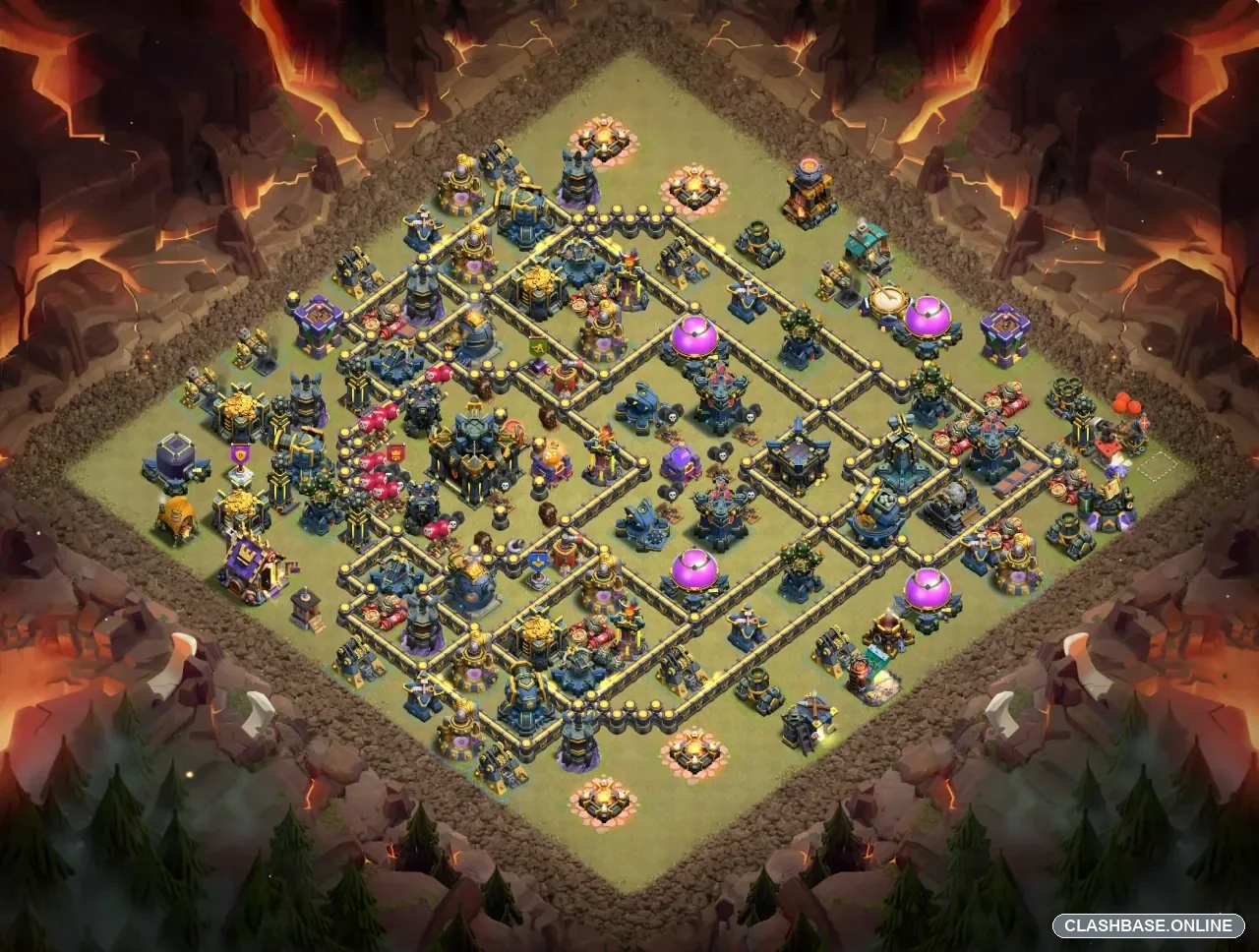
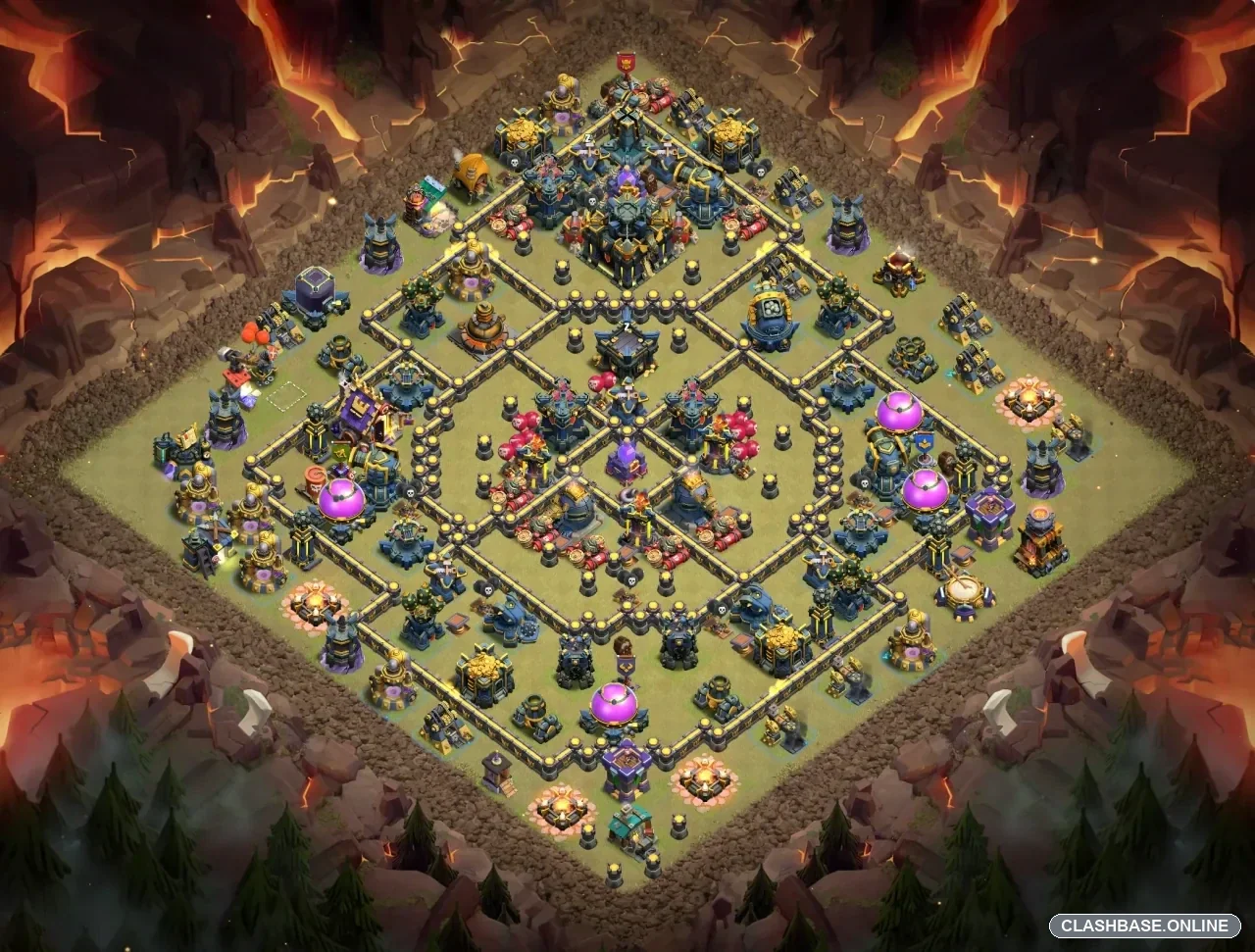
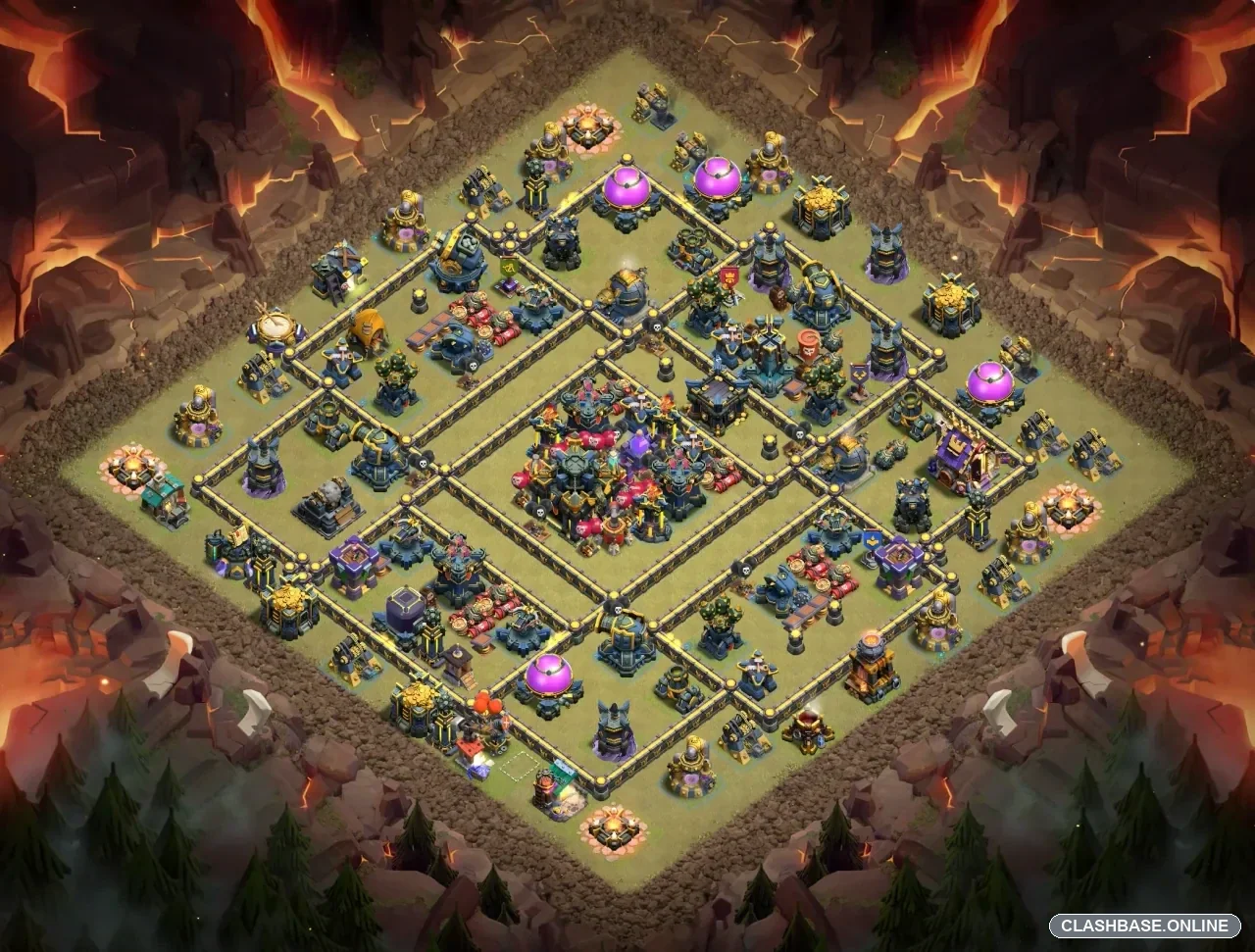
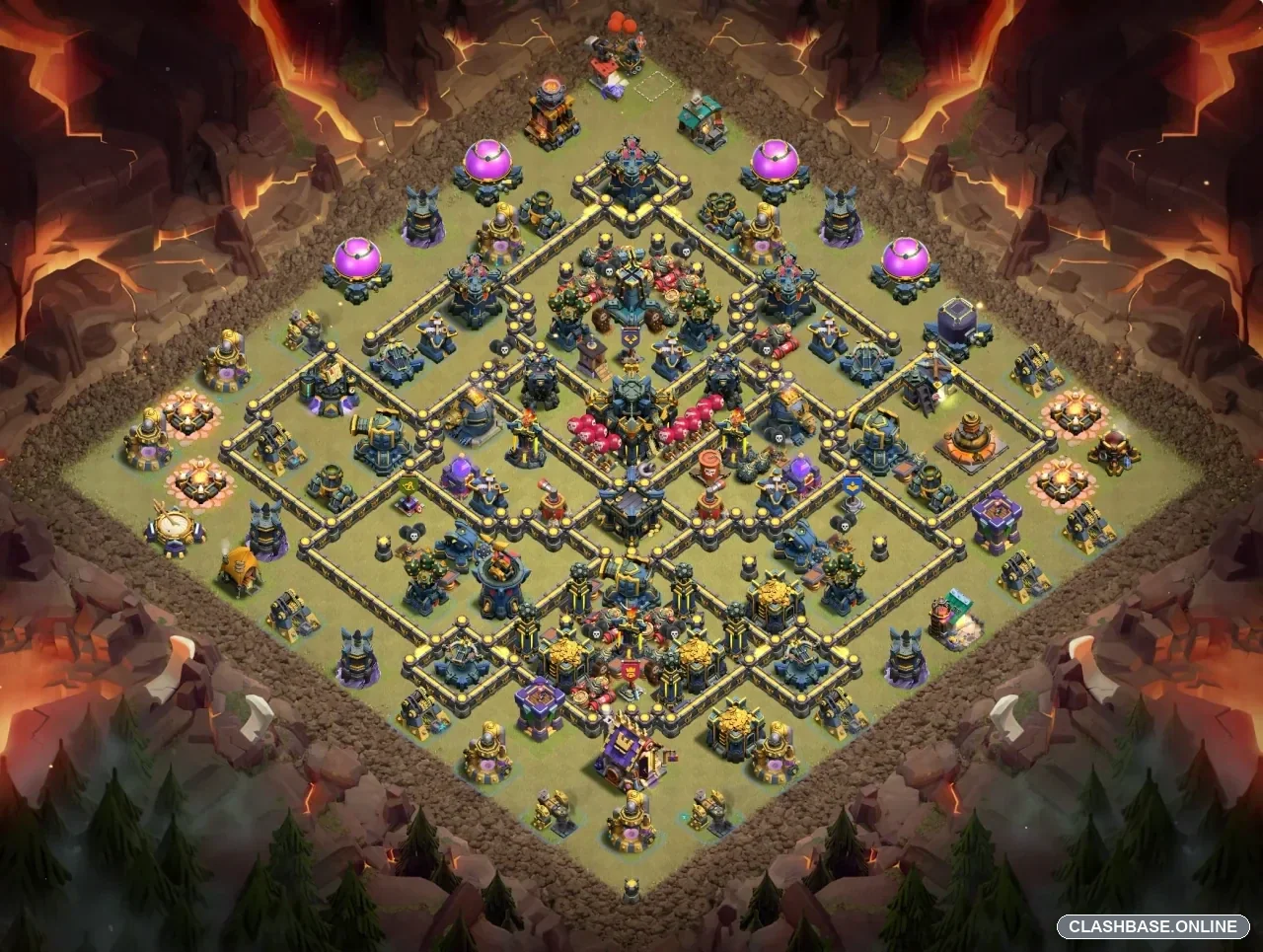
Town Hall 17 Clan War Layout #14 is built around a fairly clear war-defense idea: reaching the Town Hall should not automatically give the attacker a comfortable route through the rest of the village. The Town Hall sits toward the upper half rather than exactly in the middle, while several major defenses are spread around an open central structure. From the scouting screen, that creates an interesting choice. An attacker can plan aggressively around the Town Hall, or preserve more strength for the back end, but doing both cleanly may be harder than it first appears.
The lower-right edge, roughly around four or five o’clock, looks like the most practical place to begin shaping an attack. There is enough room to remove a few exterior buildings and create a diagonal route toward the center without immediately fighting through the strongest defensive section. I would still keep that funnel fairly tight. Opening the entire corner could give heroes, tanks, and support troops several reasonable targets at once, which is often where a clean-looking attack starts to lose its structure.
A heavy ground push illustrates the problem well. Root Riders or another smash-style army could enter from the lower-right and move toward the core relatively quickly. The wall layout itself probably will not stop them for long. What matters more is whether the Queen, Grand Warden, and support troops remain close to the front line. If the main group turns toward the Town Hall while part of the support follows buildings along the outside, the attack can become divided before the most important phase even begins.
That split may not look dangerous immediately. Both groups can continue taking defenses, and percentage will keep climbing. The trouble comes when the attacker starts spending spells. A Rage, Heal, Freeze, or other control spell is much more useful when the entire army is fighting in one area. Once the force has separated, each spell solves only part of the problem.
The Town Hall placement adds another layer. Since the objective is offset toward the upper side, an attacker may be tempted to secure it early and remove the uncertainty. That is understandable in Clan War, especially when a safe two-star result matters. The downside is resource commitment. If too many troops, hero abilities, or spells are spent reaching the Town Hall, the village can still have a healthy defensive section left on the opposite side.
This is probably the most important defensive feature of Layout #14. The Town Hall and the best percentage route do not completely overlap. An attacker who focuses on objective security may struggle with cleanup. Someone who prioritizes the wider base first may reach the Town Hall later than expected and take more defensive pressure during the approach.
Queen Charge Hybrid could be one of the more controlled solutions. A Queen starting from the lower-right may remove one defensive pocket and help close off a side lane before Miners and Hog Riders enter. That kind of setup can reduce the chance of the Hybrid splitting around the open core. The plan sounds fairly clean on paper, although it is sensitive to time. One unexpected Queen walk or a stubborn high-hitpoint target could delay the main phase enough to make the final compartments uncomfortable.
Air armies face a different version of the same decision. The Air Defenses are spread through separate inner areas rather than concentrated into one convenient group. The Inferno Towers are also spaced apart, which reduces the chance of getting perfect value from one Freeze or other spell. A Dragon attack could still work from the lower-right if the funnel is prepared carefully, but the deployment should probably stay narrow.
A wide Dragon line might create impressive early destruction while quietly sending several units around the outside. If that happens, the strongest group can reach the central section without enough support to continue efficiently. LavaLoon provides more control over target selection, but the attacker still has to think several steps ahead. Removing one Air Defense does not automatically create a clean path to the Town Hall and the remaining back-end defenses.
The open anti-three-star core is what makes this layout feel different from a compact central fortress. Instead of forcing the entire attack into one dense kill zone, the village creates several decisions around the middle. Troops can move through the core, but leaving it in the right direction is just as important as entering it.
That makes the second half of the raid especially important. An attack can look excellent early: the funnel works, heroes stay healthy, and the Town Hall falls on schedule. Then the remaining troops leave the core in two different directions, cleanup slows down, and a few strong defenses survive long enough to deny the triple. That kind of delayed failure is exactly what an anti-three-star war layout is trying to produce.
There is an obvious weakness. A disciplined lower-right entry that removes the correct corner buildings and keeps the army compact could create a relatively short path into the base. If the attacker reaches the Town Hall without overspending and still has spells available for the back end, Layout #14 may become much easier to finish.
Even so, the design has a clear Clan War identity. It is not simply trying to keep the Town Hall alive for as long as possible. Instead, it separates objective security from the rest of the defensive value and forces the attacker to think about what happens after the Town Hall falls.