 CLASHBASE.ONLINERanked
About this Town Hall 14 base
Copy this base to Clash of Clans
Tap the button below. Clash of Clans will open so you can place this layout in an available base slot.
Copy base to the gameClash of Clans must be installed on this device.Rate this layout
Share a useful, honest experience. One review is stored per visitor for this item.
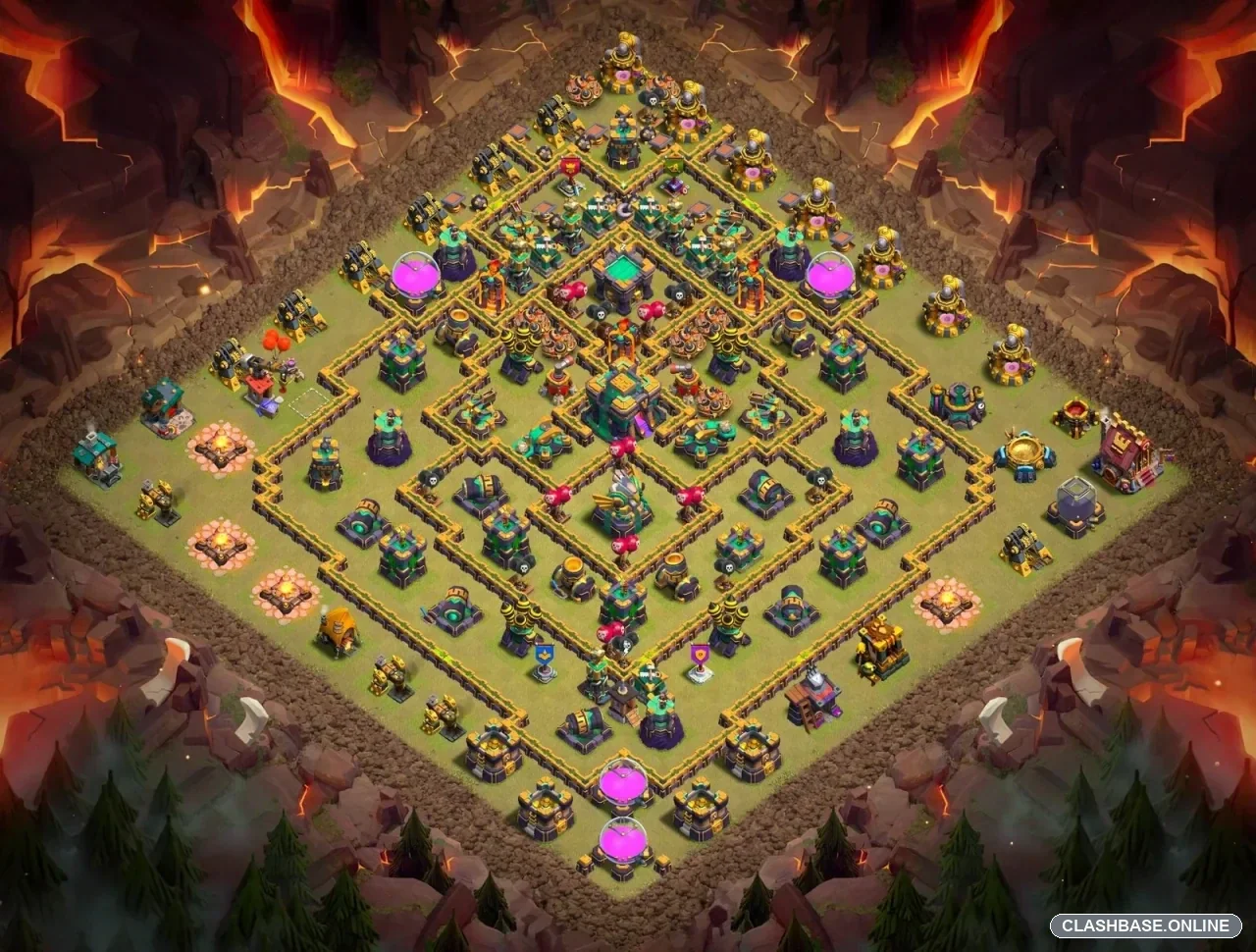
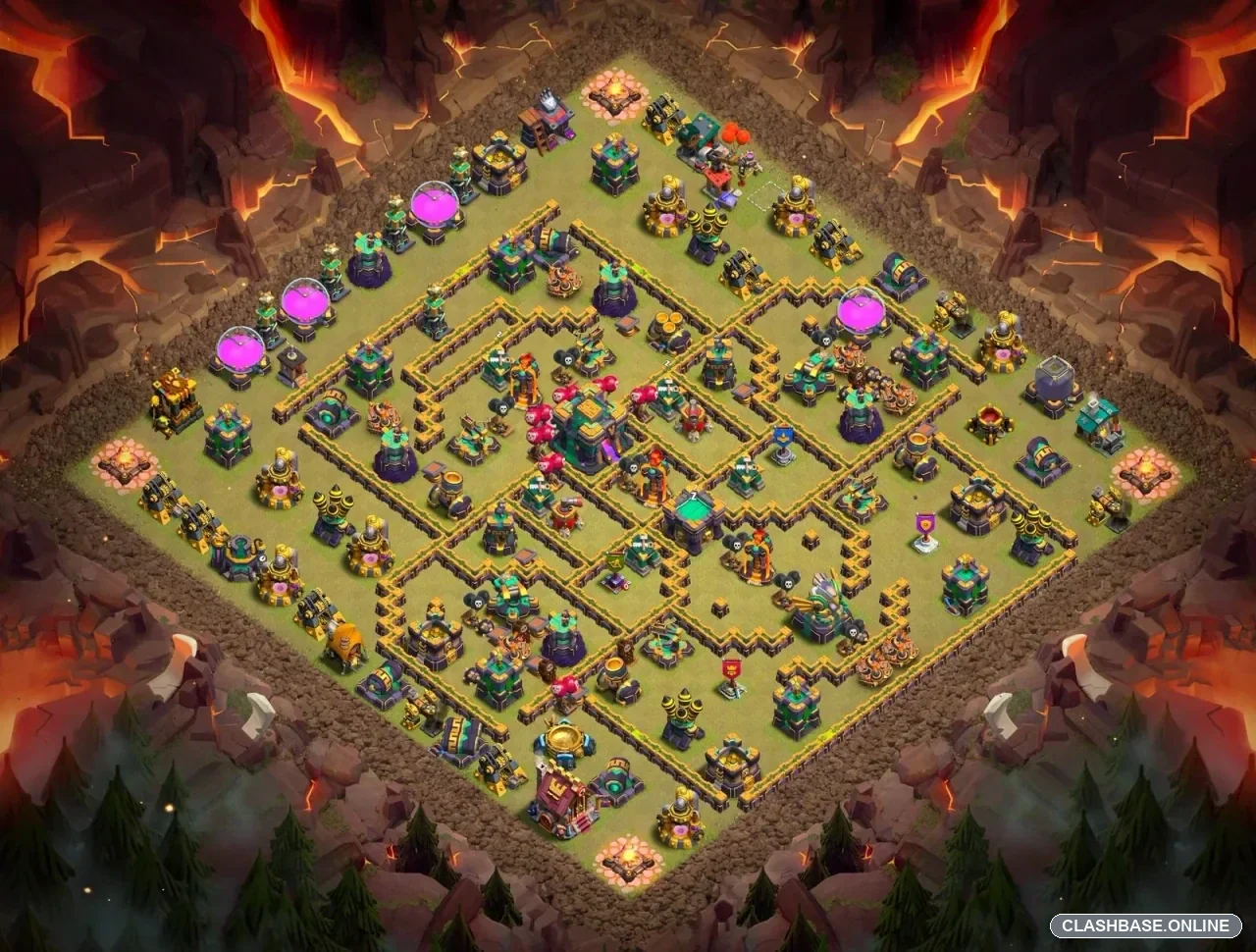
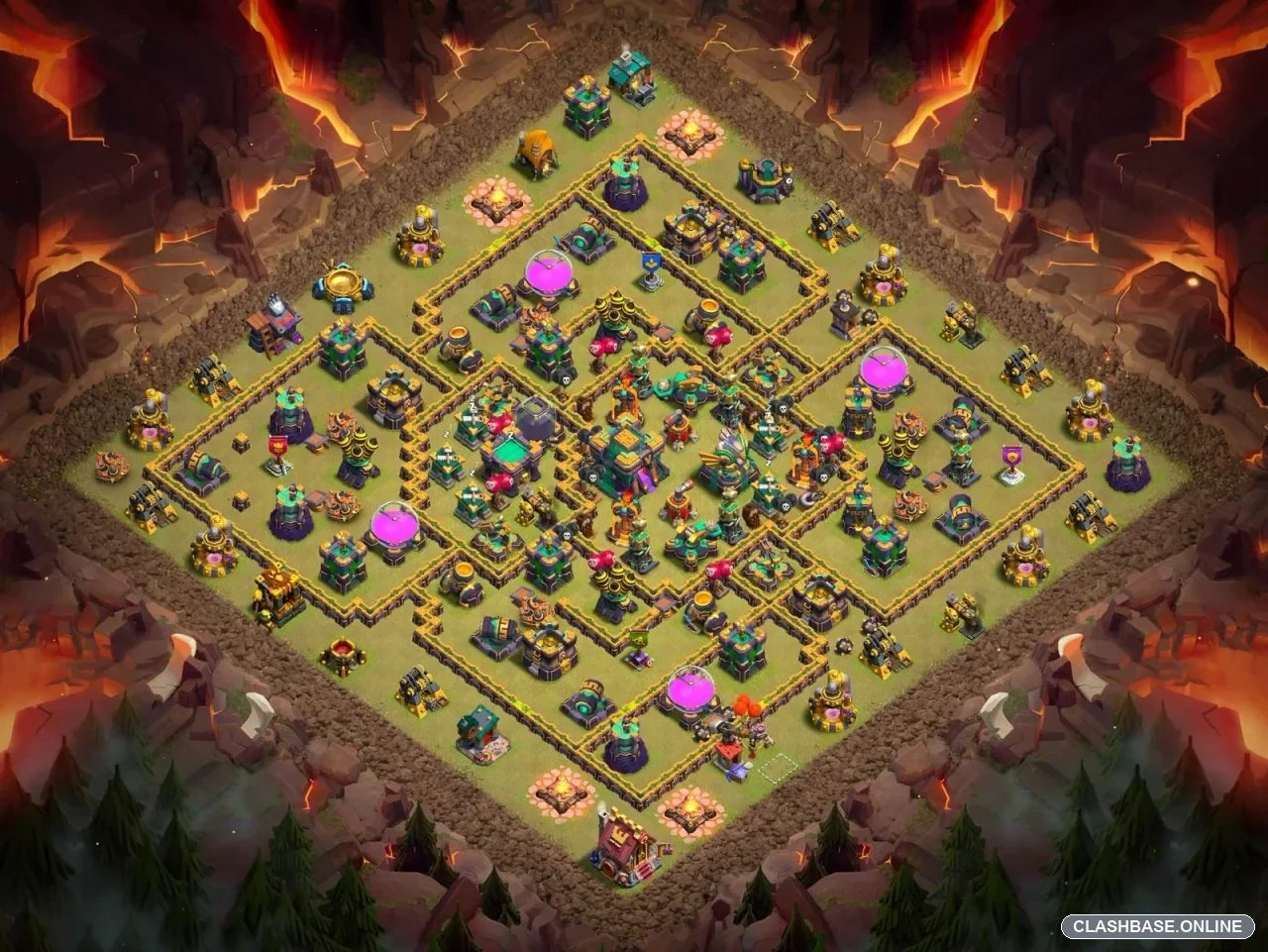
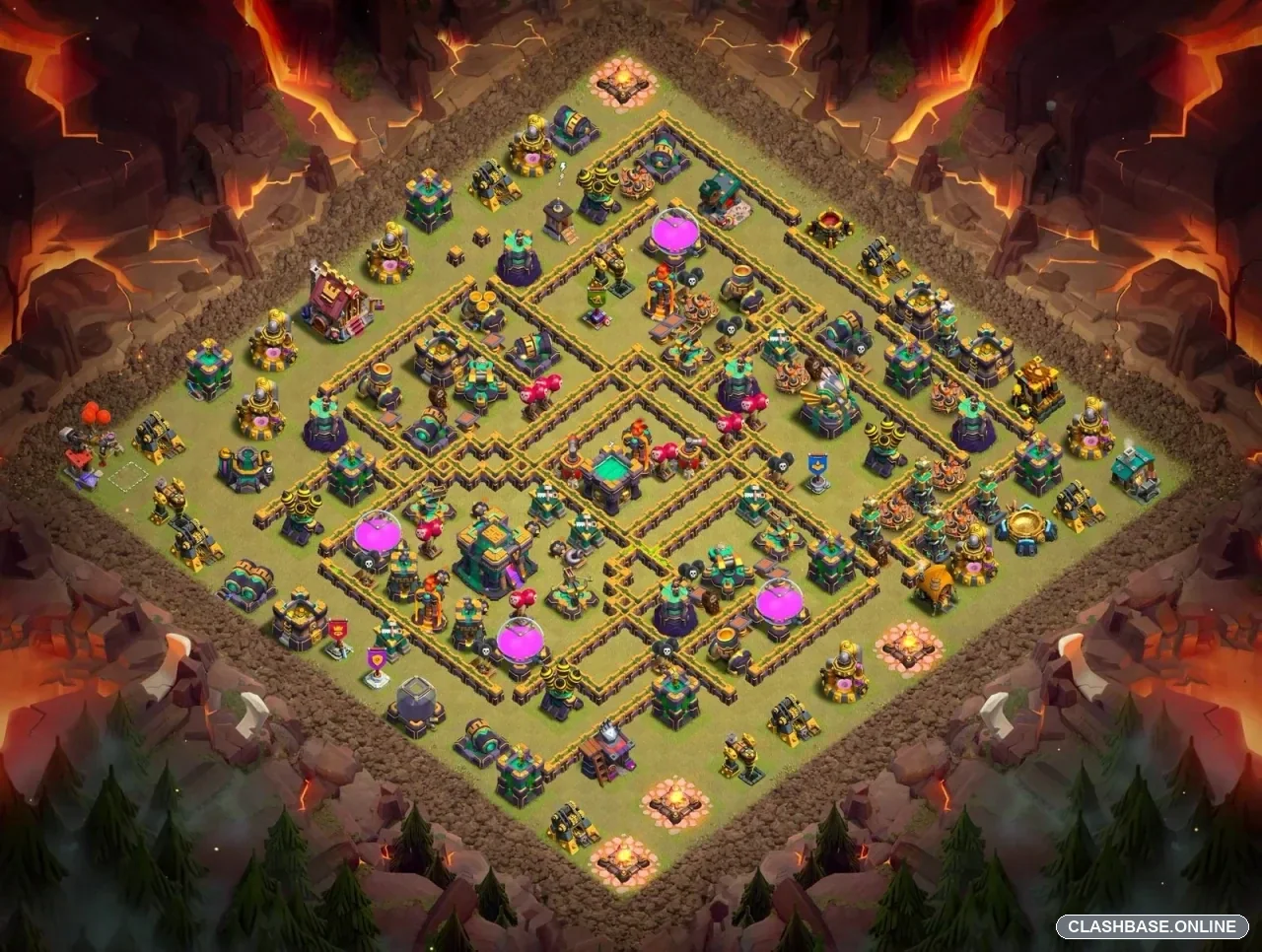
TH14 Ranked Base #16: Compact-Square Defense Built Around Core Pressure
TH14 Ranked Layout #16 uses a compact-square structure with the Town Hall sitting inside the primary defensive core. After studying the actual base, the design looks intentionally tighter than many of the wider TH14 layouts. Major defenses are kept close enough to support one another, but the surrounding compartments still create several routes that can pull troops away from the center.
For Ranked defense, that balance makes sense. The base is not mainly concerned with protecting resources. Its job is to contest stars, slow percentage gain, and make the final part of the raid less comfortable than the opening.
The Town Hall anchors a concentrated damage zone
The Town Hall sits in the heart of the defensive network, where several important threats can influence troops approaching from different directions.
This makes the center the section the defense wants to preserve for as long as possible.
Outer compartments may disappear without immediately compromising the whole layout. By the time troops reach the Town Hall area, they may already have lost support units, hero health, or valuable abilities.
That gradual weakening is important. Layout #16 does not appear to depend on one surprise stop. It tries to make the attacking army arrive at the strongest section in worse condition than it started.
Compact compartments punish poor troop control
The walls around the middle create several relatively short but separate defensive lanes.
Once troops begin entering those compartments, nearby targets can pull different groups in slightly different directions. A formation that looked compact on the outside may start stretching as it reaches the core.
From the defender's point of view, that is valuable.
Yeti or Bowler Smash-style armies rely heavily on keeping tanks, heroes, and supporting damage together. If the base separates those groups, Infernos, X-Bows, and surrounding defenses can concentrate on smaller portions of the army.
Queen Charge Hybrid faces a similar defensive problem: one pocket can fall while another remains active beside it.
Staggered air coverage keeps several threats alive
The Air Defenses are positioned around different parts of the core, while the Inferno Towers act as separate high-value anchors.
This prevents the defense from relying on one single zone.
Against Dragons or LavaLoon, one section may be overwhelmed while another continues applying pressure. That staggered coverage helps keep the raid under threat as it moves through the base rather than only during the initial engagement.
Still, the compact structure introduces a real defensive concern.
High spell value is the biggest weakness
Because several important defenses sit relatively close to the central area, high spell value appears to be Layout #16's main structural risk.
If multiple threats can be controlled from roughly the same section of the core, the defensive pressure may disappear faster than intended.
That is the tradeoff of a compact design: strong overlapping coverage when everything is active, but potentially greater value for well-timed control spells.
Hidden traps and the exact spacing between the major defenses therefore matter a lot here.
The right edge has to slow the opening
The right edge looks like the most accessible side of the layout.
Defensively, that area needs to make early progress cost something. It does not necessarily have to produce an immediate stop. Even forcing additional time, hero health, or abilities before the core is reached can make the compact center considerably stronger.
If the right side falls too cheaply, the core may face a concentrated army earlier than the design wants.