 CLASHBASE.ONLINEClan War
About this Town Hall 15 base
Copy this base to Clash of Clans
Tap the button below. Clash of Clans will open so you can place this layout in an available base slot.
Copy base to the gameClash of Clans must be installed on this device.Rate this layout
Share a useful, honest experience. One review is stored per visitor for this item.
TH15 Clan War Base #2: Offset-Ring Defense Built for Three-Star Denial
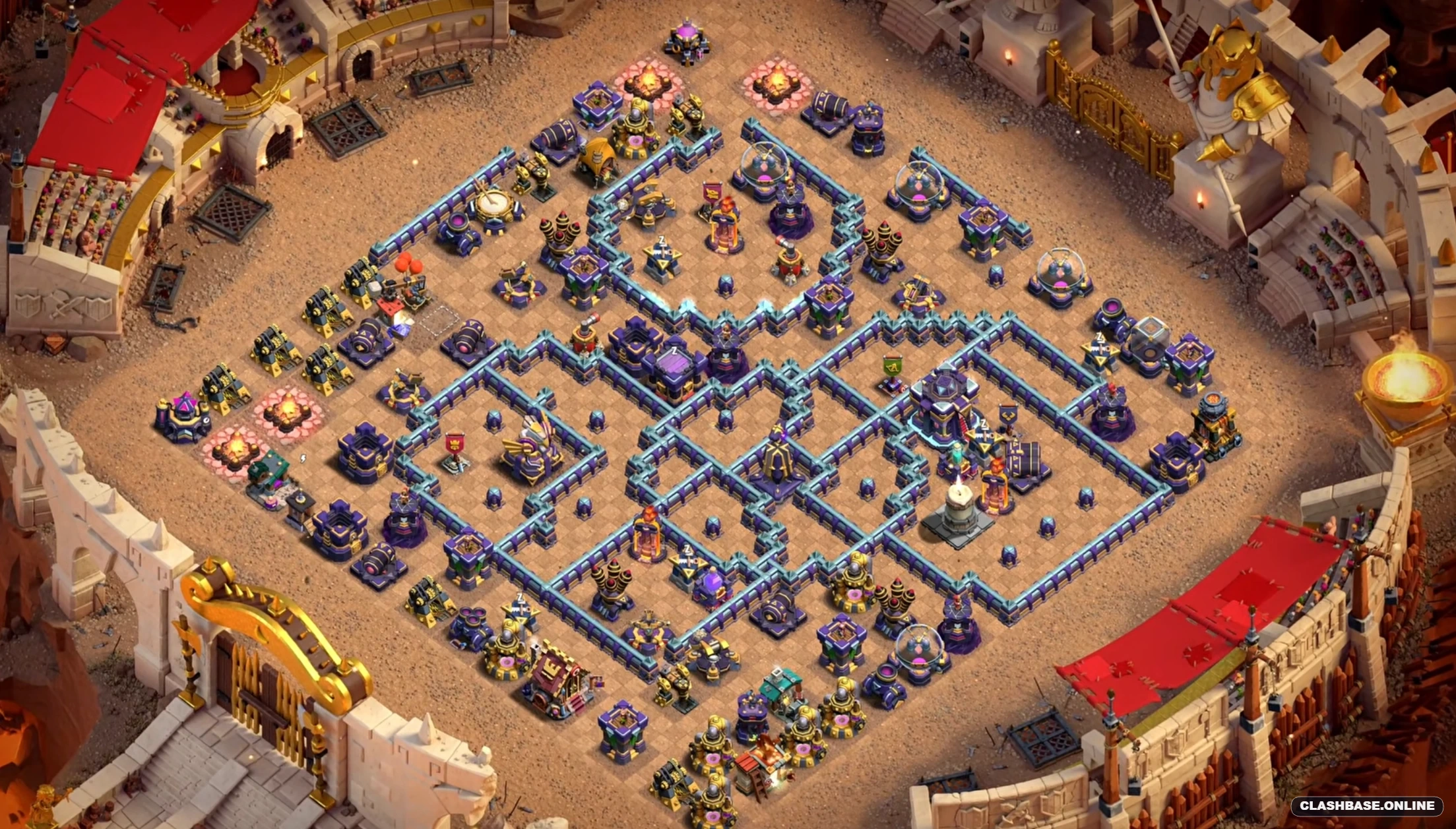
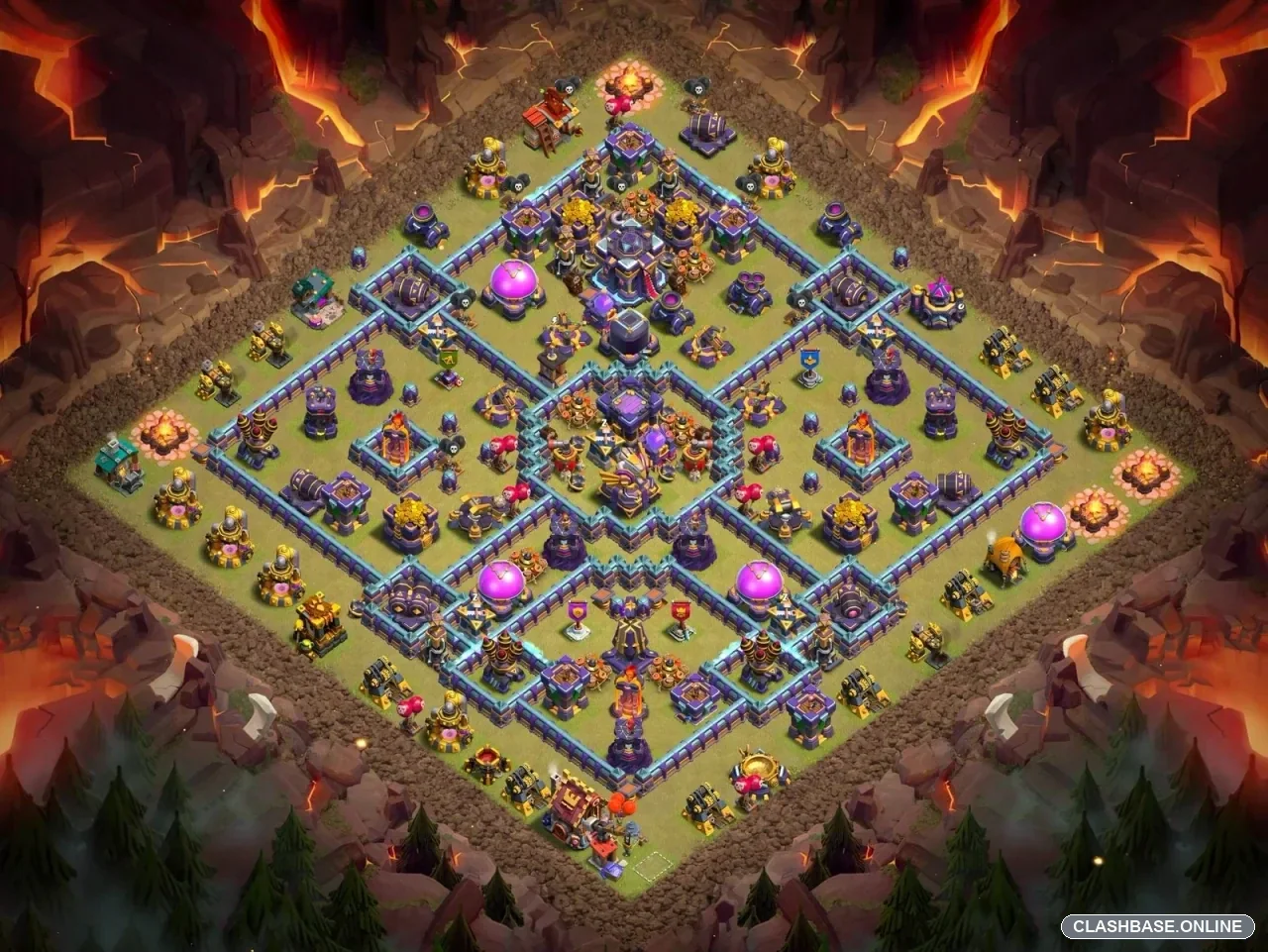
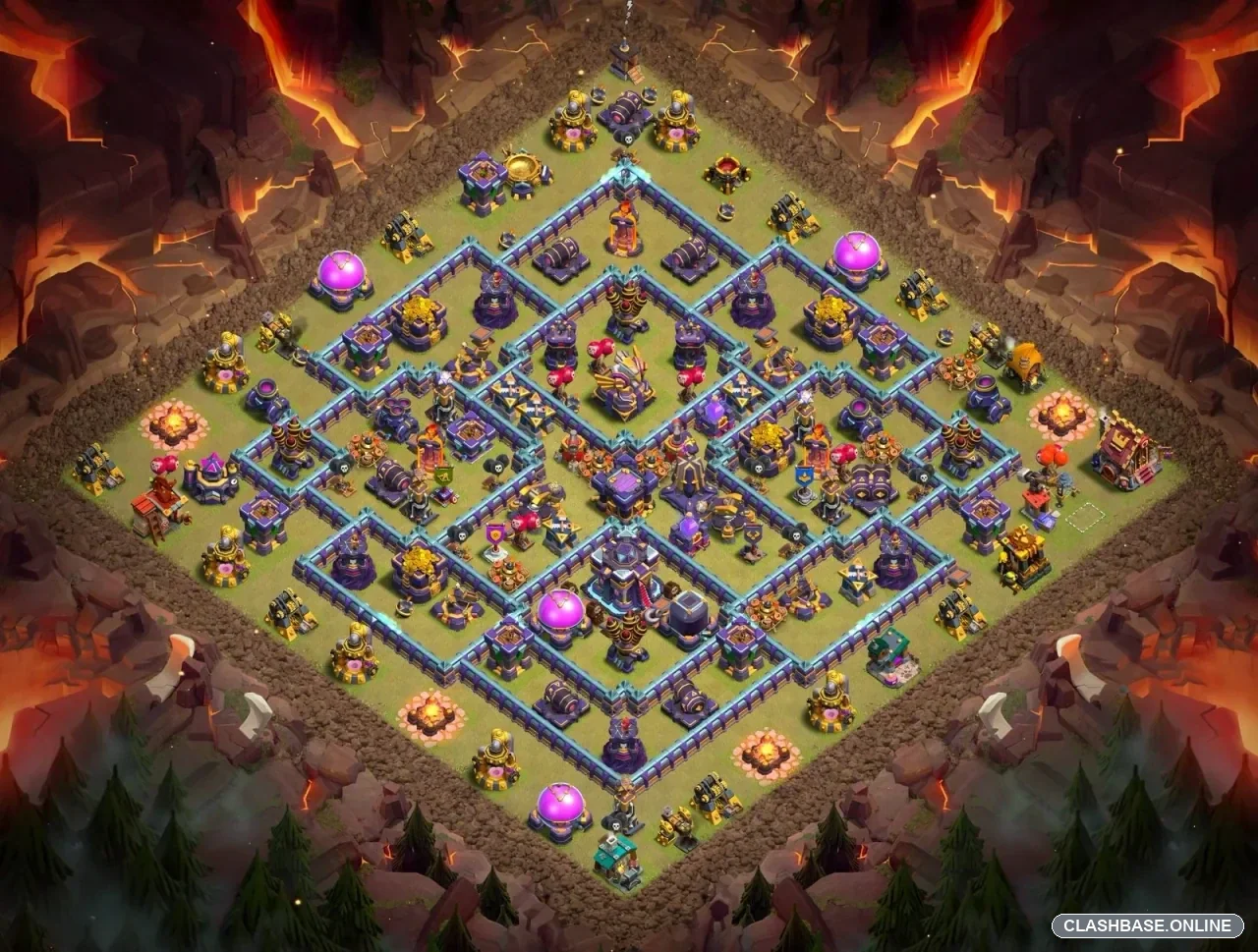
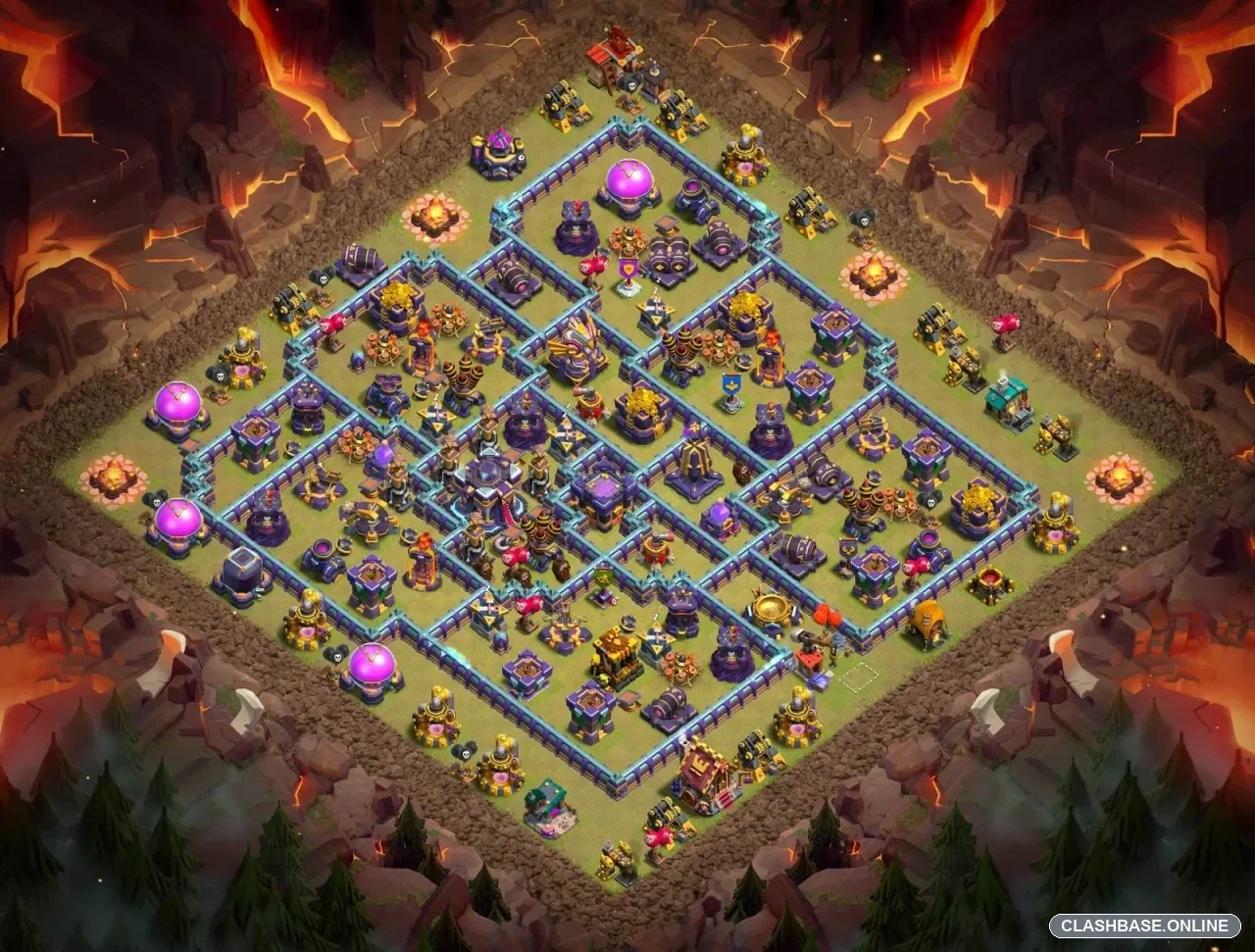
TH15 Clan War Layout #2 uses an offset-ring defensive structure with the Town Hall shifted toward the left side of the core. Looking closely at the base itself, the layout seems designed around one main idea: losing one important section should not cause the entire defense to collapse.
The Town Hall and Eagle Artillery are separated, while Inferno Towers, X-Bows, Air Defenses, and other high-value defenses are distributed across several compartments. That gives the village multiple defensive stages instead of one overloaded center.
For Clan War, this makes sense. The base appears more interested in protecting the third star than pretending the Town Hall can never be reached.
The Town Hall is deliberately separated from other key defenses
The Town Hall sits left of the central defensive mass, while the Eagle Artillery and several strong defenses remain farther toward the upper and middle sections.
This separation creates useful defensive redundancy.
Even if the Town Hall compartment is eventually removed, a significant amount of firepower can remain active elsewhere. The defense is effectively trying to make the attacker spend resources on one objective without receiving every other important target as a bonus.
That may leave surviving troops entering the next section with reduced hero health, fewer spells, or weaker support.
The offset ring is built to disturb troop pathing
The wall network forms a loose, uneven ring around the inner defenses.
Rather than directing everything through one predictable corridor, the layout offers several competing targets. Troops can begin moving around the ring while another group gets pulled deeper toward the core.
From a defensive point of view, that separation is valuable.
Root Riders and other heavy ground armies can cross walls efficiently, so the base cannot depend on walls alone. Instead, the compartments appear designed to stretch the formation and separate tanks from heroes or support troops.
Once that happens, attacking spell efficiency tends to fall, while individual defensive pockets get more time to deal damage.
Defensive anchors stay active in different zones
The Inferno Towers are positioned apart rather than sitting together in one compact spell area. Air Defenses also cover different crossing lanes through the village.
That spacing reduces the chance that one Freeze, Overgrowth, or similar control spell removes too much defensive pressure at once.
Against Dragons or LavaLoon, this means one portion of the air defense can remain active even after another section falls. Queen Charge Hybrid and heavy ground armies face a similar problem: breaking one pocket does not automatically solve the entire base.
The defense is built around continued pressure, not one dramatic stop.
The lower-left section carries the biggest defensive risk
The lower-left edge is the clearest structural concern.
Because the Town Hall is offset toward that side, losing the nearby ring too quickly could simplify troop movement through the base. If that section is opened without costing enough time, hero health, or attacking resources, the layout loses some of its pathing advantage.
Defensively, this makes the lower-left lane a sensible area for concentrated trap pressure and overlapping coverage. The goal does not necessarily have to be an immediate stop. Even a delay of several seconds or an early hero ability can strengthen the rest of the village.
Why Layout #2 works as a Clan War defense
The strongest feature of TH15 Clan War Base #2 is the separation between a safe objective route and a clean three-star route.
The Town Hall demands attention, the ring tries to split troops, separated defensive anchors maintain pressure, and surviving outside sections can become awkward cleanup targets.
Overall, Layout #2 is an anti-three-star defense based on objective separation, troop-pathing disruption, layered defensive coverage, and time pressure. Its main weakness is an early break beside the offset Town Hall, but if the ring holds long enough to scatter the attacking army, the remaining defenses and the clock can become surprisingly effective.