 CLASHBASE.ONLINEClan War
About this Town Hall 15 base
Copy this base to Clash of Clans
Tap the button below. Clash of Clans will open so you can place this layout in an available base slot.
Copy base to the gameClash of Clans must be installed on this device.Rate this layout
Share a useful, honest experience. One review is stored per visitor for this item.
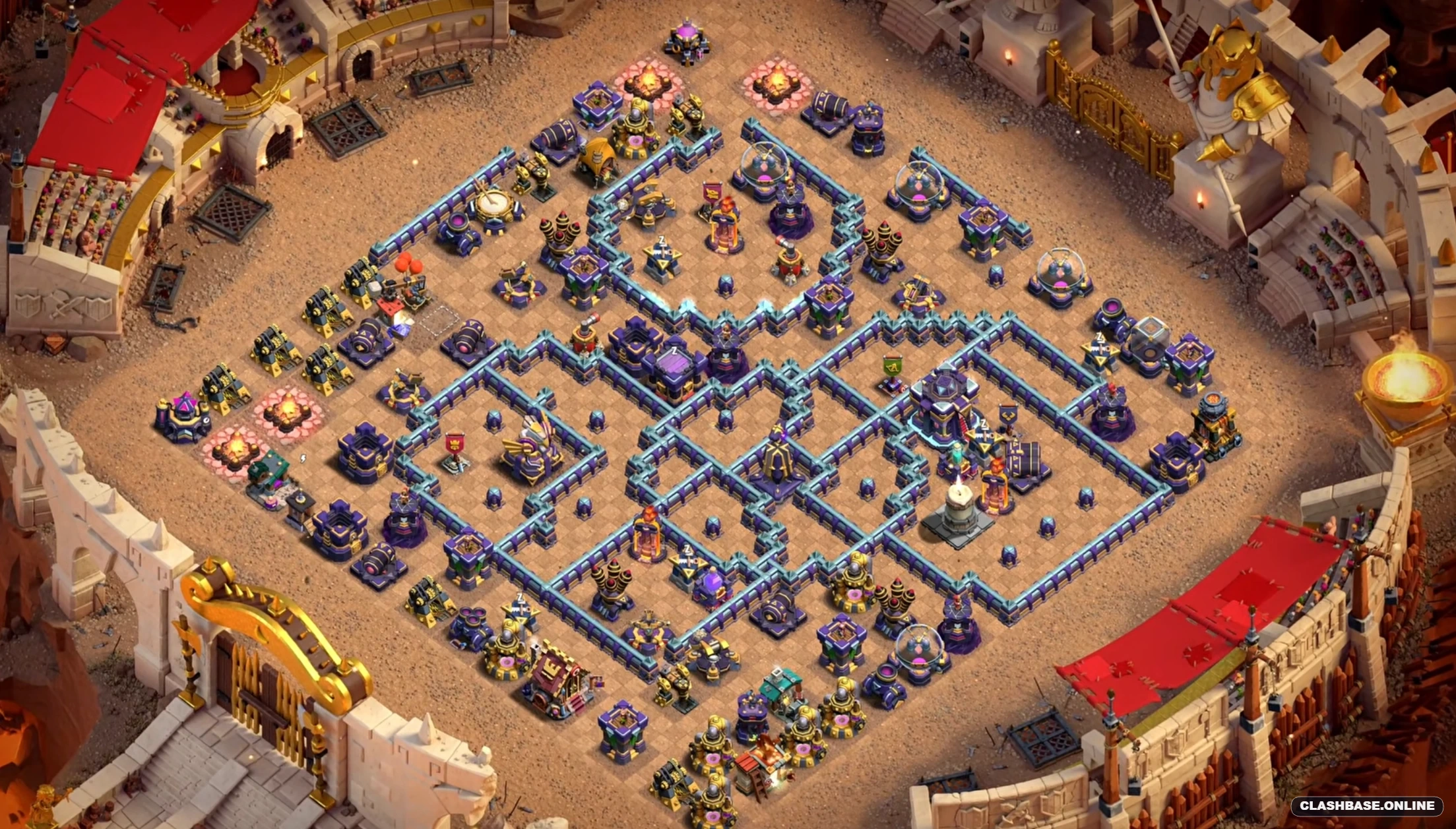
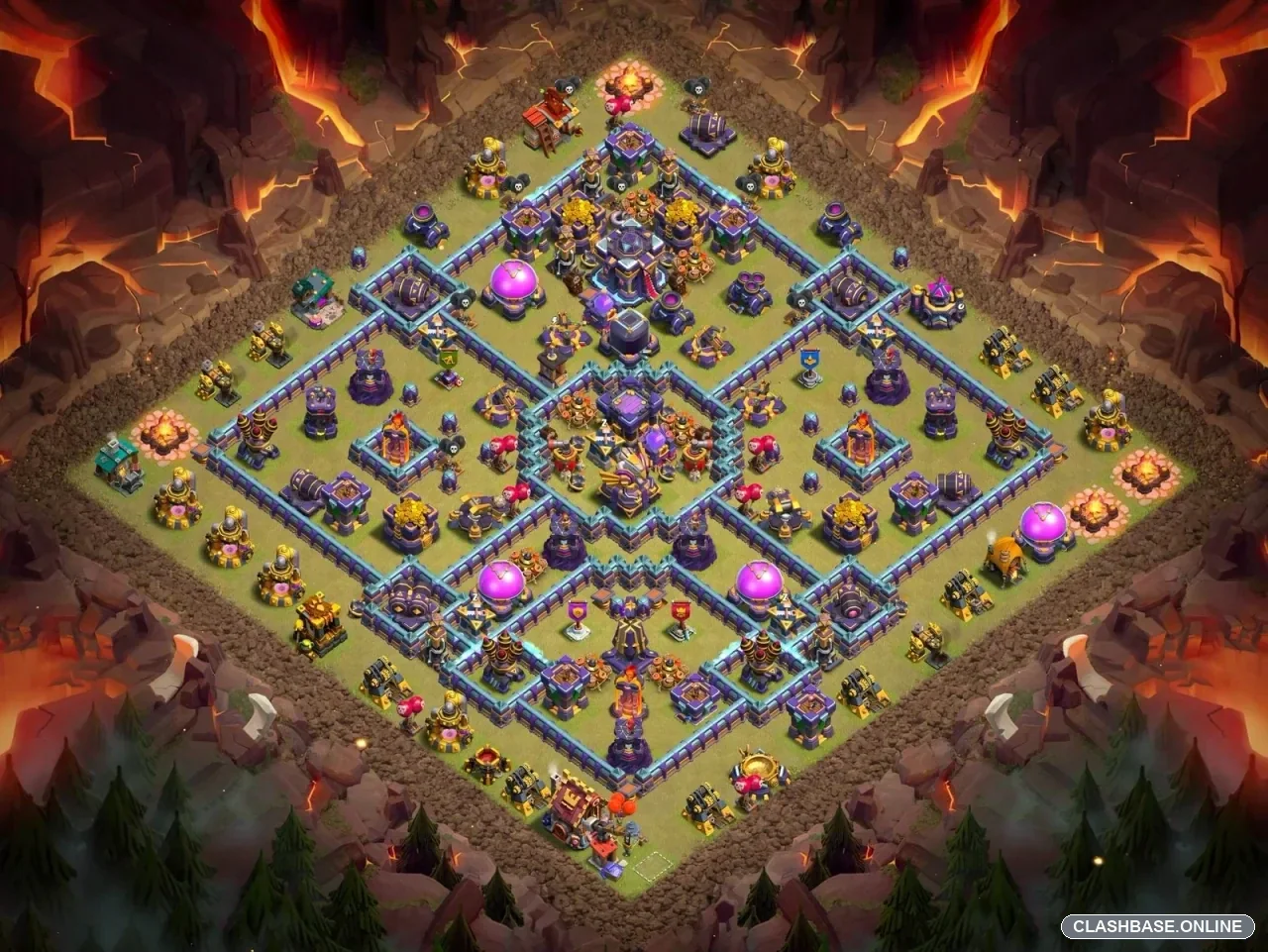
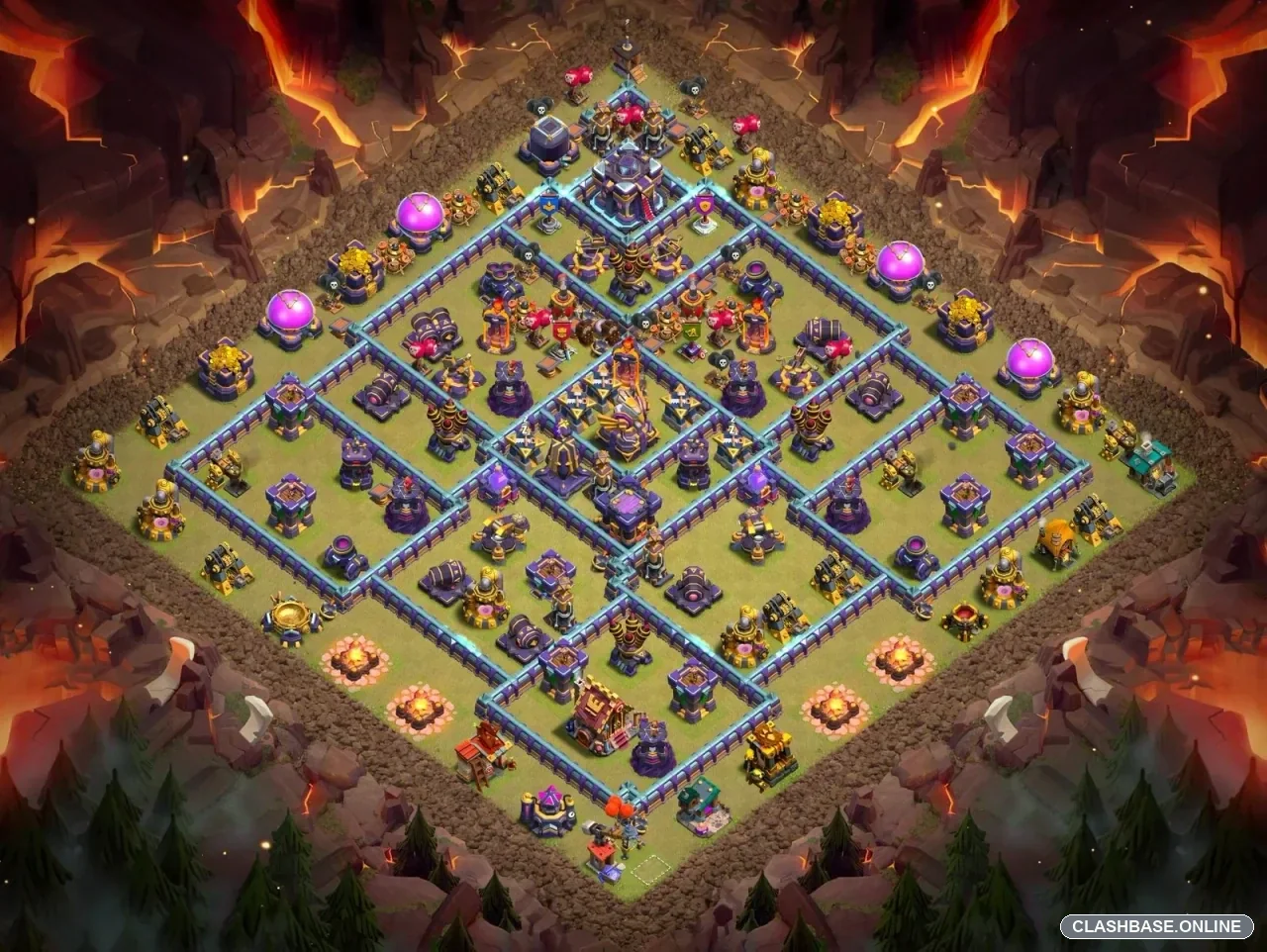
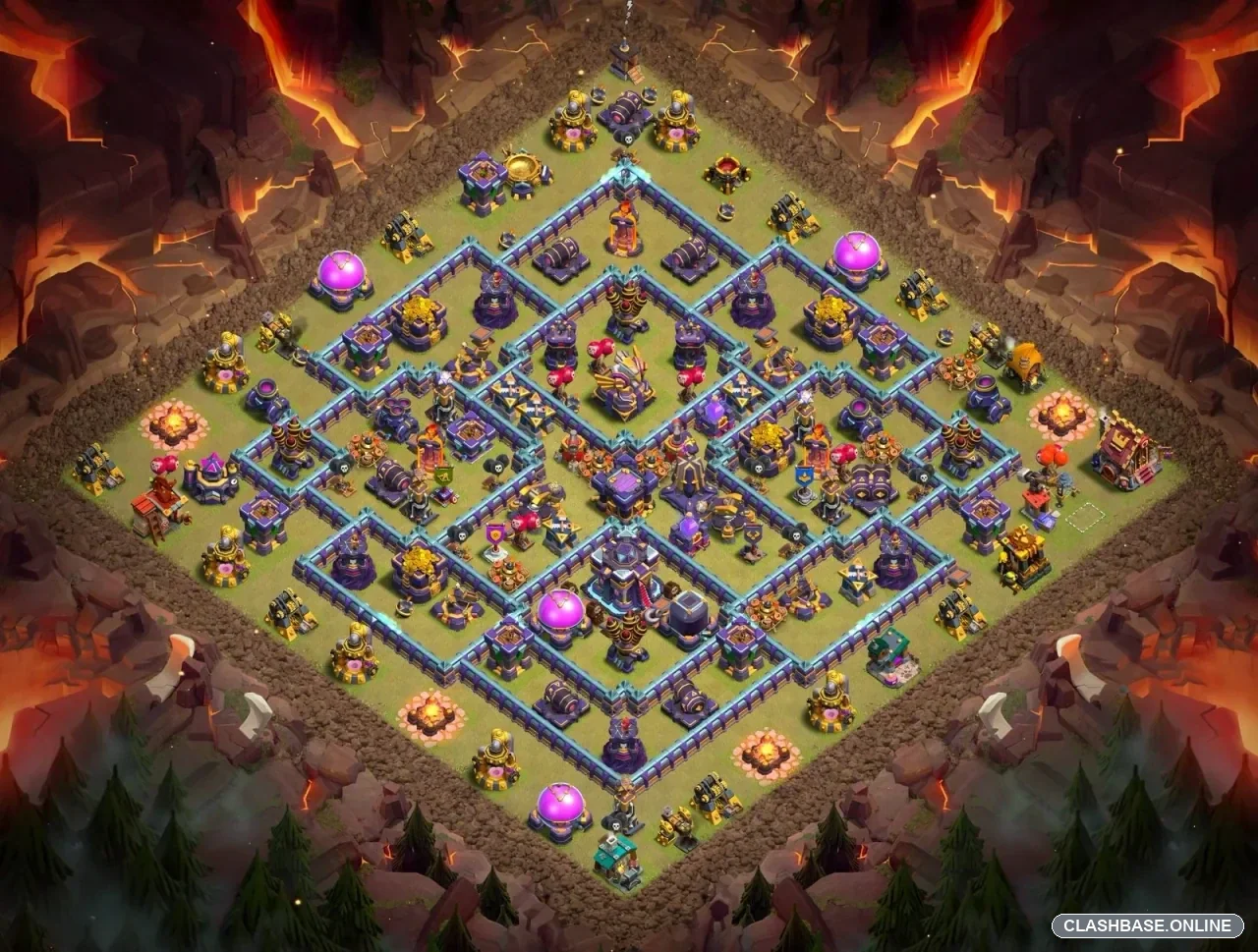
TH15 Clan War Base #32: Offset-Ring Layout with a Lower-Left Entry
Town Hall 15 Clan War Layout #32 is built around an offset-ring structure that separates the Town Hall from several of the defenses an attacker would normally prefer to remove in the same push. The Town Hall sits slightly toward the left side of the village rather than directly in the middle, while the rest of the core is divided into several interconnected compartments.
That small shift changes the way I would scout this base.
There is a reasonably clear route toward the Town Hall, so the layout is not trying to pretend the objective can never be reached. Instead, it appears to make a different trade: the safer the Town Hall route becomes, the more awkward the remaining three-star path may be. In Clan War, that is often more useful than simply burying everything in one giant compartment.
A patient attacker may secure the objective. Finishing the rest of the village cleanly is where the harder decisions begin.
The offset Town Hall creates two different attacks
The Town Hall is positioned away from some of the other high-value defensive targets. That can be attractive to an attacker because it creates the possibility of isolating the objective with heroes or one part of the main army.
There is a catch.
If too many troops, spells, or hero abilities are committed to securing the Town Hall, the rest of the base can remain surprisingly healthy. A player may reach two stars without much drama and still discover that the surviving army is poorly positioned for the opposite side.
That is why I would view Layout #32 more as an anti-three-star base than as a layout trying to completely deny the Town Hall.
The objective may fall. The question is what it costs.
Why the lower-left edge looks tempting
The lower-left edge, somewhere around seven or eight o’clock, looks like the first side I would inspect.
There are enough outside buildings there to establish a funnel without immediately deploying the entire army. More importantly, that angle appears to offer a fairly readable route toward the left side of the core, where the Town Hall is offset.
A Queen Charge could begin there. A small funnel force could do the same job before Root Riders or another heavy ground army is committed.
Still, there is a difference between opening the side and opening too much of the side.
A very wide funnel may create several legitimate paths into the base. Some troops could move toward the Town Hall while others begin travelling around the ring. At first this might look like great value—percentage rises quickly and several sections are falling simultaneously.
Later, the attack can become uncomfortable.
The Town Hall group reaches the objective while supporting troops are still working in another compartment. A Rage, Heal, Freeze, Overgrowth, or similar spell that would have supported one concentrated army is now useful to only part of it.
That is exactly the sort of small inefficiency that can matter in a war attack.
Cutting the ring early is the biggest weakness
The most obvious weakness is a controlled entry that cuts through the ring beside the offset Town Hall before the main army begins circling.
If the attacker removes the correct buildings from the lower-left and establishes one narrow lane, the Town Hall route becomes much easier to control. Instead of allowing the base to choose troop direction, the attacker can decide in advance which troops enter the core and which remain outside for cleanup.
That would reduce much of the layout’s pathing value.
Root Riders or another heavy ground smash army could be dangerous in this situation. The walls themselves are unlikely to stop that sort of army for long. The real defensive job is to make the front line move away from the heroes and supporting damage.
If everything stays together, the attacker gets strong spell efficiency.
If the troops separate, the base buys time.
It is a simple idea, but it is often effective.
Queen Charge Hybrid could create the cleanest route
Queen Charge Hybrid looks like one of the more controlled counters.
Starting the Queen from the lower-left could allow the attacker to remove one defensive section and shape the corner before Miners and Hog Riders enter. More importantly, she can clear structures that might otherwise pull the Hybrid army around the outside of the ring.
If the Queen takes the intended route, the main phase could become much easier to predict.
Of course, Queen pathing never deserves complete trust.
One outside building can keep her walking longer than expected. A slow wall opening can cost several seconds. A high-hitpoint target can create the same delay.
None of those problems automatically destroys the attack, but they change the back end. The Town Hall may still be secured while the remaining army reaches the far side later than planned.
That is where time pressure starts doing defensive work.
A base does not always have to wipe out the attacking army to deny three stars. Sometimes it simply has to make the last group of troops travel too far.
Heavy ground armies need a clean exit, not just a clean entry
A Root Rider or other ground smash can probably make good progress through the inner compartments.
What I would watch closely is where that army exits after the Town Hall phase.
A strong entry can look almost perfect. Tanks stay healthy, heroes remain alive, and the Town Hall goes down on schedule. Then the surviving troops leave the core in two different directions.
One group heads toward an easier outside compartment. Another pushes into the stronger back end.
Suddenly the army is no longer functioning as one unit.
This is where the offset ring becomes useful. The design does not necessarily stop the initial push. It tries to make the transition after that push less comfortable.
A war attacker has to think beyond “How do I reach the Town Hall?” The more useful question here is “Where will my army be thirty seconds after I reach it?”
Air attacks have multiple options, but the threats are split
The Air Defenses appear spread around the inner compartments rather than packed into one easy group. Inferno Towers are separated as well, which should reduce the value of one simple spell plan.
Dragons could still be used from the lower-left after a proper funnel.
I would expect a tighter deployment to work better than a full-width line. If several Dragons begin following outside buildings, the strongest group may arrive near the Town Hall with less damage than intended.
That does not always look serious until the central fight begins.
LavaLoon offers more control over individual targets, but it also requires a clear second phase. Removing one Air Defense is not enough. The attacker still needs a plan for the Town Hall compartment, surviving Inferno pressure, and the final defensive section.
A clean first minute may only solve half the village.
Why this feels like a real Clan War layout
The strongest war feature in Layout #32 is the separation between objective security and the three-star route.
A safer plan can focus heavily on the Town Hall and protect the two-star result. The downside is that the attacker may spend too much of the army getting there.
A more aggressive plan can preserve spells and troops for the back end, but it accepts greater risk around the objective.
Neither approach is completely free.
That is much more interesting than a base that relies on one obvious gimmick.
The lower-left edge remains the main vulnerability I would test first. A disciplined attacker who cuts the ring beside the Town Hall and keeps the main force compact could make the base significantly easier to navigate.
But a rushed attacker can use the same entry and get a completely different result.
Troops circle. Heroes separate. Spells lose value. The Town Hall falls, yet the last third of the village becomes a race against the clock.