 CLASHBASE.ONLINEClan War
About this Town Hall 15 base
Copy this base to Clash of Clans
Tap the button below. Clash of Clans will open so you can place this layout in an available base slot.
Copy base to the gameClash of Clans must be installed on this device.Rate this layout
Share a useful, honest experience. One review is stored per visitor for this item.
TH15 Clan War Base #4: Offset-Ring Defense Built for Three-Star Resistance
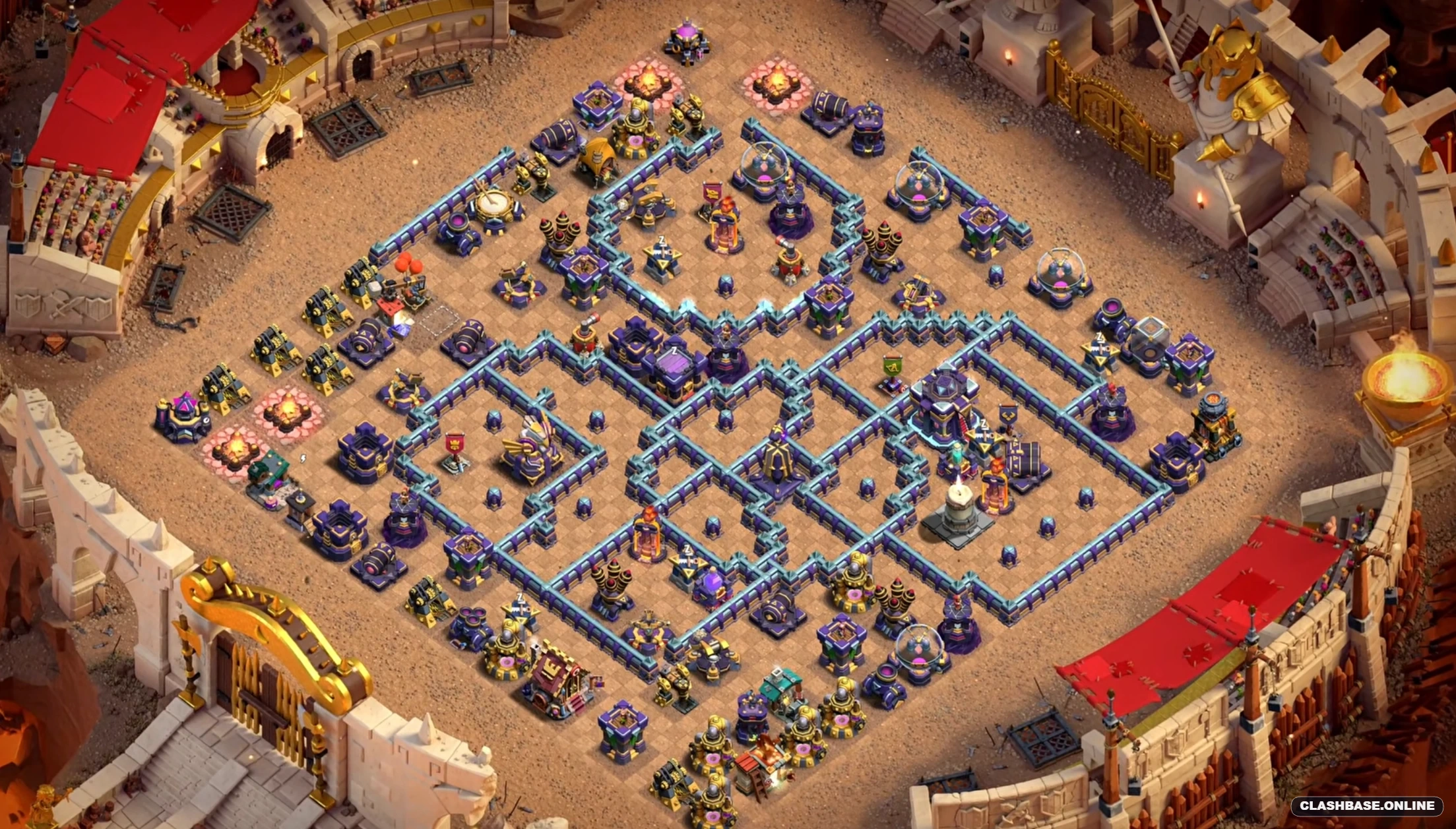
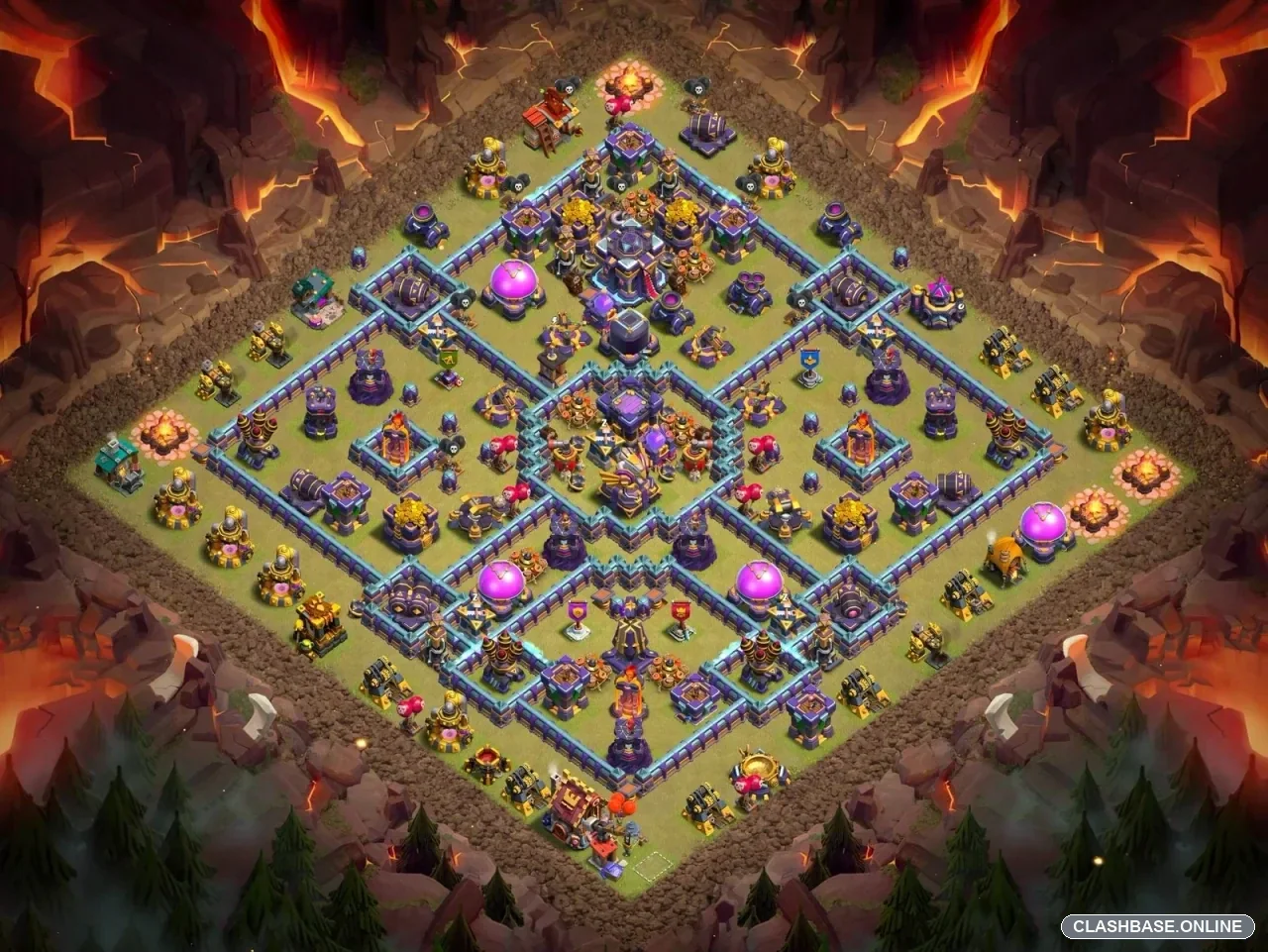
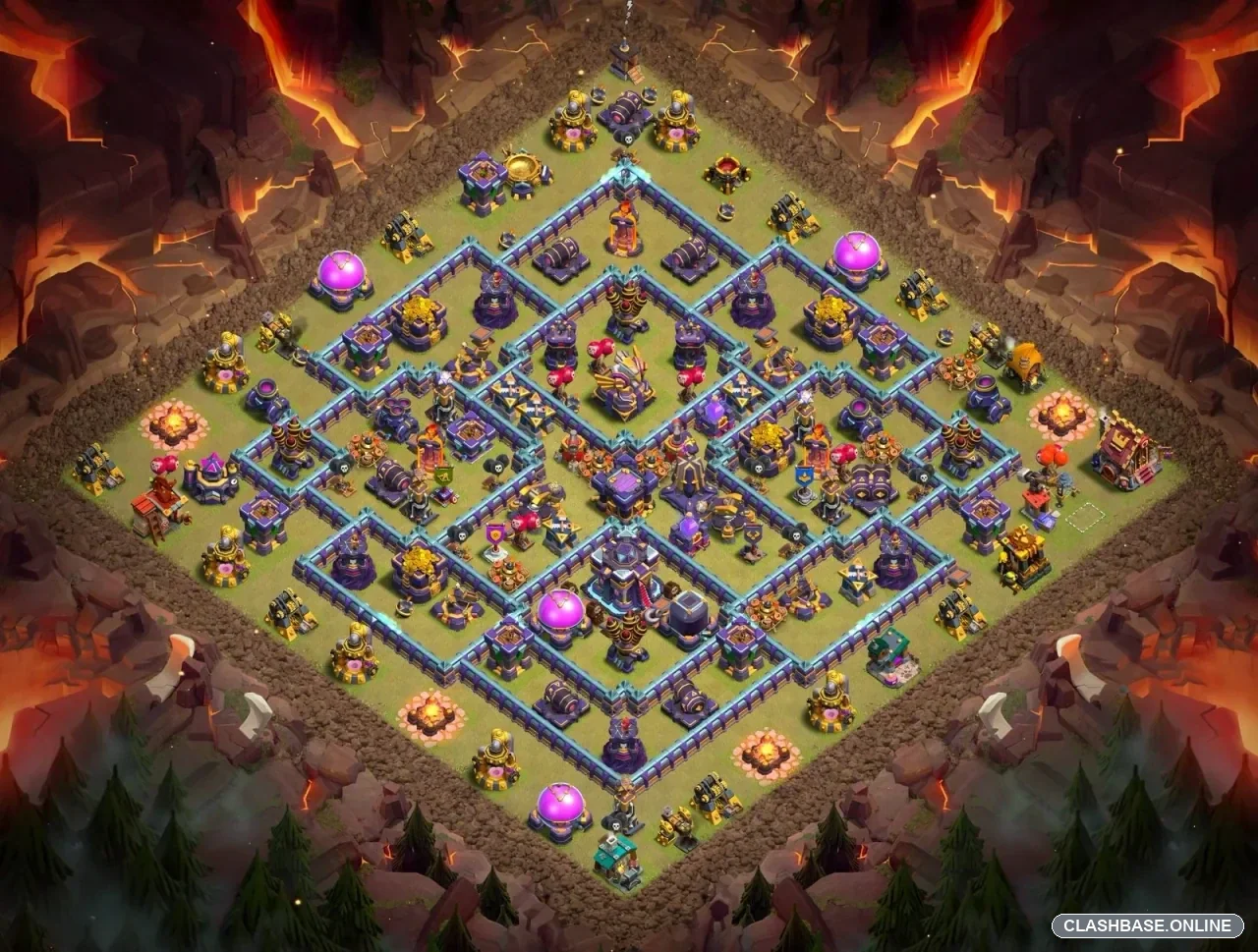
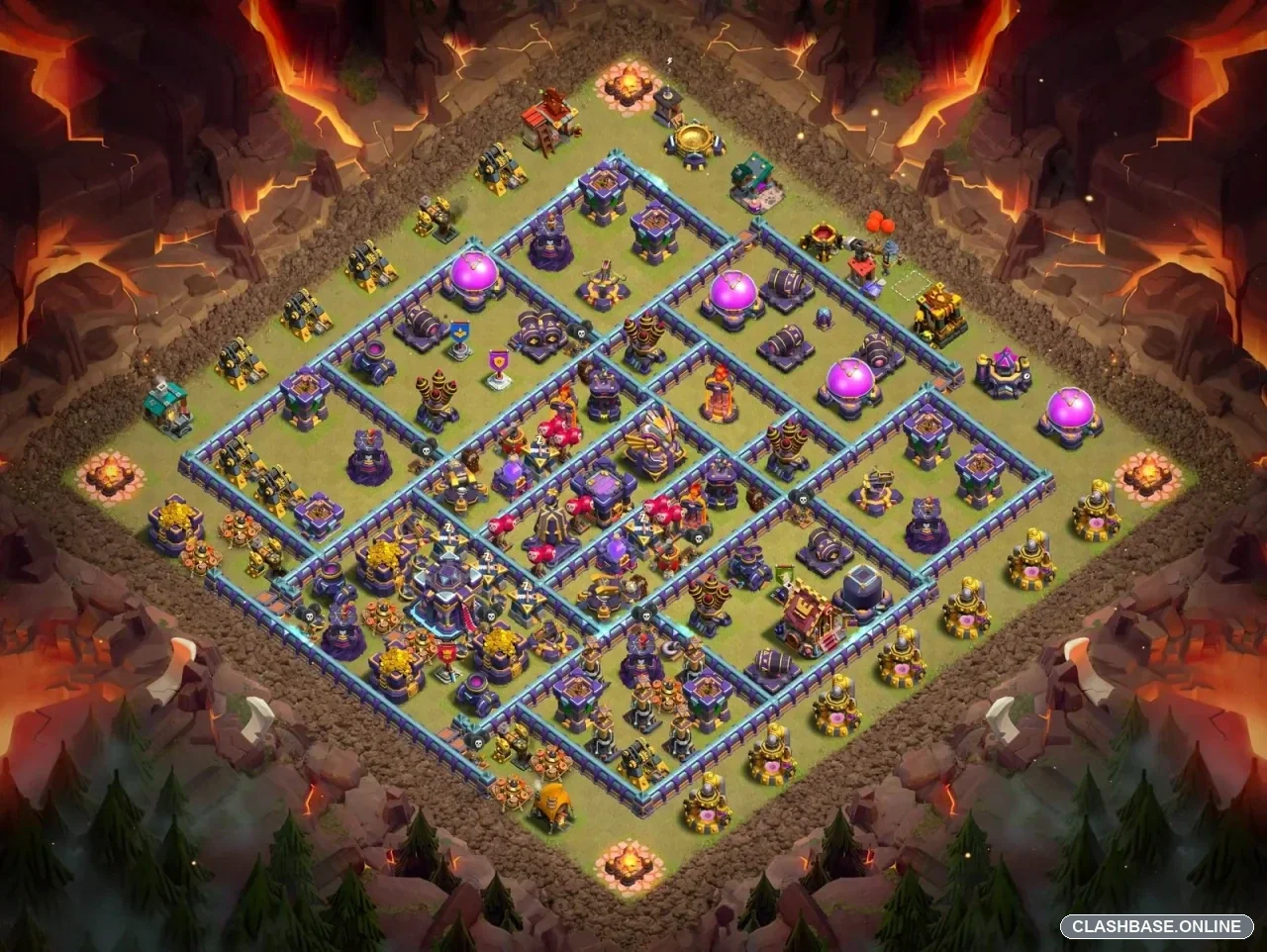
TH15 Clan War Layout #4 uses an offset-ring structure with the Town Hall shifted toward the left side of the defensive network. After studying the actual base, its purpose seems fairly clear: this layout is not trying to place every powerful defense around one central point. Instead, it spreads pressure across several compartments so the village can continue defending even after one important section falls.
That is a useful Clan War philosophy. The Town Hall may eventually be lost, but a successful defense can still come from protecting the third star.
The Town Hall is separated from the rest of the value
The Town Hall sits toward the lower-left side of the main defensive area, while the Eagle Artillery and several other important defenses remain deeper toward the center.
This separation is intentional.
If the Town Hall section is removed, the attacking force still has to deal with a substantial amount of defensive power elsewhere. The base therefore avoids the common problem of placing every valuable target in the same compartment and allowing one concentrated push to remove everything at once.
From the defender's perspective, Layout #4 is essentially trading perfect Town Hall protection for a more difficult overall three-star path.
The offset ring is designed to break troop concentration
The wall structure creates a number of long, connected lanes around the central compartments.
That shape appears designed to make attacking troops spread instead of staying together. One group may move around the outside of the ring while another becomes attracted to targets deeper inside.
This is particularly useful against heavy ground armies.
Root Riders may not care much about the walls themselves, but heroes and supporting troops still depend on predictable movement. If the front line drifts away from the rest of the army, defensive buildings get more time to work while Rage, Heal, Freeze, or Overgrowth spells become less efficient.
The ring is therefore functioning as a pathing tool, not simply a barrier.
Infernos and Air Defenses provide separate pressure zones
The Inferno Towers are positioned apart from one another rather than forming one convenient spell target. Air Defenses are also distributed across several inner lanes.
That defensive spacing matters because it limits how much value can be removed at once.
Dragons or LavaLoon may survive one defensive section only to enter another active air-pressure zone. Ground armies face something similar: controlling one Inferno does not automatically neutralize the next compartment.
The base is trying to maintain pressure throughout the raid rather than relying on one short burst of damage.
The lower-left side is the main structural concern
The lower-left edge appears to be the most vulnerable portion of the layout.
For the defense, this side needs to consume something valuable before the ring is compromised—time, hero health, troop strength, or spells. If the area collapses too cheaply, the Town Hall side of the ring becomes easier to control.
That connects directly to Layout #4's main weakness. The defensive concept loses value if the ring beside the offset objective is opened early enough that troops no longer have reasons to circle.
Why Layout #4 fits Clan War
The strongest feature of TH15 Clan War Base #4 is that the safest route to the Town Hall does not necessarily preserve enough attacking power for three stars.
The offset objective, separated defensive anchors, ring-style pathing, and spread-out remaining buildings all work toward the same goal: make the raid increasingly awkward after the first major objective is completed.
Overall, Layout #4 is an anti-three-star defense focused on objective separation, troop-pathing disruption, sustained defensive coverage, and late cleanup pressure. It is not pretending to be unbeatable. Its value comes from forcing an attacking army to remain organized for almost the entire raid—and punishing it when that organization begins to break down.