 CLASHBASE.ONLINEClan War
About this Town Hall 15 base
Copy this base to Clash of Clans
Tap the button below. Clash of Clans will open so you can place this layout in an available base slot.
Copy base to the gameClash of Clans must be installed on this device.Rate this layout
Share a useful, honest experience. One review is stored per visitor for this item.
TH15 Clan War Base #20: Open Anti-Three-Star Defense with Layered Core Pressure
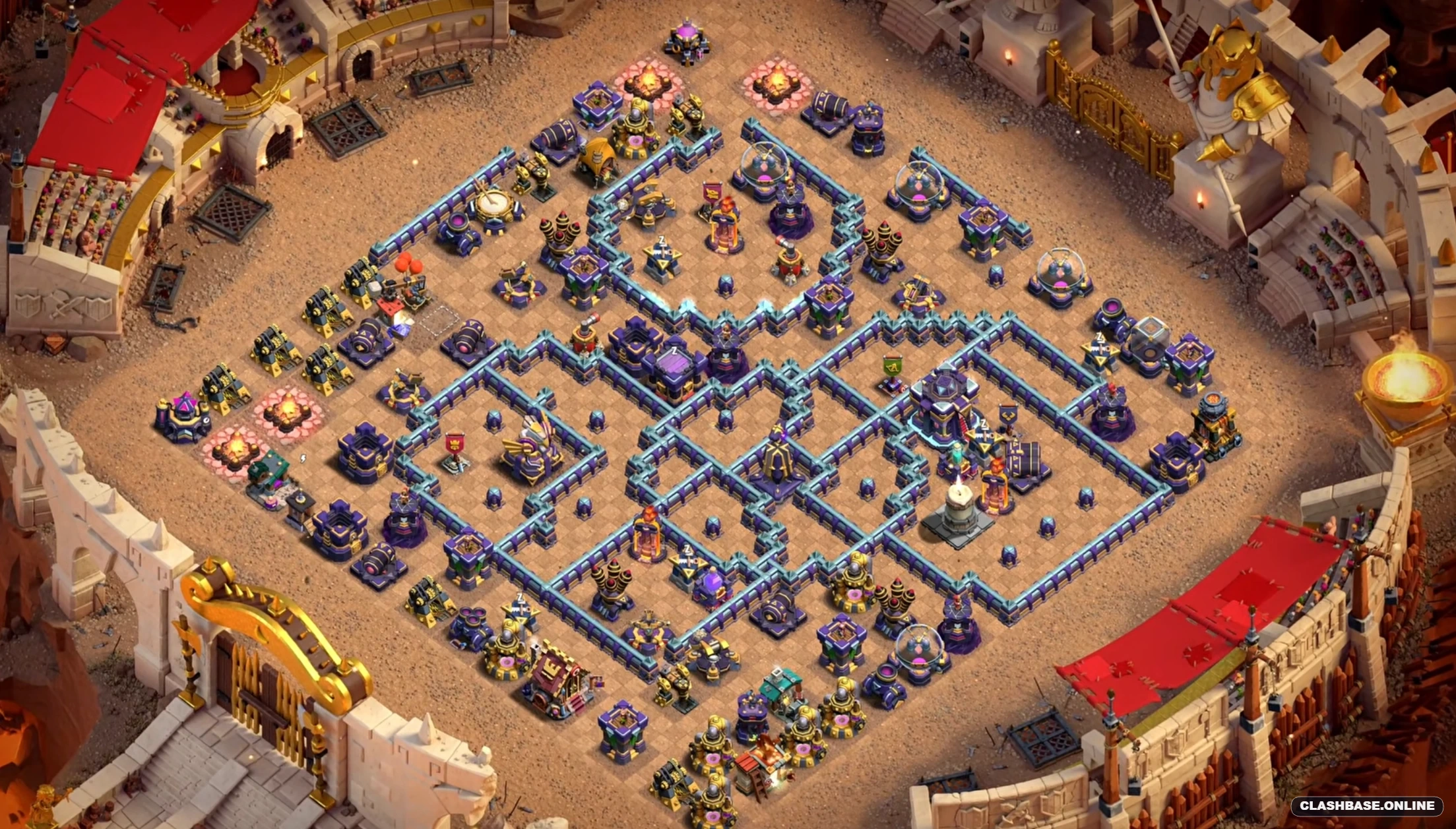
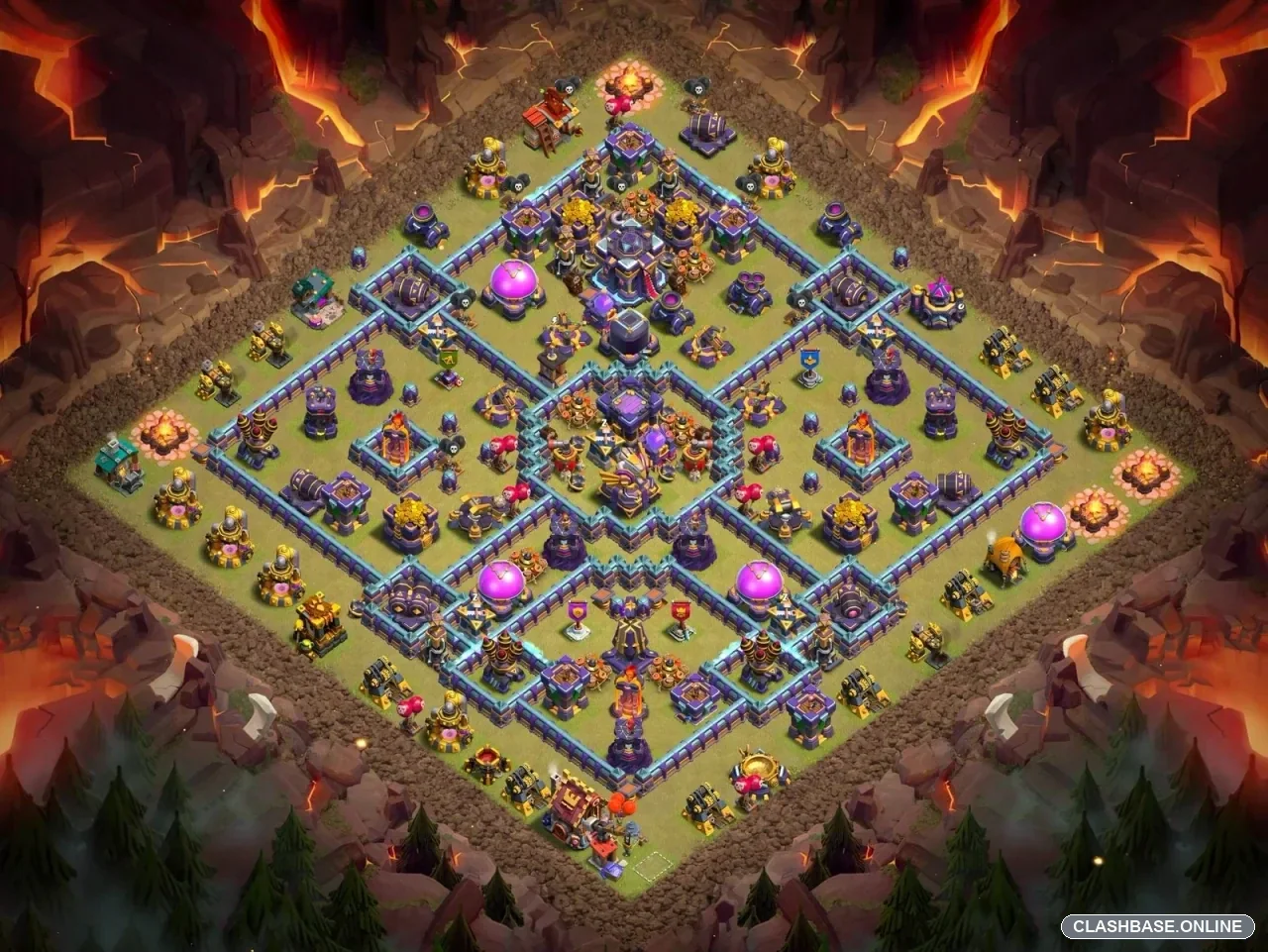
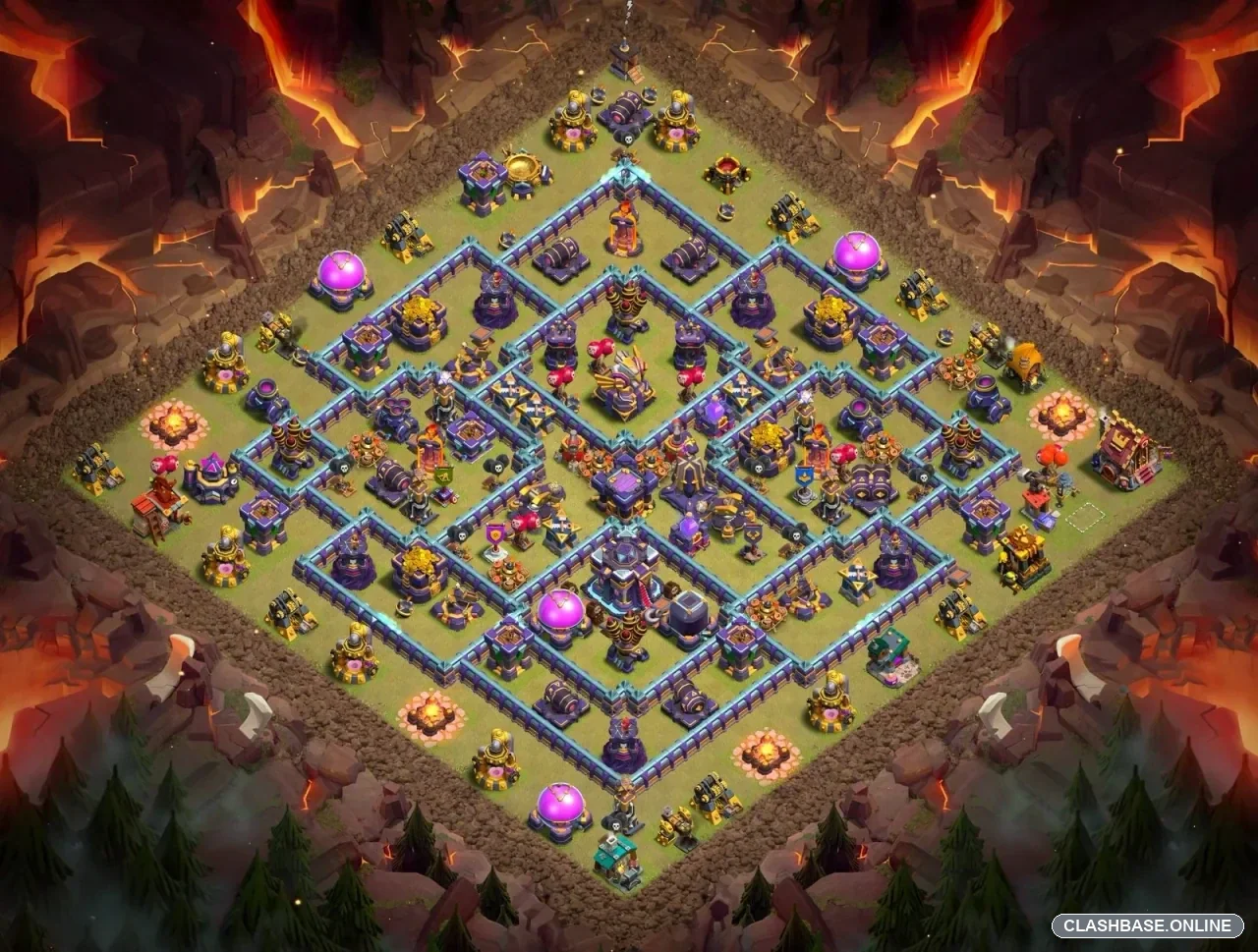
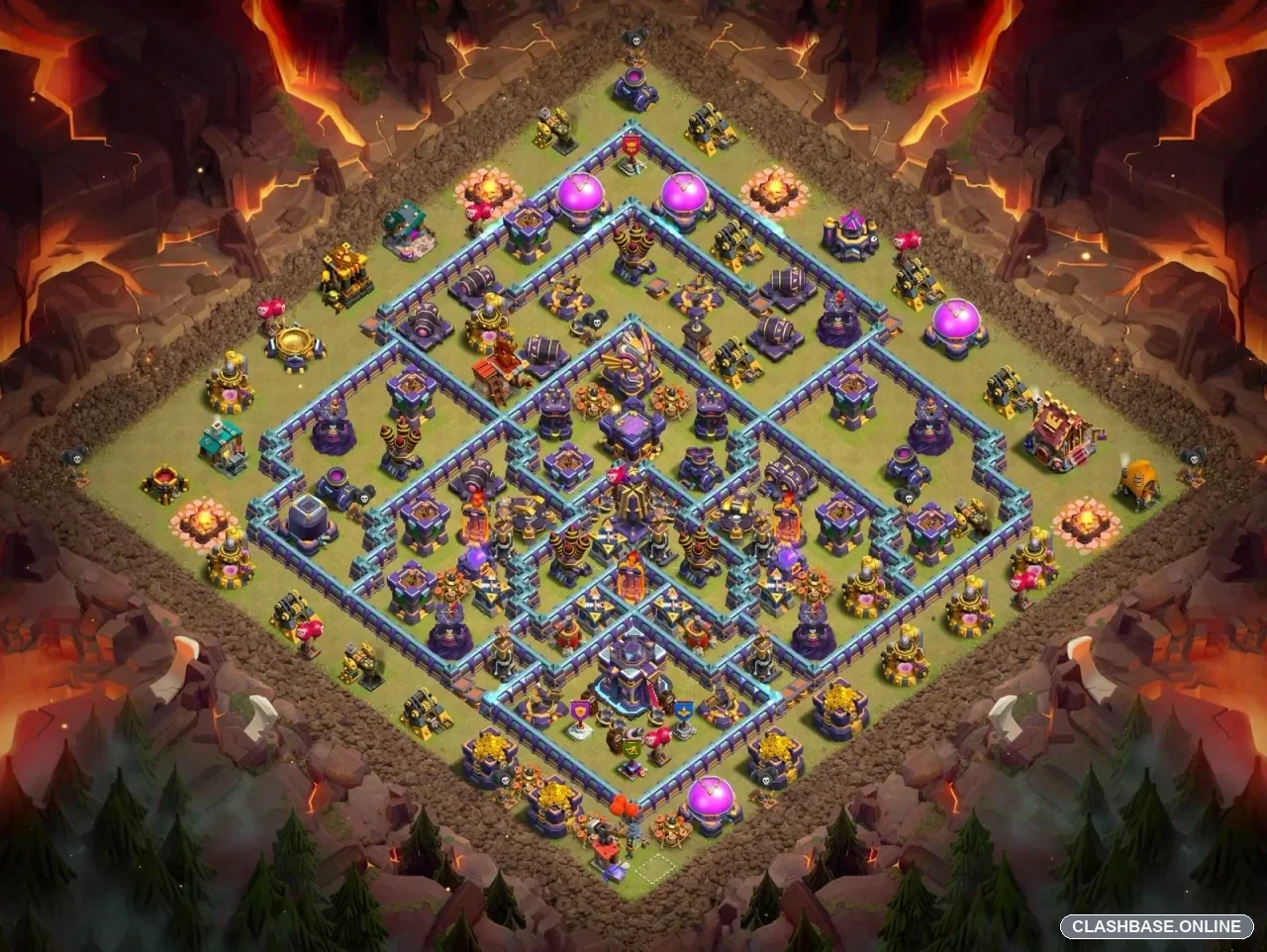
TH15 Clan War Layout #20 uses a wide anti-three-star structure where the Town Hall is separated from several of the base’s other high-value defenses. After checking the actual layout, the Town Hall appears slightly offset within the lower half of the central defensive structure rather than sitting on the exact geometric center.
That separation seems deliberate. The base is not relying on one overloaded core to do everything. Instead, it spreads defensive pressure across multiple compartments so that losing one important section does not automatically collapse the entire village.
For Clan War, that is a sensible approach. Protecting the third star can be more valuable than simply building everything around maximum Town Hall security.
The core is designed to survive in stages
The middle of Layout #20 contains several tightly connected diamond-shaped compartments. Major defenses sit in different sections rather than being stacked beside one another.
From a defensive perspective, this gives the base multiple stages of resistance.
Even if one compartment is broken, the next defensive layer remains active. Troops that survive the first section may arrive at the second with weaker heroes, reduced spell support, or a formation that is no longer compact.
That gradual loss of attacking efficiency appears to be one of the layout’s strongest ideas.
Pathing pressure is more important than the walls themselves
The wall structure forms several diagonal routes through the village.
Heavy ground armies such as Root Riders are unlikely to be stopped by walls alone, so the layout seems to use those compartments for a different purpose: forcing attacking units toward different targets.
A front group can move deeper while supporting troops become distracted by defenses sitting off to either side. Once that happens, the attack loses concentration.
For the defender, this is valuable because separated troops are much easier for Infernos, X-Bows, Scattershots, and surrounding defenses to wear down.
Defensive anchors are deliberately separated
The Inferno Towers are not placed together as one easy defensive block. Air Defenses are also distributed across different sections of the layout.
That spacing should reduce single-spell value.
A control spell affecting one strong defensive pocket is less likely to disable everything important at once. The next section can continue applying pressure while the attacker moves through the base.
The same principle helps against Dragons and LavaLoon. Air troops that spread across the wide shape may remain under fire from separate defensive zones instead of overwhelming one concentrated area.
The outer structure creates useful time pressure
Another thing I noticed is how widely the exterior buildings are distributed.
Those structures may appear less threatening than the core defenses, but defensively they serve another purpose: forcing longer travel during cleanup.
That matters in Clan War.
A base can lose most of its defenses and still protect the third star if surviving troops finish on one side while a handful of buildings remain far away on the opposite edge.
The broad diamond shape makes that kind of late cleanup problem more plausible.
The main structural risk
The main weakness of Layout #20 is that its Town Hall is separated enough from the rest of the defensive value that a very efficient early objective takedown could leave too much attacking strength available afterward.
From the defender’s point of view, this means the compartments surrounding the objective need to consume something valuable—time, hero abilities, troops, or spells.
If the Town Hall falls too cheaply, the anti-three-star concept becomes noticeably weaker.