 CLASHBASE.ONLINEClan War
About this Town Hall 15 base
Copy this base to Clash of Clans
Tap the button below. Clash of Clans will open so you can place this layout in an available base slot.
Copy base to the gameClash of Clans must be installed on this device.Rate this layout
Share a useful, honest experience. One review is stored per visitor for this item.
TH15 Clan War Base #34: Offset-Ring Design with a Lower-Left Entry
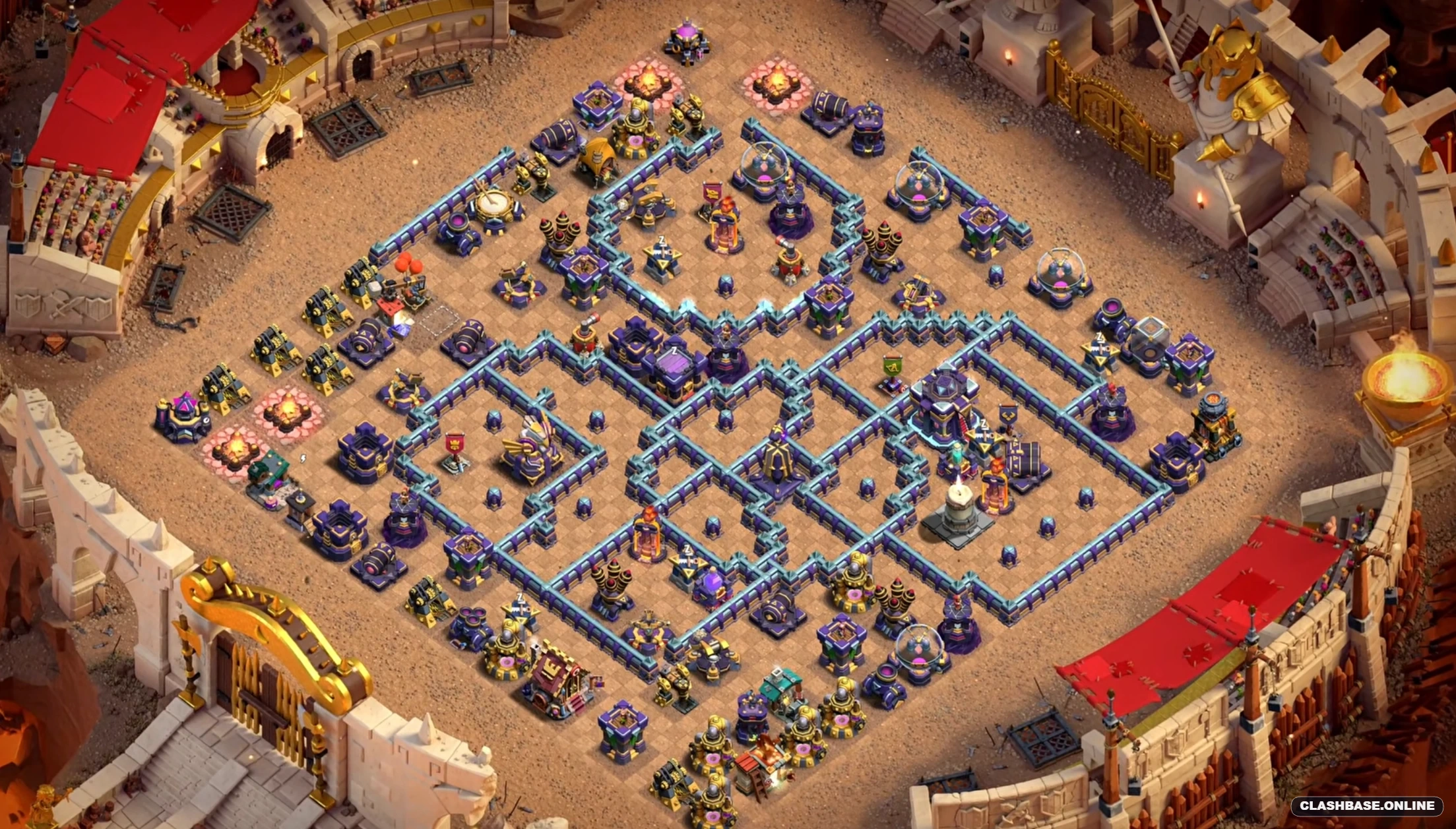
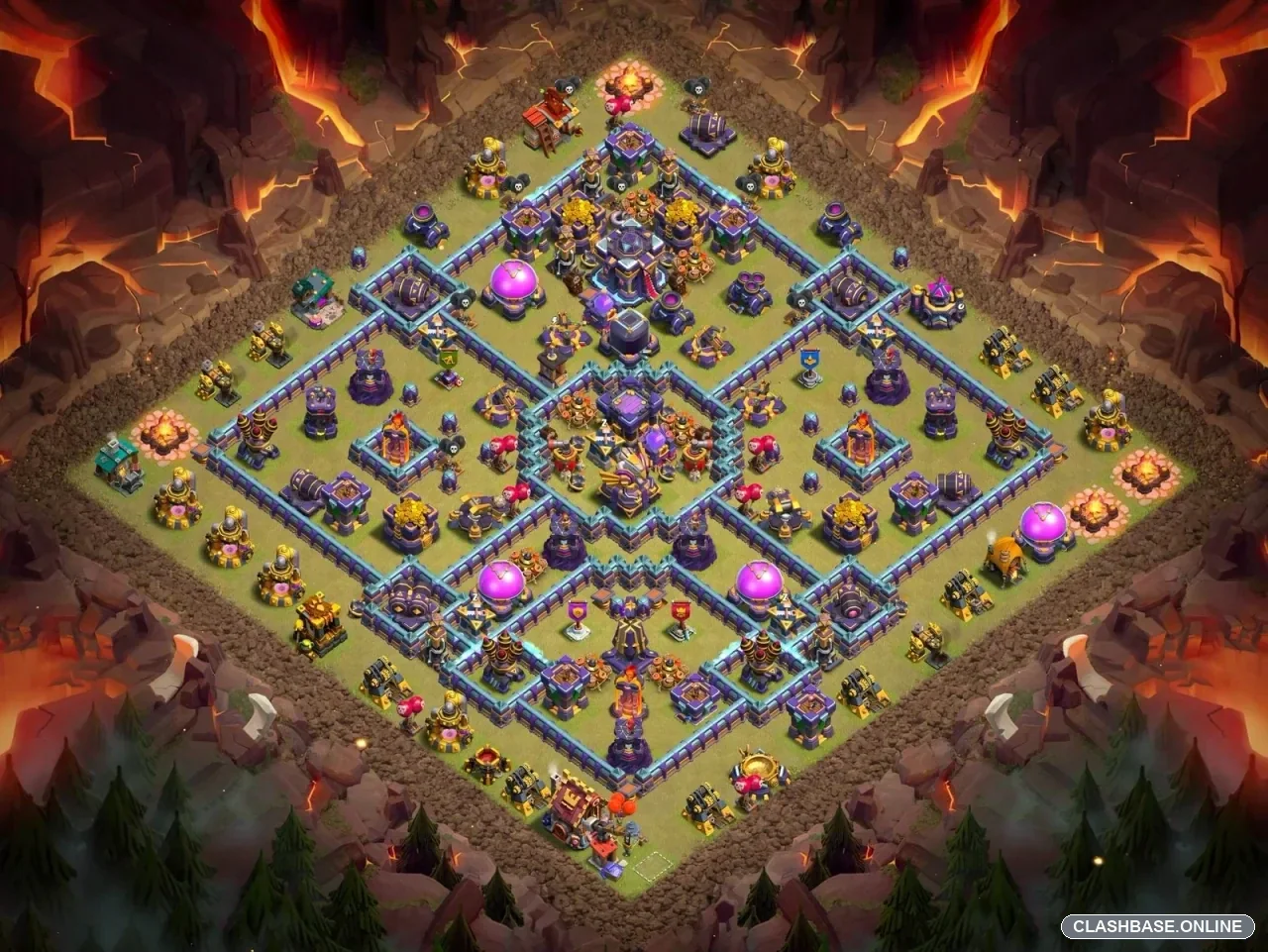
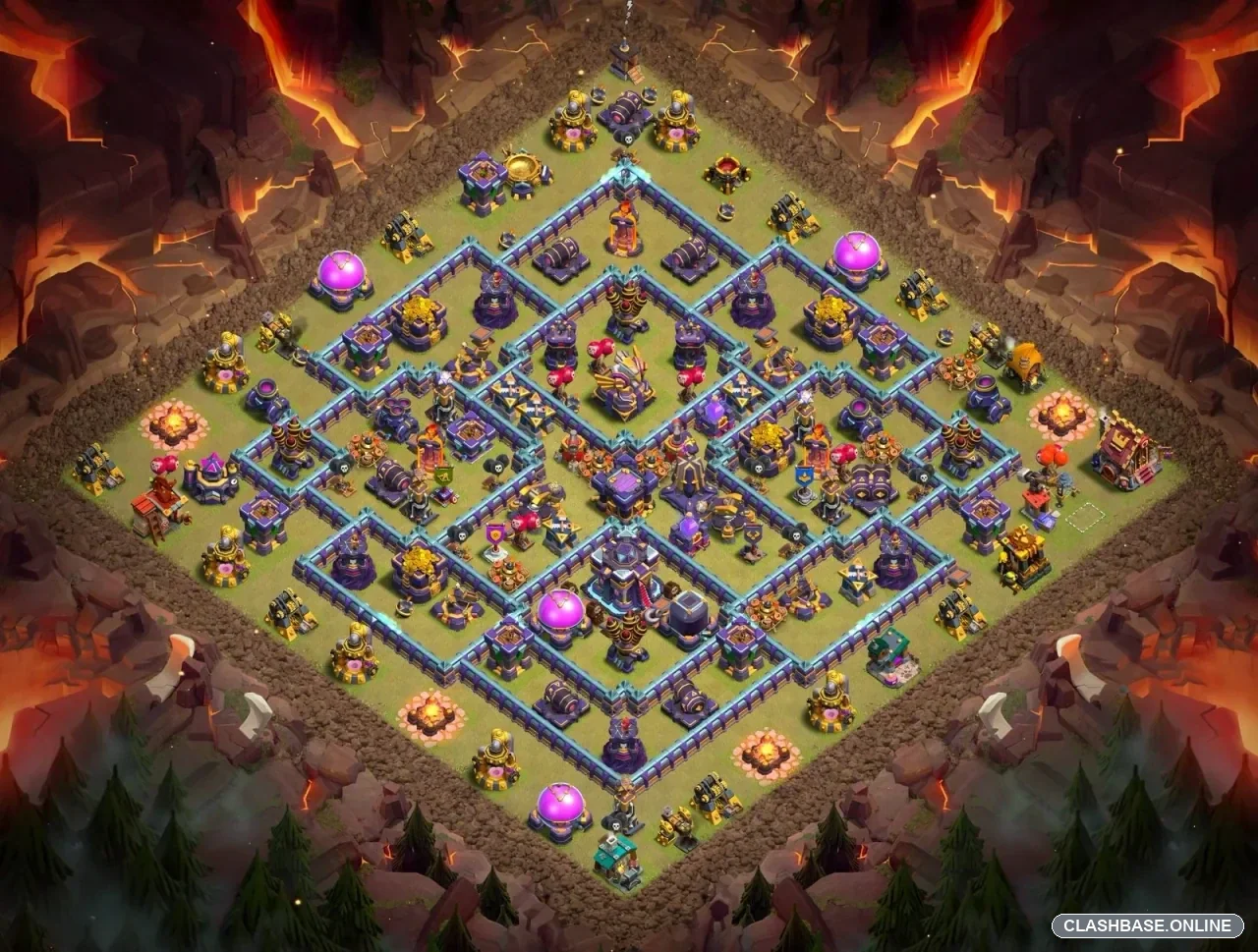
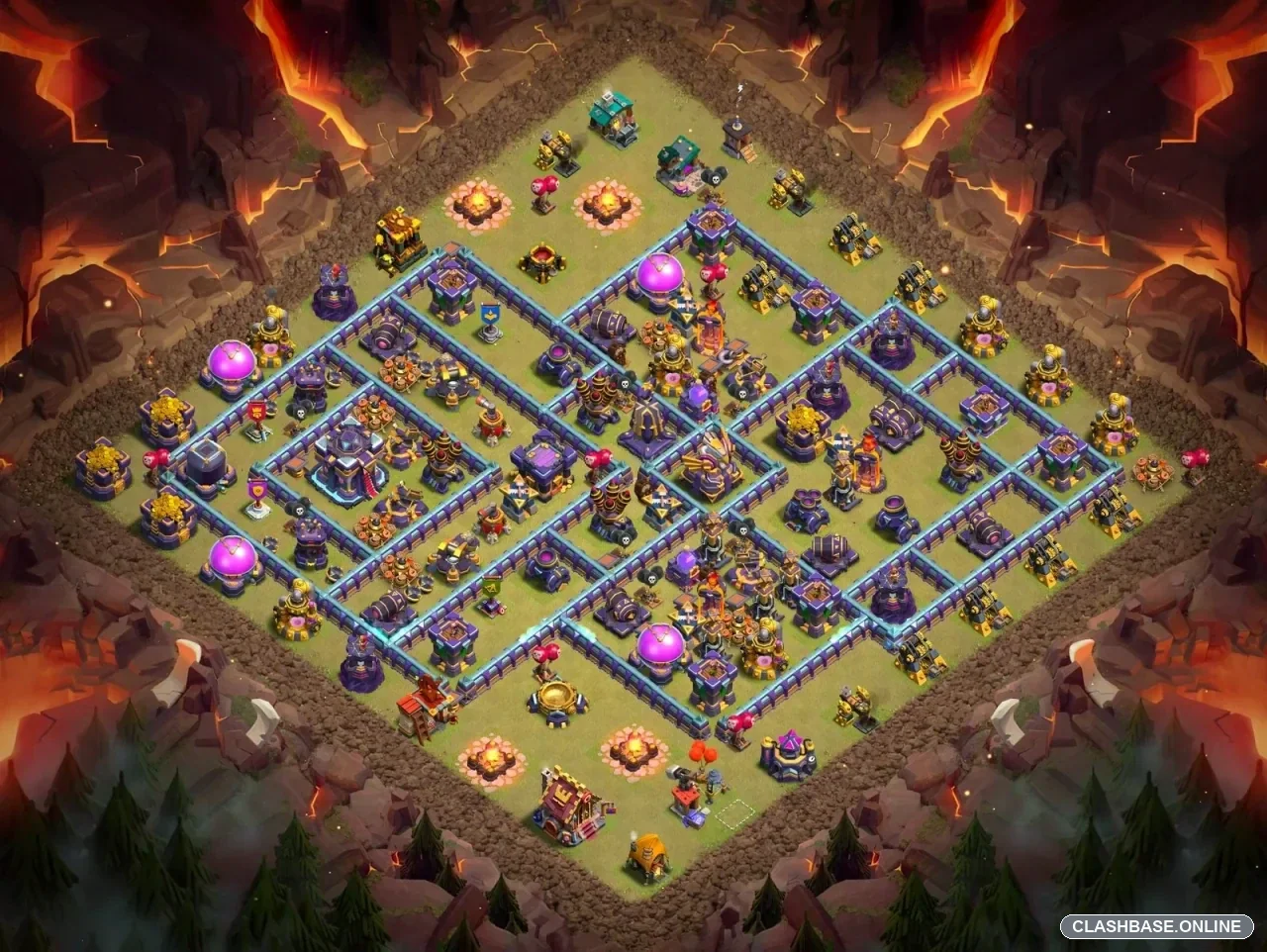
Town Hall 15 Clan War Layout #34 is built around an offset-ring structure that separates the Town Hall from several of the defenses an attacker would normally like to remove during the same push. The Town Hall sits toward the left side of the village rather than exactly in the middle, while the central defensive section stretches across several connected compartments.
That placement changes the attack quite a bit.
At first glance, the layout looks reasonably open. There are several outside buildings that can be collected for percentage, and the Town Hall does not appear impossibly deep. Still, a direct route to the objective is not necessarily the route that gives the attacker the best chance of finishing the remaining village.
For Clan War defense, that tradeoff is probably the most interesting part of the design.
The Town Hall is reachable, but the attack has to continue afterward
Placing the Town Hall slightly to the left creates what looks like a relatively understandable objective route. An attacker may decide to secure it early and then use the surviving army to work through the rest of the base.
The problem is what remains after that first phase.
Several important defenses are positioned away from the safest Town Hall line. A player who spends too many spells, hero abilities, or high-value troops reaching the objective could leave a surprisingly difficult back end.
This is where the anti-three-star idea begins to make sense.
A two-star attack may be reasonably achievable with careful planning. Getting all three stars is likely to require something more precise because the attacker needs to preserve enough force to move from the offset Town Hall into the remaining defensive ring.
Why the lower-left edge deserves attention
The lower-left side, roughly around seven or eight o’clock, looks like the easiest place to establish a funnel.
There are enough exterior buildings there to shape the attack before the main army enters, and the angle gives a fairly natural route toward the Town Hall side of the base.
I would still be cautious about making that funnel too broad.
A wide entry can expose several compartments at once. Root Riders or another heavy ground force may begin moving toward the Town Hall while the Queen and supporting troops continue around the outer ring.
For a short while, that split can actually look productive.
Percentage rises quickly. Multiple defenses are being removed. The attack appears healthy.
Then the main force reaches the core and discovers that part of its support is fighting somewhere else.
That is where spell efficiency drops. Rage, Heal, Freeze, Overgrowth, or another control spell becomes much less valuable when the army is split across two compartments.
Cutting the ring early is the main weakness
The clearest weakness in Layout #34 is a controlled attack that breaks the ring beside the offset Town Hall before the main army begins circling.
If the attacker clears the correct lower-left buildings and establishes one clean lane toward the objective, much of the pathing uncertainty can disappear.
Root Riders or another heavy ground smash army would probably be one of the first strategies worth testing from this angle. They can handle walls reasonably well, so simply surrounding the objective with compartments is unlikely to stop them.
The more important defensive question is whether those compartments can pull the army apart.
A compact smash is dangerous because heroes, tanks, healers, and supporting troops can share the same spell coverage. A scattered smash is far easier for the layout to slow down.
The difference may come down to only a few buildings in the funnel.
Queen Charge Hybrid could give the attacker more control
Queen Charge Hybrid also looks like a sensible counter.
Starting the Queen from the lower-left could allow the attacker to remove one defensive pocket before Miners and Hog Riders are committed. More importantly, she could clear buildings that might otherwise pull the main army around the ring instead of toward the Town Hall.
If that part works, the Hybrid phase gets a much cleaner route.
The risk is time.
A Queen that walks farther outside than planned can add several seconds to the setup. One stubborn building can do the same. That delay may not stop the Town Hall from falling, but it can make the final compartments surprisingly difficult to clean.
In war, that can be enough.
A base does not always defend by wiping out the attacking army. Sometimes it protects the third star simply by forcing troops to finish in the wrong place.
Air attacks have several routes, but no single easy solution
The Air Defenses appear spread across different entry lanes rather than grouped in one tidy section. The Inferno Towers also function more like separate inner anchors than one compact pair.
That means an air attacker has to choose which threat deserves attention first.
Dragons could potentially work from the lower-left after a careful funnel. I would expect a tighter deployment to be more reliable than spreading them across the entire edge. If several Dragons begin following perimeter buildings, the strongest group may reach the Town Hall with less damage than expected.
LavaLoon offers more control over defensive targets, although the attack still needs a second-phase plan.
Destroying one Air Defense does not automatically solve the whole layout. The Balloons still have to move through the offset ring, handle the remaining Inferno pressure, and finish somewhere useful for the back-end defenses.
That transition may be harder than the opening itself.
Why Layout #34 works as a Clan War base
The strongest war feature here is the separation between a safe objective route and a clean three-star route.
An attacker can focus heavily on securing the Town Hall, but doing so may consume the exact spells and hero abilities needed for the rest of the base. A more aggressive plan can preserve strength for the back end, but it introduces more risk during the Town Hall phase.
Neither option feels completely free.
That is what makes the design more interesting than a layout that simply hides the Town Hall behind the deepest possible walls.
The lower-left route remains the main weakness I would test. A disciplined attacker who breaks the ring early and keeps the army together may expose the Town Hall faster than intended. Root Rider smash, Queen Charge Hybrid, Dragons, and LavaLoon all look like realistic counters depending on execution.