 CLASHBASE.ONLINEClan War
About this Town Hall 16 base
Copy this base to Clash of Clans
Tap the button below. Clash of Clans will open so you can place this layout in an available base slot.
Copy base to the gameClash of Clans must be installed on this device.Rate this layout
Share a useful, honest experience. One review is stored per visitor for this item.
TH16 Clan War Base #8: Asymmetric Core with a Shorter Left-Side Route
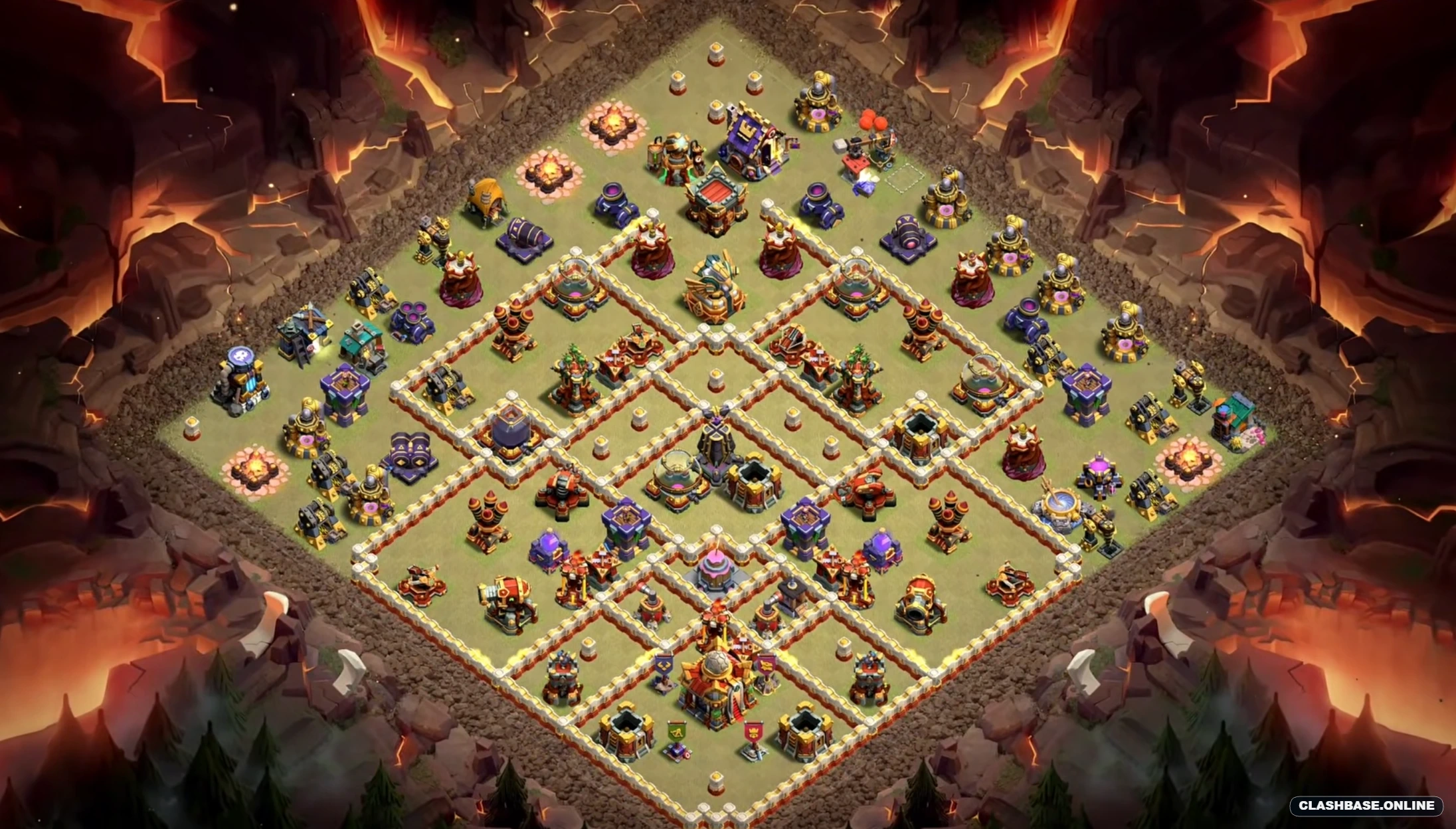
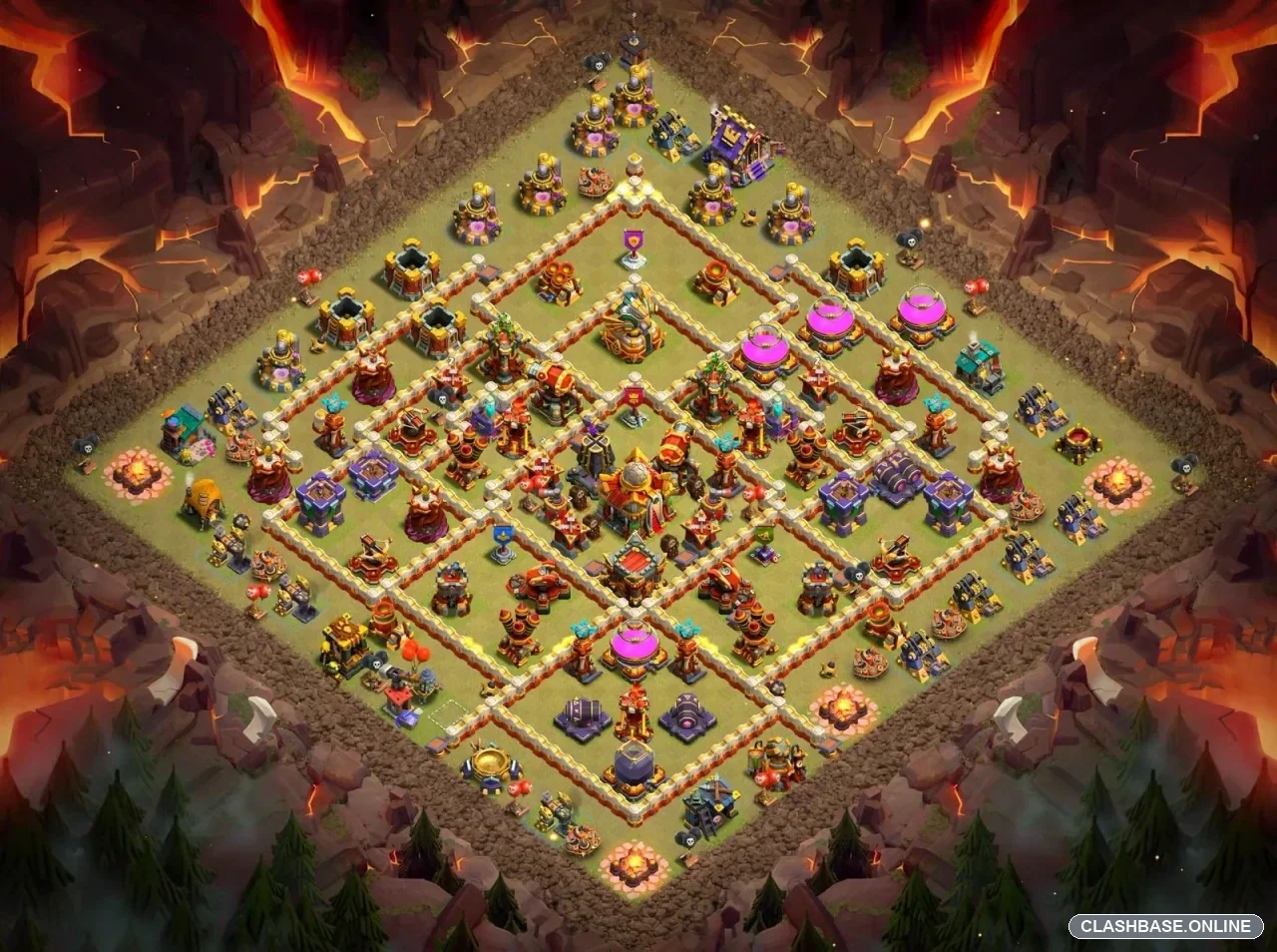
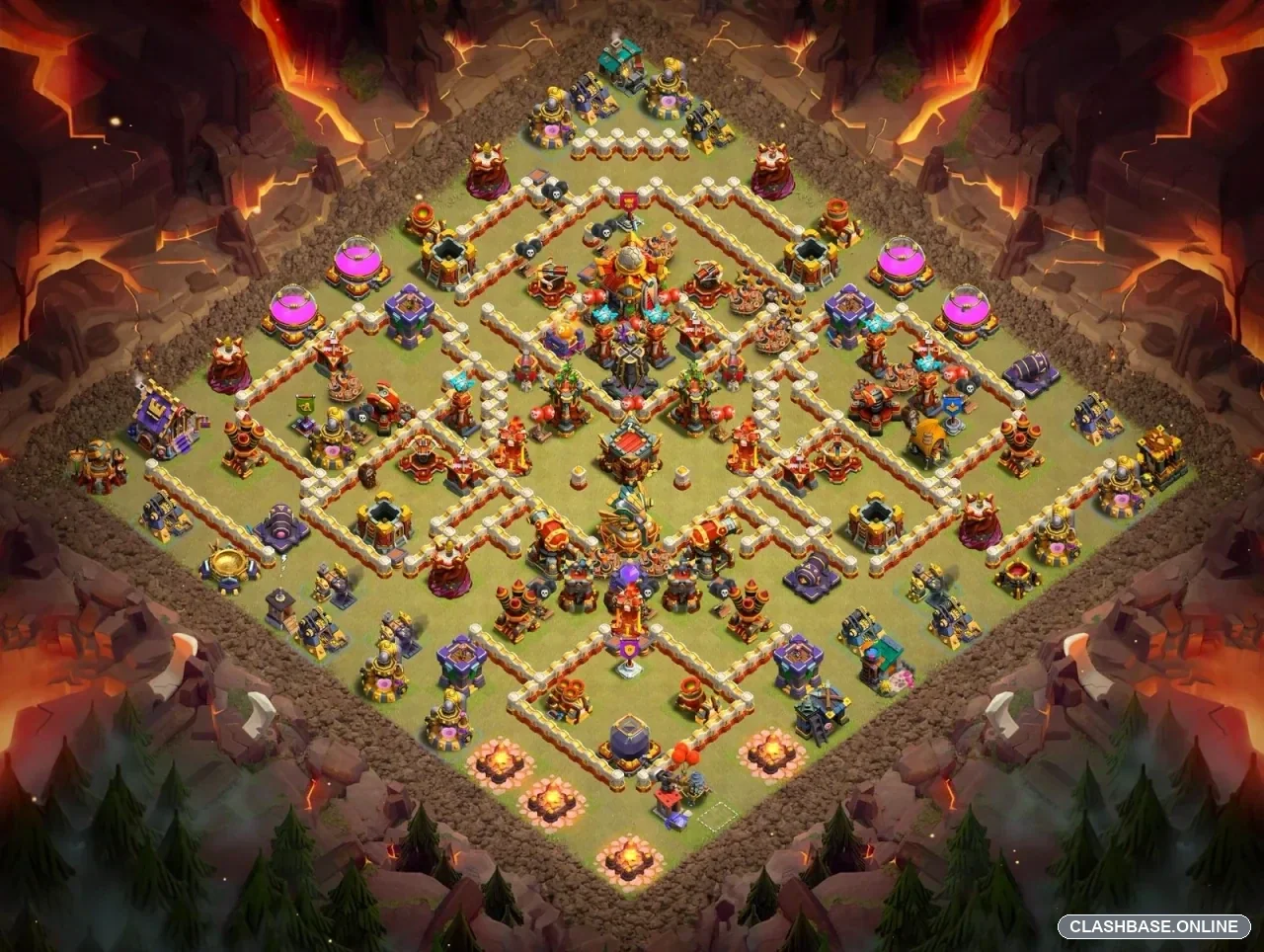
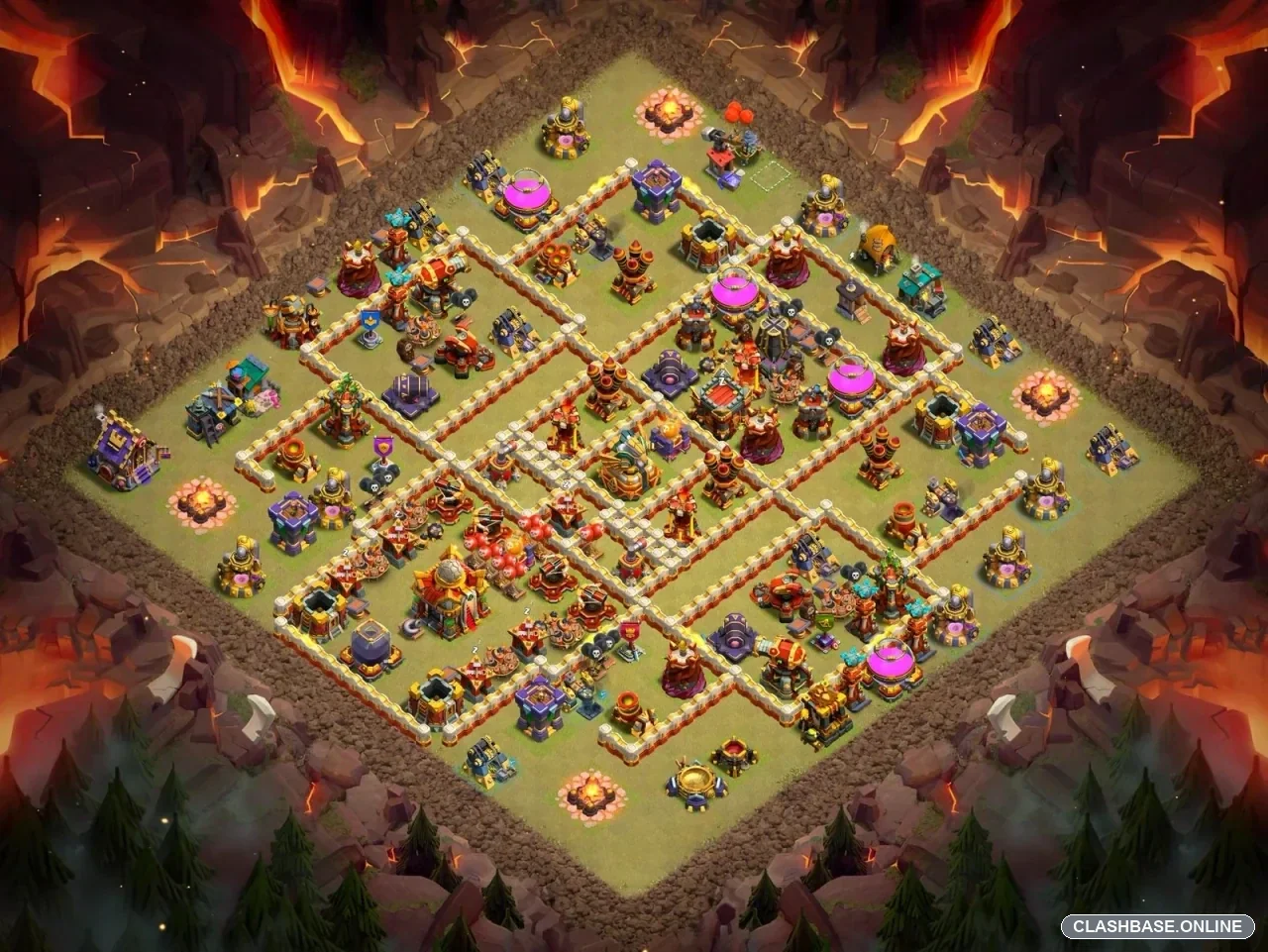
Town Hall 16 Clan War Layout #8 is built around an asymmetric diamond rather than a perfectly mirrored war design. That uneven structure is important because it changes the way an attacker reads the village. From a distance, there are several reasonable-looking approaches, but the Town Hall sits close to the edge of the inner core rather than directly in the middle. Reaching it is possible without clearing the whole base, yet the route that secures the objective may leave valuable defenses standing somewhere awkward for the second half of the attack.
That is the part of the design I find most interesting. It does not seem to depend on hiding the Town Hall behind an enormous defensive block. Instead, it appears to use route choice and troop movement to protect the final star.
The left edge, roughly around eight or nine o’clock, looks like the first place worth scouting. There are enough exterior buildings to establish a funnel without committing a huge amount of housing space, and the wall geometry from this side appears slightly shorter than the opposite diagonal. A patient attacker could potentially remove one corner and turn that opening into a relatively direct path toward the inner defenses.
The weakness is real, but exploiting it cleanly may be harder than simply dropping a full army from the left.
A Root Rider or other heavy ground smash could make fast progress once the funnel is established. The first wall sections are unlikely to be the main problem for that type of army. Pathing matters more. If Root Riders, heroes, healers, and support troops stay inside one narrow route, the attacker can preserve strong spell value and carry a compact force toward the Town Hall.
Open the funnel too widely, however, and the base gets more opportunities to separate the attack.
The Queen might follow an outside defense while the main group continues inward. A few supporting troops could enter the neighboring compartment instead of following the tanks. None of that necessarily looks disastrous in the first twenty seconds. Buildings are still falling, percentage is climbing, and the raid may appear comfortably ahead.
The trouble usually arrives when the core fight begins.
A Rage, Heal, Freeze, Overgrowth, or similar control spell is much stronger when most of the army occupies one area. Once the formation stretches between two compartments, every spell becomes a compromise. The attacker can support the Town Hall group or the troops that drifted sideways, but often not both.
That delayed pathing problem is exactly what makes the asymmetric shape useful.
The Town Hall itself creates another decision. Because it sits near the edge of the inner core, an attacker may be able to secure it earlier than they would against a deeply centered design. For a Clan War attack, that is attractive. A player can protect the two-star result before taking bigger risks elsewhere.
But there is a cost.
If too many spells, hero abilities, or major troops are committed to guaranteeing the Town Hall, the defenses beyond it can become an uncomfortable back end. A base like this does not necessarily need to prevent the Town Hall takedown. If it makes the attacker spend enough resources that the remaining army cannot finish the opposite side, it has already done its job.
Queen Charge Hybrid looks like one of the more controlled ways to attack the layout. A Queen Charge from the left could remove one defensive pocket and eliminate a few buildings that might otherwise disturb the funnel. Miners and Hog Riders could then enter through a narrower route toward the inner core.
That sounds clean on paper, but the timing may be fairly sensitive. One unexpected Queen walk can add valuable seconds to the setup. An awkward wall opening can do the same. If the Hybrid phase starts late, the Town Hall may still fall while the last defensive sections survive simply because the army runs out of time.
Air attacks face a different puzzle. The Air Defenses and Inferno Towers are not arranged as one tidy defensive cluster. Their spacing may force the attacker to decide which threat deserves spell support first rather than removing everything important with one convenient combination.
Dragons could potentially use the left-side funnel after the outer buildings are trimmed. I would expect a tighter deployment to be safer than spreading them across the entire side. A wide Dragon line can create early percentage, but some Dragons may stay on the perimeter while the strongest group moves into the core. That leaves fewer units available for the Town Hall phase.
LavaLoon offers better control over individual targets, although it demands a clearer attack sequence. Removing one Air Defense does not appear to open the whole village immediately. The attacker still needs to plan the next defensive pocket, the Town Hall section, and whichever defenses will become the back end.
The shorter diagonal is probably the most important weakness to understand. Supporting defenses have slightly less room to overlap along that route, which means a precise attacker may remove several targets before the deeper side contributes full pressure. Still, a short route is only useful if the army stays organized. A loose funnel can turn the same opening into two separate attacks.
That is why this design feels genuinely suited to Clan War. It protects the final star through pathing uncertainty and uneven defensive value, not simply by hoping one hidden trap wins the attack.
A cautious player may secure the Town Hall and strong percentage. A more aggressive attacker can chase the triple, but they need enough troops and spells to survive beyond the objective. The two plans are not quite the same.