 CLASHBASE.ONLINEClan War
About this Town Hall 16 base
Copy this base to Clash of Clans
Tap the button below. Clash of Clans will open so you can place this layout in an available base slot.
Copy base to the gameClash of Clans must be installed on this device.Rate this layout
Share a useful, honest experience. One review is stored per visitor for this item.
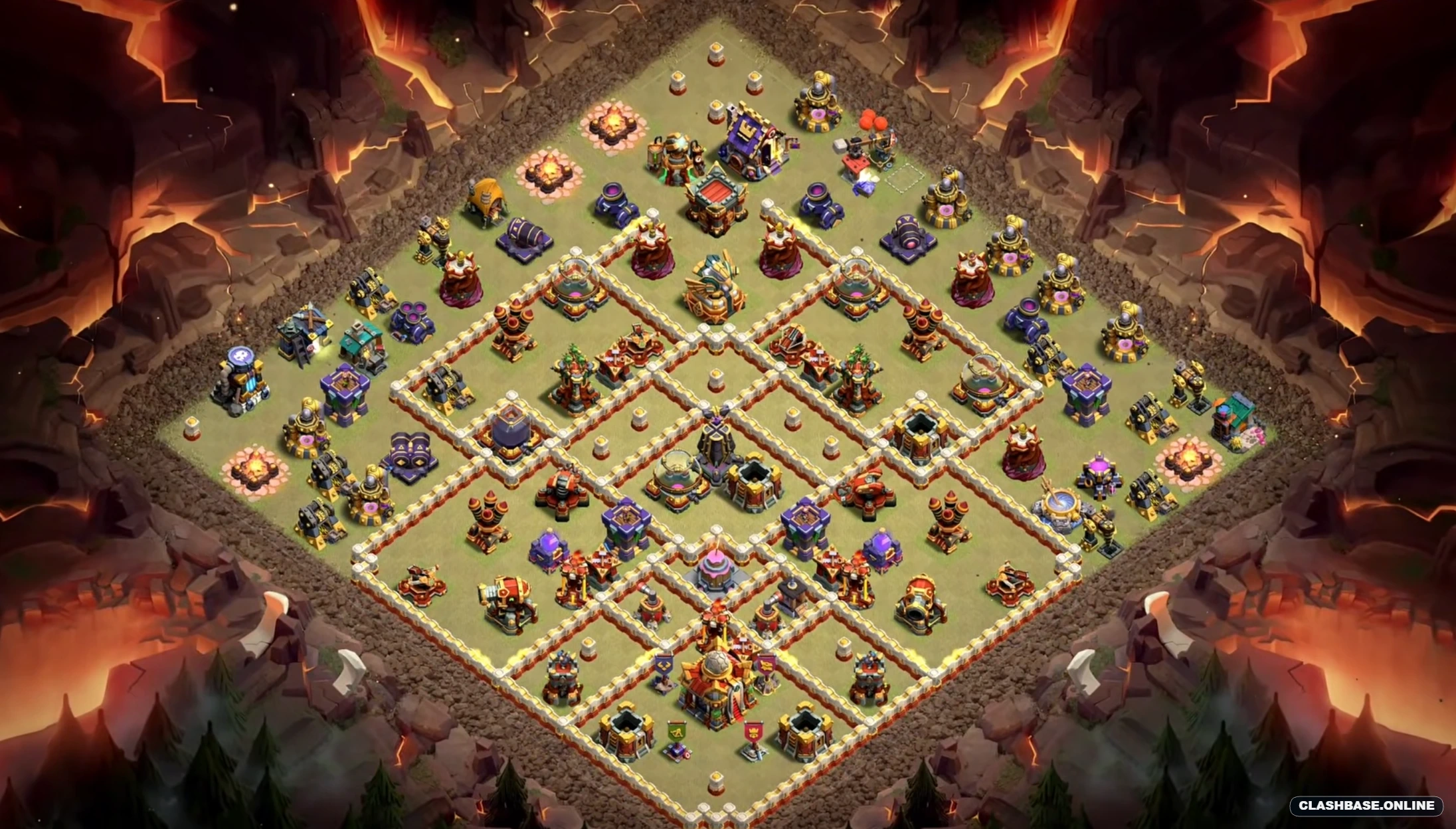
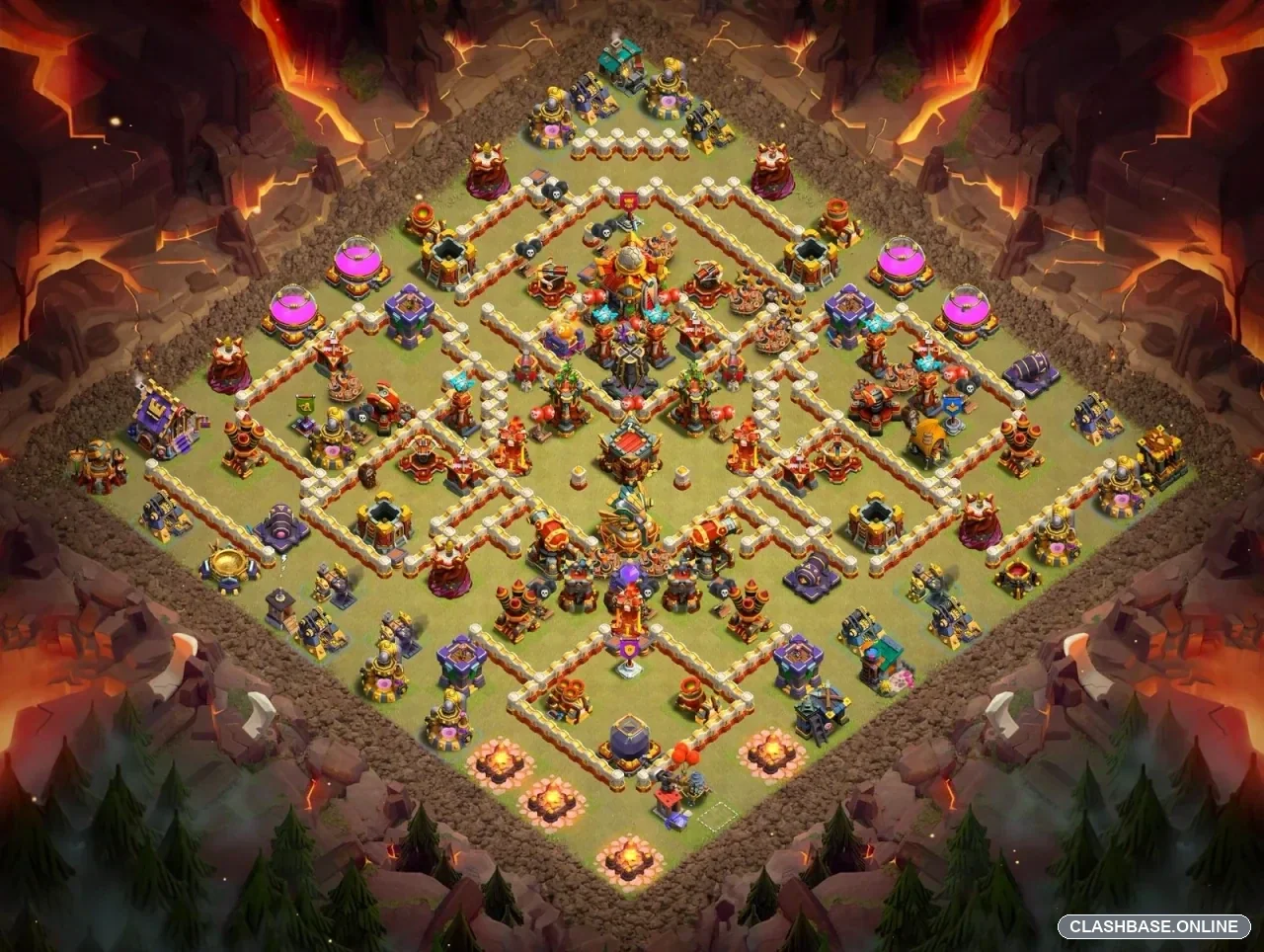
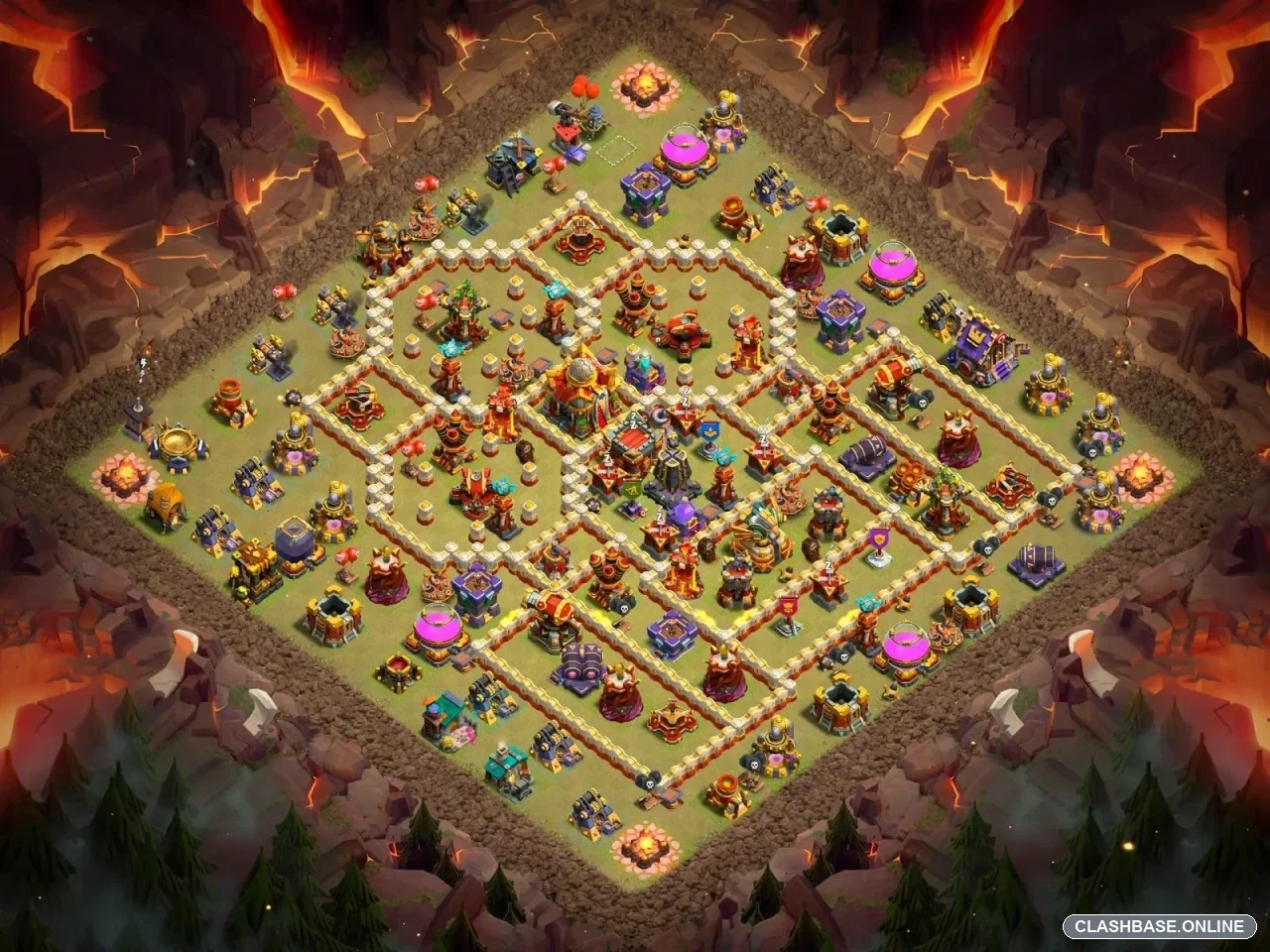
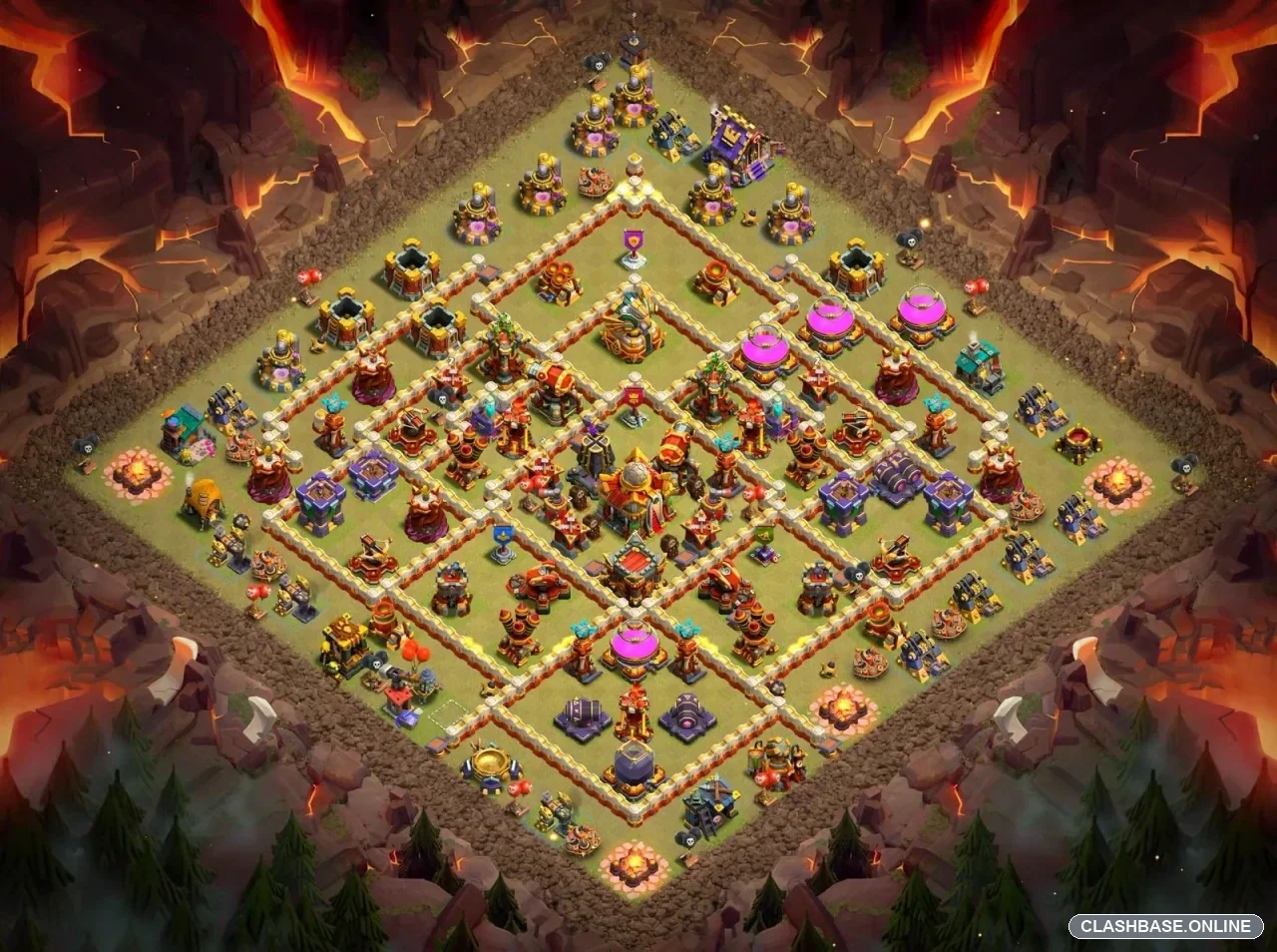
TH16 Clan War Base #32: Asymmetric Diamond with a Shorter Right-Side Attack Route
Town Hall 16 Clan War Layout #32 has a slightly uneven shape that makes it more interesting than a traditional symmetrical war base. The walls form an asymmetric diamond, with several defensive sections pulling away from the middle at different angles. The Town Hall sits close to the edge of the inner core instead of being buried at the exact center. That placement may tempt an attacker to secure it early, but doing so does not automatically give a clean route through the rest of the village.
The right edge looks like the most natural place to start. Around three or four o’clock, the outer buildings can be trimmed without immediately committing the full army, and the wall structure appears to create one of the shorter diagonals toward the center. It is a reasonable entry, but not necessarily a free one. The attack still has to deal with several compartments that can redirect troops once the first layer begins to collapse.
That shorter diagonal is also the layout’s most believable weakness.
A disciplined ground push from the right could reduce the amount of defensive overlap the attacker has to deal with. Root Riders or another heavy smash army may be particularly effective because they can move through the wall structure without spending too much time creating openings. If the funnel is narrow and the heroes stay close to the main group, the army could reach the inner core with useful spell support still available.
A wide deployment is much less convincing. Troops may enter together and then separate as nearby defenses pull them into different compartments. Root Riders could continue toward the Town Hall while the Queen or ranged support drifts along the outer lane. For a while, that split might actually look successful. Buildings are falling in several places and percentage rises quickly. The weakness shows up later, when the attacker needs one concentrated push but the army is already stretched across the base.
That is where spell efficiency starts to matter. A Rage, Heal, Freeze, Overgrowth, or similar spell is far more useful when most of the army is fighting in one area. Once the formation breaks apart, every spell becomes a choice between two separate groups.
The Town Hall placement creates another tactical decision. Because it is relatively close to the inner edge, an attacker may choose to guarantee the objective before worrying about the rest of the base. That is understandable in Clan War. A secure Town Hall helps protect the two-star result. The tradeoff is how much of the army is spent reaching it.
If too many hero abilities or spells are committed early, the opposite side of the village may remain surprisingly healthy. A safer attack might take the Town Hall and finish with strong percentage, but still fall short of three stars because the main force no longer has enough strength for the back end.
Queen Charge Hybrid offers a more controlled alternative. A Queen starting from the right could remove one defensive pocket, clear buildings that might otherwise pull the Hybrid troops sideways, and open the shorter route before Miners and Hog Riders enter. That setup looks promising, although it is sensitive to timing. One awkward Queen walk or a slow high-hitpoint target can delay the main phase enough to make the final cleanup uncomfortable.
Air attacks face a different problem. The Air Defenses appear staggered around the inner sections rather than grouped into one obvious cluster. Inferno Towers also act as separate high-value targets, which reduces the chance of getting perfect value from one spell combination.
Dragons may still find a workable path from the right once the funnel is shaped. A tighter deployment would probably keep more of the army heading toward the core. Spread the Dragons too widely and some may begin following exterior buildings, leaving the Town Hall group with less support than expected.
LavaLoon gives the attacker more control over defensive targeting, but it also requires a clear sequence. Removing one Air Defense does not appear to open the entire village. The attacker still has to plan how the Balloons transition through the Town Hall section and which defensive pocket will become the back end.
What makes this layout feel appropriate for Clan War is the separation between Town Hall security and a full three-star route. The objective may be accessible, but the best path to it does not necessarily remove every important defense. A cautious attacker can prioritize the Town Hall, while an aggressive attacker may try to preserve more army for the far side and accept extra risk around the core.
The asymmetric structure also creates scouting pressure. It is not enough to identify the easiest entry. An attacker needs to understand what happens after that entry works: where the heroes are likely to move, which defenses will pull the main group sideways, and whether the surviving troops will finish close enough together for efficient cleanup.
The right-side diagonal is clearly the first route worth testing. If a strong attacker creates a precise funnel and keeps the army compact, the shorter path may expose the core faster than intended. Still, that requires better execution than simply dropping the whole army along one edge.