 CLASHBASE.ONLINEClan War
About this Town Hall 16 base
Copy this base to Clash of Clans
Tap the button below. Clash of Clans will open so you can place this layout in an available base slot.
Copy base to the gameClash of Clans must be installed on this device.Rate this layout
Share a useful, honest experience. One review is stored per visitor for this item.
TH16 Clan War Base #12: Asymmetric Diamond with a Shorter Left-Side Route
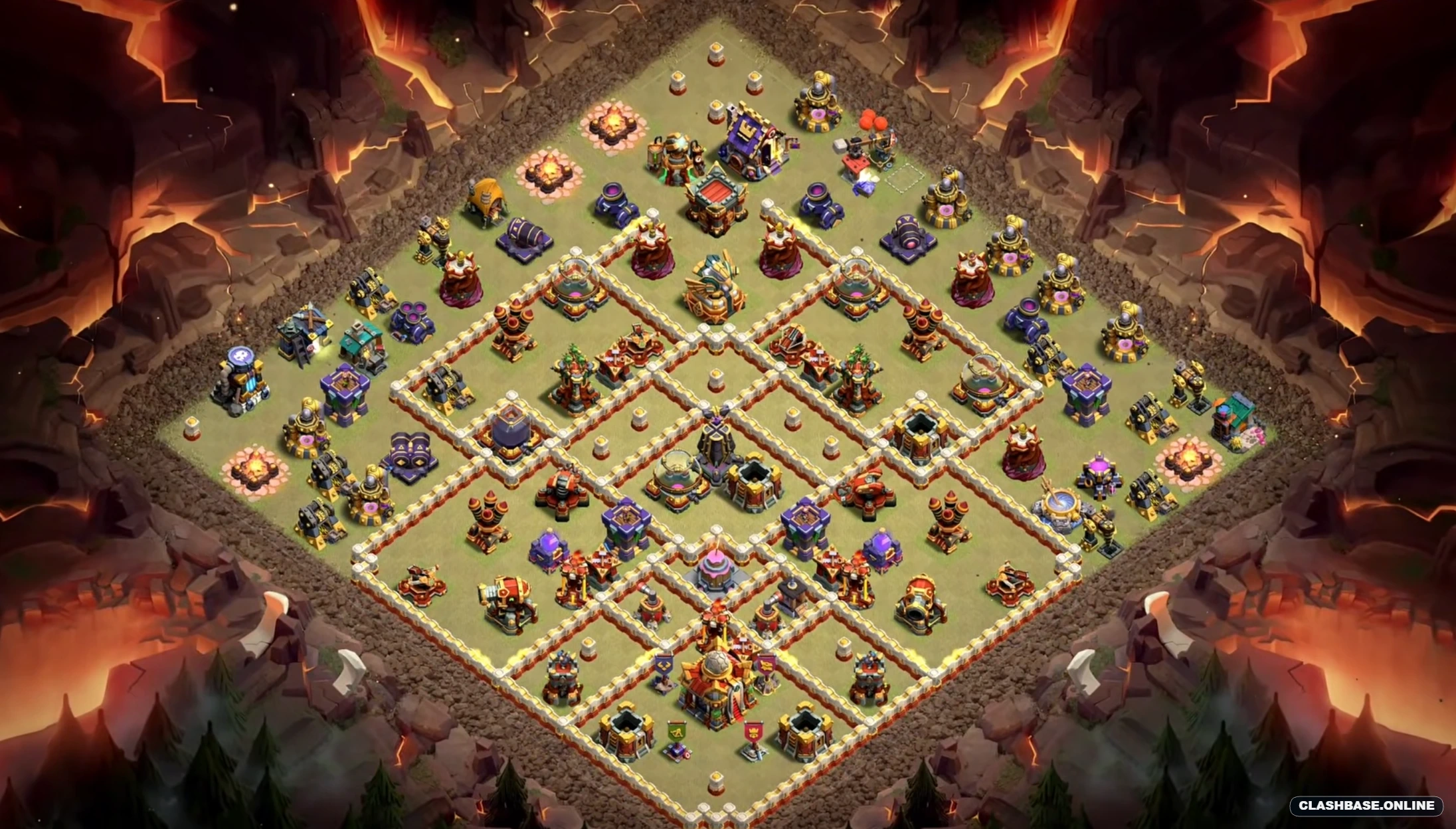
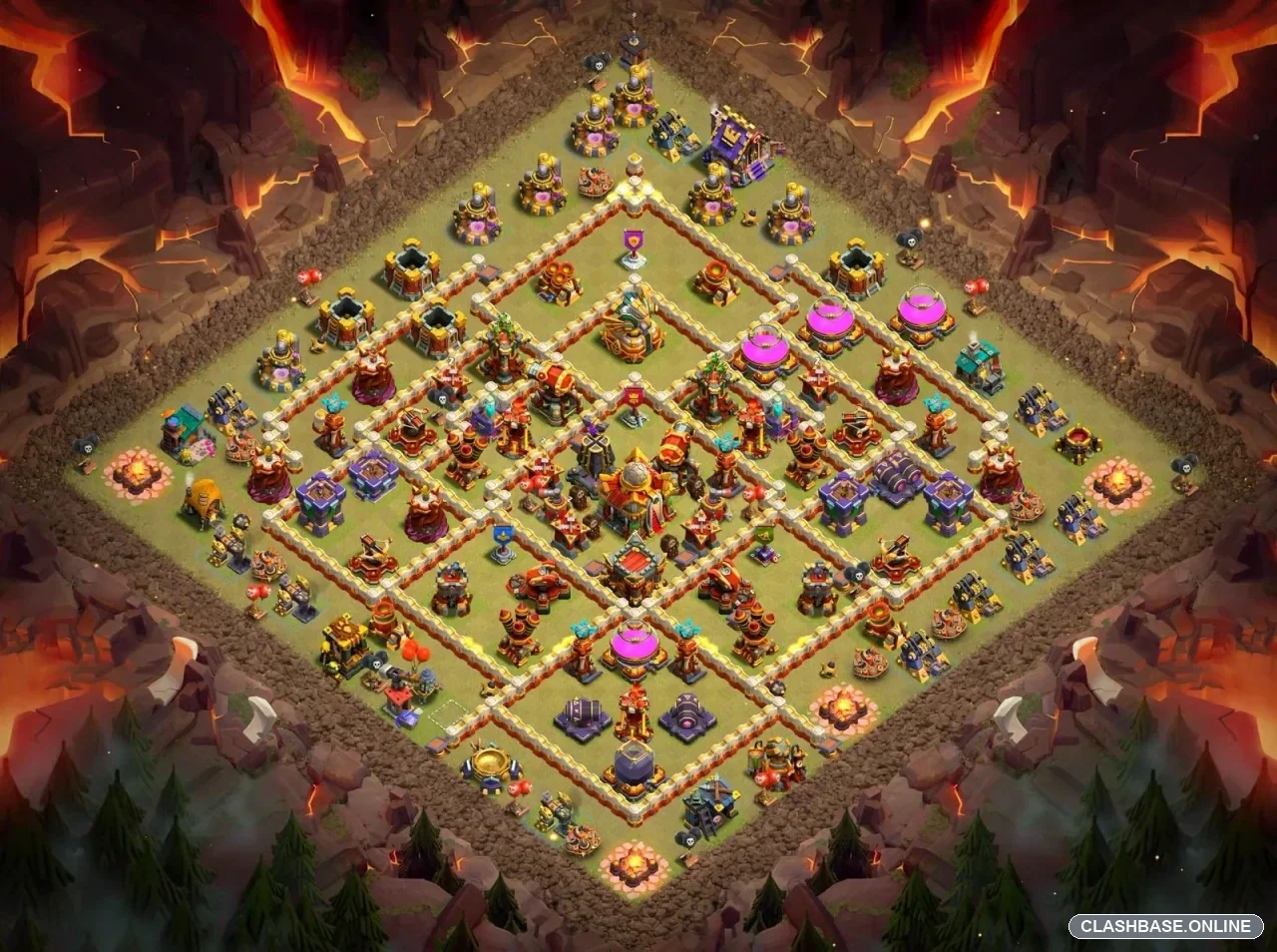
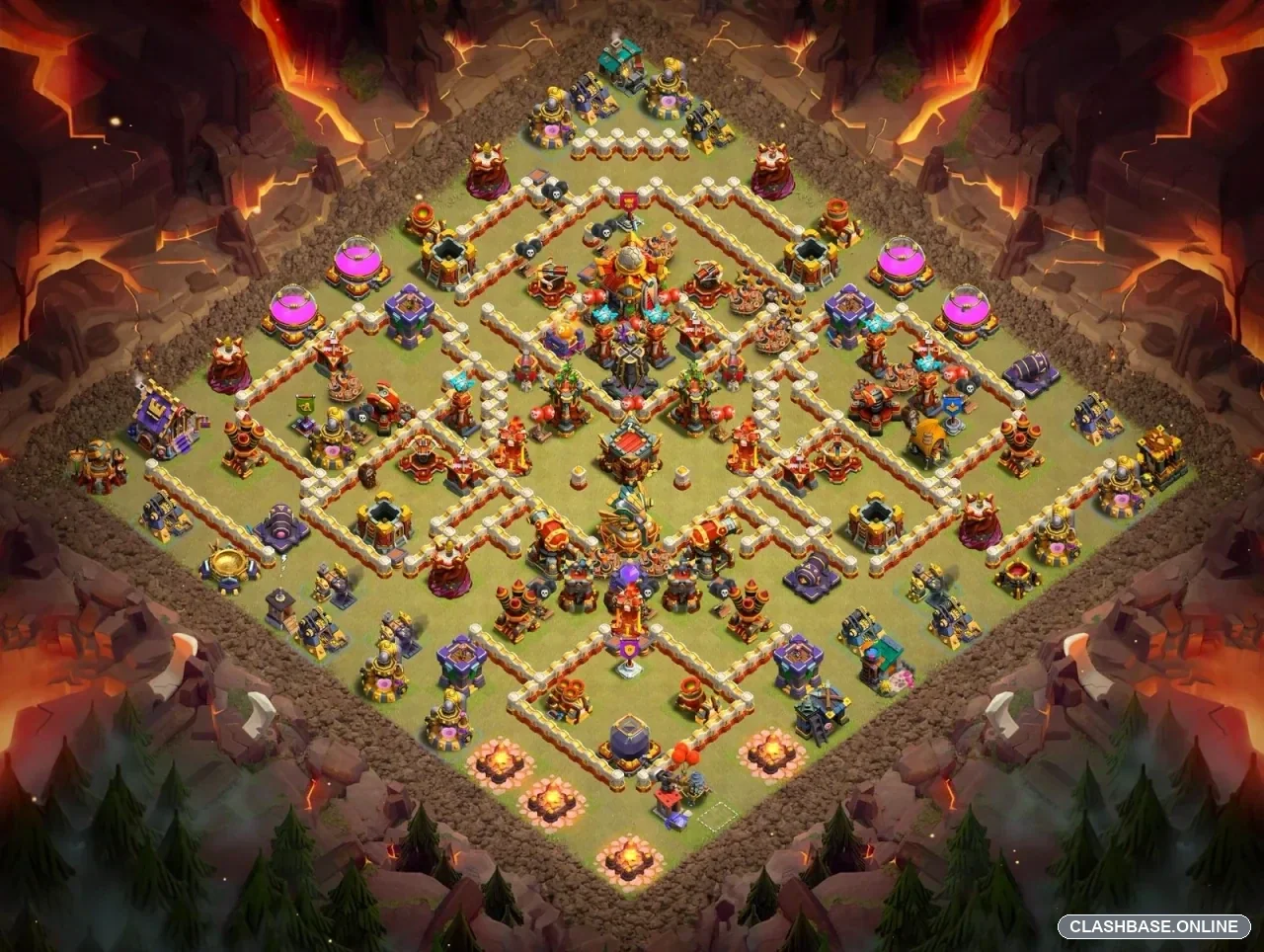
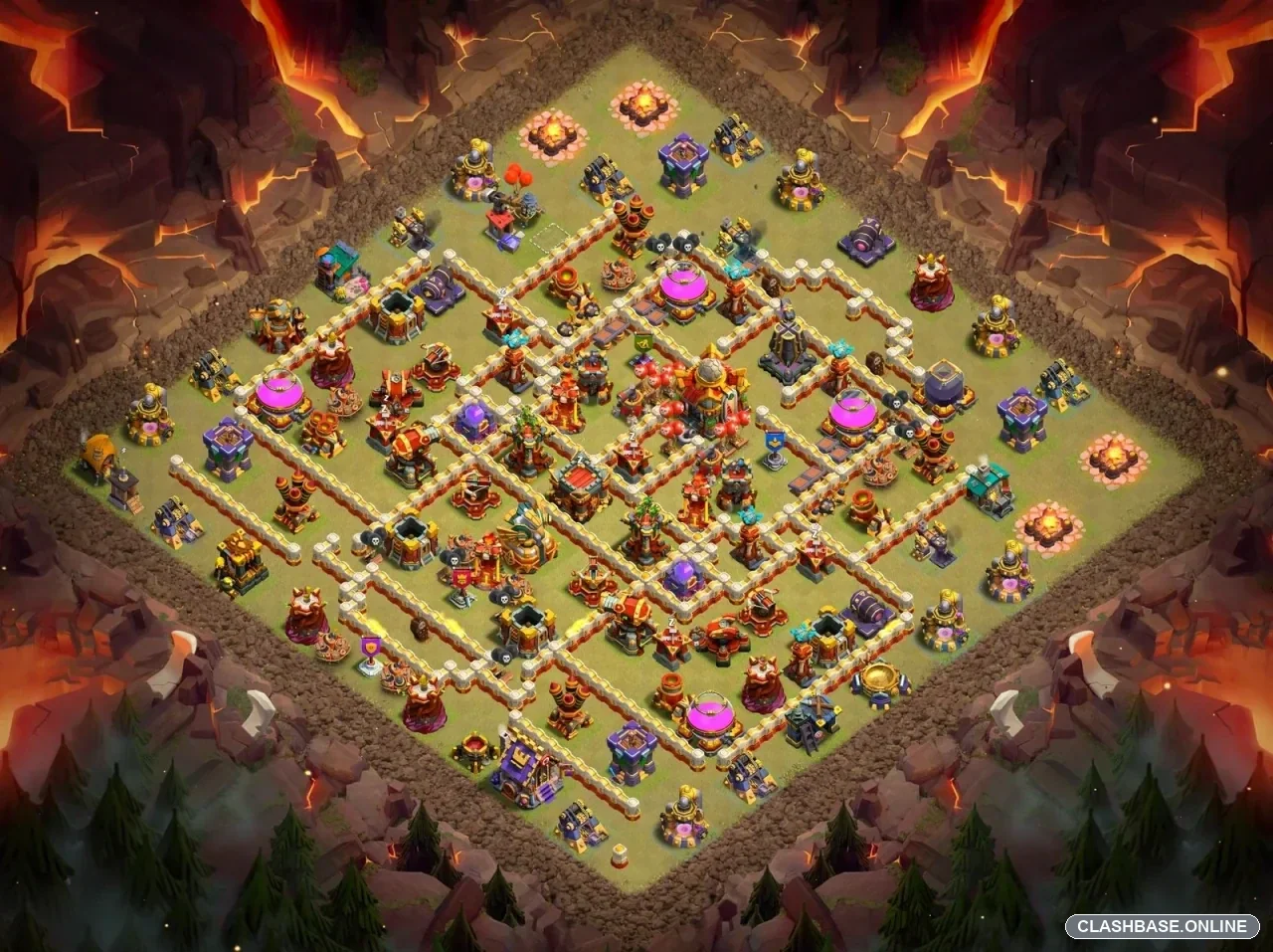
Town Hall 16 Clan War Layout #12 has an intentionally uneven shape, and that asymmetry is probably the most important thing to understand before planning an attack. The Town Hall sits close to the edge of the inner core rather than being buried at the exact center, while the surrounding compartments form a loose diamond with different depths on each side. At first glance, the village appears reasonably open. Once you trace an actual route through it, however, it becomes clear that reaching the Town Hall and finishing the rest of the base are two separate problems.
The left edge, roughly around eight or nine o’clock, looks like the most natural place to begin scouting. There is enough space to remove a few exterior buildings without committing too much of the army, and this side appears to connect with the shorter diagonal through the base. That can create a more direct route toward the inner defenses.
It is also probably the layout’s clearest weakness.
A disciplined attacker could use the left side to remove one corner and create a narrow lane toward the core. Root Riders or another heavy ground smash army would make sense here because they can cross the wall structure without spending too much time opening individual compartments. The walls themselves are unlikely to be the biggest obstacle. The harder part is keeping heroes, healers, and supporting troops close to the main force after the first section falls.
A wide deployment could create exactly the opposite result.
Imagine Root Riders moving inward while the Queen follows buildings closer to the outside-left edge. For twenty or thirty seconds, the attack may still look excellent. Several defenses are falling, percentage is climbing, and both groups remain healthy. Then the main force reaches the Town Hall area and the attacker realizes that part of the support army is several tiles away.
That separation is expensive because spell value drops. A Rage, Heal, Freeze, Overgrowth, or similar control spell works best when the army is concentrated. Once troops are fighting in two different compartments, every spell becomes a choice between supporting the core push or helping the units that drifted outside.
The shorter diagonal itself deserves attention. Because this path gives supporting defenses less room to overlap, a well-shaped attack may remove several important targets before the deeper sections of the village contribute their full defensive pressure. That is a real opening rather than just a visual weakness. The attacker still needs to use it carefully, though. A sloppy funnel can turn a short route into a split army.
Queen Charge Hybrid looks like another realistic counter. A Queen starting from the left could remove one defensive pocket, clear buildings that might disturb the funnel, and leave Miners and Hog Riders with a cleaner route into the middle. If the Queen follows the intended path, this approach may reduce much of the uncertainty around the asymmetric core.
The downside is timing. One unexpected Queen turn can stretch the setup quickly. A slow high-hitpoint target or extra wall break may not destroy the attack, but those lost seconds become important later. The Town Hall could still fall while the final compartments remain too far away for comfortable cleanup.
The Town Hall placement creates a classic war decision. Because it sits near the edge of the inner core, an attacker may be able to secure it earlier than on a deeply centered layout. That makes a safe two-star route easier to imagine. The danger is overspending troops, hero abilities, or spells just to guarantee that objective.
If too much is committed early, valuable defenses beyond the Town Hall can stay alive for the back end. A cautious player may finish with strong percentage but never seriously threaten the third star. A more aggressive attacker can preserve resources for later, but that means accepting more risk around the main objective.
That tradeoff is why this design feels much more appropriate for Clan War than for ordinary farming.
Air attackers face a different puzzle. The Air Defenses and Inferno Towers do not form one tidy defensive cluster. Their spacing may force an attacker to decide which threat should be controlled first rather than solving the entire air-defense network with one convenient spell sequence.
Dragons could still work from the left after the funnel is shaped. A narrow deployment would probably be safer than spreading them across the full edge. If some Dragons follow outer buildings while the stronger group turns toward the Town Hall, the inner defenses end up fighting only part of the army.
LavaLoon provides better control over individual defensive targets, but the attack needs a clear second phase. Removing the first Air Defense is not enough. The attacker still has to plan how the Balloons cross the Town Hall section, which high-value defense comes next, and where the surviving group should finish.
What makes TH16 Clan War Layout #12 interesting is that it appears to protect the third star through pathing uncertainty, not simply through overwhelming defensive damage. The Town Hall can be reached. The shorter left-side route can be exploited. Yet neither of those facts guarantees a clean finish.
A strong attacker who keeps the left funnel narrow and preserves enough spells may open the base faster than intended. A rushed attacker can enter from the same side, split the army between nearby compartments, and spend the last part of the raid trying to reconnect scattered troops.