 CLASHBASE.ONLINEClan War
About this Town Hall 16 base
Copy this base to Clash of Clans
Tap the button below. Clash of Clans will open so you can place this layout in an available base slot.
Copy base to the gameClash of Clans must be installed on this device.Rate this layout
Share a useful, honest experience. One review is stored per visitor for this item.
TH16 Clan War Base #22: Offset Town Hall with a Multi-Compartment Core and Top-Side Pressure
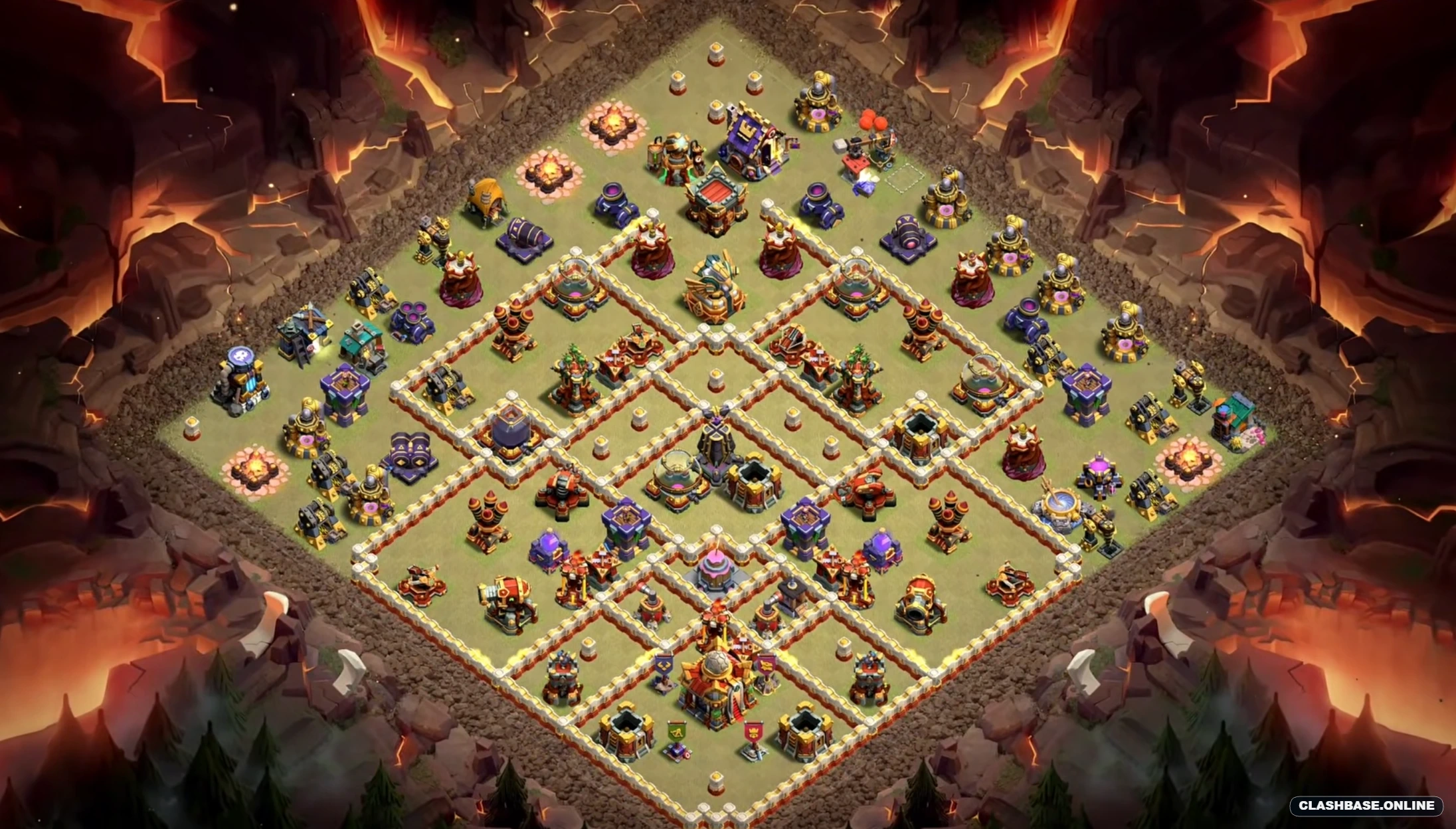
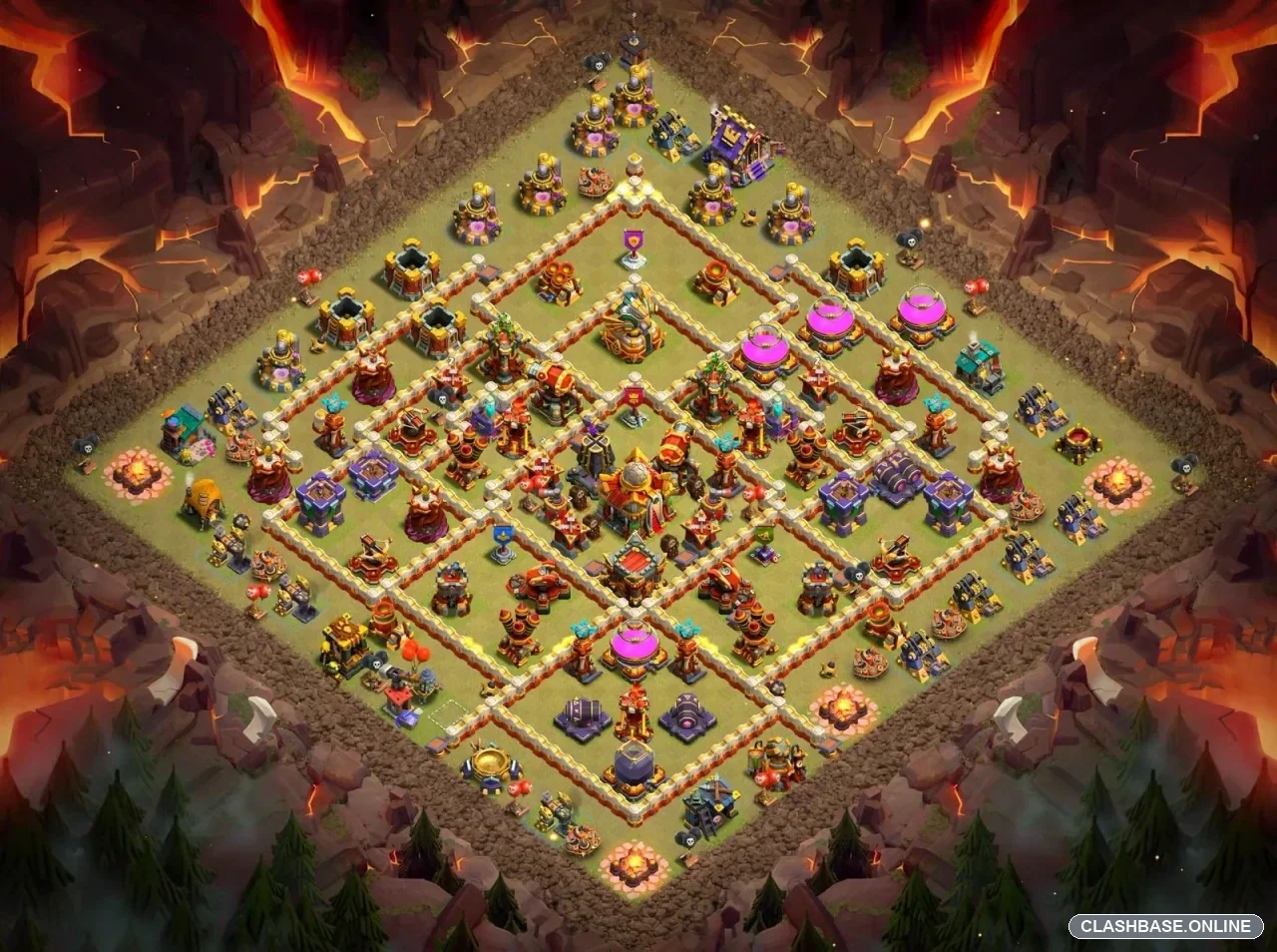
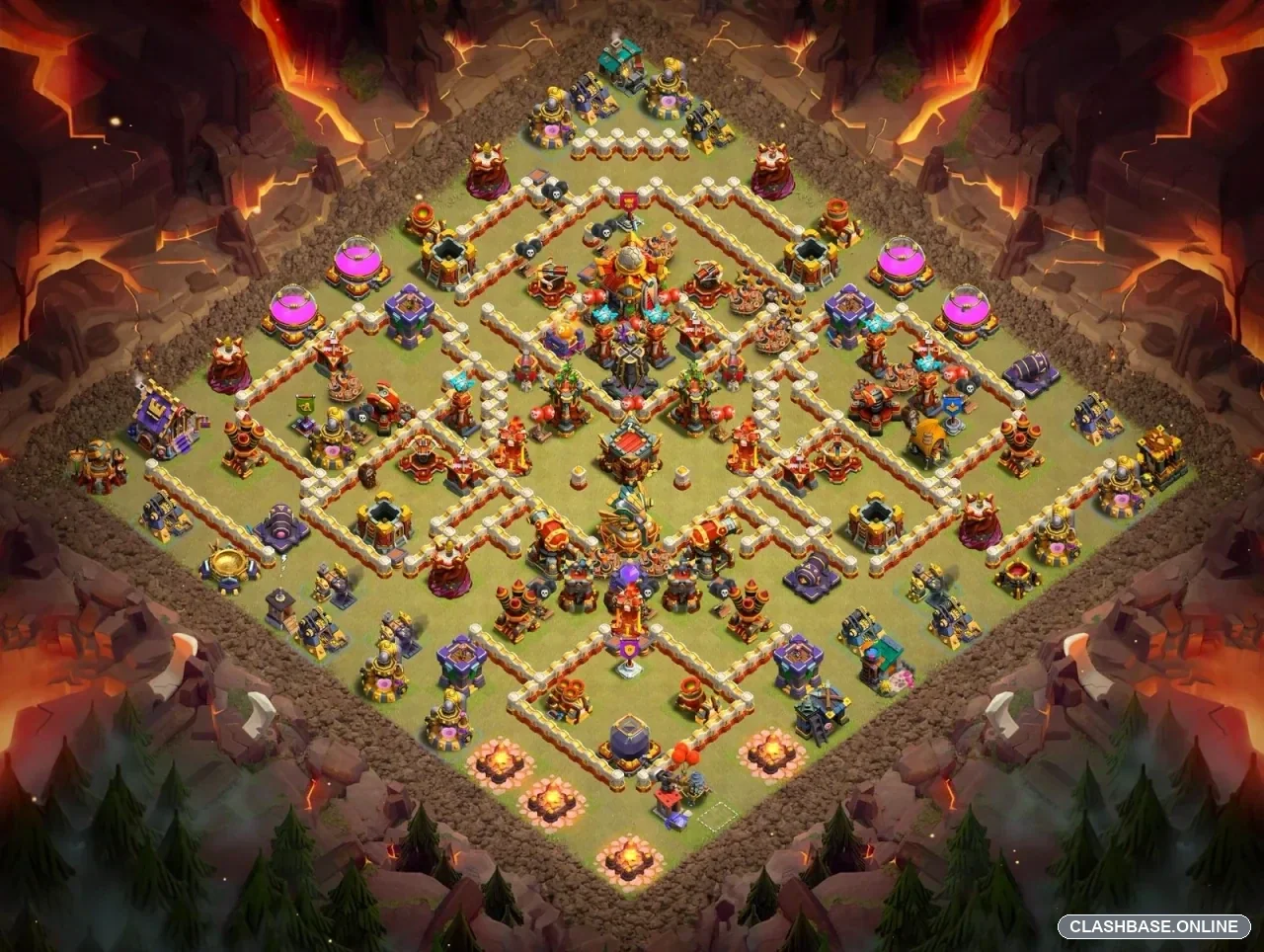
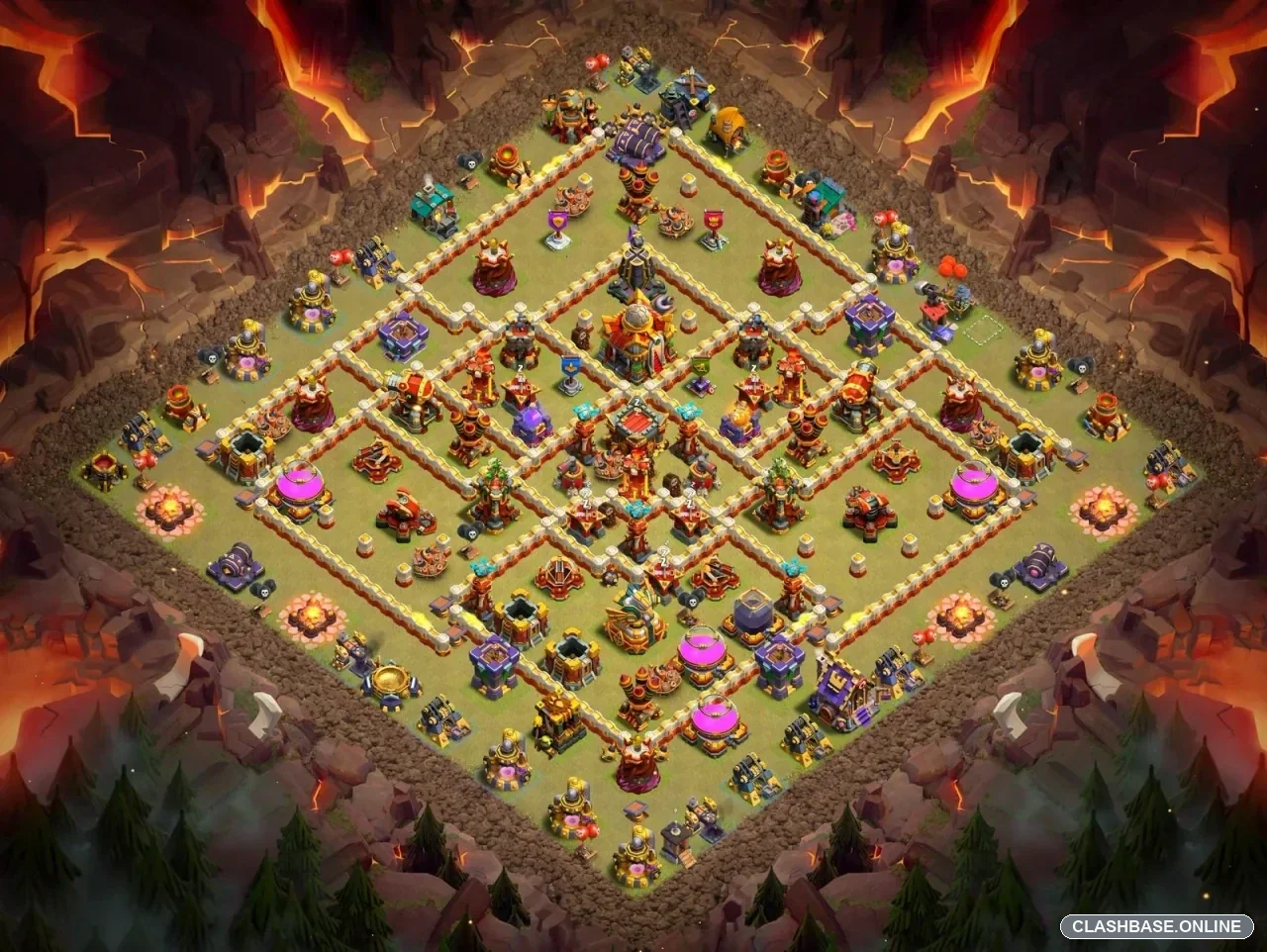
Town Hall 16 Clan War Layout #22 has a fairly symmetrical first impression, but the attack path is less predictable than the outer shape suggests. The walls form several connected compartments around the middle rather than one oversized central box, and the Town Hall sits slightly toward the right side of the core. That small offset matters. It makes the obvious straight-line push less comfortable and gives the base more opportunities to pull troops into neighboring sections before the main objective is fully secured.
The top edge, around eleven to one o’clock, looks like the most practical place to begin. There is enough room to clear a few exterior buildings and shape the first part of a funnel without immediately committing the whole army. On paper, that seems like the cleanest opening. I would still be cautious about removing too much of the top side, though. A very wide funnel can expose several compartments at once, which may give heroes and supporting troops different targets before the main group reaches the core.
That pathing issue is probably the most important part of this layout.
Imagine a Root Rider or heavy ground smash entering from the top. If the funnel stays narrow, the tanks, heroes, healers, and support troops can travel through roughly the same lane. In that situation, the attacker can get strong value from Rage, Heal, Freeze, Overgrowth, or other support spells because most of the army is fighting in one area.
A wider deployment may have the opposite effect. Root Riders might move toward the Town Hall while the Queen or supporting units continue clearing one of the side compartments. For the first twenty or thirty seconds, that can actually look productive. Multiple sections are falling and percentage climbs quickly. The weakness only becomes obvious once the main group reaches the inner defenses without all of its support nearby.
The Town Hall placement adds another decision. Because it sits slightly right of center, troops entering from the top do not naturally pass through every important defensive pocket on the way to the objective. An attacker may secure the Town Hall and still leave a meaningful amount of defensive strength on the opposite side. In Clan War, that is useful. A safe two-star route may exist, but converting that same plan into a three-star requires better control.
Queen Charge Hybrid looks like one of the more sensible answers. A Queen starting from the top could remove one defensive section and close off part of the funnel before Miners and Hog Riders are deployed. If she follows the intended route, the Hybrid army would have fewer buildings competing for its path through the center.
The risk is timing. One unexpected Queen turn or a slow high-hitpoint target can delay the main phase. The Town Hall may still fall, but the final compartments can become difficult to finish once cleanup begins late. That seems particularly relevant here because the base is divided into several sections rather than one continuous lane.
Air attackers face a different problem. The Air Defenses appear staggered around the core, while the Inferno Towers act as separate high-value targets. There is no obvious single cluster where one spell solves everything at once. That spacing forces the attacker to decide which threat matters first.
Dragons could still make progress from the top after the funnel is prepared, but deployment width would matter. A narrow line is likely to keep more of the army moving toward the center. Spread the Dragons too widely and some may follow outside buildings while the stronger group travels toward the Town Hall. Once the formation separates, the central defenses are fighting only part of the army.
LavaLoon offers better control over individual targets, though the attack would need a clear sequence through the inner sections. Removing one Air Defense does not appear to open the whole village. The attacker still has to plan the Town Hall phase, the remaining Inferno coverage, and whichever defensive pocket becomes the back end.
The main weakness of Layout #22 is probably time pressure created by a wide funnel. The base does not necessarily need to destroy the army early. It can defend simply by making troops change direction or finish in separate compartments. An attacker might secure the Town Hall and reach strong percentage, then spend the last twenty seconds watching surviving troops travel between buildings rather than actually fighting.
That is also why this layout feels well suited to Clan War. Its job is not to protect resources or create an easy day-to-day defense. It is trying to deny a clean three-star. The top edge gives the attacker a believable starting point, but the path out of the core may be less comfortable than the path into it.
A disciplined player can certainly beat the design. A narrow top funnel, careful hero placement, and preserved spells could open the center much faster than intended. Root Riders, Queen Charge Hybrid, Dragons, and LavaLoon all look like realistic counters depending on the attacker’s style.
Still, the base has a clear defensive identity. The slightly offset Town Hall, multi-compartment structure, staggered air coverage, and awkward cleanup routes all push the attacker toward the same problem: entering the base is easier than finishing it cleanly.