 CLASHBASE.ONLINEClan War
About this Town Hall 16 base
Copy this base to Clash of Clans
Tap the button below. Clash of Clans will open so you can place this layout in an available base slot.
Copy base to the gameClash of Clans must be installed on this device.Rate this layout
Share a useful, honest experience. One review is stored per visitor for this item.
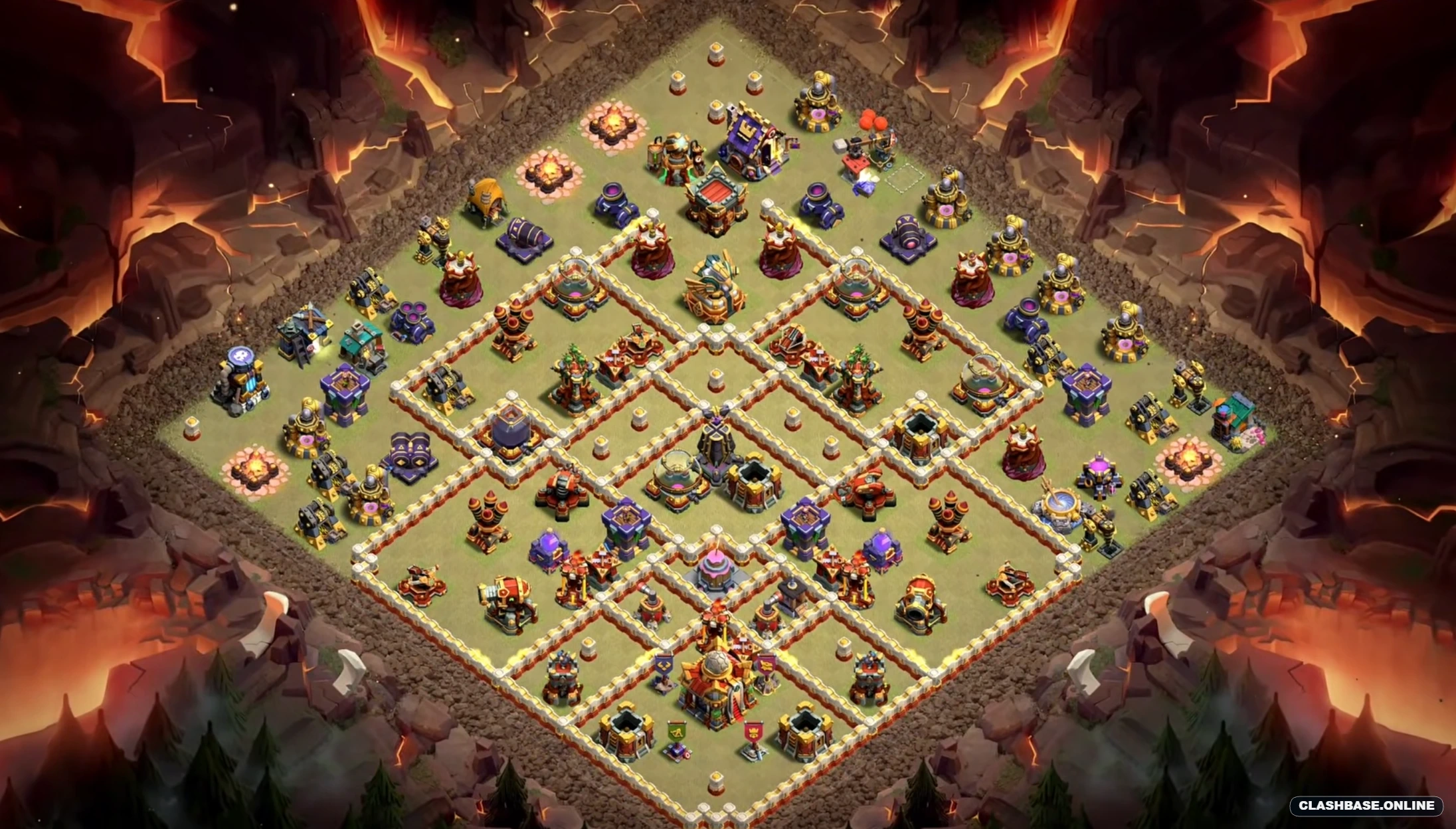
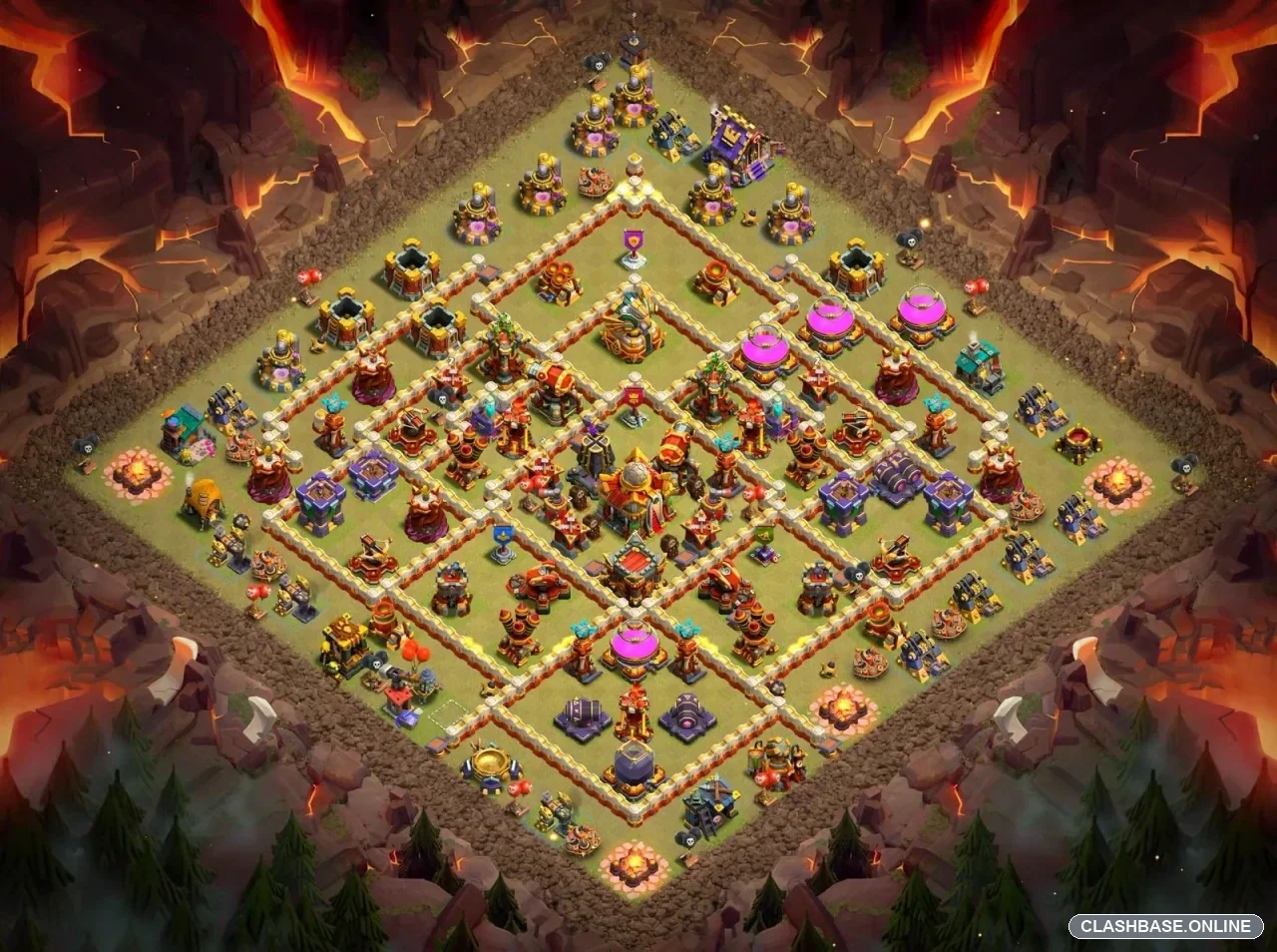
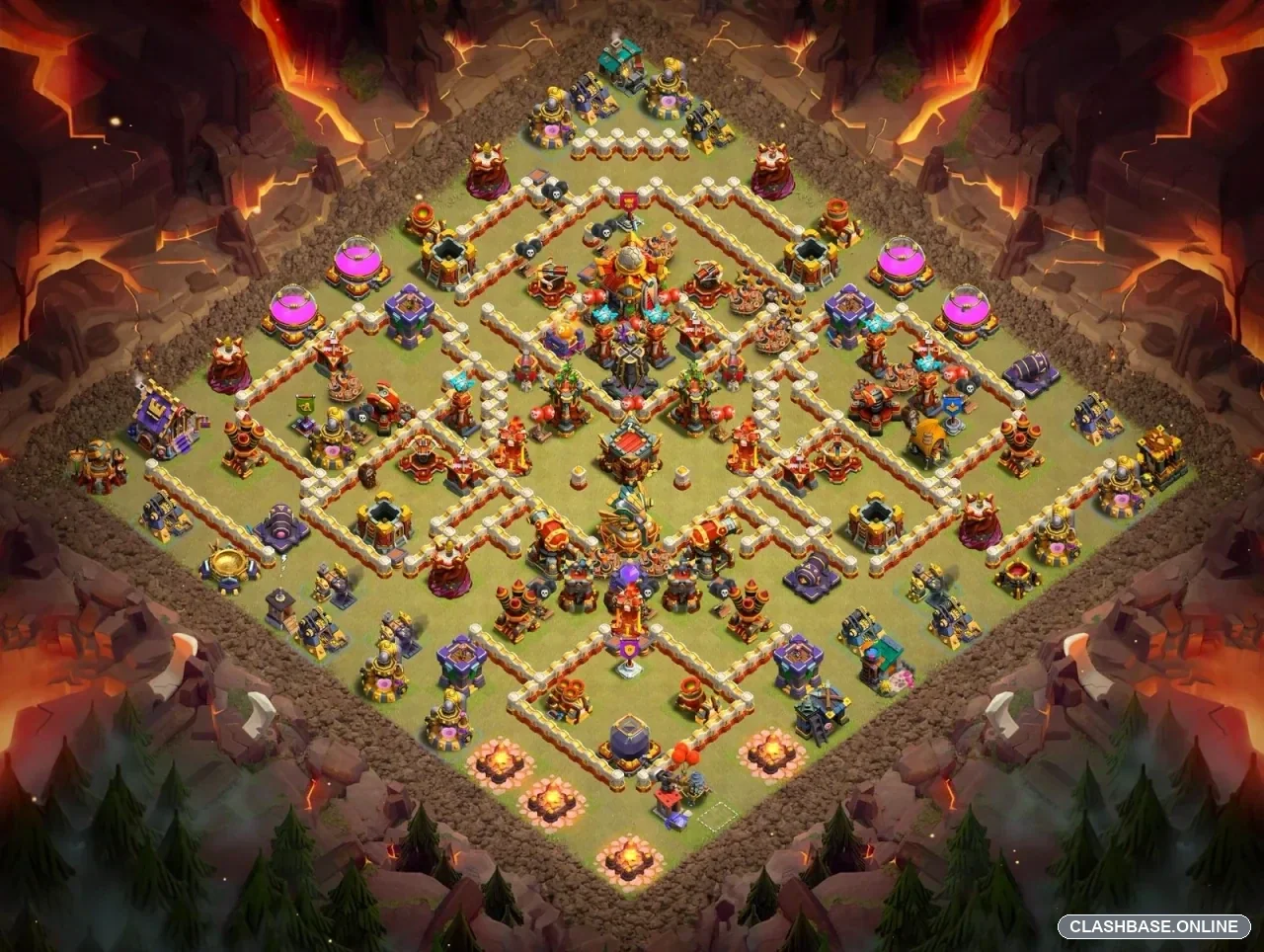
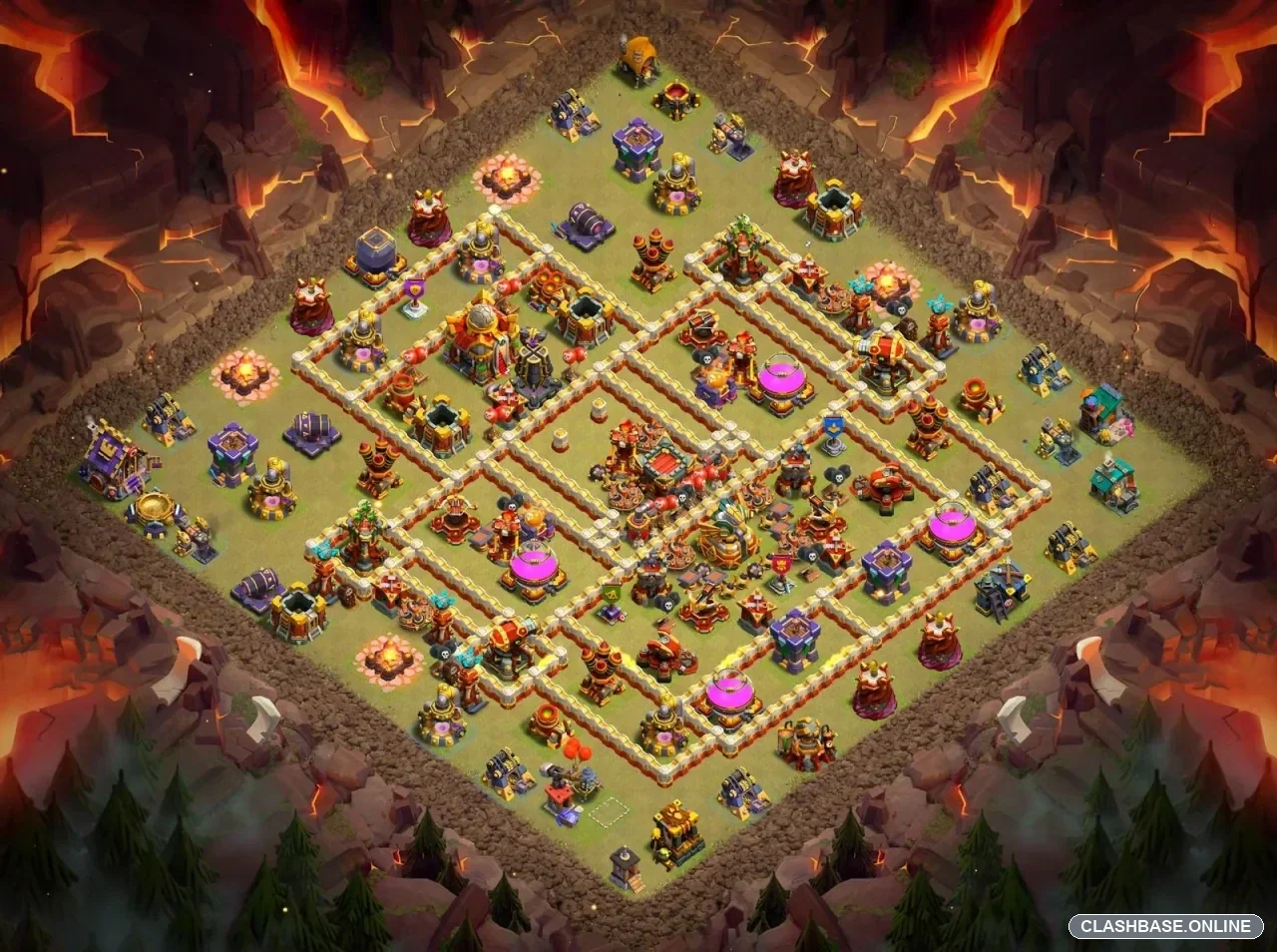
TH16 Clan War Base #34: Asymmetric Diamond with a Shorter Left-Side Route
Town Hall 16 Clan War Layout #34 has an uneven, stretched shape that makes the base look less predictable than a standard square war design. The walls form an asymmetric diamond, with several compartments pulling away from the center at different angles. The Town Hall is positioned close to the edge of the inner core rather than being buried in the exact middle, which creates an interesting war tradeoff: an attacker may be able to secure the objective fairly early, but doing so does not automatically leave the army in a comfortable position for the rest of the base.
The left edge is the side I would study first. Around eight or nine o’clock, there appears to be enough room to remove a few outside buildings and create a controlled funnel toward the inner compartments. The route looks slightly shorter than the opposite diagonal, and that matters. A well-prepared attacker could potentially use this side to reach important defenses before the rest of the base has enough time to apply overlapping pressure.
That does not mean the entire left edge should be cleared.
In fact, opening too much of it may help the defense. Once several buildings disappear, troops can see targets in different compartments and begin splitting. A Root Rider group may move inward while the Queen or supporting units continue along the outside. For a few seconds, both groups can still look healthy. Percentage rises and defenses fall. Then the central push reaches the stronger section and the attacker realizes the heroes are no longer close enough to support the same fight.
That kind of separation is probably one of the layout’s better defensive tools.
The shorter diagonal is also the most obvious weakness. Supporting defenses have less room to overlap along that route, so a disciplined push from the left could remove several important targets in sequence. Root Riders or another heavy ground smash army would likely be dangerous here because they can move through the wall structure without spending too much time opening compartments. The main question is whether the attacker can keep the entire formation together.
A narrow funnel would worry me more than a broad spam attack. If Root Riders, heroes, healers, and support troops all travel through the same channel, Rage, Heal, Freeze, or other control spells become much more efficient. The attacker can support one strong group instead of trying to rescue several smaller ones.
Queen Charge Hybrid is another realistic counter. A Queen starting from the left could remove one defensive pocket, take out buildings that might pull the main army sideways, and create a cleaner lane before Miners and Hog Riders are deployed. That setup may reduce the pathing uncertainty around the asymmetric core.
The downside is time. One unexpected Queen turn, an awkward wall choice, or a high-hitpoint target can slow the opening considerably. The Town Hall may still fall, but the far side of the village could remain healthy enough to create a difficult cleanup. In Clan War, a high-percentage two-star is still a useful defensive result if the triple is denied.
The Town Hall placement is especially important here. Because it sits near the edge of the inner core, an attacker may be tempted to commit early resources to guarantee it. That makes sense—nobody wants to reach the final minute of a war attack without the Town Hall secured. Still, overspending spells or hero abilities on that objective can leave the army short of answers for the deeper defenses.
That is where the anti-three-star idea becomes clearer. The base does not need to make the Town Hall impossible to reach. It only needs to make the attacker pay enough for it that the second half becomes awkward.
Air attacks face a different puzzle. The Air Defenses appear staggered around separate inner sections, while the Inferno Towers work as individual high-value targets rather than one convenient pair. That spacing reduces the value of a single spell plan. An attacker may be able to remove one air threat early, but the next one still sits on a different route.
Dragons could potentially enter from the left after a good funnel. I would expect a tight deployment to work better than spreading them across the entire edge. A wide Dragon line may send some units around the perimeter while the main group moves toward the Town Hall. Once that happens, the central defenses are fighting a smaller force than the attacker intended.
LavaLoon gives more control over target order, but it also asks for better planning. Removing one Air Defense does not seem to open the whole village. The attacker still has to decide how to transition through the core and which remaining defensive pocket should become the back end.
What makes Layout #34 feel genuinely suited to Clan War is the difference between securing the Town Hall and finishing the base. A safe route to the objective may exist, especially from the shorter diagonal, but the army can easily leave the core in separate directions. That makes cleanup just as important as the opening.
The layout also creates scouting pressure. It is not enough to identify the easiest entry. The attacker has to understand what happens after that entry succeeds. Where will the Queen walk? Which compartment will the main force choose next? Will the surviving troops finish on the same side of the base or end up several compartments apart?
Those questions matter more here than simply asking which side has the weakest defenses.
The left-side diagonal is still the main vulnerability. A disciplined attacker who creates a precise funnel and enters with the army compact may be able to shorten the route into the core considerably. If the Town Hall falls without too much spell or hero commitment, the rest of the layout could become easier to finish than intended.