 CLASHBASE.ONLINEClan War
About this Town Hall 16 base
Copy this base to Clash of Clans
Tap the button below. Clash of Clans will open so you can place this layout in an available base slot.
Copy base to the gameClash of Clans must be installed on this device.Rate this layout
Share a useful, honest experience. One review is stored per visitor for this item.
TH16 Clan War Base #36: Asymmetric Diamond with a Shorter Right-Side Route
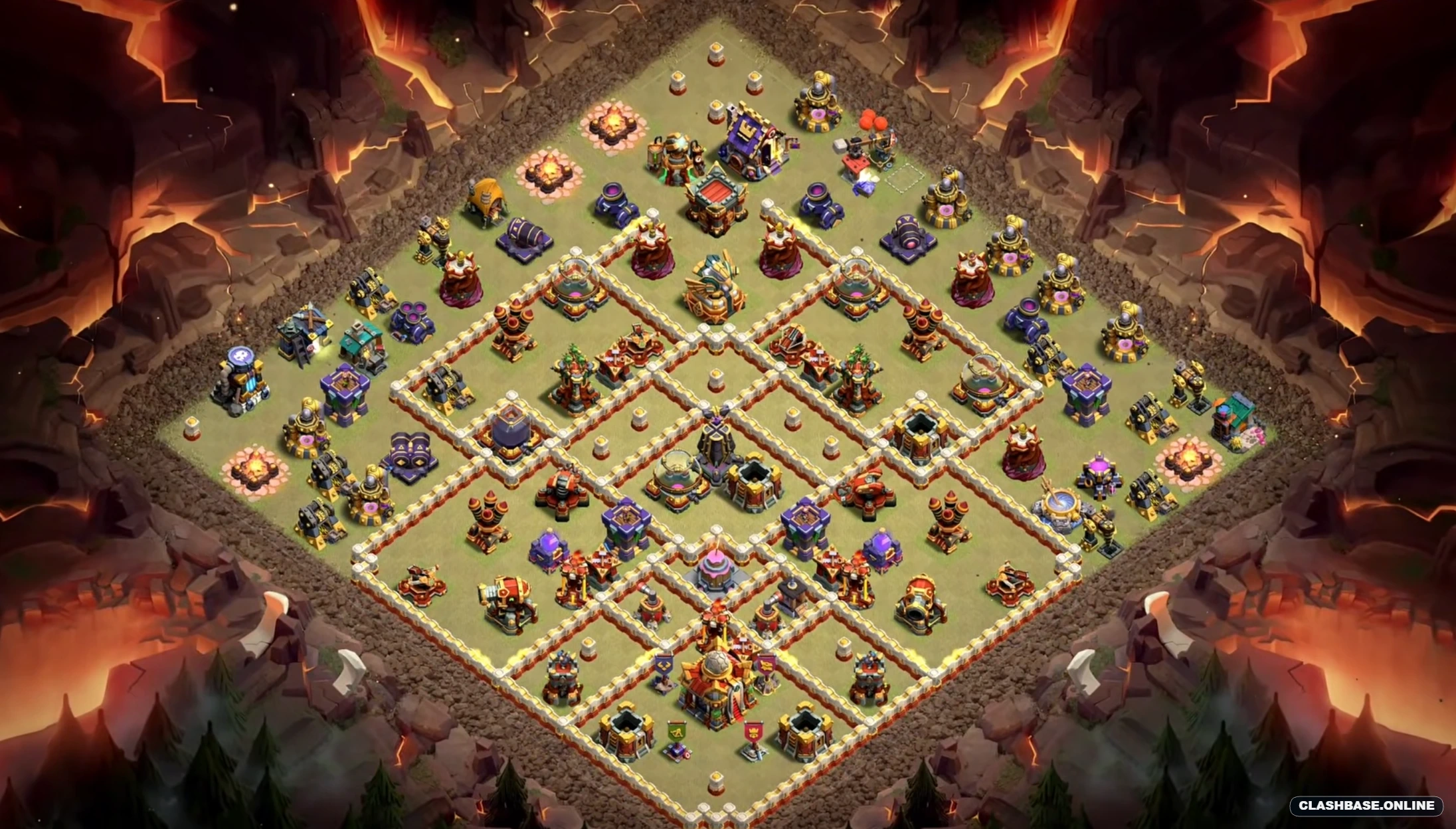
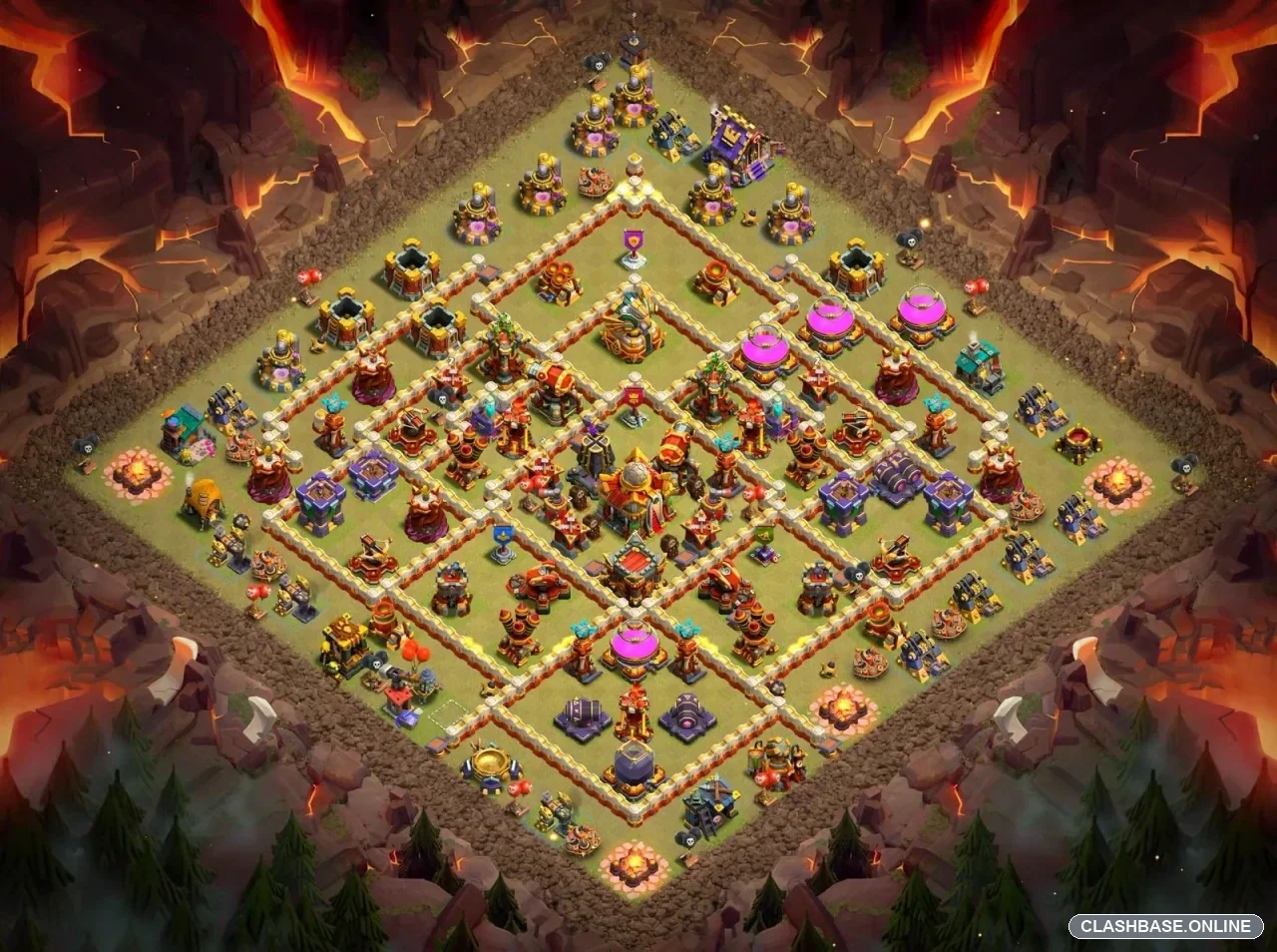
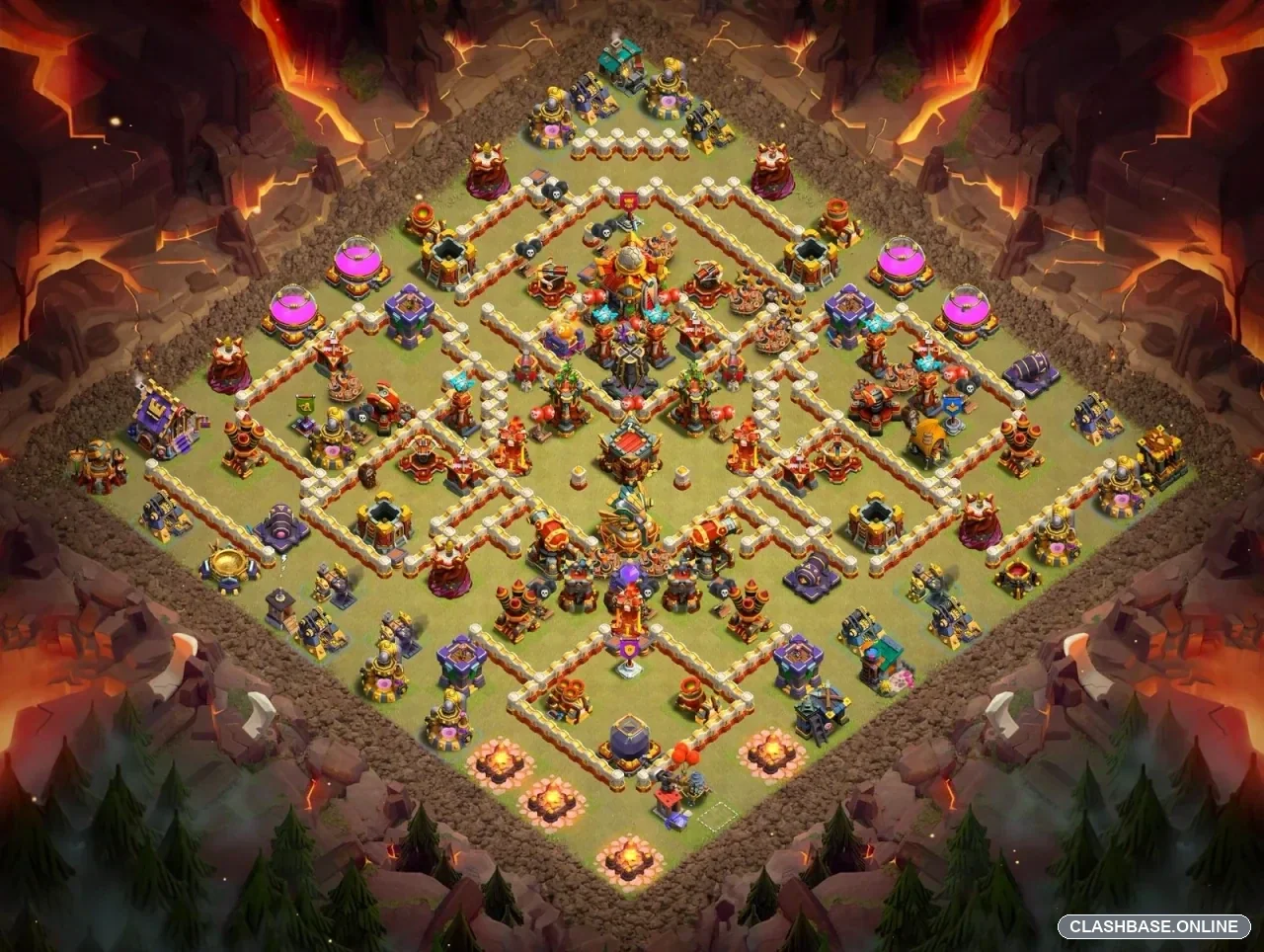
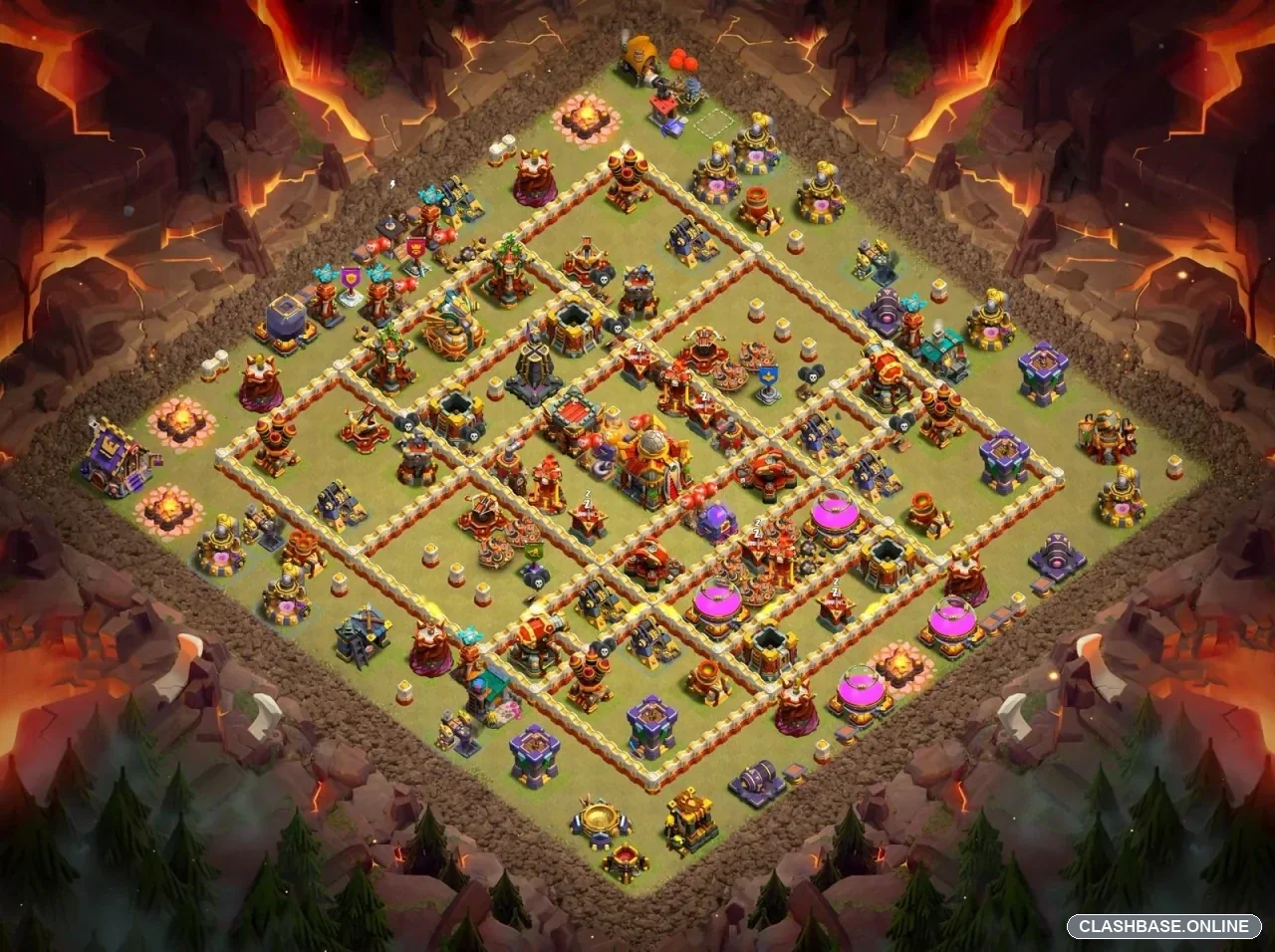
Town Hall 16 Clan War Layout #36 has an uneven, stretched shape that immediately separates it from a traditional compact war base. The walls form an asymmetric diamond, with several narrow compartments arranged around a more open central area. The Town Hall sits close to the edge of the inner core rather than being buried at the exact center. That placement creates an interesting war decision: an attacker may secure the Town Hall without crossing every major defensive section, but the army still has a considerable amount of work left afterward.
The right edge is the first side I would inspect when scouting this layout. From roughly three to five o’clock, the wall geometry appears shorter and less layered than the opposite diagonal. There is enough room to clear a couple of exterior structures and establish a controlled funnel before committing the main force. That makes the side attractive, although it is not necessarily an automatic weakness. The quality of the entry will probably matter more than the side itself.
A disciplined ground attack could be dangerous here.
Root Riders or another heavy smash composition may use the shorter diagonal to move quickly toward the core. The first few wall sections are unlikely to be the main obstacle for an army with strong wall-crossing ability. What matters more is whether supporting troops follow the same route. If the tanks move inward while the Queen, Warden, or ranged units continue clearing along the outer right edge, the attack can lose its shape before the Town Hall is properly secured.
That split can be deceptive. Both groups may remain alive for a while, so the attacker still sees buildings falling and percentage climbing. The real cost appears later, when spell support becomes divided. A Rage, Heal, Freeze, or other control spell that would normally strengthen one concentrated push may only help half of the army.
The Town Hall placement adds another layer to this decision. Because it sits near the edge of the inner core, an attacker may be tempted to commit early resources to guarantee the objective. In Clan War, that makes sense. A safe Town Hall takedown protects the two-star result. The tradeoff is what remains behind it. Several defensive pockets sit farther across the village, and spending too many hero abilities or spells on the objective could leave the back end surprisingly healthy.
This is probably where the anti-three-star character of the base becomes clearest. It does not need to make the Town Hall impossible to reach. Instead, it can allow the objective while forcing the attacker to decide how much strength to preserve for the rest of the village.
Queen Charge Hybrid looks like a more controlled option. A Queen could work from the right side, remove one defensive pocket, and close part of the funnel before Miners and Hog Riders enter. That would shorten the route into the central area and reduce the number of competing targets. If the Queen stays on track, the main Hybrid phase could move through the shorter diagonal with much better control.
The problem is timing. One awkward Queen turn, an unexpected outside target, or a slow high-hitpoint building can stretch the setup. The attack may still reach the Town Hall, but the final compartments could become a race against the clock. On a war base like this, time failure is just as useful as overwhelming defensive damage.
Air attackers face a different puzzle. The Air Defenses appear spread around several inner sections instead of sitting together in one tidy cluster. Inferno Towers also work as separate high-value threats rather than one compact pair. That staggered coverage reduces the chance of solving the entire core with one convenient spell sequence.
Dragons may still find a workable approach from the right after the funnel is shaped. A narrow deployment would probably be safer than spreading them across the whole side. With a broad line, some Dragons could follow outside buildings while the stronger group turns toward the Town Hall. Once the formation stretches, the center receives only part of the army.
LavaLoon gives the attacker more precise control over target order, but it still requires a clear second phase. Removing one Air Defense does not appear to open the whole village automatically. The attacker needs to decide which defensive pocket comes next and how the Balloons will transition from the Town Hall section toward the remaining back end.
The biggest weakness in Layout #36 is the shorter diagonal itself. A well-prepared entry from the right may reduce defensive overlap and create a cleaner route inward than the longer side of the diamond. If an attacker removes the correct corner buildings and keeps the main army compact, several defenses could fall in sequence before the rest of the base has enough time to influence the fight.
Still, an obvious entry is not necessarily a bad design choice. If that route demands precise funneling, the base can punish players who simply spam the entire side. A wide attack may cause troops to spread across adjacent compartments, while a rushed Town Hall push may leave too little strength for cleanup.
That is why this layout fits Clan War better than ordinary farming or trophy defense. Its value comes from scouting pressure and from separating the main objective from the defenses an attacker would ideally like to remove at the same time. A cautious player may secure a comfortable two-star. A more aggressive player can chase the triple, but that requires better control through the shorter diagonal and enough surviving force to handle the far side.