 CLASHBASE.ONLINEFarming
About this Town Hall 17 base
Copy this base to Clash of Clans
Tap the button below. Clash of Clans will open so you can place this layout in an available base slot.
Copy base to the gameClash of Clans must be installed on this device.Rate this layout
Share a useful, honest experience. One review is stored per visitor for this item.
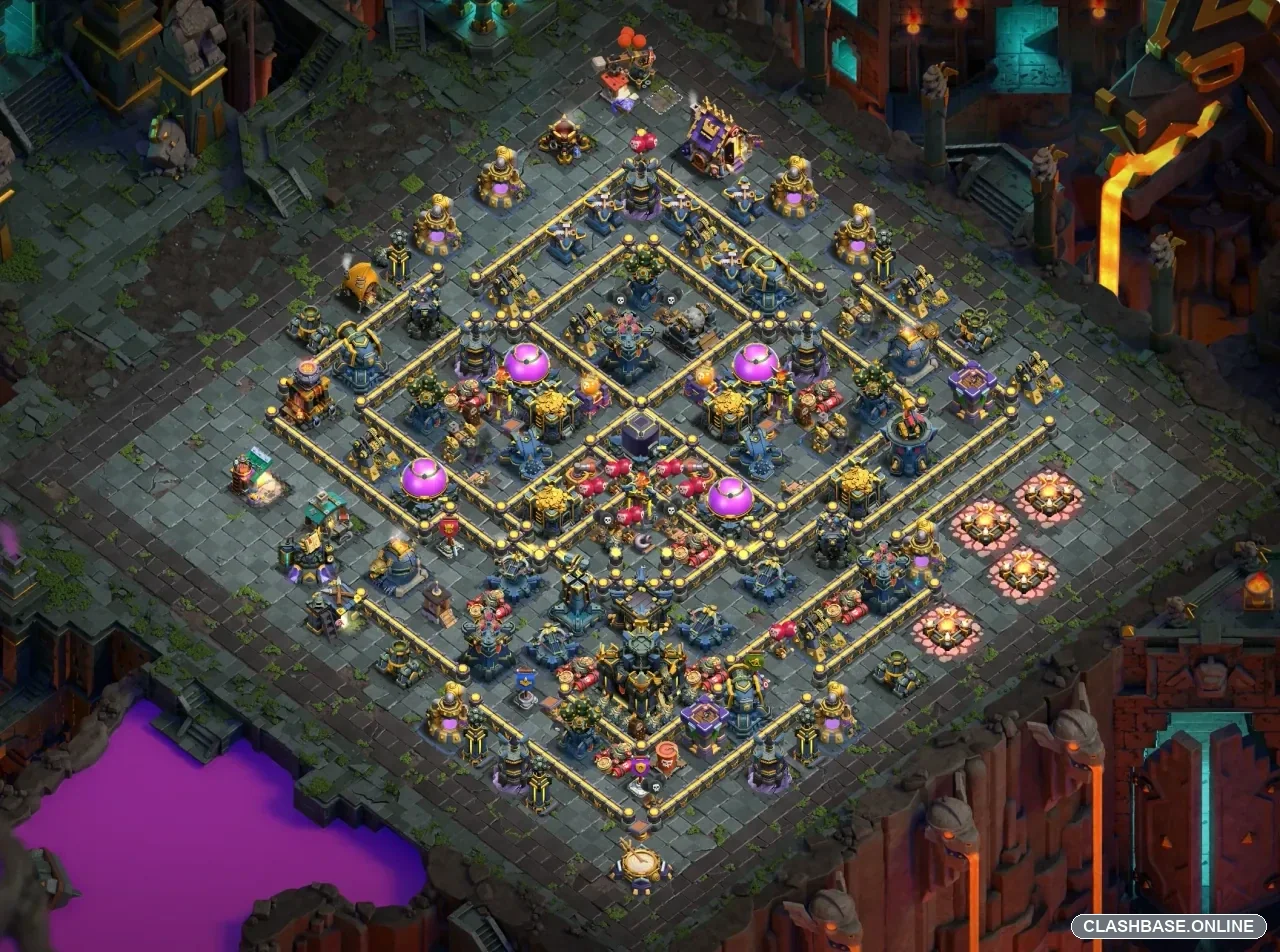
TH17 Farming Base #5: Multi-Compartment Resource Defense with a Bottom-Side Funnel
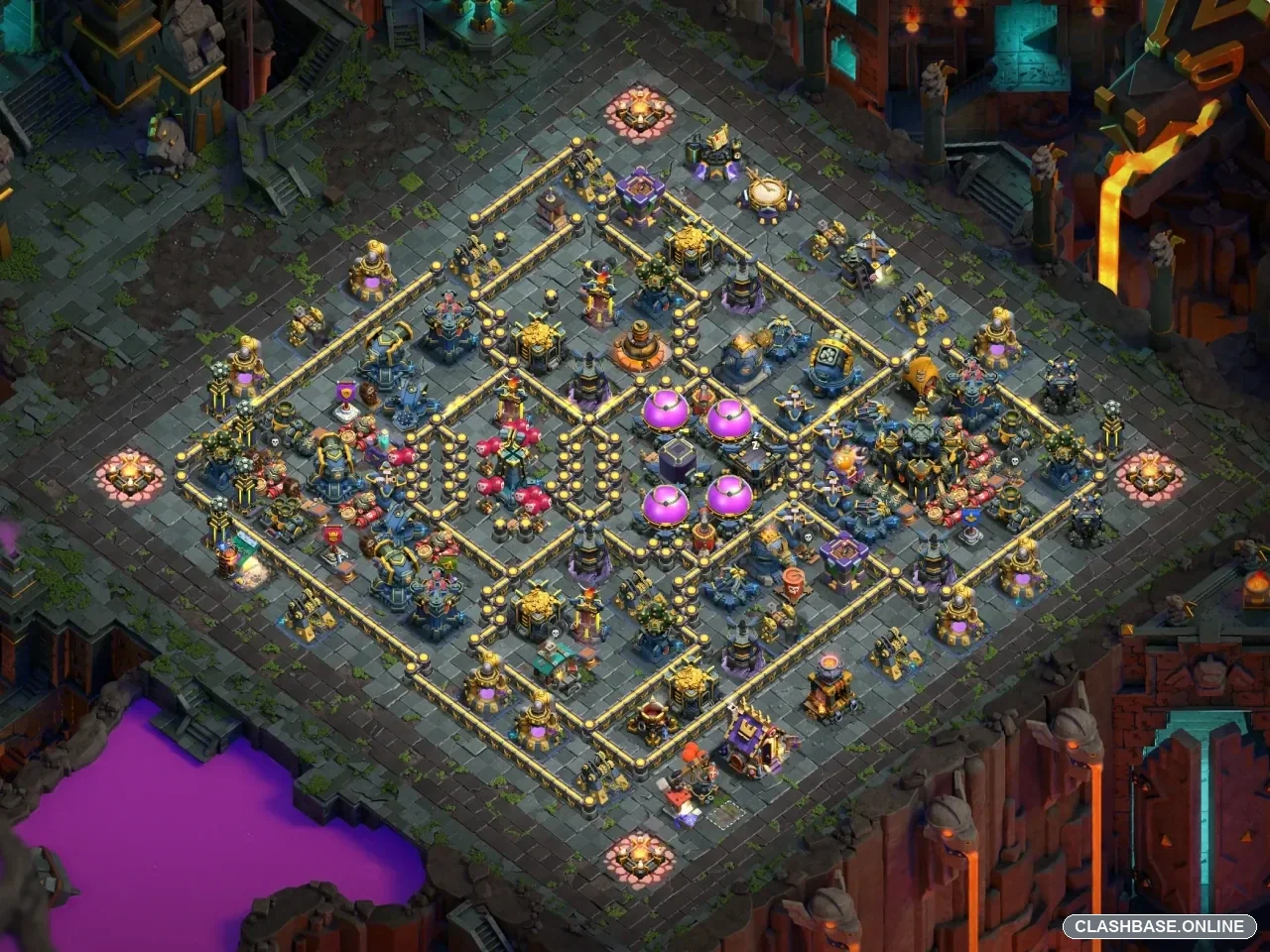
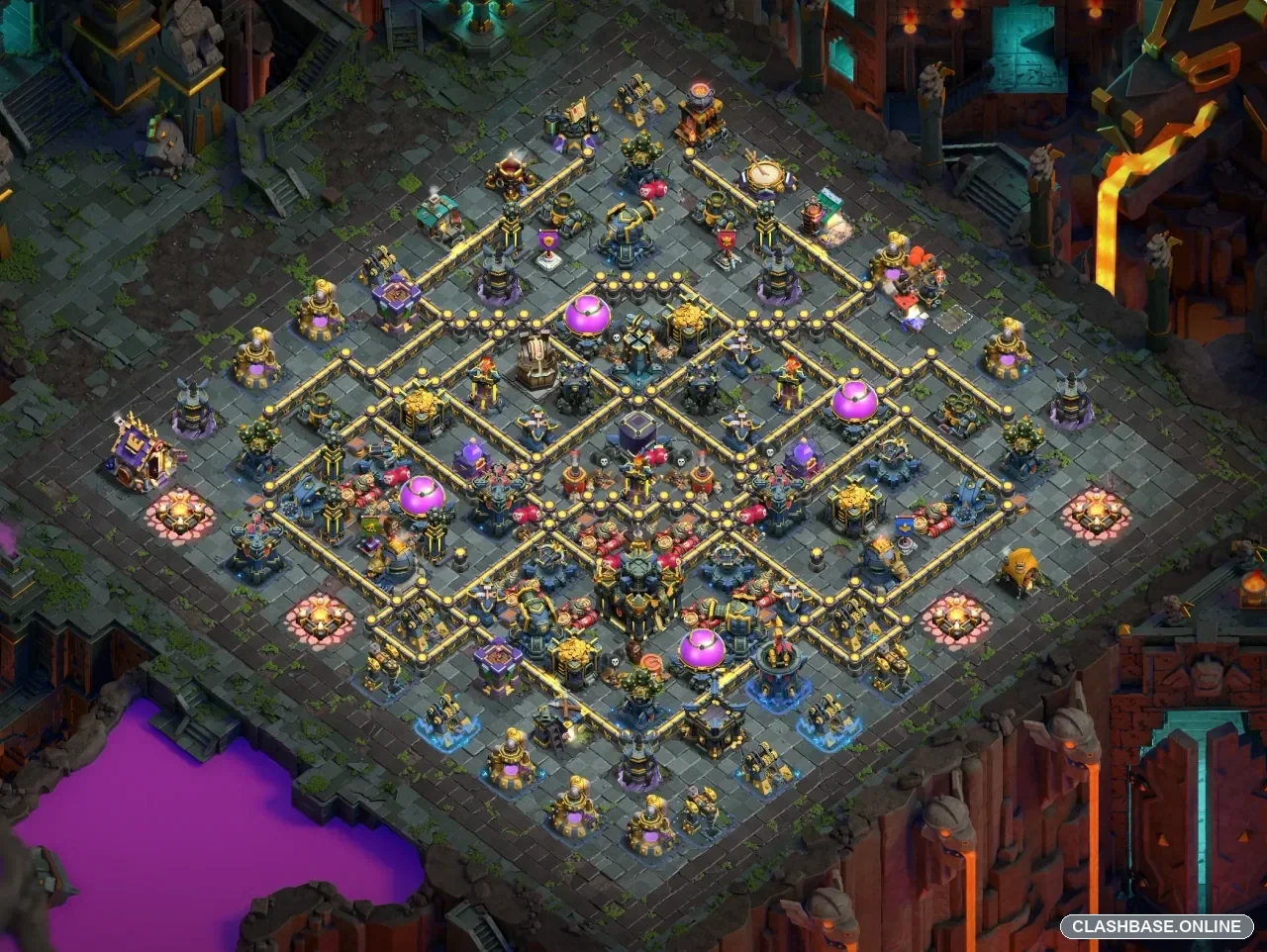
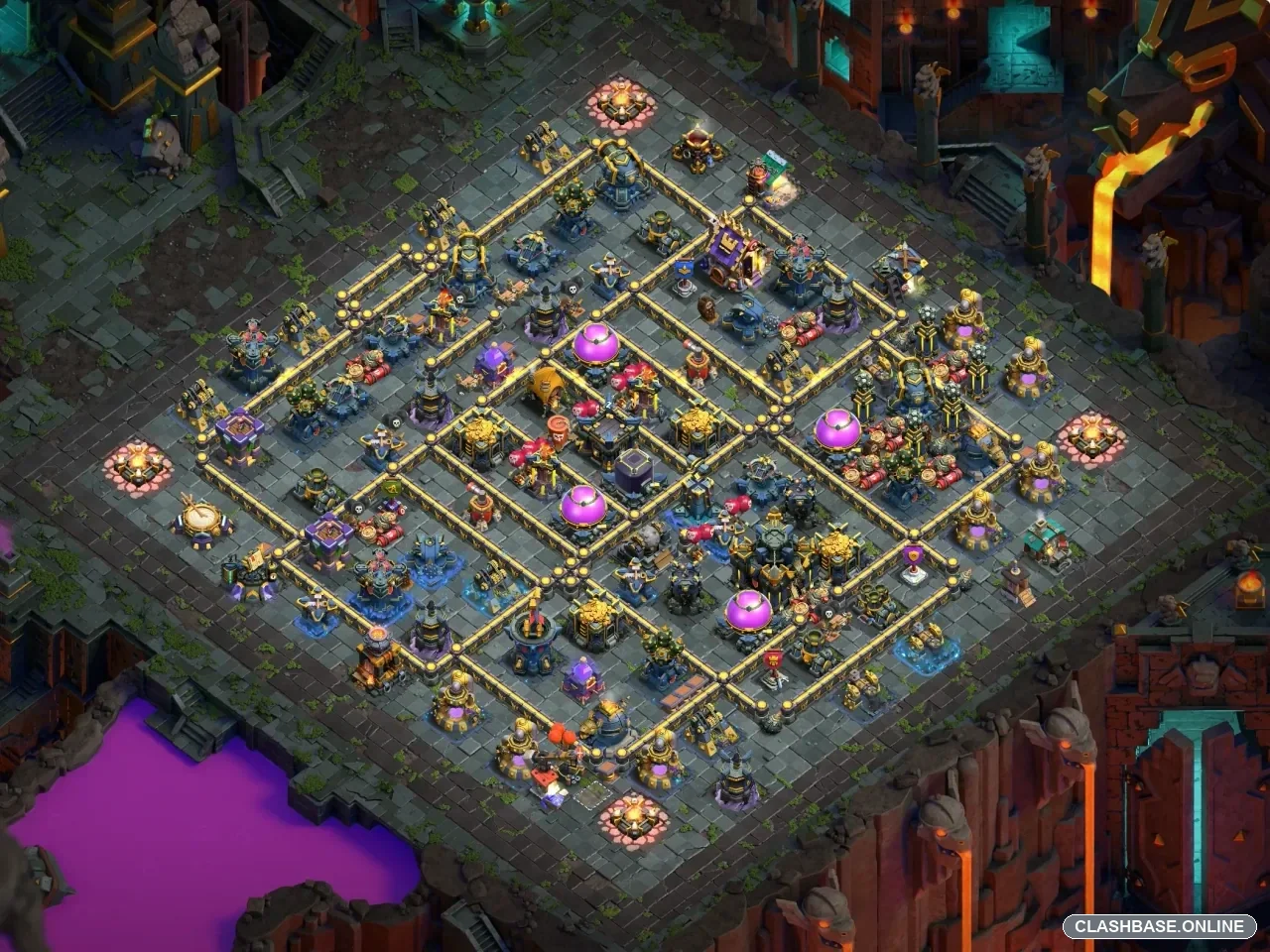
Town Hall 17 Farming Layout #5 is built around a multi-compartment structure rather than one huge central box. The Town Hall sits slightly below the visual center, surrounded by several defensive pockets, while the main resource buildings are spread across different parts of the village. That separation is what gives the layout its farming purpose. An attacker may reach one storage or the Town Hall without too much trouble, but taking every important resource in the same clean push is a different challenge.
The bottom edge, around six o’clock, is the first place I would study before attacking. There is enough open space to remove a few exterior buildings and create a funnel toward the middle. At first glance, this side looks fairly welcoming. That may be slightly deceptive, because once troops enter the first compartments, several nearby targets can pull the army away from the intended route.
A narrow funnel seems much more dangerous to this base than a wide one.
Imagine a Root Rider or heavy ground army entering from the bottom. If the attacker clears only the buildings needed to create one lane, the main force could stay together and move toward the Town Hall with decent momentum. Heroes, healers, and supporting troops would remain close enough to share the same spells, which makes the central push much easier to control.
Open too much of the bottom edge, though, and the attack can start stretching sideways. Root Riders might push into the center while the Queen or another group follows a neighboring compartment. For a while, that split can actually look good. Two parts of the base are falling at once and percentage rises quickly. The problem becomes obvious later, when the main army needs support and the heroes are several walls away.
That is where time pressure starts to matter.
A farming raid does not necessarily fail because the army dies. Sometimes it fails because troops finish in the wrong places. One group may reach the Town Hall, another may clear a storage pocket, and the final surviving units can spend the last twenty seconds simply walking toward buildings on the opposite side. If even one valuable storage survives because of that delay, the base has done something useful.
Queen Charge Hybrid looks like one of the more controlled counters. A Queen starting near the bottom could remove one defensive compartment, cut away buildings that might pull the main army sideways, and create a narrower lane for Miners and Hog Riders. That approach may give the attacker more control than simply dropping a full smash army across the edge.
The downside is timing. A Queen that walks farther along the outside than expected, takes too long on a high-hitpoint target, or needs another wall opening can delay the Hybrid phase. The Town Hall may still fall, but the far-side storages could become much harder to reach before time runs out.
Root Riders or another heavy ground smash offer a faster solution, although they depend heavily on pathing. The walls themselves are unlikely to stop these armies for long. What matters more is whether the compartments can separate the tanks from their support. A Rage, Heal, Freeze, or other control spell is far more valuable when the whole army is fighting in one section. Once the formation breaks into two groups, every spell becomes a compromise.
The Town Hall's slightly lower placement adds another useful farming decision. A player coming from the bottom can aim for it relatively early, but that route does not necessarily pass through every major storage. Going directly for the objective may leave resources elsewhere. Chasing those storages first gives better loot value, but it also costs more movement and keeps the core active for longer.
That tradeoff is a good reason to classify this as a Farming layout.
Air attackers face a different problem. The anti-air network appears spread across opposite parts of the village rather than concentrated in one convenient section. The Inferno Towers also seem to support separate routes through the core, which makes it harder to solve the entire middle with one simple spell plan.
Dragons could still work from the bottom after the funnel is prepared. A narrow deployment would probably be safer than spreading them across the entire edge. A wide Dragon line may send some units into side compartments while the stronger group moves toward the Town Hall. Once that happens, the central push is fighting with fewer troops than expected.
LavaLoon gives the attacker better control over individual defenses, but the second half of the attack becomes important. Removing one Air Defense does not appear to open the entire village. The attacker still has to decide which defensive pocket comes next, when to pressure the Town Hall, and where the surviving Balloons should finish.
What makes this layout interesting from a farming perspective is the distance between the different resource pockets. A rushed attacker may claim some loot from the bottom side and make good progress toward the Town Hall, while the remaining storages still demand another commitment. That is more realistic than pretending a farming base can keep every resource untouched against a properly prepared TH17 army.
The biggest weakness is also fairly clear. If the attacker creates a disciplined bottom-side funnel and keeps the army compact, the central compartments may open much faster than intended. The base relies on troop separation and travel time more than raw wall strength. If those two defensive ideas fail, a strong ground army could move through the middle efficiently.
Still, the layout has a clear identity. TH17 Farming Layout #5 uses a slightly lower Town Hall, a multi-compartment core, separated resource routes, and spread-out defensive coverage to make complete loot collection less convenient than the opening suggests.