 CLASHBASE.ONLINEFarming
About this Town Hall 17 base
Copy this base to Clash of Clans
Tap the button below. Clash of Clans will open so you can place this layout in an available base slot.
Copy base to the gameClash of Clans must be installed on this device.Rate this layout
Share a useful, honest experience. One review is stored per visitor for this item.
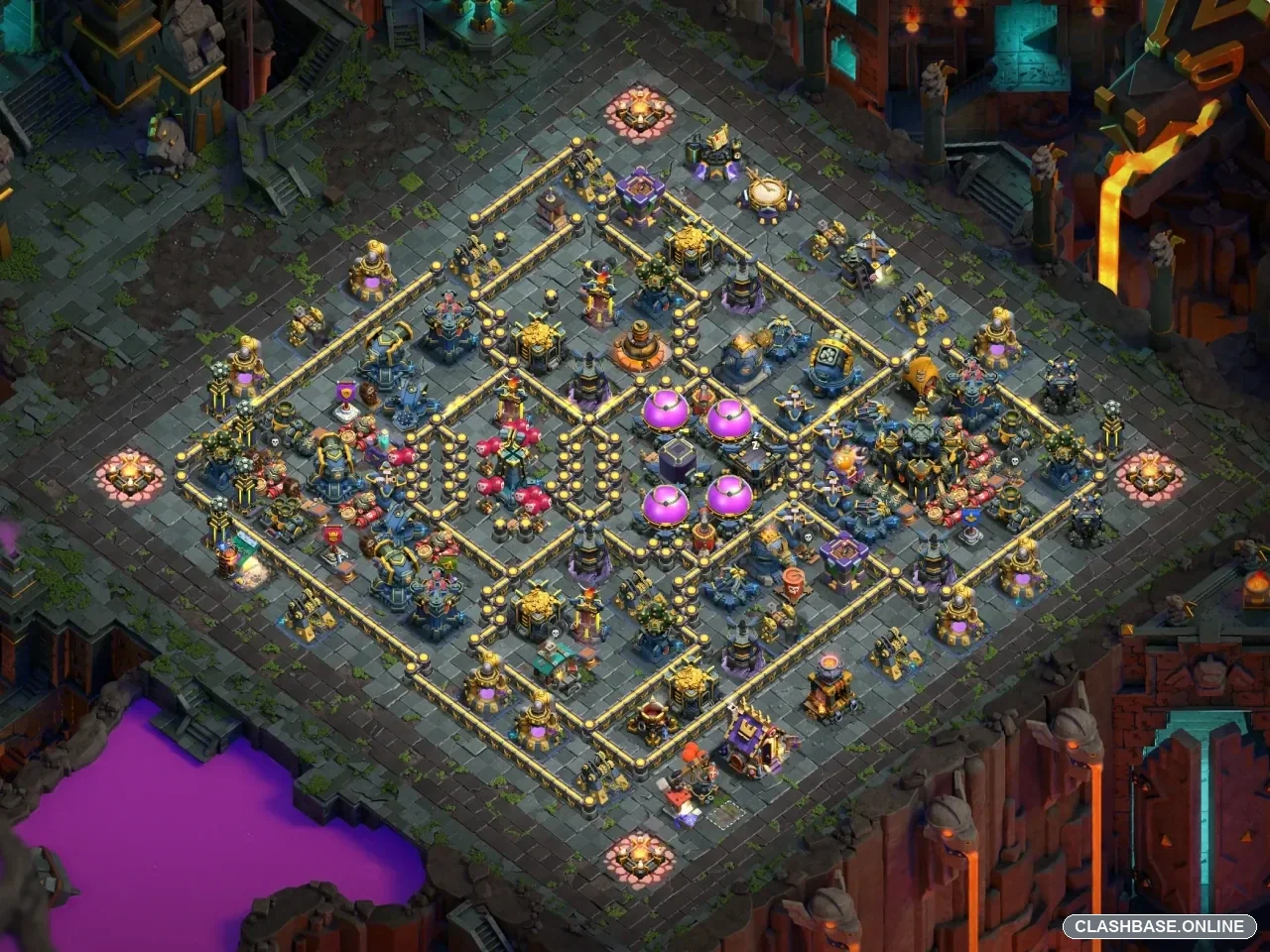
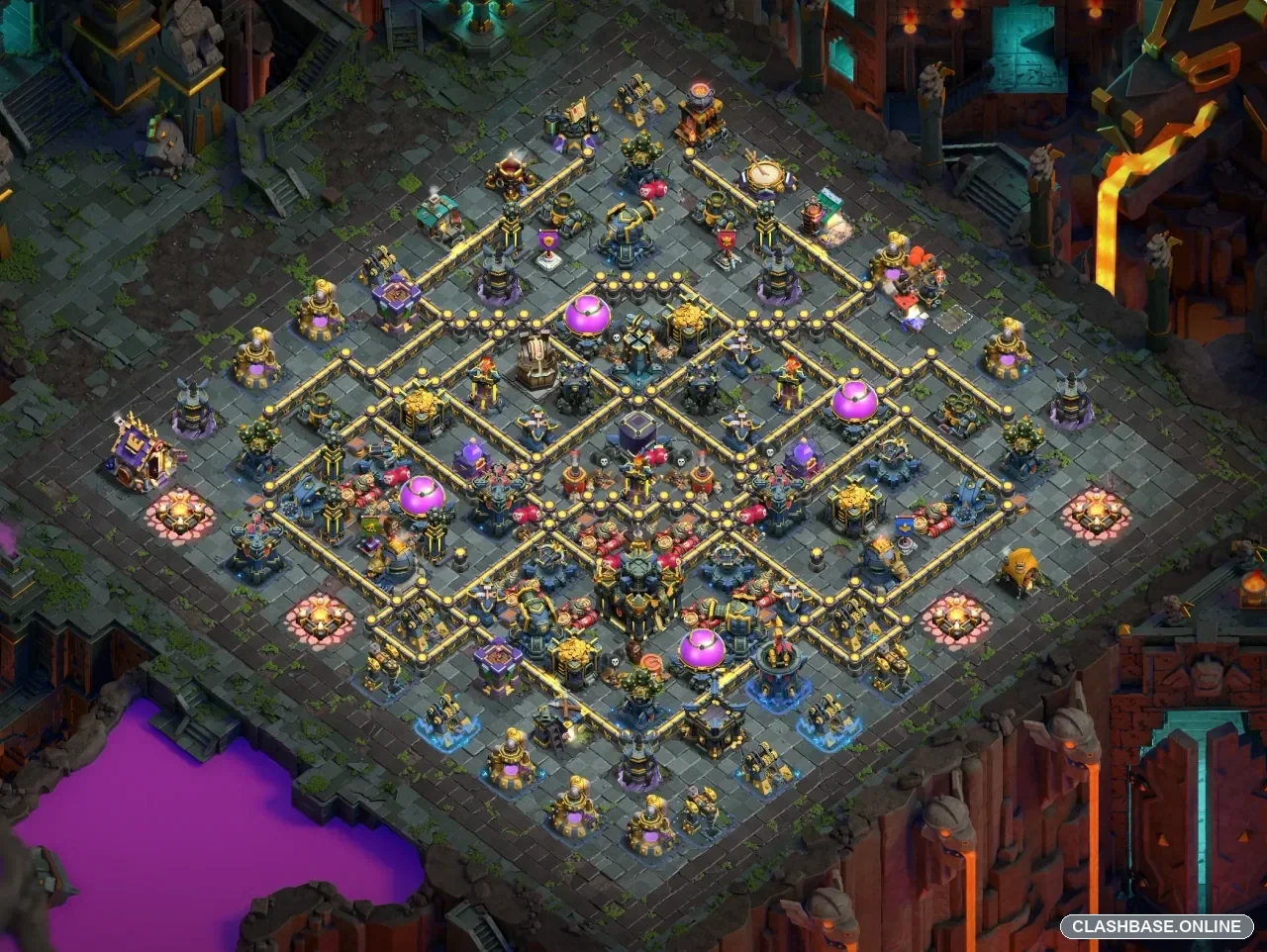
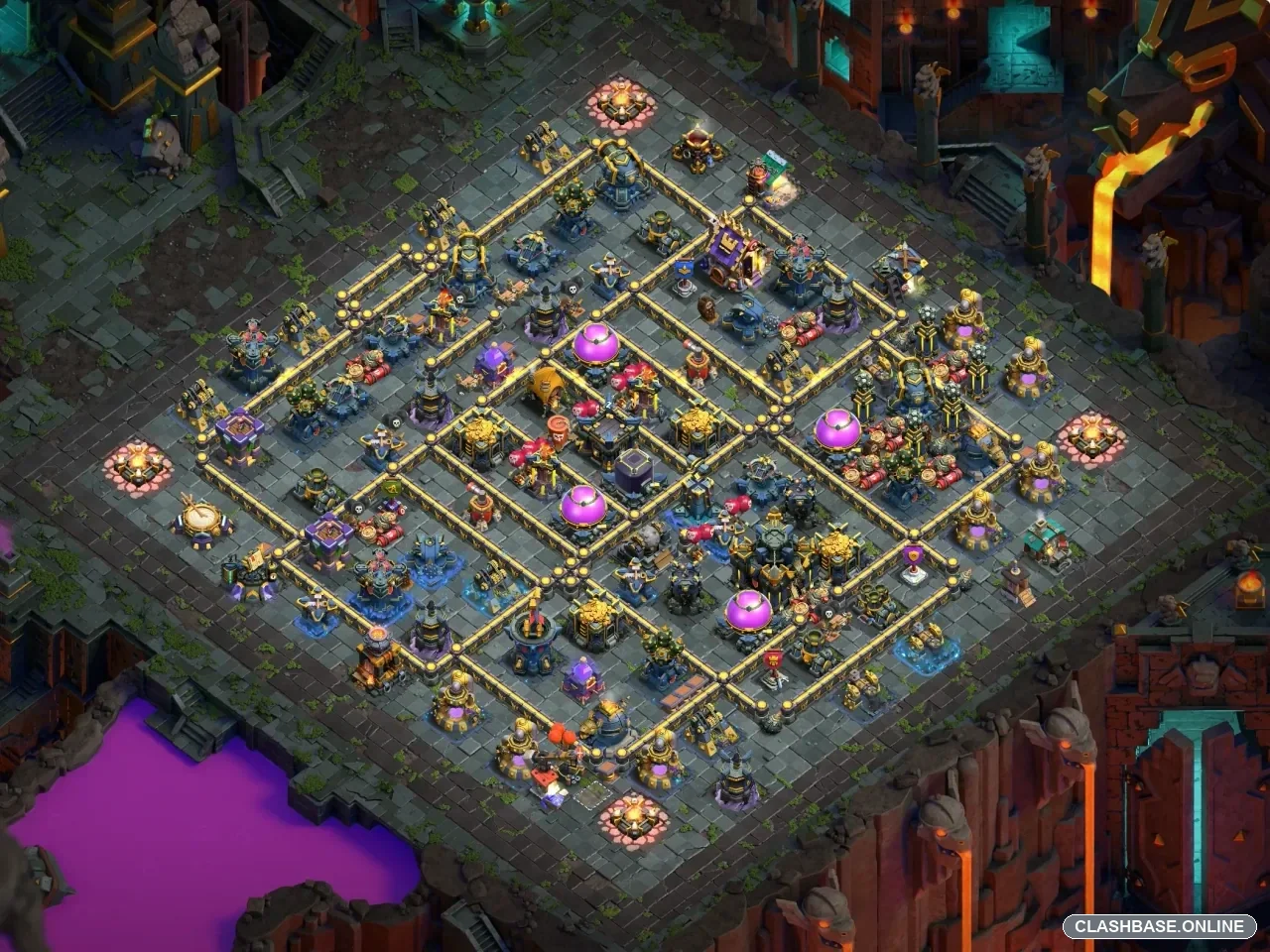
TH17 Farming Base #13: Layered Square with a Protected Resource Core and Left-Side Funnel
Town Hall 17 Farming Layout #13 is built around a fairly straightforward farming principle: keep the important resources close enough to benefit from strong defensive coverage, but avoid placing every valuable building on one easy attack line. The Town Hall sits near the center, tucked behind the main storage line, while the walls form several layers around the core. From the screenshot, the base looks compact and organised. Once you start tracing an attack route, though, the different compartments make a complete resource sweep less obvious.
The storage placement is probably the first thing worth studying. Gold and Elixir value is distributed through the inner sections rather than being pushed toward a single corner. That means an attacker may reach one storage and still have to cross another wall layer before gaining access to the next valuable pocket. For a farming layout, this is a useful distinction. Losing one section does not necessarily mean losing everything.
The left edge, roughly around eight or nine o’clock, appears to provide the cleanest entry. There is enough space to remove a couple of outside buildings and create a funnel without spending too much of the army on preparation. A disciplined attacker could use that side to form a relatively straight route through two wall layers and toward the central resource area.
That is also the part of the layout I would be most cautious about.
If the attacker clears exactly the right buildings, the layered structure can become much easier to read. Root Riders or another heavy ground smash army could use the left-side opening to push directly toward the core. These armies are unlikely to spend much time struggling with the walls themselves, so the bigger defensive test is whether the compartments can disturb troop pathing before the main storage line is reached.
A narrow funnel is potentially dangerous. If Root Riders, heroes, healers, and supporting troops all stay together, the attacker can get much better value from Rage, Heal, Freeze, or other control spells. One well-organised group moving through the middle is far harder for this base to slow than several smaller groups fighting in different sections.
A wide entry may create the opposite result. The main tanks could head toward the Town Hall while the Queen or supporting units continue along an outside lane. At first, that may look like extra value because both groups are destroying buildings. Later, however, the army reaches the central defenses in pieces. Spell coverage becomes awkward, cleanup starts from the wrong places, and one storage on the opposite side can survive simply because the troops no longer have a natural route toward it.
Queen Charge Hybrid looks like another realistic way to test the layout. A Queen starting from the left could remove one defensive pocket and eliminate some of the buildings that might otherwise pull the Hybrid army sideways. Miners and Hog Riders could then travel through a narrower path toward the center.
The catch is timing. A Queen that takes an unexpected turn or gets held up by a high-hitpoint building can add valuable seconds to the setup. The Town Hall and first storage may still fall, but the far side of the base could become difficult to finish. In farming defense, that is not a bad outcome. Protecting one major storage is still meaningful even if the attacker earns strong percentage.
The anti-air setup seems designed around the same idea of separated threats. Air Defenses provide staggered coverage around the core rather than sitting together in one convenient cluster. Inferno Towers also appear to function as individual high-value targets. That spacing may force an air attacker to decide which threat deserves spell support first instead of solving the entire center with one simple combination.
Dragons could potentially work from the left after a careful funnel. A tight deployment should keep more of the army moving into the inner sections. Spread them across too much of the edge and several Dragons may follow outside buildings, leaving the central group to deal with the strongest defenses by itself.
LavaLoon offers more precise control over target order, but it would still need a clear plan for the second half of the raid. Taking down the first Air Defense is only one step. The attacker still has to cross the middle, account for the Town Hall, and reach whichever storage pocket remains for cleanup.
What makes Farming Layout #13 convincing as a resource base is that the Town Hall and storages are related without being placed on exactly the same attack route. A player can push directly for the central objective, but that may leave loot elsewhere. Chasing every storage first can produce better resource value, although it costs additional movement and time.
There is no need for a farming base to be described as unbeatable. Against a carefully prepared TH17 army, any visible layout can be broken with the right execution. The more useful question is whether a rushed or poorly shaped attack can take every valuable building efficiently. Here, that does not appear guaranteed.
The main weakness remains the left-side corner funnel. A patient attacker who creates a straight route through two wall layers could open the central storage line earlier than intended. That is likely to be the first approach experienced players try. Still, the base has enough separate compartments that a sloppy version of the same attack may produce very different results.