 CLASHBASE.ONLINEClan War
About this Town Hall 13 base
Copy this base to Clash of Clans
Tap the button below. Clash of Clans will open so you can place this layout in an available base slot.
Copy base to the gameClash of Clans must be installed on this device.Rate this layout
Share a useful, honest experience. One review is stored per visitor for this item.
TH13 Clan War Base #20: Offset-Ring Defense Built Around Three-Star Pathing Pressure
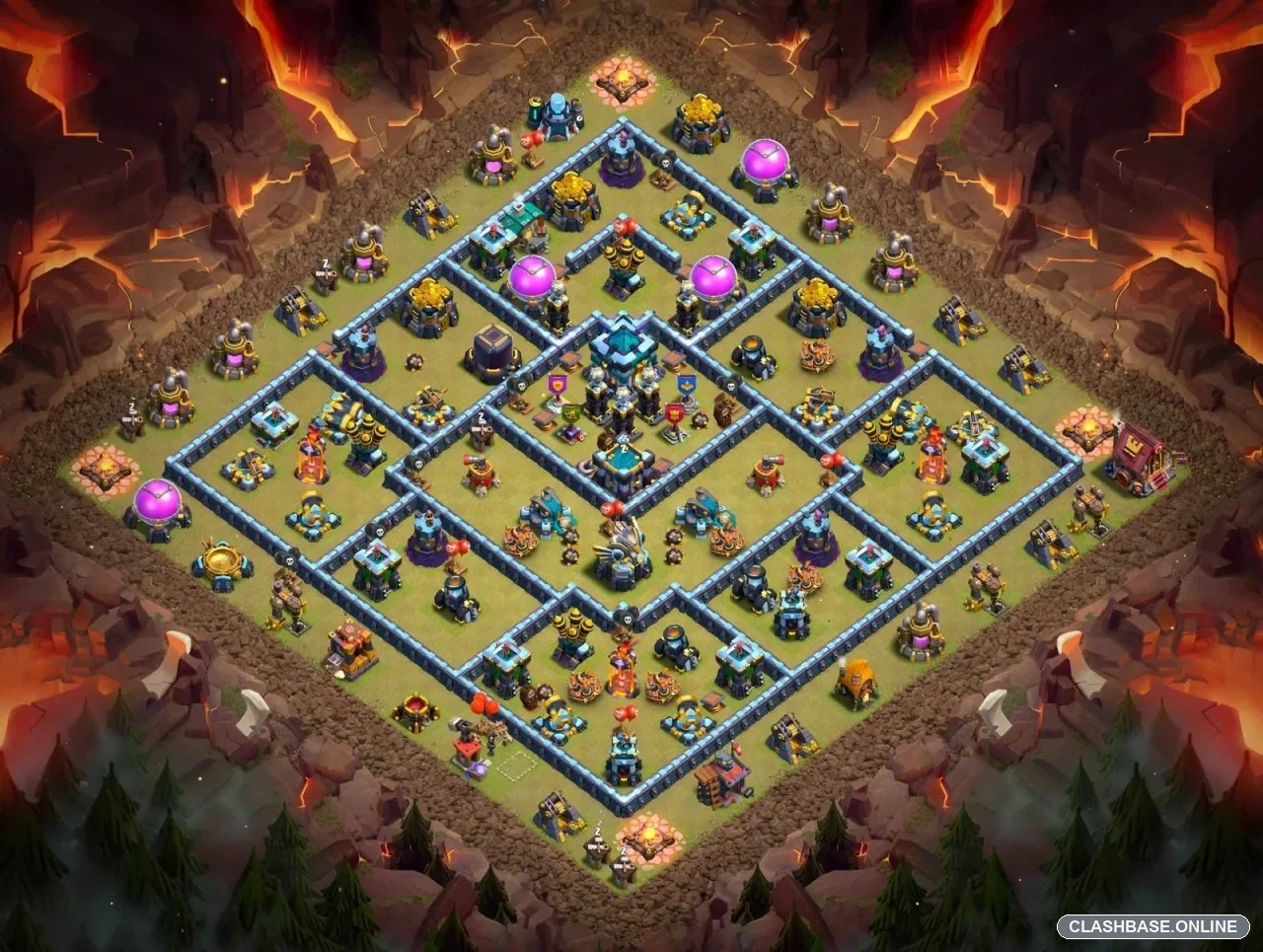
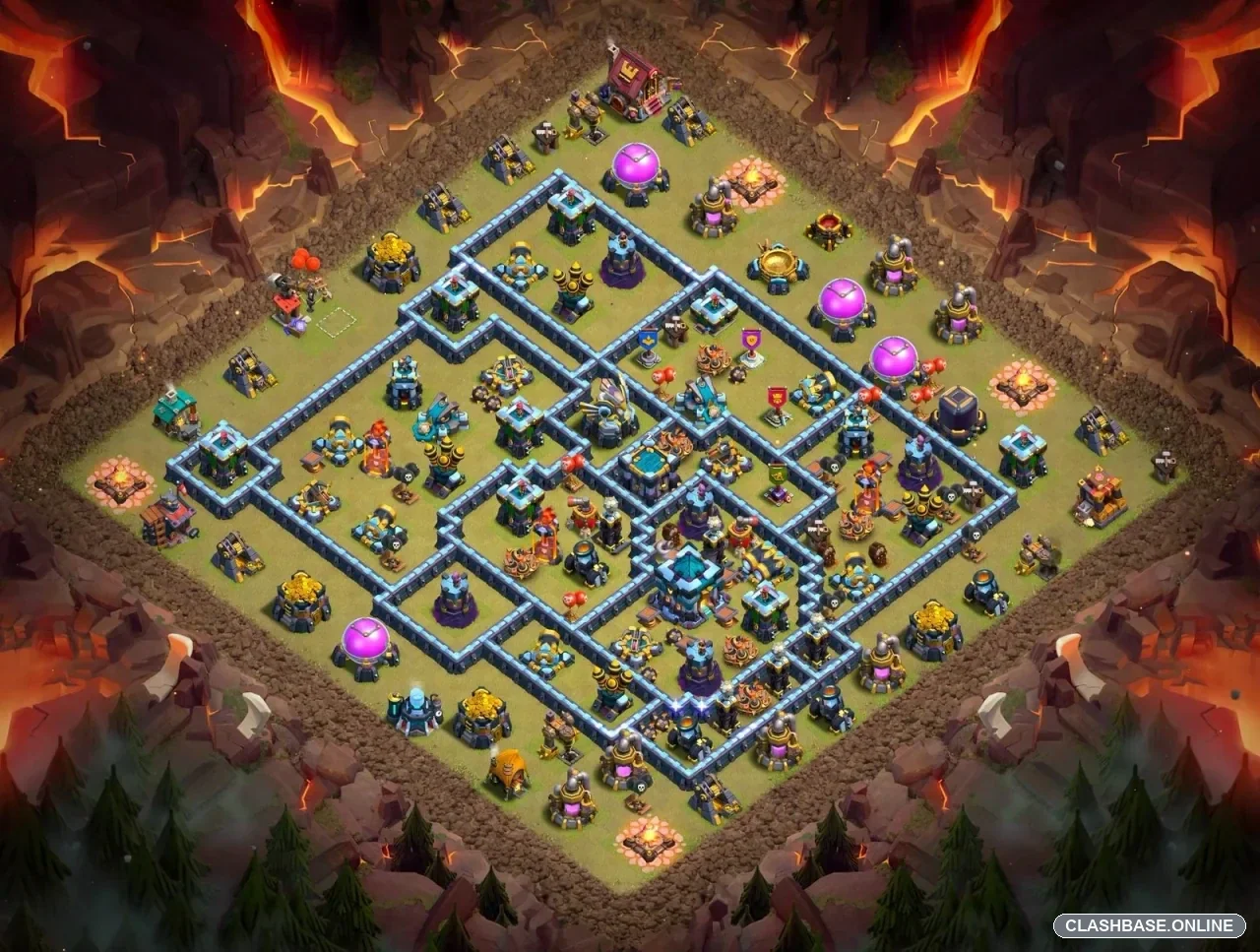
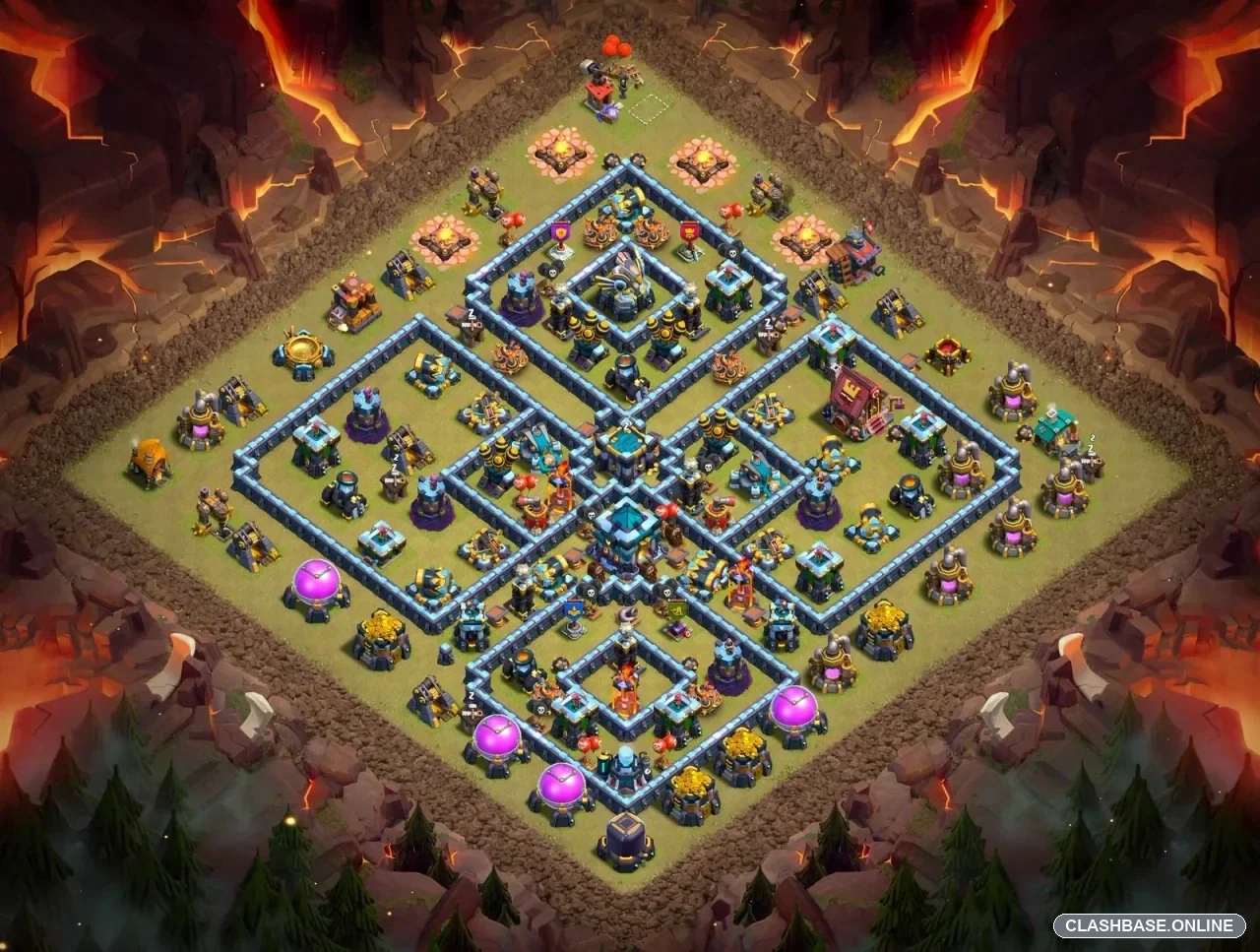
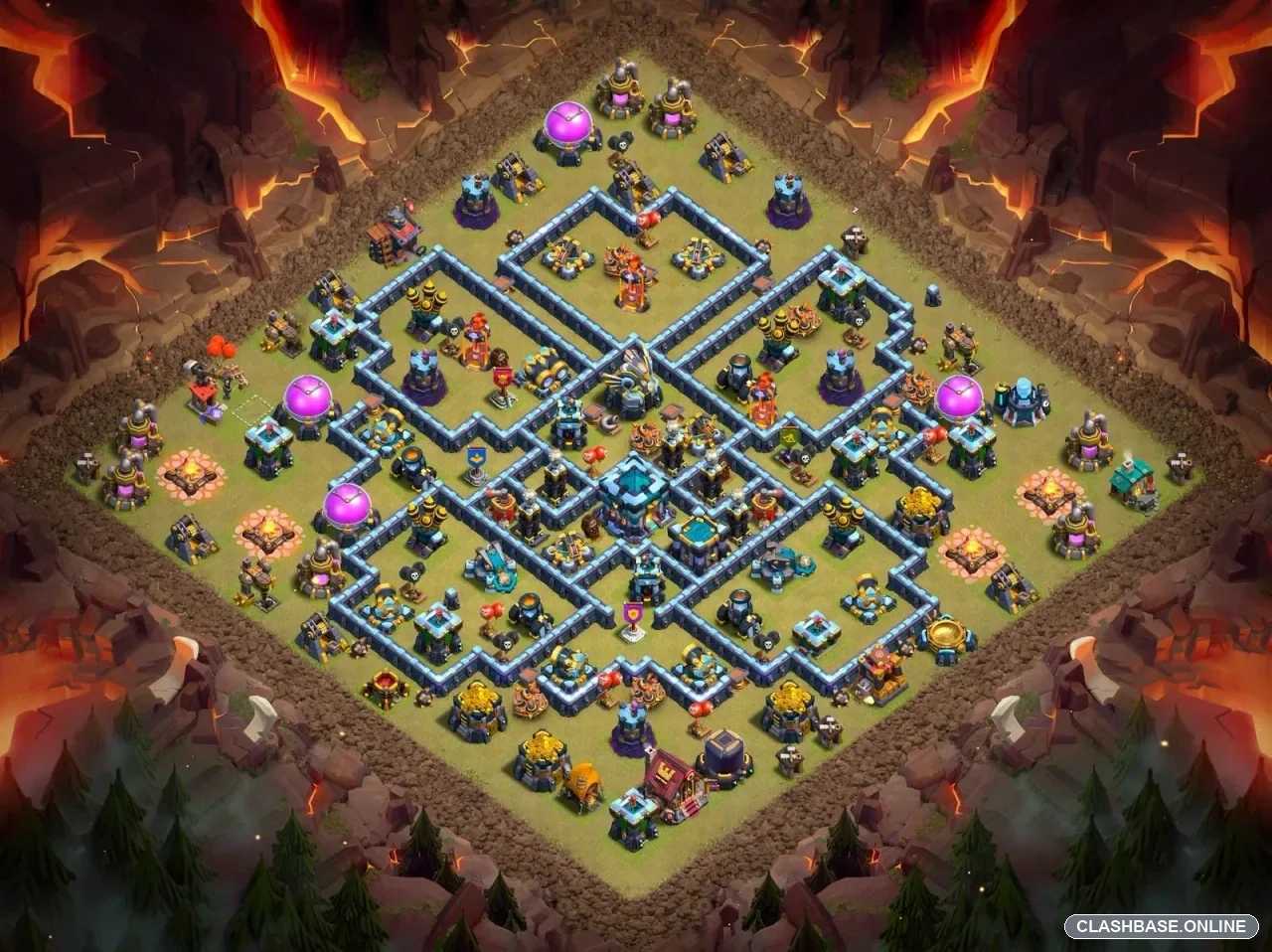
TH13 Clan War Layout #20 uses an offset-ring structure with the Town Hall separated slightly toward the left side of the main defensive network. Looking closely at the actual layout, the base is not relying on one oversized core. Instead, several compartments wrap around the center, with major defenses spread far enough apart that losing one section should not automatically collapse everything nearby.
That gives Layout #20 a clear war identity. The Town Hall matters, but the broader defensive goal appears to be protecting the third star by disturbing troop movement and keeping fresh defensive pressure alive after the first major engagement.
The Town Hall does not carry the whole defense
The Town Hall sits inside the stronger inner section but remains separated from several other high-value targets.
That is useful defensively. A force that commits heavily around the Town Hall may still leave Inferno Towers, X-Bows, Air Defenses, and other important structures active elsewhere.
In other words, the base can afford to lose one objective without immediately losing control of the raid.
For an anti-three-star design, that is often more valuable than simply stacking everything directly beside the Town Hall.
The offset ring is designed to break troop formation
The wall pattern is probably the most important feature of Layout #20.
Several connected compartments create an uneven ring around the inner defenses. Once troops reach this area, different targets can pull them in different directions. One group may begin following the ring while another moves deeper toward the core.
From the defender's perspective, that is exactly the kind of split this structure wants.
Yeti or Bowler Smash formations become much less dangerous when tanks, heroes, and supporting troops stop moving together. Once the formation stretches across separate compartments, concentrated damage drops and defensive towers gain longer firing windows.
The walls are therefore functioning as a pathing-control system, not merely another layer to break.
Air and Inferno coverage stays divided
The Air Defenses are spread around different inner lanes, while the Inferno Towers operate as separate defensive anchors rather than one compact pair.
That spacing reduces easy spell value.
Against Dragons or LavaLoon, one defensive lane may begin to fail while another remains active farther across the village. Queen Charge Hybrid creates a different kind of pressure, but the same defensive principle applies: clearing one compartment should not automatically neutralize everything protecting the next.
This helps the base maintain pressure through several phases of a war raid.
The lower-left side is the key structural concern
The lower-left edge appears to be the most vulnerable section.
The real danger is an early break beside the offset Town Hall that cuts through the ring before troop movement begins to circle. If that happens too cheaply, one of the layout's main defensive advantages disappears.
This makes the lower-left area particularly important for overlapping fire and hidden trap pressure. The defense does not necessarily need an immediate stop. Forcing extra time, hero health, abilities, or spell investment may already be enough to preserve the rest of the structure.
Why Layout #20 works for Clan War
The strength of TH13 Clan War Base #20 comes from making several parts of a three-star attempt succeed in the correct order.
The Town Hall creates commitment. The offset ring encourages troop separation. Spread Infernos and Air Defenses preserve defensive pressure, while surviving compartments can become awkward cleanup zones later.