 CLASHBASE.ONLINEClan War
About this Town Hall 13 base
Copy this base to Clash of Clans
Tap the button below. Clash of Clans will open so you can place this layout in an available base slot.
Copy base to the gameClash of Clans must be installed on this device.Rate this layout
Share a useful, honest experience. One review is stored per visitor for this item.
TH13 Clan War Base #26: Offset-Ring Defense Built Around Three-Star Denial
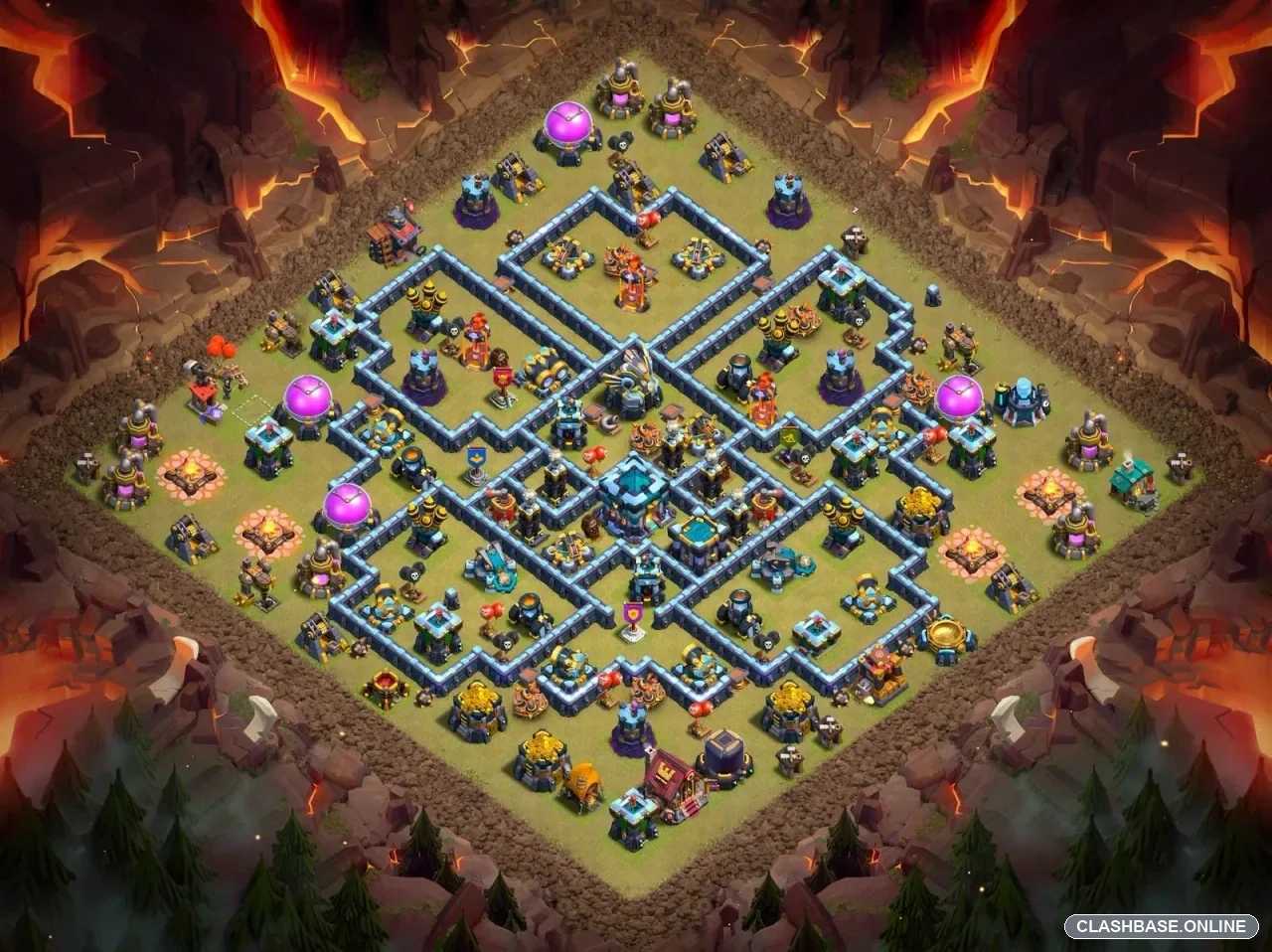
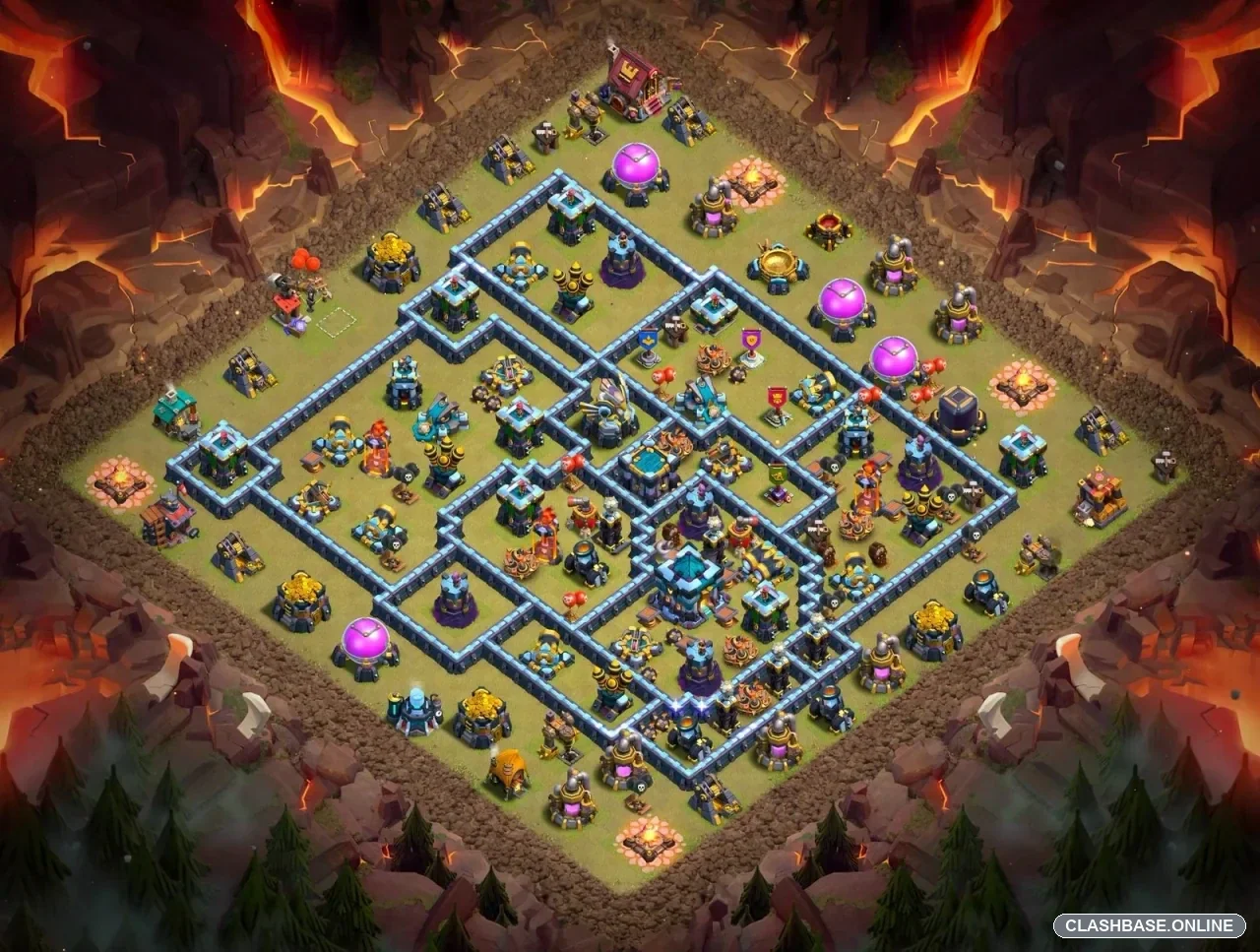
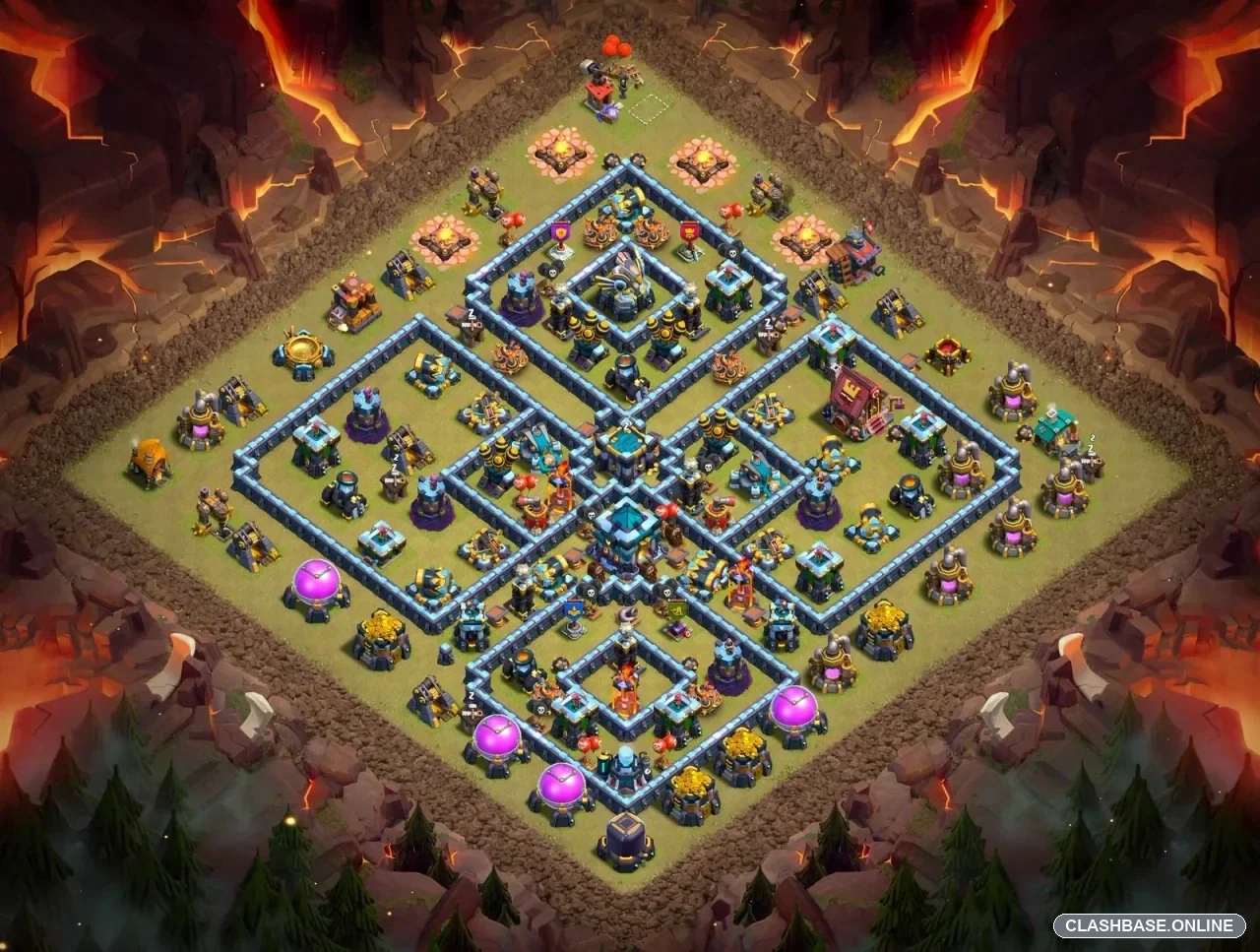
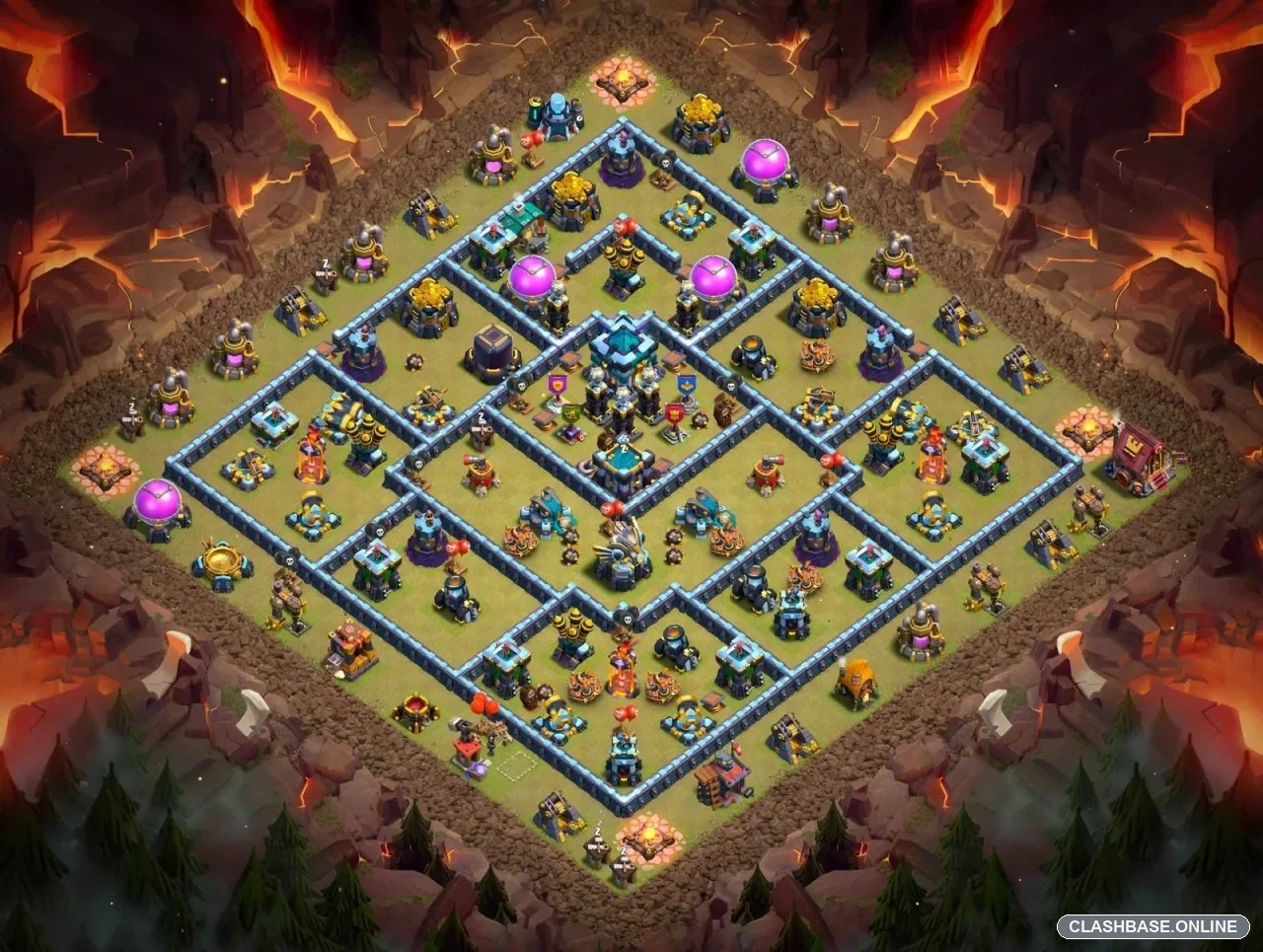
TH13 Clan War Layout #26 uses an offset-ring structure that spreads defensive value across several compartments instead of concentrating everything around one target. Looking at the actual base, the layout is fairly balanced visually, but the inner structure is less straightforward than it first appears. The Town Hall sits slightly offset within the defensive network, while major defenses remain active on different sides of the core.
That separation gives Base #26 a clear Clan War purpose. It does not need the Town Hall to survive every raid. The more important goal is to make the third star difficult after the first major objective has already been challenged.
The Town Hall is only one part of the defensive plan
The Town Hall is separated from several other high-value defenses rather than sharing one tightly packed compartment with all of them.
From a defensive perspective, that matters. Even if the Town Hall section eventually falls, Inferno Towers, X-Bows, Air Defenses, and other defensive pockets can remain operational elsewhere.
In effect, the layout asks the attacking army to solve the village in stages.
A force that spends too much strength around the main objective may reach the remaining compartments with reduced hero health, fewer spells, or weaker support. That is exactly the sort of trade an anti-three-star war base wants to create.
The offset ring is built to disturb troop movement
The wall structure is probably the most interesting feature of Layout #26.
Rather than creating one open path through the middle, several compartments form an uneven ring around the inner defenses. Troops reaching this area may find equally attractive targets in different directions.
For the defense, troop separation is valuable.
A Yeti or Bowler Smash is much harder to stop when tanks, heroes, and supporting troops stay together. Once different sections of the army start moving around opposite parts of the ring, concentrated damage falls and defensive buildings get longer firing windows.
The walls are therefore doing more than slowing movement. They are helping determine where the attacking troops fight.
Air and Inferno pressure stays divided
The Air Defenses appear to protect different crossing lanes, while the Inferno Towers function as separate inner anchors rather than one compact pair.
That spacing reduces easy spell value.
One defensive section may be controlled while another remains active farther across the village. Against Dragons or LavaLoon, this allows air pressure to continue through multiple phases rather than disappearing after one successful engagement.
Queen Charge Hybrid faces the same broader defensive problem: clearing one pocket does not necessarily make the rest of the core harmless.
The lower-left side is the main defensive concern
The lower-left edge appears to be the most exposed part of the structure.
The real concern is what happens if the ring beside the offset objective is broken too early. Once that section disappears, the defensive pathing becomes more predictable and troops have fewer reasons to circle into separate compartments.
For Layout #26 to perform well, this side needs to consume something valuable—time, troop strength, hero health, abilities, or spells—before the central structure loses its shape.
Why Layout #26 works for Clan War
The strength of TH13 Clan War Base #26 comes from forcing several parts of a three-star attempt to succeed in the correct order.
The Town Hall demands commitment. The offset ring tries to split the army. Separated Infernos and Air Defenses maintain pressure, while untouched outer compartments can become awkward cleanup targets later.