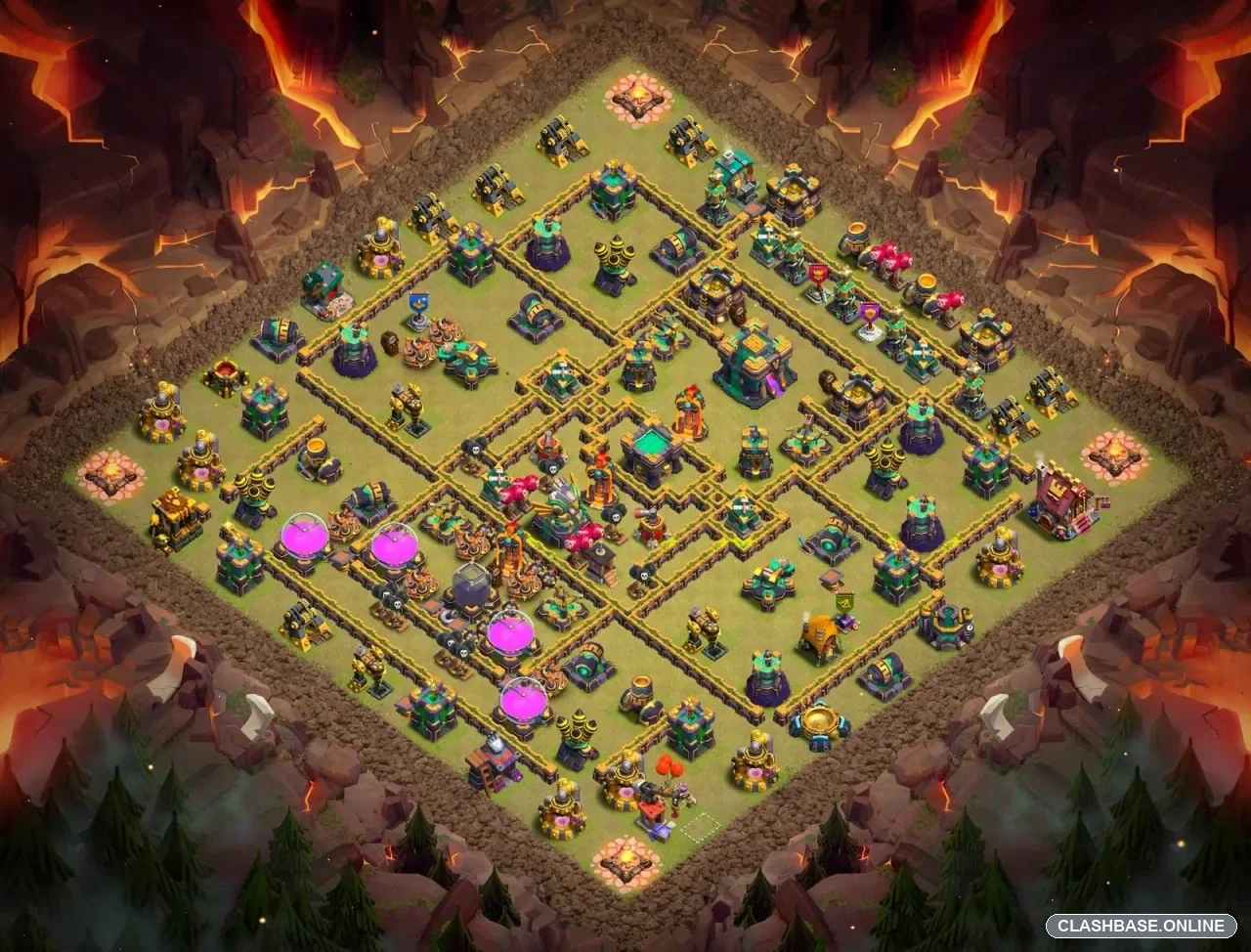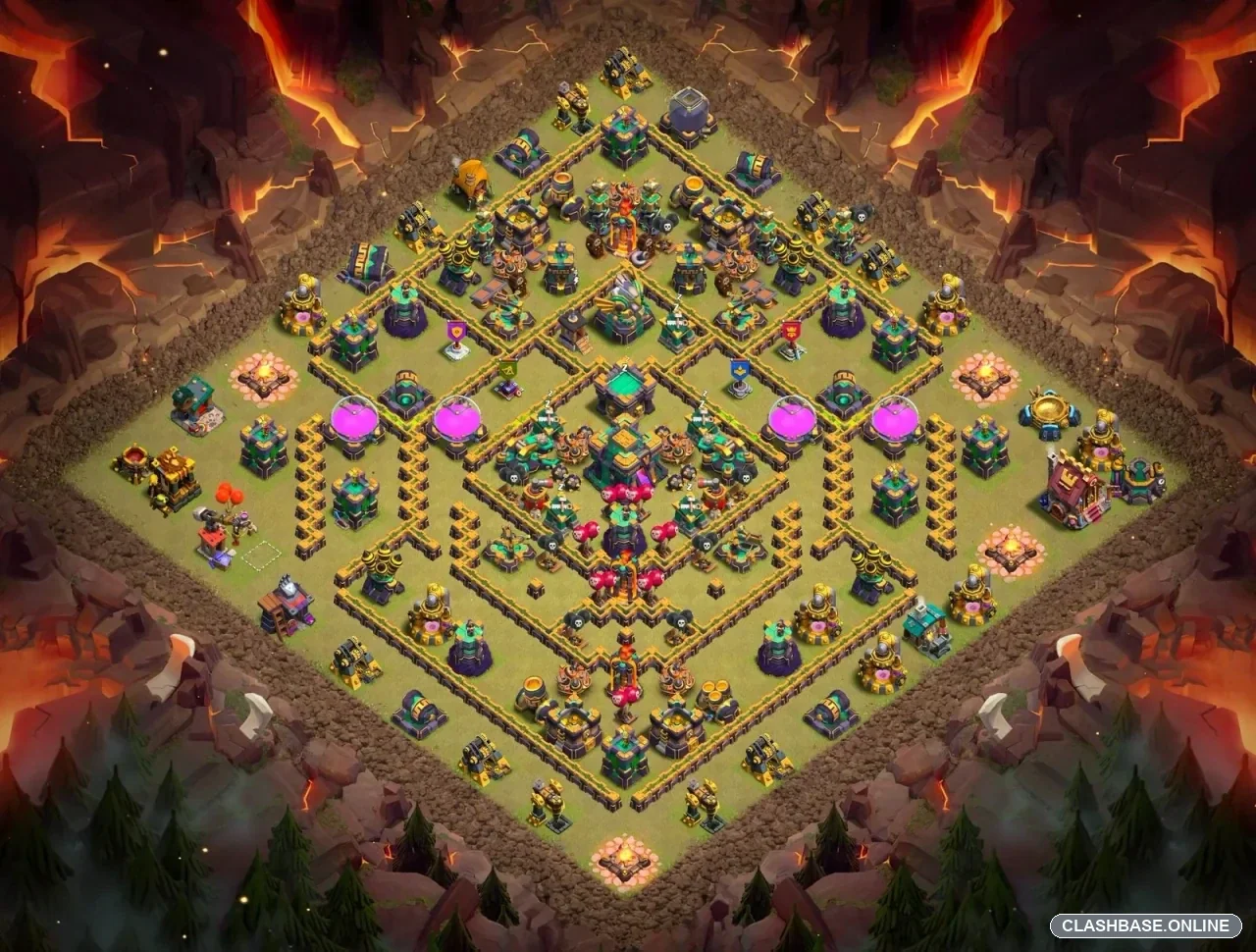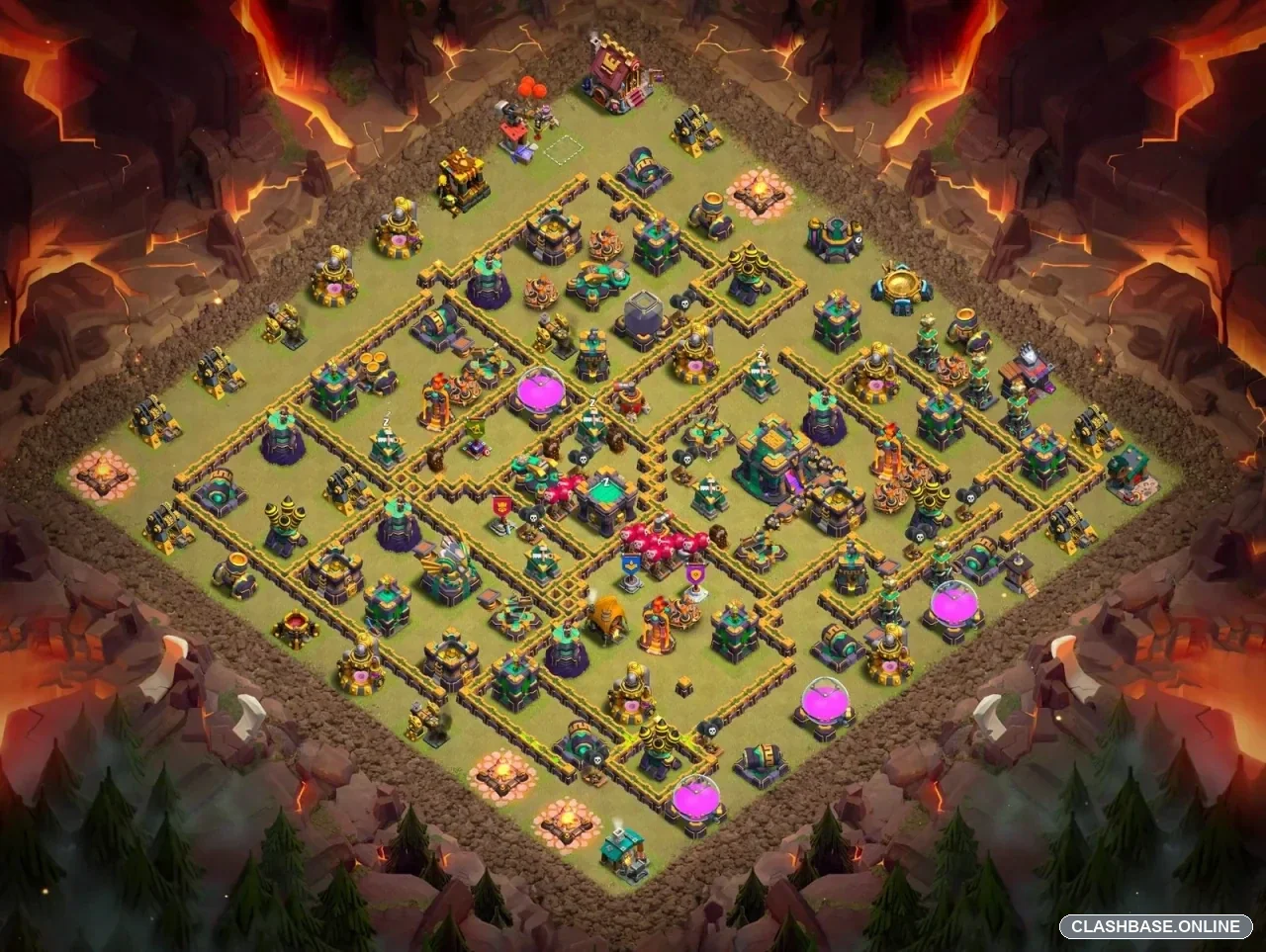
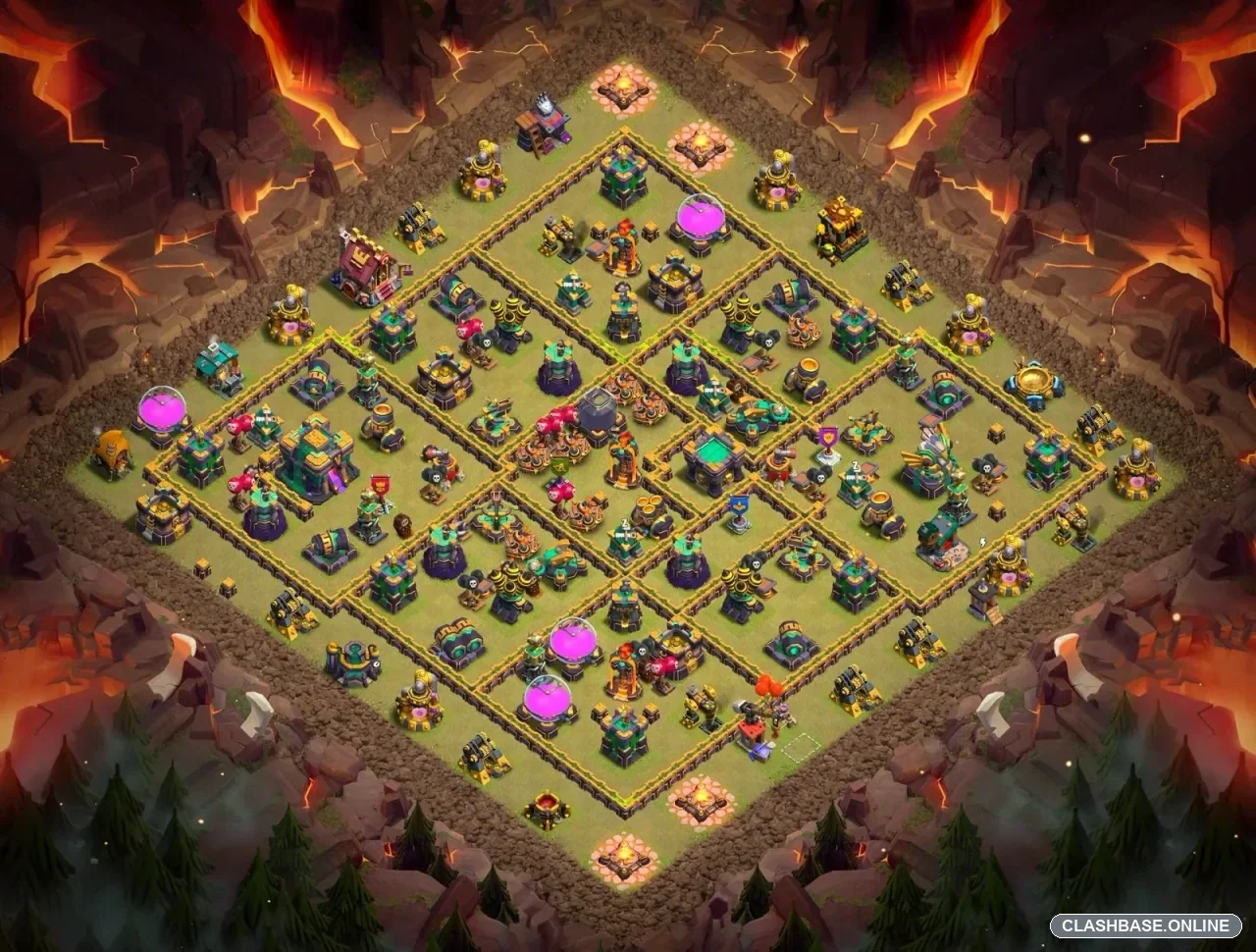
 CLASHBASE.ONLINEClan War
About this Town Hall 14 base
Copy this base to Clash of Clans
Tap the button below. Clash of Clans will open so you can place this layout in an available base slot.
Copy base to the gameClash of Clans must be installed on this device.Rate this layout
Share a useful, honest experience. One review is stored per visitor for this item.
TH14 Clan War Base #7: Multi-Compartment Defense Built Around Split Pathing
TH14 Clan War Layout #7 uses a wide multi-compartment structure with the Town Hall shifted toward the right side of the defensive network. Looking closely at the actual base, the layout appears designed to avoid one simple failure point. Important defenses are spread through several pockets, while the Town Hall is separated enough that losing its section does not necessarily mean losing the whole village.
That gives Base #7 a clear anti-three-star identity. The defense seems willing to concede progress in one area if the remaining compartments can keep the attacking army under pressure afterward.
The offset Town Hall separates objective value
The Town Hall sits toward the right half rather than directly in the geometric center.
Defensively, that is useful because an army committed heavily to the Town Hall may leave several major threats alive elsewhere. Inferno Towers, Air Defenses, X-Bows, Scattershots, and other supporting defenses remain distributed across the middle and opposite side.
The Town Hall therefore works as one part of the defensive puzzle rather than the entire defense.
If that section falls, Layout #7 still has enough independent defensive value to contest the third star.
Multiple compartments are meant to stretch the army
The wall structure is probably the most important defensive feature visible here.
Instead of one large core, the base uses numerous medium-sized sections connected by awkward turns. Once troops move inside, several targets become available at roughly the same time.
That can create troop separation.
For a Yeti or Bowler Smash, this matters because the formation is strongest when tanks, heroes, and support troops stay together. If one group turns toward a side compartment while another continues deeper, the defense gains valuable seconds and spell coverage becomes less efficient.
Queen Charge Hybrid can face the same underlying problem. Removing one defensive pocket does not automatically open a clean route through everything behind it.
Air and Inferno coverage remains active in different zones
The anti-air network is spread across opposite sections, while the Inferno Towers support different routes through the base.
That spacing reduces easy spell value and helps the defense remain dangerous in stages.
Against Dragons or LavaLoon, one air-defense section may be removed while another continues covering a different part of the village. This means air pressure does not disappear after one successful engagement.
The layout appears to prefer sustained pressure across several compartments rather than concentrating every threat into one central cluster.
The top edge carries an important defensive job
The top edge appears to be the most approachable side.
That is not automatically a weakness. From the defender's perspective, an inviting edge can encourage a broad formation, and that is where the multi-compartment design may start working in its favor.
If the army becomes too wide, troops can split between adjacent sections. Damage becomes less concentrated, heroes may separate from the main force, and the raid begins spending more time moving between targets.
The real concern is a very controlled opening that keeps the entire force together. If the top section falls too cheaply without causing any pathing disruption, the inner defenses may face too much concentrated strength.