 CLASHBASE.ONLINERanked
About this Town Hall 15 base
Copy this base to Clash of Clans
Tap the button below. Clash of Clans will open so you can place this layout in an available base slot.
Copy base to the gameClash of Clans must be installed on this device.Rate this layout
Share a useful, honest experience. One review is stored per visitor for this item.
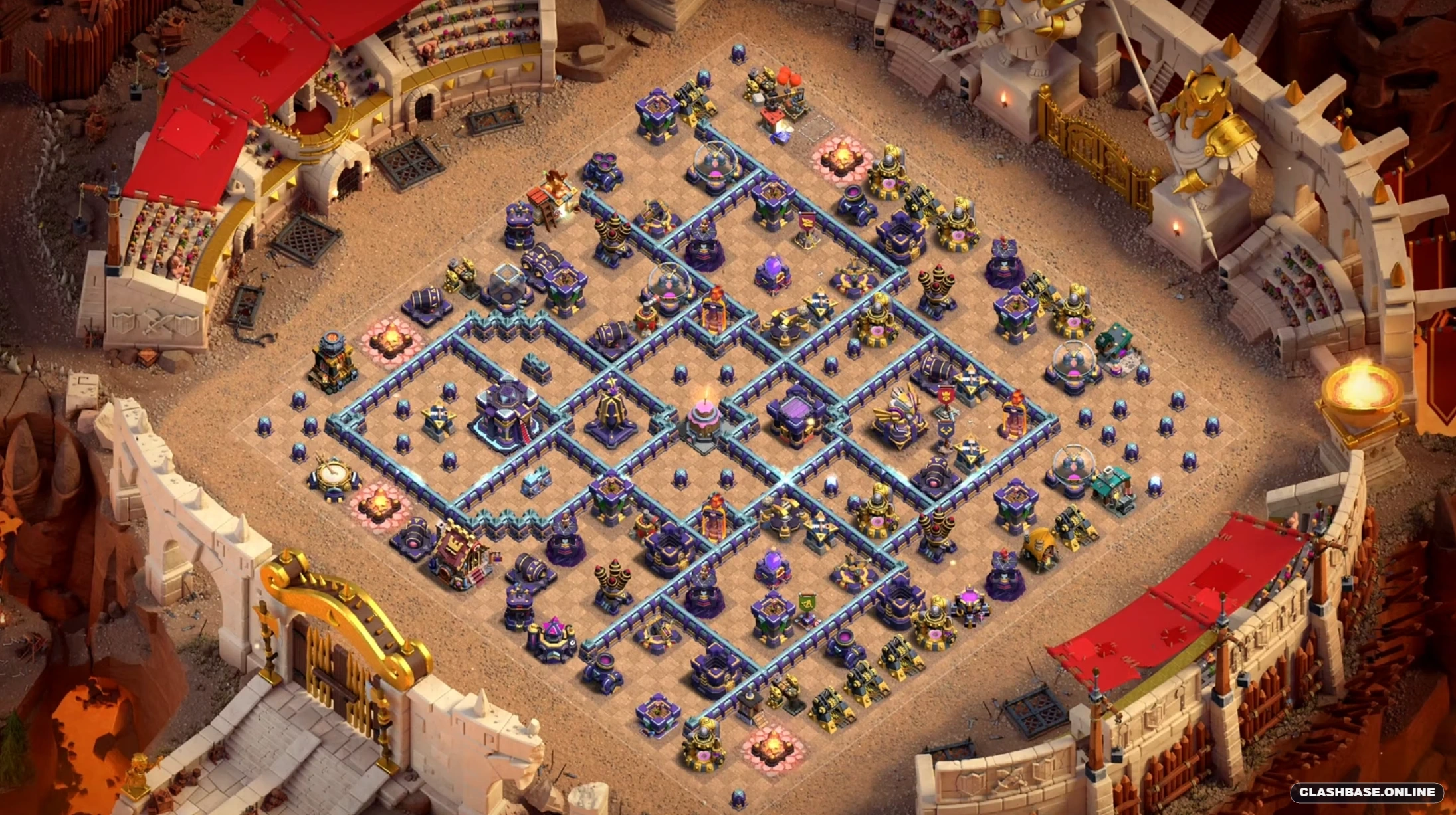
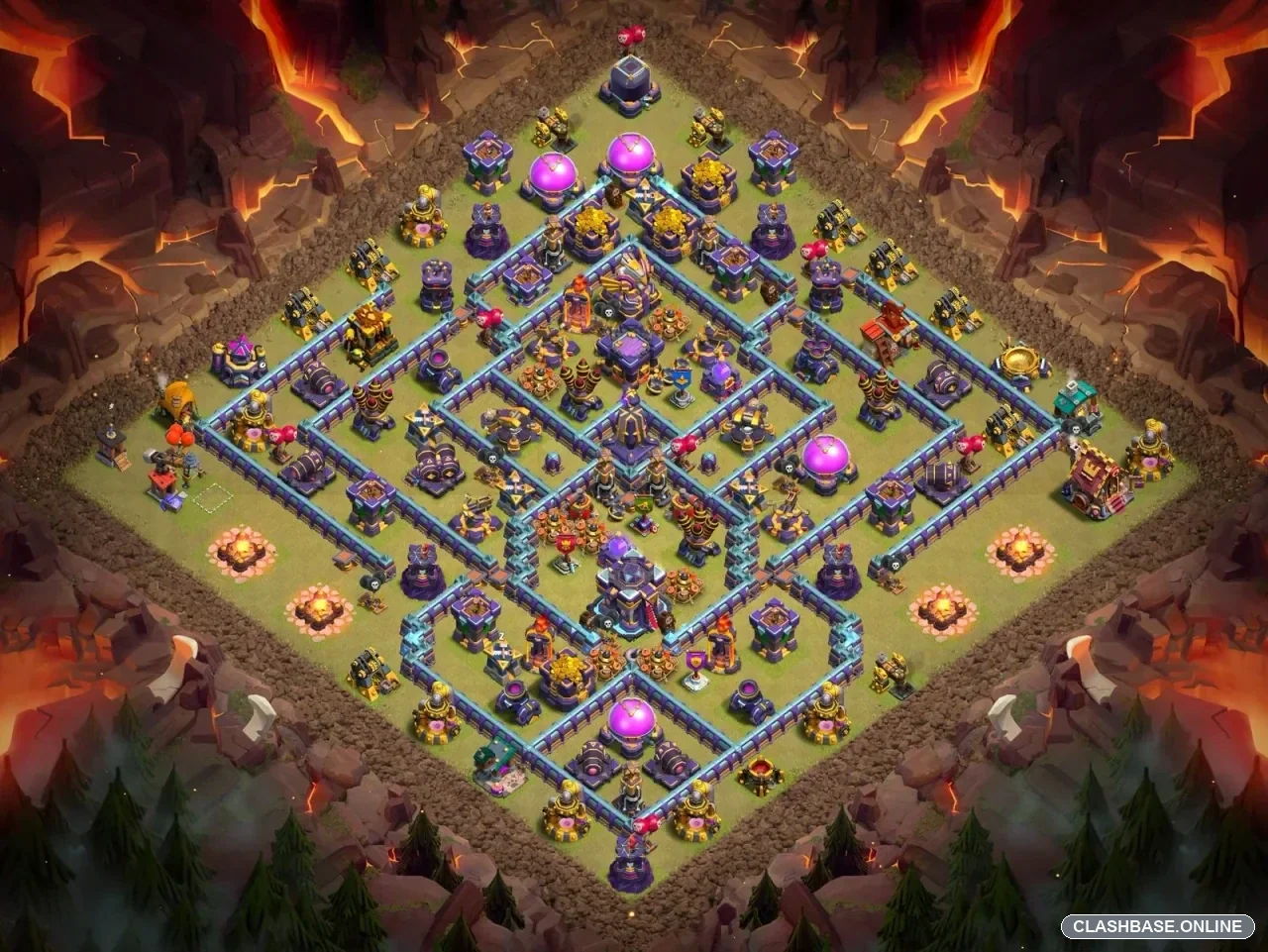
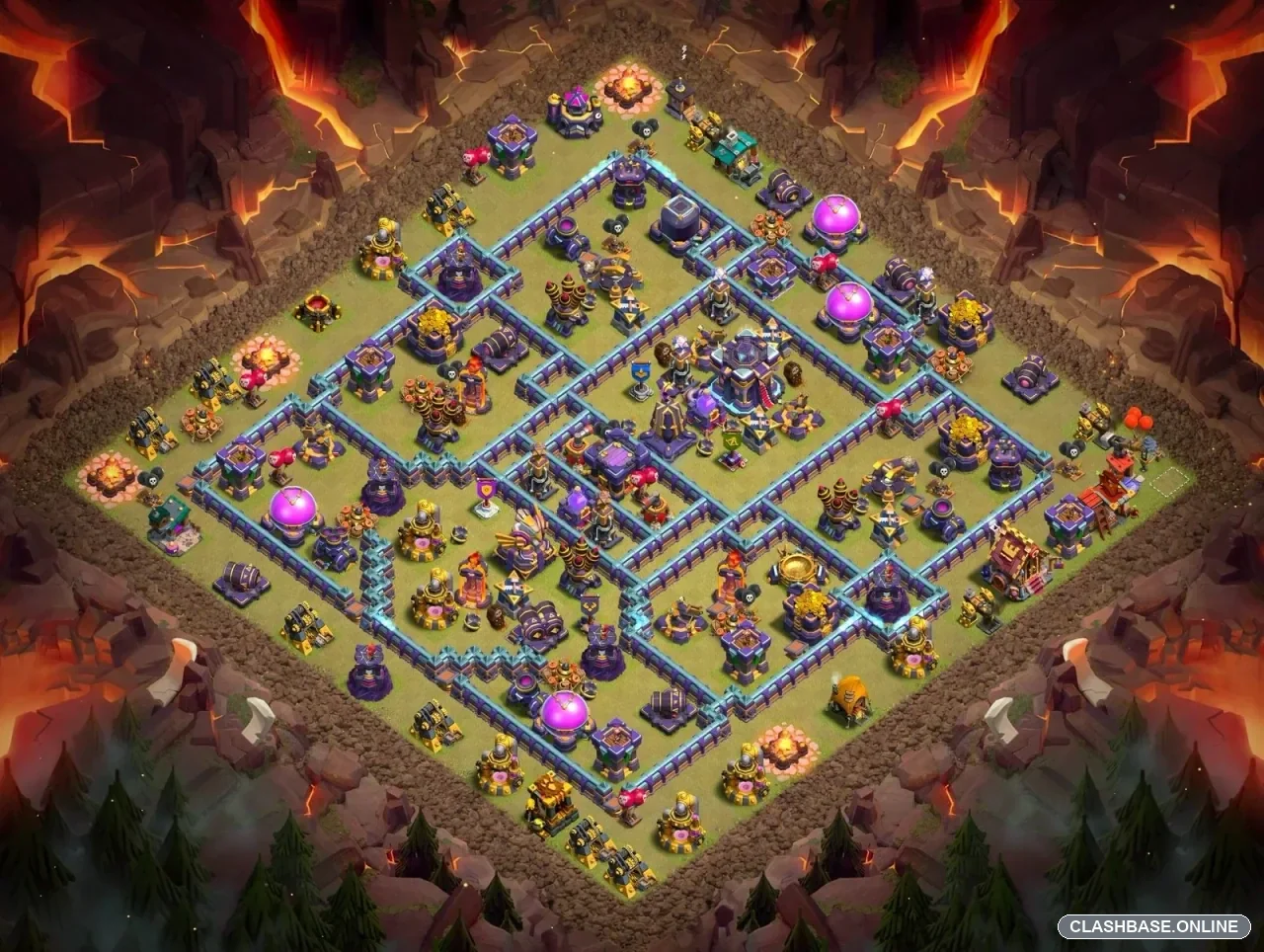
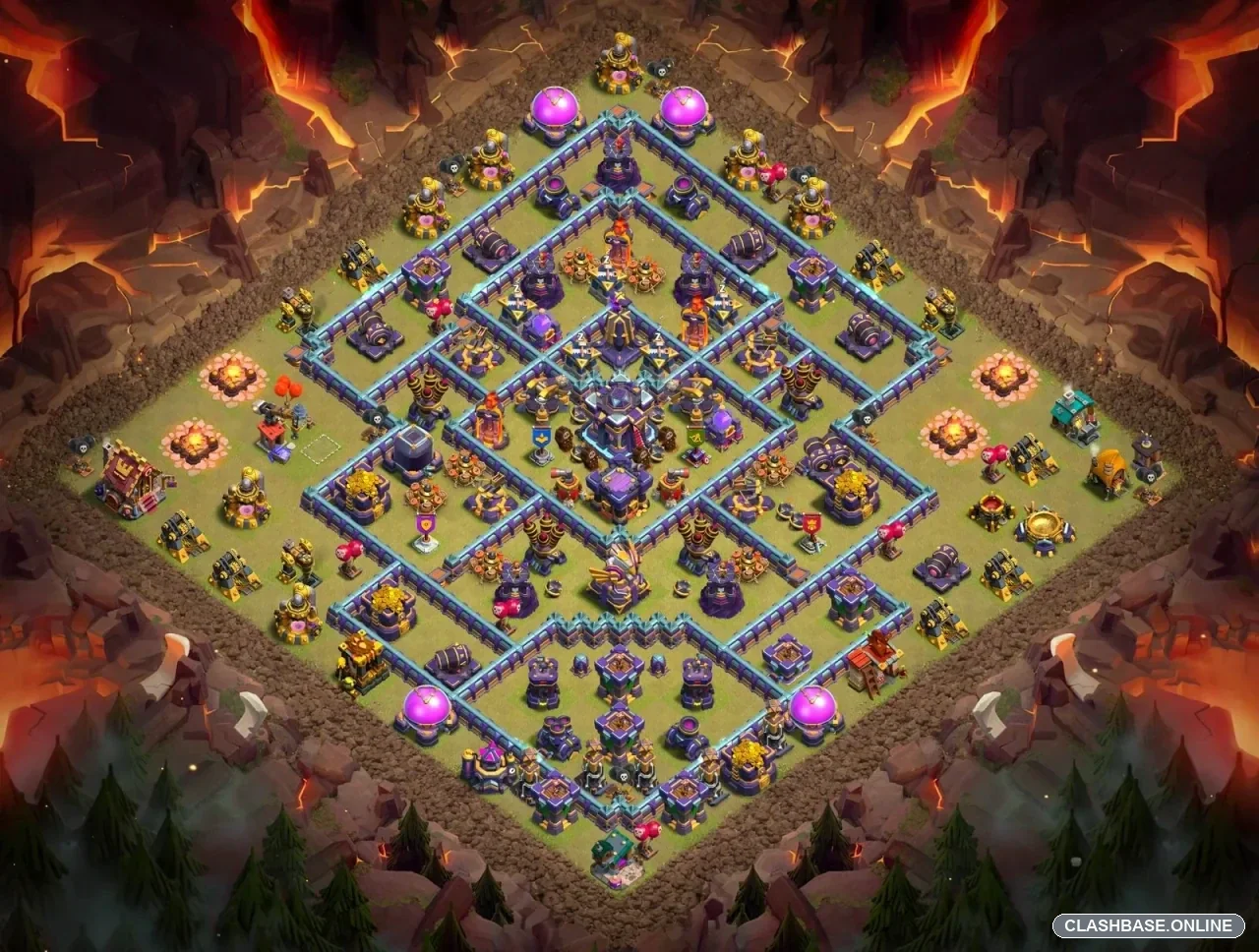
TH15 Ranked Base #1: Open-Ring Defense Built Around Central Pressure
TH15 Ranked Layout #1 uses a central Town Hall surrounded by an open-ring defensive structure, and after studying the actual base, the design appears to be focused on controlling the shape of the entire raid rather than simply hiding the Town Hall.
The village is arranged in several layered diamond-shaped compartments. The core is dense, while the outside offers more space and scattered buildings. That contrast is important. It gives attackers some relatively accessible percentage, but clearing those areas does not necessarily reduce the pressure around the Town Hall.
For Ranked defense, that is a useful trade.
The Town Hall anchors the strongest defensive zone
The Town Hall sits inside the primary core, protected by multiple wall layers and surrounded by high-value defenses.
What makes this setup interesting is that the strongest defenses are not all packed into one tiny compartment. They sit across neighboring sections of the ring, allowing the base to keep applying pressure even after one pocket is removed.
This gives Layout #1 a more gradual defensive style.
Instead of relying on one huge damage burst, the base tries to weaken an army over several stages. Heroes may lose health in one compartment, support troops can disappear in another, and the remaining force may reach the Town Hall without the strength it had at the start.
The open ring is designed to create troop separation
The wall arrangement around the center is probably the most important defensive feature.
Several targets become available at similar distances as troops enter the inner structure. That can encourage one group to continue around the ring while another gets pulled toward the core.
From the defender’s perspective, that split is valuable.
Root Riders and other heavy ground armies can handle walls well, so the base is not relying on barriers alone. The real goal is to separate the front line from heroes and supporting troops.
Once that happens, spells such as Rage, Heal, Freeze, or Overgrowth naturally cover fewer units. The attack may still look healthy on troop count, yet its combined strength has already dropped.
Spread defenses keep pressure active
The Inferno Towers are positioned far enough apart to behave as separate defensive anchors. Air Defenses also appear to cover crossing lanes instead of concentrating everything toward one side.
That spacing reduces easy spell value.
Against Dragons or LavaLoon, clearing one defensive zone does not necessarily create a safe flight path through the rest of the village. Queen Charge Hybrid and heavy ground armies face the same defensive idea: one successful compartment does not solve the whole core.
This layered coverage should make the middle of the base especially stubborn.
The upper-right edge is the main defensive concern
The upper-right side appears to be the most manageable outer section, making it the biggest structural pressure point.
If that edge disappears too cheaply, the attacking army may gain better control over how troops enter the open ring. That weakens one of Layout #1’s main defensive advantages.
For the base to work as intended, this area needs to cost something—time, hero health, an ability, or additional spells. Even a small delay here may become important later.
Why Layout #1 works for Ranked
The main strength of TH15 Ranked Base #1 is the tension between quick outside percentage and the more demanding central objective.
The perimeter encourages troops to spread. The Town Hall demands concentration. The open ring sits between those two ideas and tries to make the transition messy.
Overall, Layout #1 is a pathing-control and time-pressure defense built around a central Town Hall, layered compartments, separated defensive anchors, and difficult cleanup positioning.
Its weakness is disciplined troop control that prevents the ring from creating splits. When the defensive structure works, though, an attacking army can remain alive while ending up scattered across several sections—leaving the core defenses and the clock to finish the job.