 CLASHBASE.ONLINERanked
About this Town Hall 15 base
Copy this base to Clash of Clans
Tap the button below. Clash of Clans will open so you can place this layout in an available base slot.
Copy base to the gameClash of Clans must be installed on this device.Rate this layout
Share a useful, honest experience. One review is stored per visitor for this item.
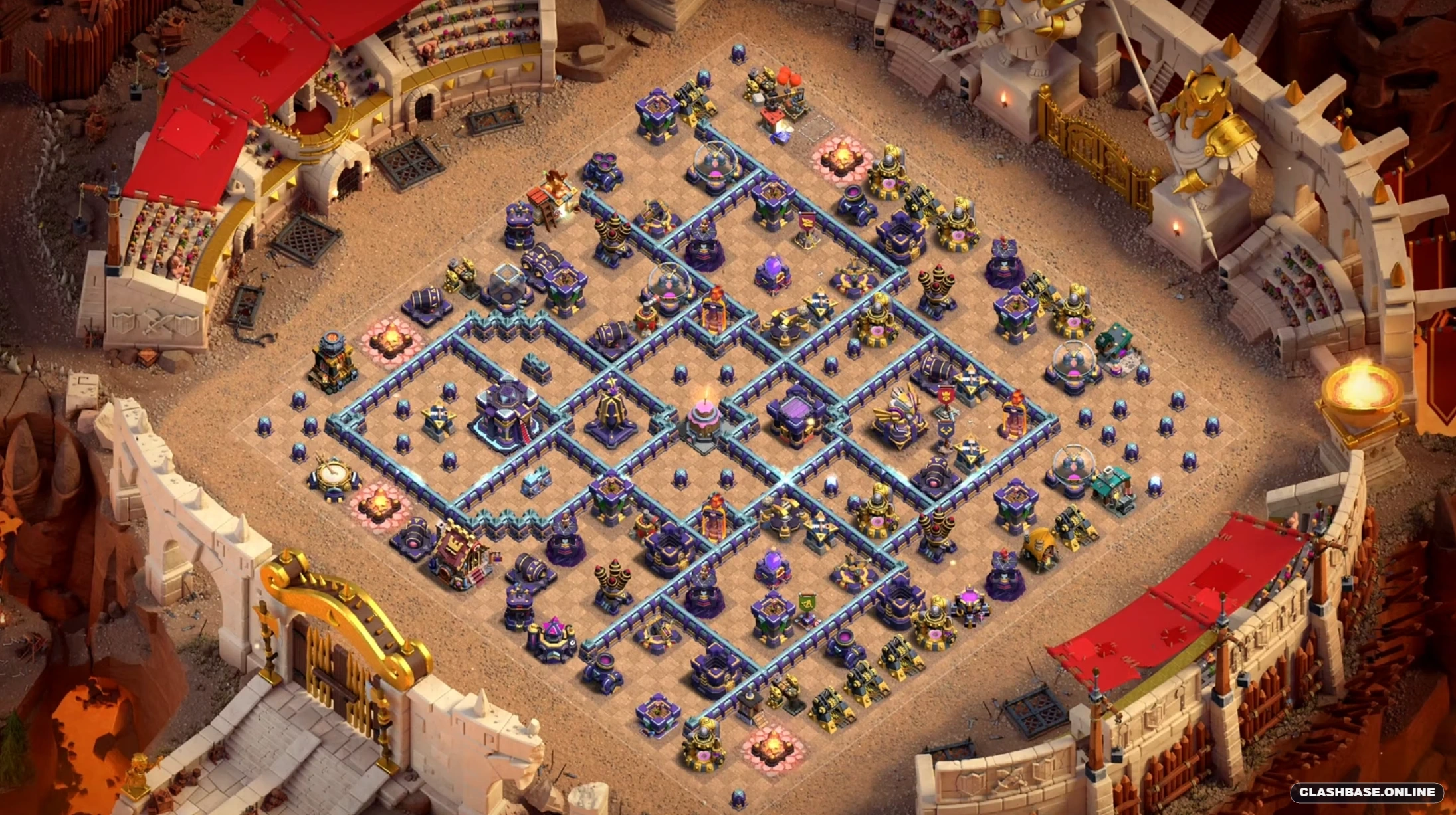
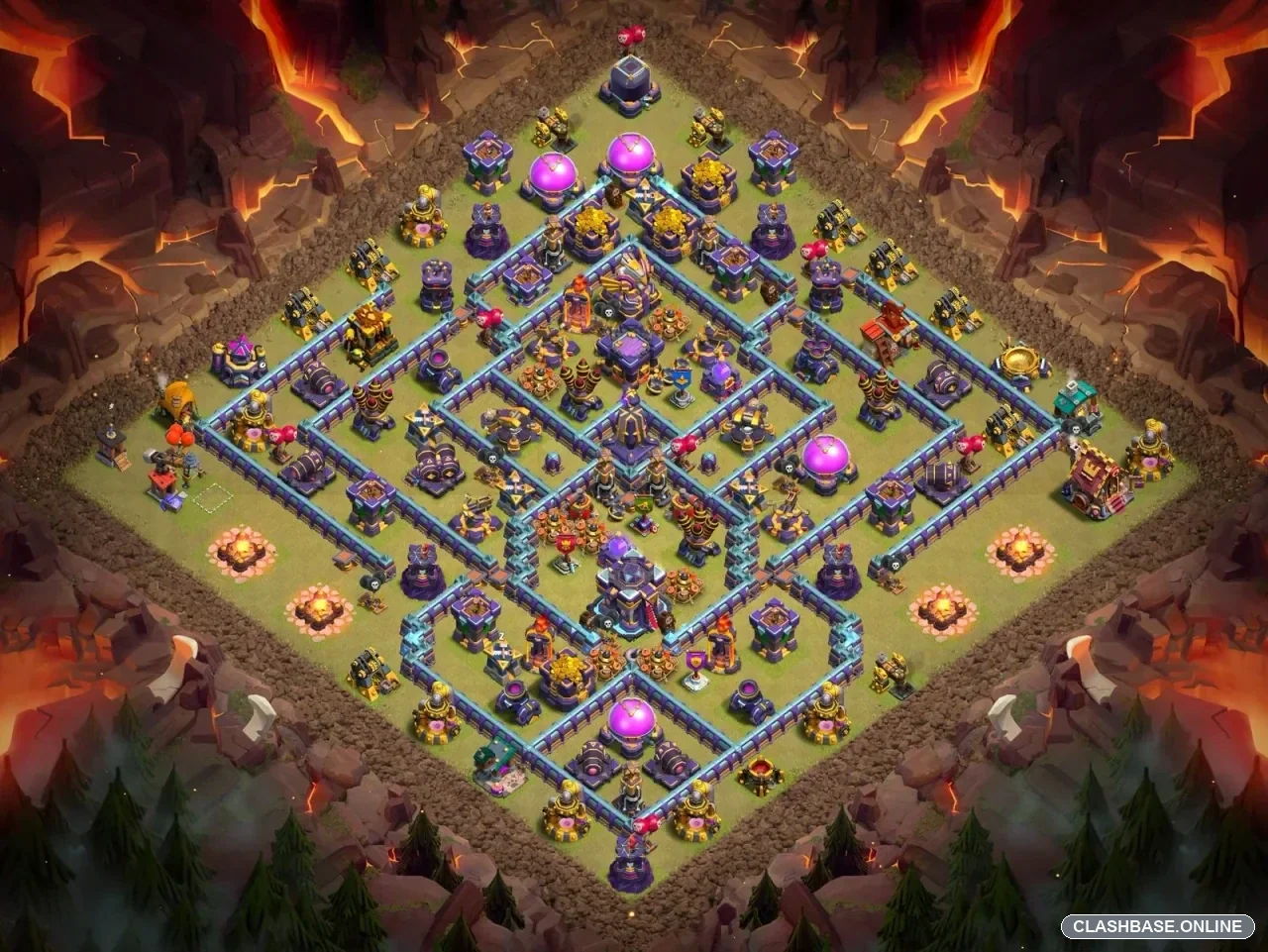
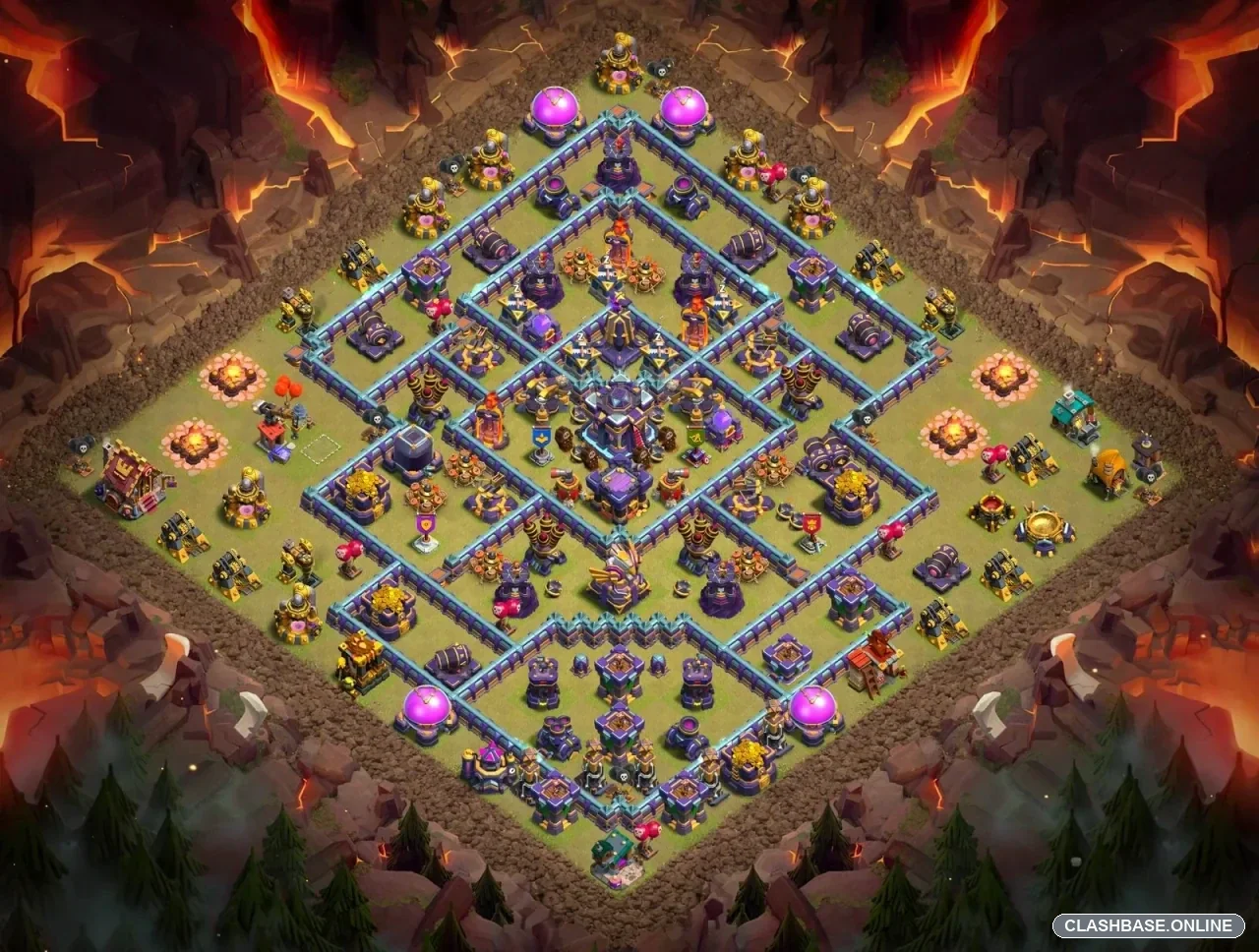
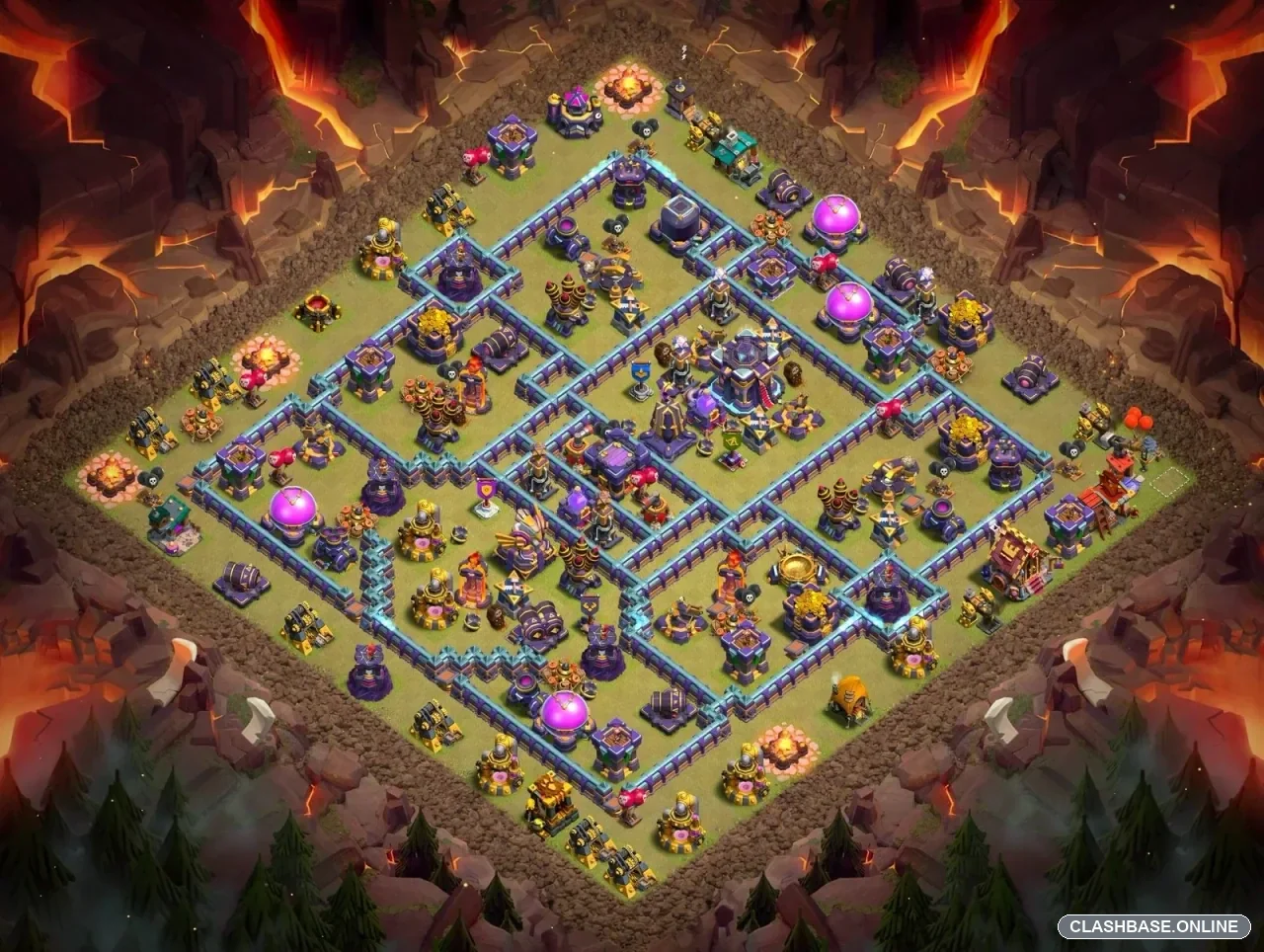
TH15 Ranked Base #33: Open-Ring Core with Lower-Left Entry and Split Pathing
Town Hall 15 Ranked Layout #33 is built around an open-ring core, and that shape immediately changes how the base should be attacked. The Town Hall is positioned inside the primary defensive area rather than being pushed toward an outer edge. Around it, the walls create several connected lanes that can send troops either toward the center or around the outside of the core.
At first glance, the layout may look fairly approachable. There are buildings around the perimeter that can be collected for percentage, and none of the outer compartments appears impossibly deep. The tricky part begins after the first section falls. Once troops enter the ring, several new targets become available at almost the same time.
That is where pathing can get messy.
For Ranked defense, this makes sense. The base is not only trying to protect the Town Hall. It is also trying to influence percentage, troop direction, spell usage, and how much time remains for cleanup.
The central Town Hall changes the attack plan
Because the Town Hall sits inside the main defensive core, an attacker cannot simply collect it from the edge and move on.
A real commitment is required.
That does not necessarily mean the Town Hall is extremely difficult to reach. A carefully planned ground push can certainly get there. The issue is what the army looks like by the time it arrives.
If troops remain together, the central section may actually offer good attacking value. Heroes, tanks, and supporting units can share Rage, Heal, Freeze, Overgrowth, or other spells while working through several defenses in one area.
If the army separates before reaching the Town Hall, the picture changes completely.
One group may continue around the outer ring while another enters the core. For twenty seconds, that split can look surprisingly good. Outside percentage rises quickly and the central group is still moving toward the objective.
Then the attacker needs one concentrated push, and the army is no longer concentrated.
That seems to be the main defensive idea behind Layout #33.
Why the lower-left edge looks attractive
The lower-left edge, roughly around seven or eight o’clock, appears to be the easiest place to begin shaping a funnel.
There is enough space to clear a handful of exterior buildings without immediately committing the main army. A Queen Charge could start there, or a few funnel troops could create the outside boundary before Root Riders or another heavy ground group enters.
The mistake would be assuming that a wider funnel is automatically better.
Opening too much of the lower-left side can expose both the outer ring and the central lane. Troops then have legitimate reasons to choose different directions.
A Root Rider group might turn inward while the Queen continues around the outside. Miners and Hog Riders can also separate if the first compartment is not shaped carefully. Air troops are not immune either; Dragons can drift toward perimeter buildings while the main pack heads into heavier fire.
So although the lower-left looks like the most convenient starting point, the quality of the funnel probably matters more than the entry itself.
Pathing manipulation is both the strength and weakness
The tactical profile identifies pathing manipulation as the base’s main weakness, and I think that description fits.
A skilled attacker may deliberately divide the job: send one small group around the ring for percentage while forcing the main army into the Town Hall compartment. If that split is intentional, it can work against the design rather than helping it.
The dangerous scenario for the defender is an attacker who controls which troops split and when.
That is very different from an accidental split.
With an accidental split, the Queen may wander away while the main group loses damage. With a planned split, inexpensive cleanup troops can take outer buildings while heroes and the main army stay focused on the core.
In other words, the ring is useful when it controls the attacker. It becomes weaker when the attacker controls the ring.
Queen Charge Hybrid looks like a logical counter
Queen Charge Hybrid is one of the cleaner approaches for this reason.
A Queen could begin from the lower-left and remove one defensive pocket before the main attack starts. That opening would serve two purposes: collect percentage and remove buildings that might pull the Hybrid troops around the wrong side of the ring.
Once the funnel is shaped, Miners and Hog Riders could be sent on a much cleaner path toward the Town Hall.
The obvious tradeoff is time.
A Queen Charge that takes thirty seconds longer than expected can create serious pressure during the final phase. One stubborn storage, awkward wall opening, or unexpected Queen walk may not ruin the raid immediately, but it changes the cleanup.
The attacker can still secure the Town Hall and good percentage while leaving several buildings alive simply because surviving troops finish too far away from them.
That is exactly the kind of situation a Ranked layout wants to create.
Heavy ground smash can challenge the core directly
Root Riders or another heavy ground smash army could also work.
Against this type of layout, walls themselves may not be the biggest concern. Keeping the formation intact is more important.
A compact ground push can carry heroes, healers, and support troops through the same lane. This allows the attacker to use spells efficiently while dealing with the Town Hall and nearby defenses.
A loose deployment creates the opposite result.
One part of the army enters the core. Another group follows the open ring. Spell coverage becomes awkward, hero abilities are triggered at different times, and the attack can lose momentum despite still having plenty of surviving troops.
That is why simply dropping a powerful army from one side may not be enough.
Dragons and LavaLoon have their own pathing problem
The Air Defenses appear positioned to cover different approach lanes rather than forming one tidy defensive block. Inferno Towers are also separated enough that an attacker may need to decide which threat deserves attention first.
Dragons could certainly be used, especially after a lower-left funnel.
I would expect a tighter deployment to perform better than a full-width line. Spread the Dragons too broadly and some are likely to follow outer buildings while the stronger group approaches the core.
That gives good percentage early, but the Town Hall fight may begin with fewer Dragons than planned.
LavaLoon offers more control over individual targets, although the route needs to be planned beyond the opening. Removing the first Air Defense is not the entire solution. The Balloons still need to transition through the open ring, handle the Town Hall area, and finish close enough to the remaining buildings for efficient cleanup.
A good first minute does not guarantee a comfortable final minute.
Why Layout #33 fits Ranked play
What makes TH15 Ranked Layout #33 feel appropriate for Ranked defense is the tension between easy outside percentage and the harder central objective.
An attacker can spend time collecting perimeter buildings and create a safer percentage floor. The downside is that the Town Hall phase begins later.
Push immediately into the center and the objective becomes the priority, but more outside buildings remain untouched. Those buildings then have to be handled during cleanup, often when the army is already scattered.
Neither route is completely free.
That is more interesting than simply placing every major defense on top of the Town Hall and hoping raw damage wins the battle.