 CLASHBASE.ONLINERanked
About this Town Hall 15 base
Copy this base to Clash of Clans
Tap the button below. Clash of Clans will open so you can place this layout in an available base slot.
Copy base to the gameClash of Clans must be installed on this device.Rate this layout
Share a useful, honest experience. One review is stored per visitor for this item.
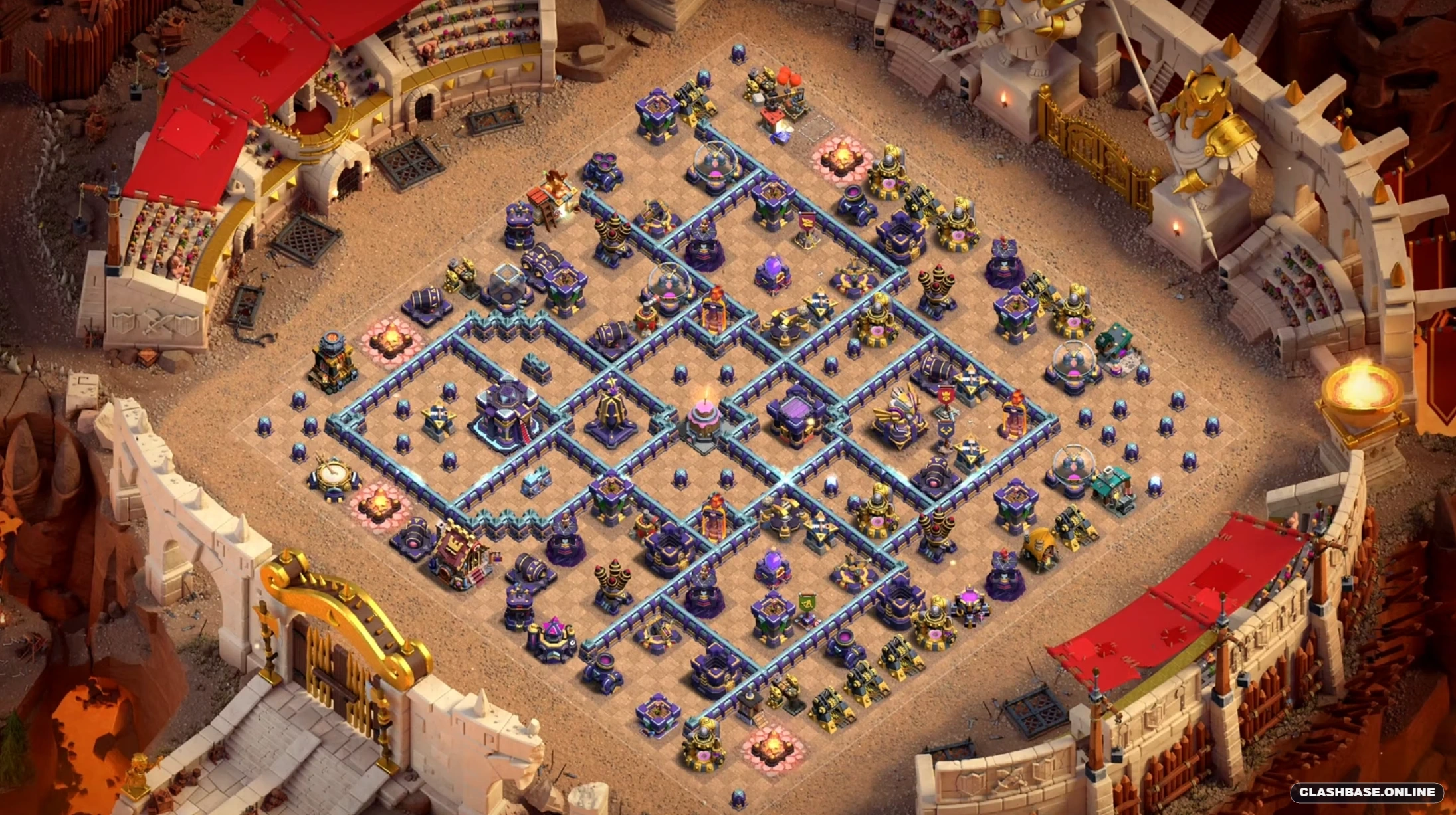
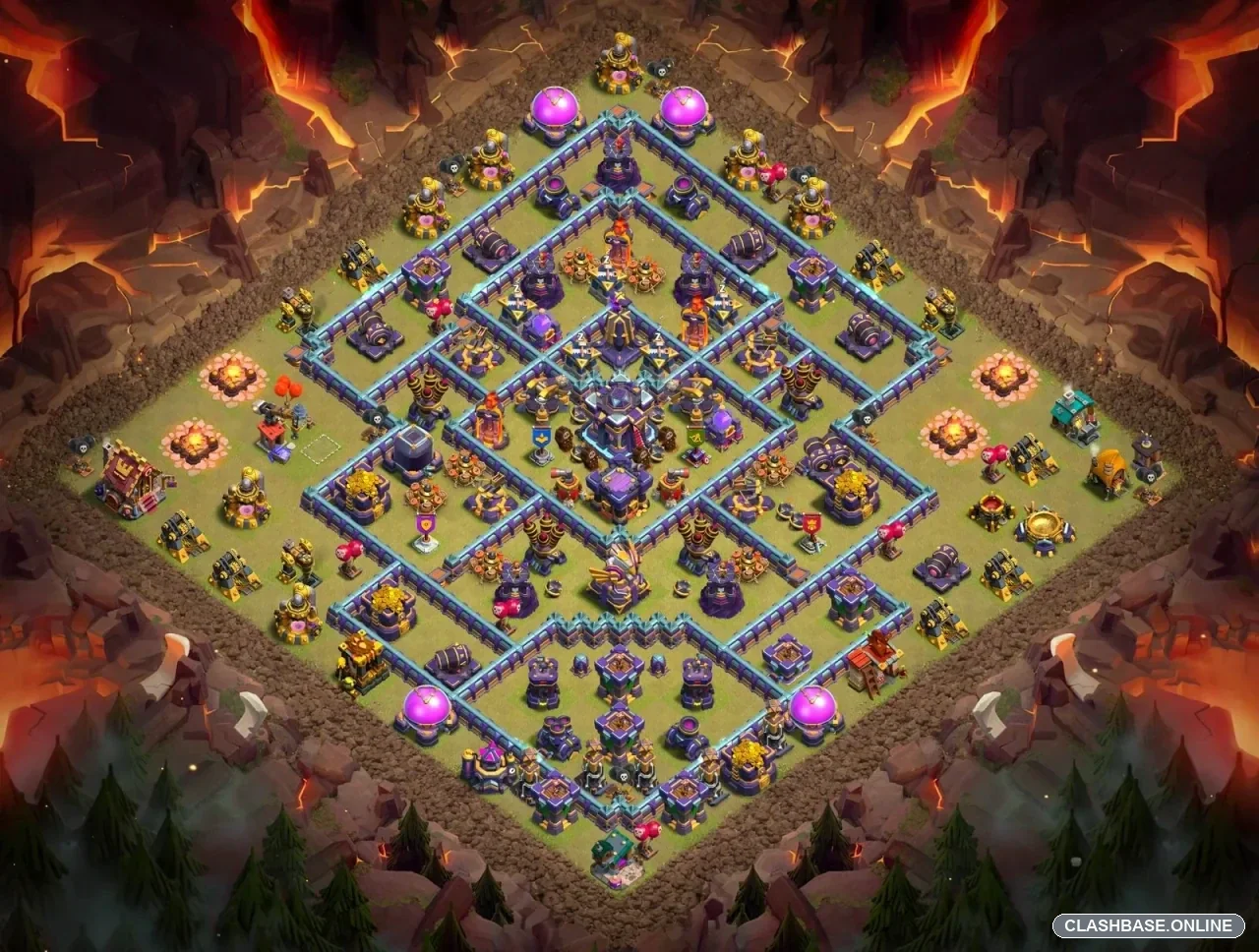
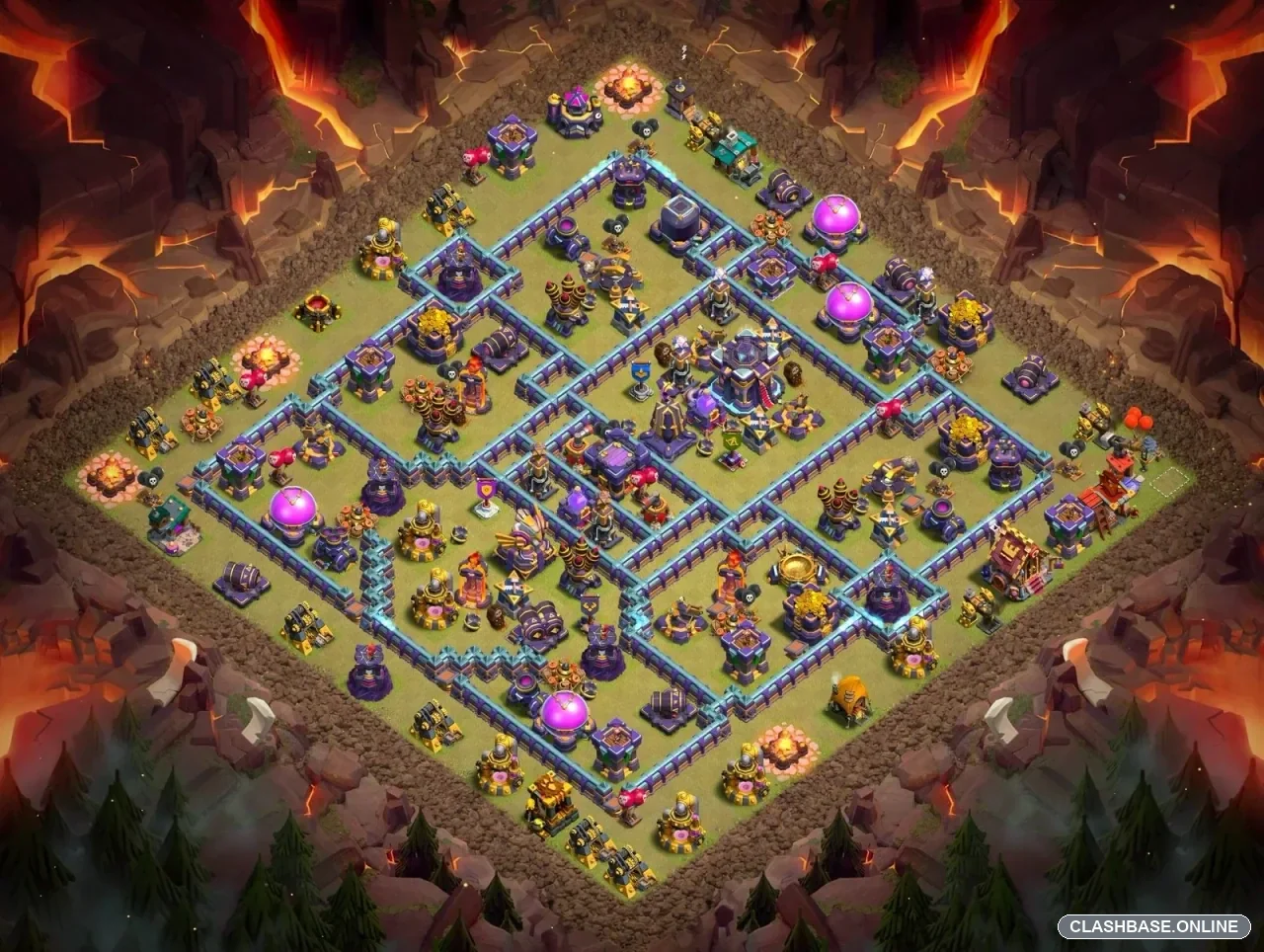
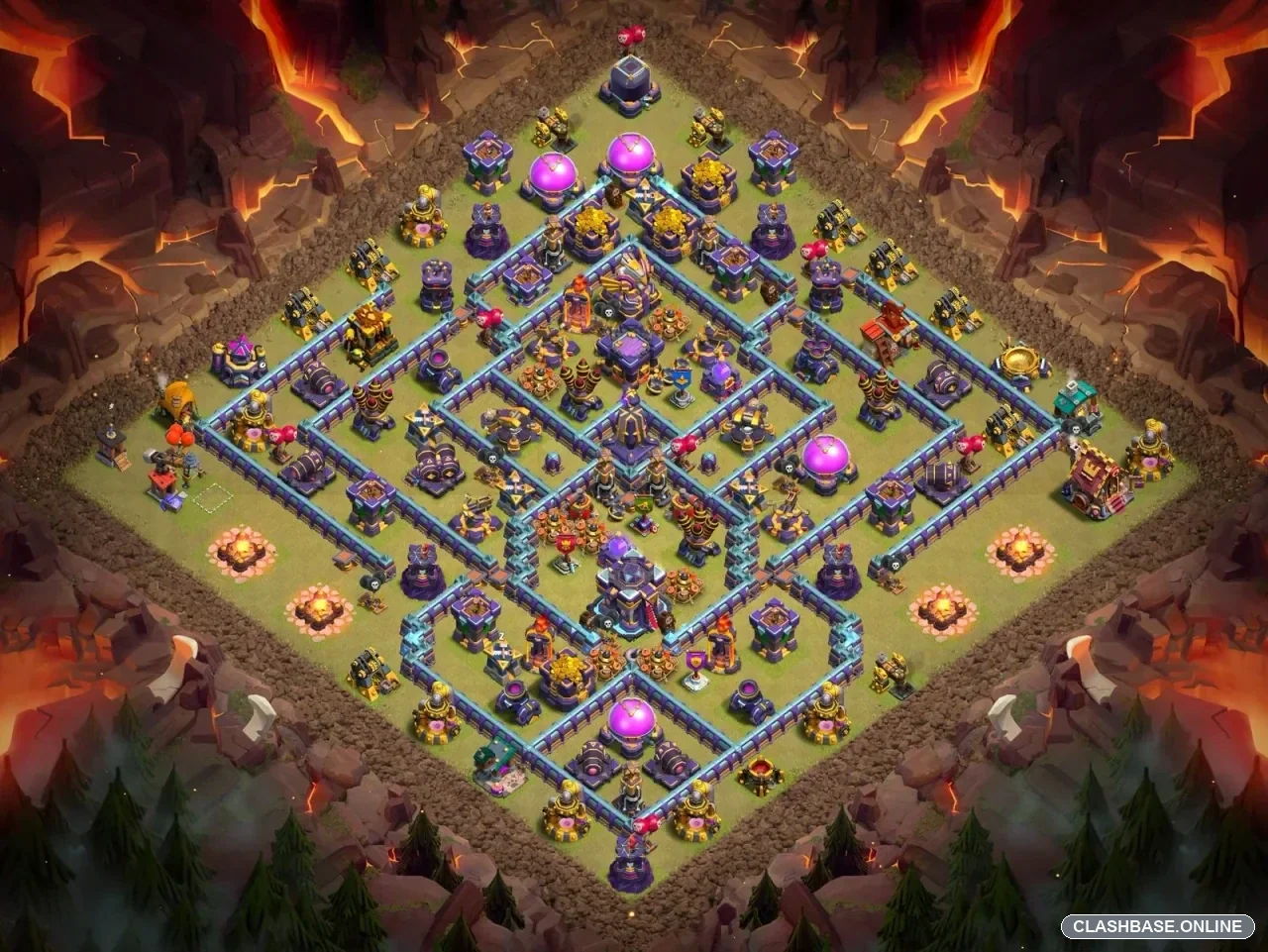
TH15 Ranked Base #35: Open-Ring Core with Split Pathing and Lower-Left Pressure
Town Hall 15 Ranked Layout #35 is built around an open-ring structure that looks reasonably organized from a distance but becomes much less predictable once troops start moving through it. The Town Hall sits slightly toward the right side of the core rather than directly in the middle, while the walls create several connected lanes around the central defenses.
That small Town Hall offset changes the attack more than it may seem.
A player can create a route toward the objective without necessarily clearing the outer ring first. At the same time, attacking too directly may leave a large amount of percentage sitting on the opposite side of the village. In Ranked play, that tradeoff matters because protecting the Town Hall is only one part of the defensive job. Forcing attackers to leave buildings standing—or simply making them spend too much time reaching the last few percent—can be just as valuable.
The open ring is really a pathing trap
The central walls do not form one completely closed compartment. Instead, several paths run around the Town Hall and nearby defenses.
That gives troops choices.
Sometimes too many choices.
A ground army entering the base may begin as one compact group, then separate as different units notice targets on opposite sides of the ring. Root Riders might continue toward the core while the Queen or supporting troops follow defenses around the perimeter.
For the first twenty or thirty seconds, that can actually look like a great attack.
Multiple buildings are falling. Percentage climbs quickly. The player may even feel that splitting the army is helping because two sections are being cleared at once.
The problem appears later.
One group reaches the Town Hall while another is still working around the ring. Rage, Heal, Freeze, Overgrowth, or another support spell that would have helped the entire army now affects only one section.
That loss of spell efficiency could be one of the strongest defensive features of Layout #35.
Why the lower-left edge looks like the easiest funnel
The lower-left side, around seven or eight o’clock, appears to provide one of the cleanest openings into the village.
There are enough exterior buildings to shape a funnel without committing the full army immediately. A Queen Charge could begin there, or a few support troops could remove outer structures before a heavier push enters.
Still, this is one of those bases where making the funnel too wide may cause more problems than it solves.
If the lower-left section is opened aggressively, several compartments become available at roughly the same time. One part of the army may turn toward the central objective while another naturally follows the outer ring.
That is exactly the split the defender wants.
A tighter entry would probably be more dangerous to the base because it removes some of that uncertainty and gives the attacker a better chance of keeping the army together.
The main weakness: manipulating the ring before it manipulates the army
The clearest weakness is controlled pathing that deliberately sends one group around the ring while another enters the core—or, even better, prevents the split altogether.
An experienced attacker may use the lower-left side to remove specific buildings and decide in advance which troops are supposed to enter the center and which units should stay outside for percentage.
Root Riders or another heavy ground smash army would probably be one of the first strategies worth testing.
These troops can move through wall-heavy layouts without relying on one perfect opening. Once they reach the ring, though, troop direction becomes more important than wall access.
A compact smash could be dangerous.
If Root Riders, heroes, healers, and supporting damage stay together, the attacker can stack spell value around the Town Hall and central defenses. If half the army turns around the ring, the same attack becomes much less efficient.
That makes this layout more of a pathing test than a wall test.
Queen Charge Hybrid offers more control
Queen Charge Hybrid may be one of the cleaner counters because it allows the attacker to shape the base before the main army is deployed.
A Queen starting from the lower-left could remove one defensive pocket and clear the structures that might otherwise pull Miners and Hog Riders toward the wrong side of the ring.
If the Queen gets the intended path, the Hybrid portion can enter through a much narrower lane and move toward the core with better control.
Of course, there is a familiar downside.
Queen Charges take time.
One outside building can keep the Queen walking longer than expected. A high-hitpoint target or awkward wall break can delay the main phase by several seconds.
That may not ruin the attack immediately, but Ranked layouts benefit from those small delays. A player could secure the Town Hall, reach good percentage, and still fail to finish the last group of buildings because cleanup starts too late.
That is probably where this base gains more value than a simple “Town Hall protection” layout.
Air attacks have several routes, but no simple shortcut
The Air Defenses are spread across different inner lanes rather than being grouped into one neat cluster. The Inferno Towers also appear separated, acting more like individual anchors than one compact pair.
That gives air attackers options, but it also means one spell plan is unlikely to solve every important threat.
Dragons could attack from the lower-left after a proper funnel. I would expect a narrow deployment to work better than spreading them across the full edge.
A wide Dragon line may produce strong early percentage, but some Dragons can begin circling around the ring while the stronger group heads toward the Town Hall. By the time the core fight starts, the main group may have less damage than the attacker expected.
LavaLoon provides more control over individual defensive targets, but it also needs a clear sequence beyond the first Air Defense.
Removing one air threat is only step one.
The Balloons still have to transition through the open ring, manage the remaining high-value defenses, and finish somewhere useful for cleanup. A successful opening does not automatically guarantee a clean final phase.
Why this layout makes sense for Ranked play
The strongest reason to classify TH15 Layout #35 as a Ranked base is that total percentage and pathing control appear almost as important as protecting the Town Hall itself.
A player can focus heavily on reaching the objective, but that may leave too many outer buildings untouched.
Another attacker may collect percentage first, only to discover that the Town Hall phase begins too late.
Neither option is perfect.
That tension is useful in Ranked defense because the attacker has to manage stars, percentage, troop movement, and the clock at the same time.
The Town Hall's mild right-side offset adds to this. A lower-left attack can move toward the core, but it does not naturally clear every section of the open ring along the way. The attacker needs to decide what gets handled by the main army and what gets left for cleanup.
That decision becomes especially important when the last ten or fifteen percent sits on the opposite side of the village.
Overall assessment
TH15 Ranked Layout #35 appears to be a pathing-focused Ranked base built around an open ring, an offset Town Hall, and separated defensive lanes.
Its most obvious vulnerability is the lower-left edge. A disciplined attacker who shapes that corner carefully and controls which troops enter the core could reduce much of the uncertainty that makes the layout useful. Root Rider smash, Queen Charge Hybrid, Dragons, and LavaLoon all look like realistic counters depending on execution.
A rushed attacker, however, may get a completely different result.
Troops can split around the ring, spells lose value, and the final percentage can become awkward even after the Town Hall is secured.