 CLASHBASE.ONLINERanked
About this Town Hall 15 base
Copy this base to Clash of Clans
Tap the button below. Clash of Clans will open so you can place this layout in an available base slot.
Copy base to the gameClash of Clans must be installed on this device.Rate this layout
Share a useful, honest experience. One review is stored per visitor for this item.
TH15 Ranked Base #5: Open-Ring Defense Built to Disrupt the Entire Raid
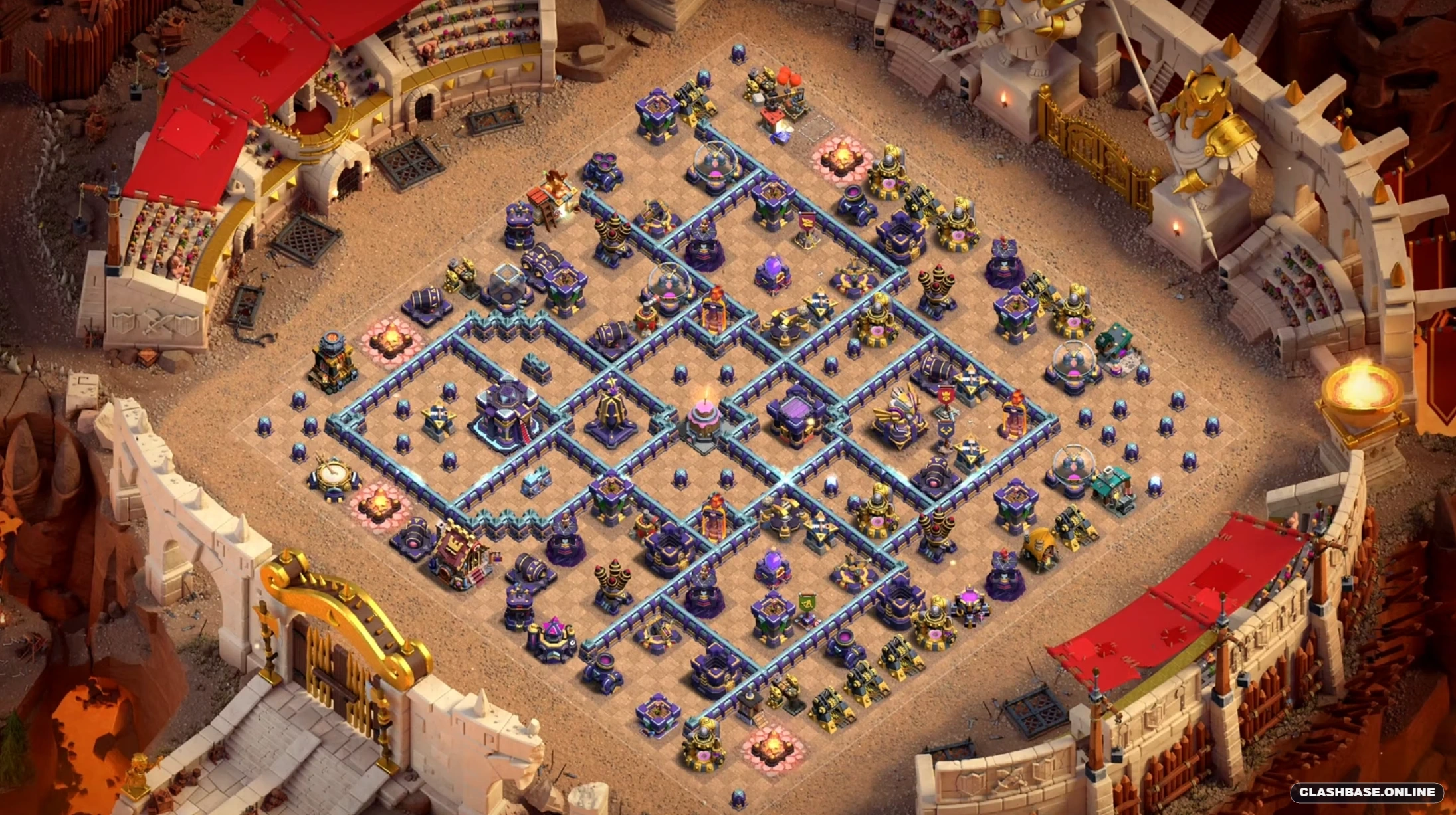
TH15 Ranked Layout #5 is an open-ring defensive base with the Town Hall slightly offset toward the left side of the core. After looking closely at the actual layout, the main defensive idea seems broader than simply protecting the Town Hall. The walls, defensive spacing, and outer compartments are arranged to influence troop movement from the opening seconds all the way to cleanup.
That makes sense for Ranked play. A good defense here does not necessarily need one dramatic stop. If it can separate troops, reduce spell efficiency, and leave awkward buildings standing late, it has already done useful work.
The Town Hall sits inside a layered defensive pocket
The Town Hall is positioned inside the upper-left portion of the main defensive network rather than directly on the geometric center.
That slight offset is useful because it prevents the whole village from revolving around one obvious point. Several important defenses remain deeper in the center and toward the opposite side, so losing the Town Hall section does not automatically remove the strongest defensive pressure.
The nearby compartments also contain enough high-hitpoint structures and defensive fire to slow troops before they can move cleanly into the next section.
The open ring is the real defensive weapon
The most interesting feature is the large open-ring structure around the core.
Instead of directing every troop into one narrow corridor, the walls create multiple believable paths. One group can continue along the ring while another gets pulled toward the Town Hall or central defenses.
For the defender, that is exactly the type of separation this base wants.
Root Riders and similar heavy ground armies can overcome walls, but they are far less comfortable when the front line moves away from heroes and support troops. Once that happens, Rage, Heal, Freeze, or Overgrowth spells cover fewer units and the surviving defenses gain more time.
The base is not trying to stop movement. It is trying to make that movement inefficient.
Defensive spacing avoids one easy spell solution
The Inferno Towers are spread across separate inner compartments, while the Air Defenses protect different crossing lanes.
That is a sensible defensive choice.
A single control spell is unlikely to neutralize several major threats at once. Even after one section is temporarily shut down, another defensive anchor can keep working.
Against Dragons or LavaLoon, this spread may also encourage the air army to fan out rather than remain concentrated over one lane. Queen Charge Hybrid can face a similar problem: removing one pocket still leaves substantial defensive value elsewhere.
The upper-right edge is the main pressure point
The upper-right side looks like the easiest section to shape, so this is probably the most important structural concern for the defense.
If that edge collapses too cheaply, the attacker may gain much better control over the open ring. Once troop direction becomes predictable, the layout loses part of the pathing disruption it was designed to create.
This makes the upper-right lane a natural area where hidden traps and overlapping defensive fire could provide extra value. The defense does not need to completely shut down that side; forcing extra time, an early ability, or additional spell investment may already be enough.
Why Layout #5 fits Ranked defense
What makes TH15 Ranked Base #5 interesting is that it tries to influence the whole raid rather than simply hide one building.
The Town Hall demands attention, the open ring encourages troop separation, distributed Infernos preserve pressure, and outer buildings can stretch cleanup.
Overall, Layout #5 is best described as a pathing-control and time-pressure defense. Its weakness is controlled movement that prevents troops from splitting around the ring. When the structure works as intended, though, an attacking army can remain relatively healthy while becoming scattered across different compartments—exactly the kind of situation where surviving defenses and the clock begin doing the real damage.