 CLASHBASE.ONLINERanked
About this Town Hall 15 base
Copy this base to Clash of Clans
Tap the button below. Clash of Clans will open so you can place this layout in an available base slot.
Copy base to the gameClash of Clans must be installed on this device.Rate this layout
Share a useful, honest experience. One review is stored per visitor for this item.
TH15 Ranked Base #7: Open-Ring Defense Built to Control the Whole Raid
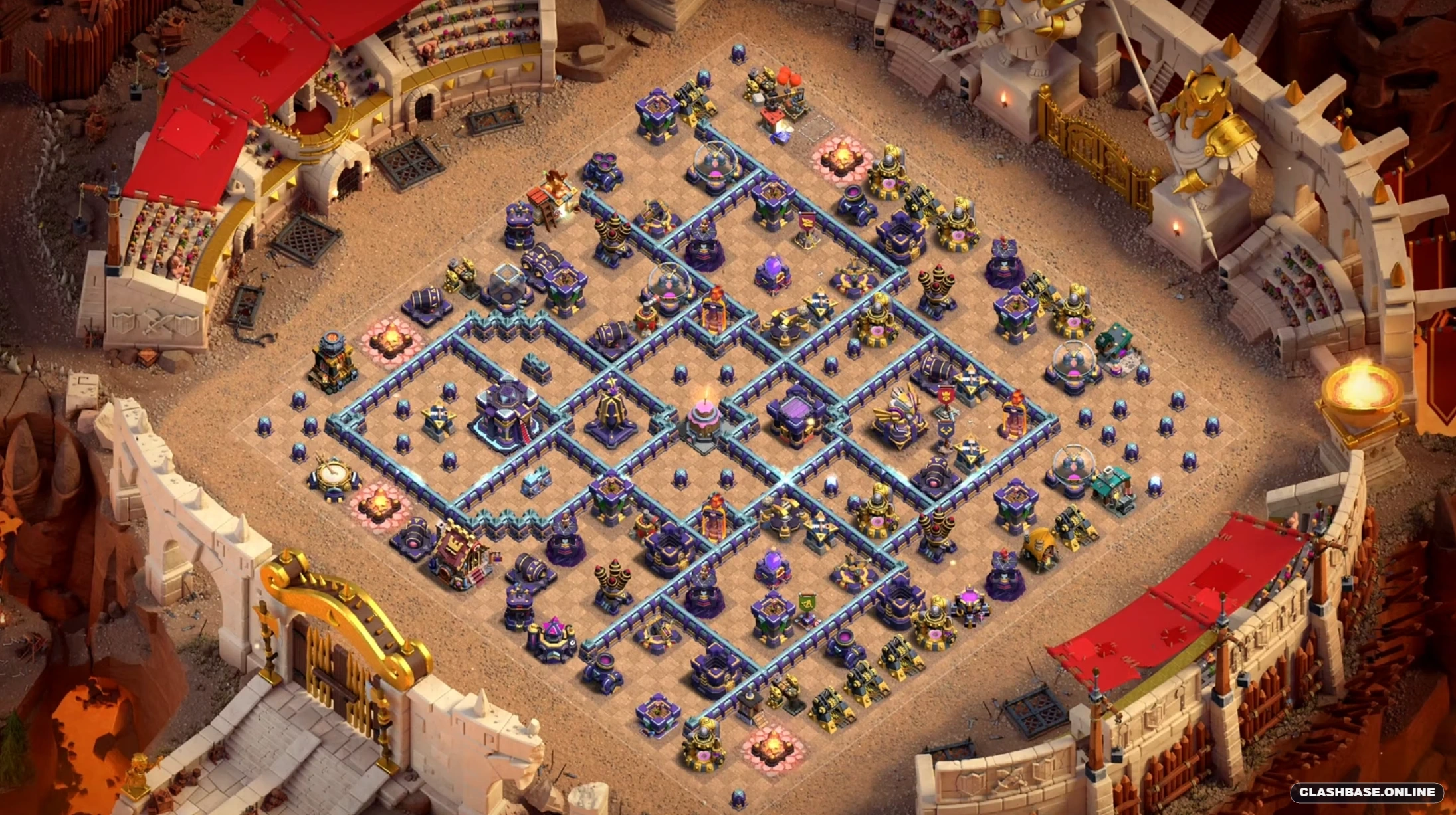
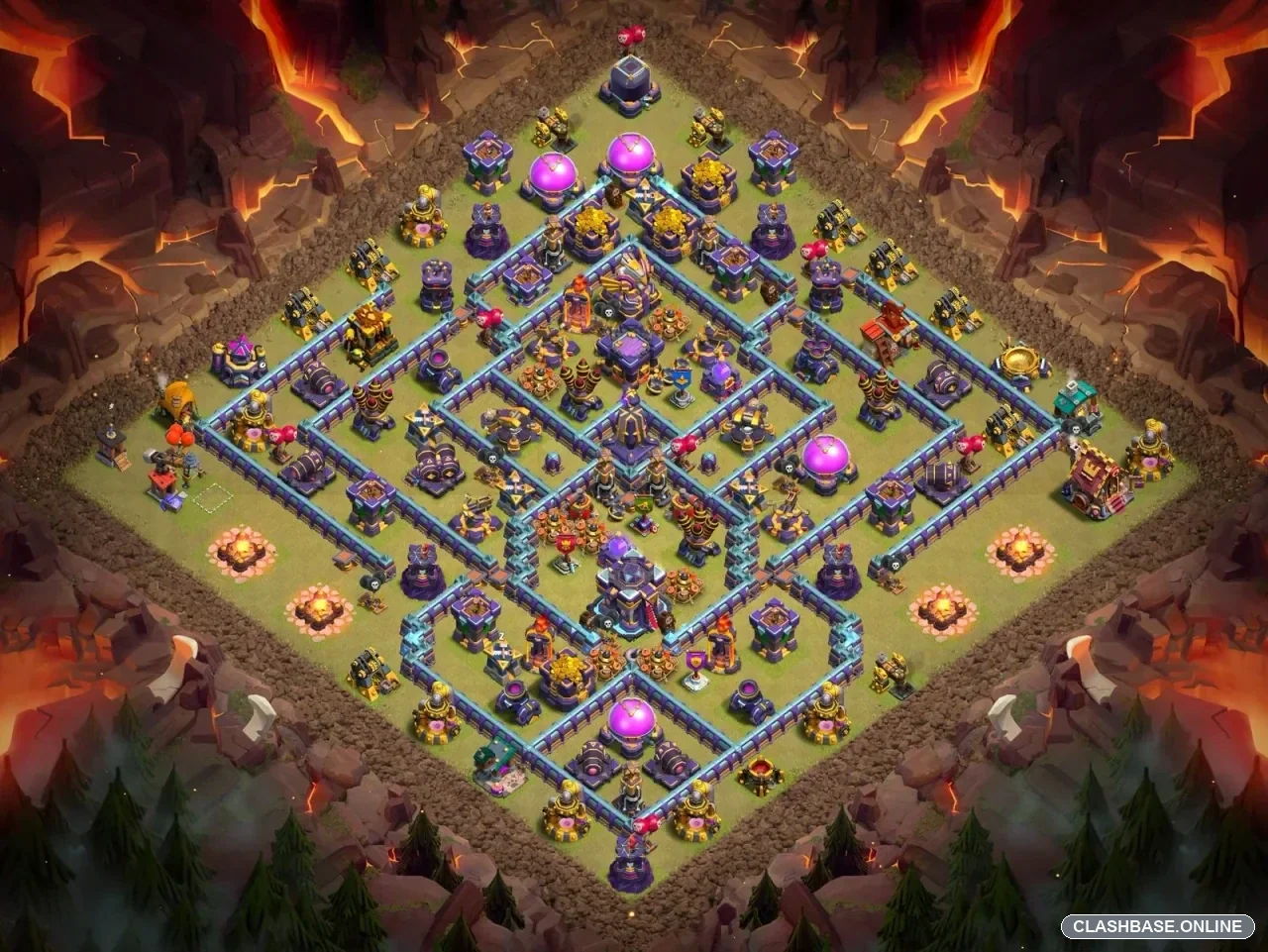
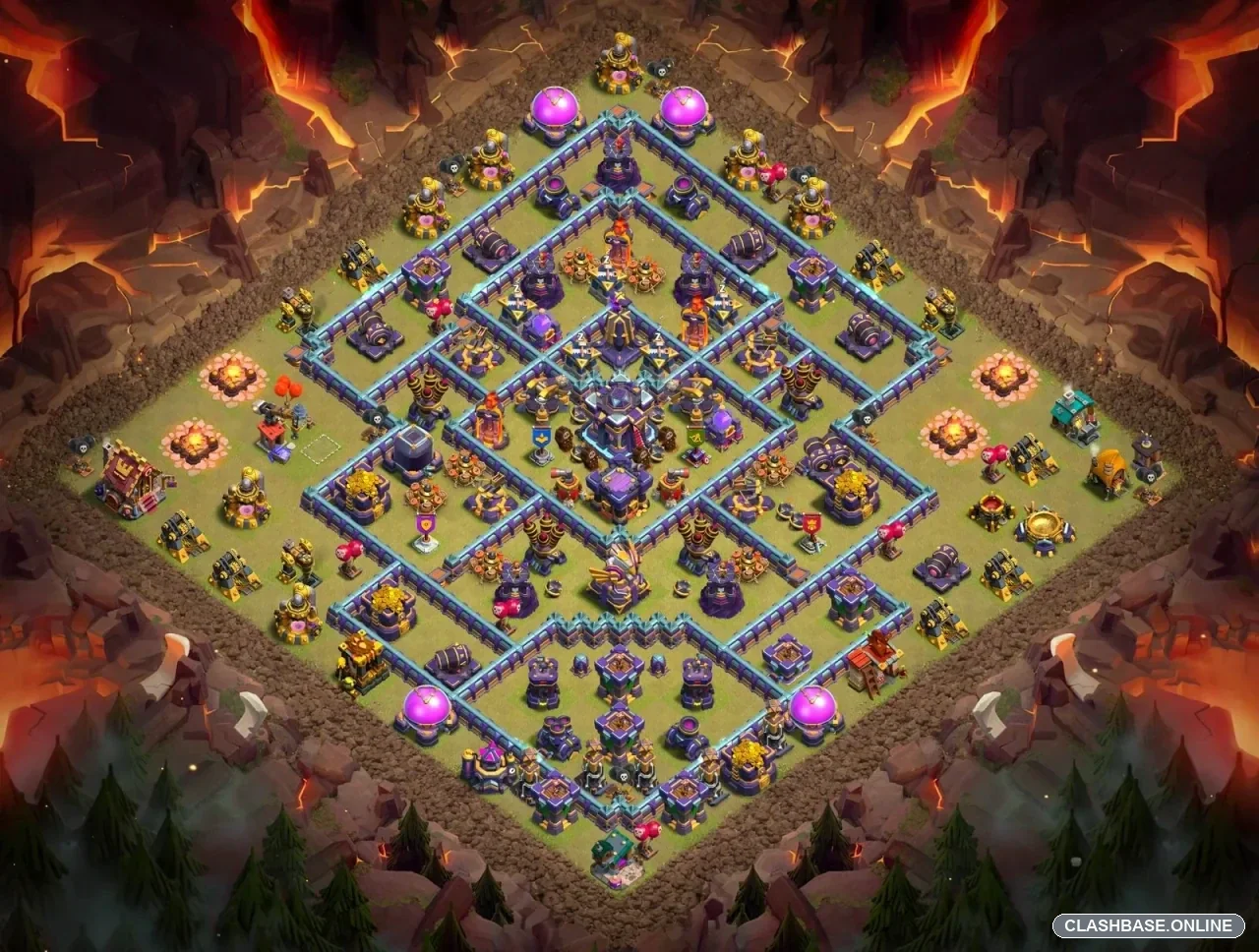
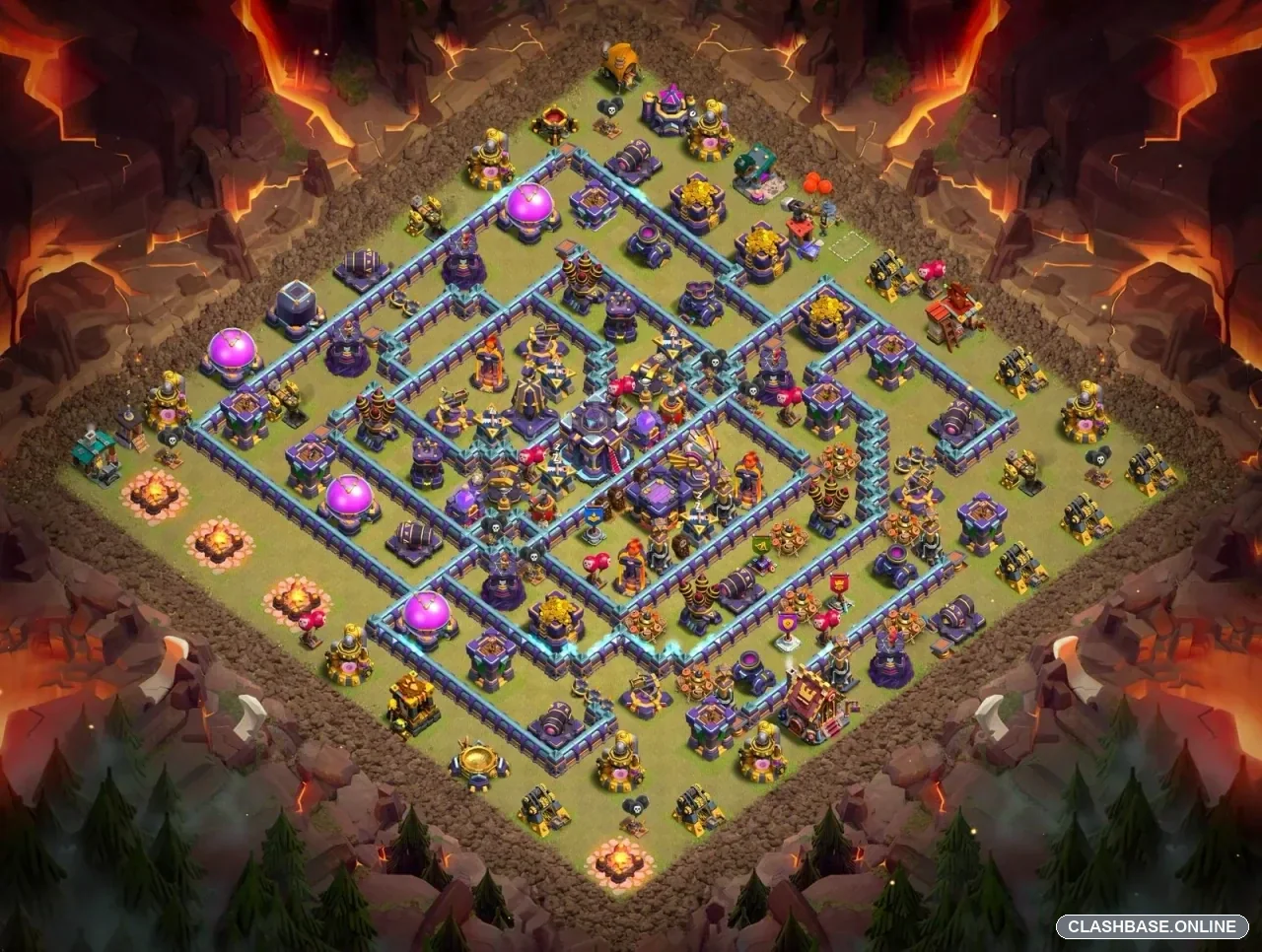
TH15 Ranked Layout #7 uses an open-ring core with the Town Hall slightly offset toward the left side, and after studying the actual base, its defensive strategy appears to go well beyond simply protecting that one building.
The inner compartments are packed tightly enough to maintain serious pressure, while the outer structure is more stretched and irregular. That contrast matters. The base can allow attackers to pick up some percentage around the edges while keeping the most dangerous defensive zones active deeper inside.
For Ranked defense, that feels deliberate. Layout #7 is trying to influence the entire raid—pathing, spell value, cleanup time, and troop concentration—not just the Town Hall phase.
The Town Hall sits inside layered protection
The Town Hall is protected within the primary defensive area, but it is not placed on the exact geometric center.
That slight left-side offset makes the surrounding paths less predictable. Defensive compartments remain active on different sides of the Town Hall, so breaking one section does not automatically remove all of the core pressure.
The layout also uses high-hitpoint buildings and smaller compartments around the inner lanes. These structures may not look threatening individually, but defensively they can slow movement just long enough for Infernos, X-Bows, and other damage sources to stay active.
A few extra seconds in the wrong compartment can matter a lot.
The open ring is meant to break attacking formations
The biggest defensive feature here is the open-ring pathing.
Several targets become available at similar distances once troops enter the inner sections. That can encourage one group to travel around the ring while another moves toward the core.
For the defense, that split is valuable.
Root Riders and other heavy ground armies are difficult to contain with walls alone. Layout #7 instead seems designed to separate front-line troops from heroes and supporting units.
Once the formation stretches, spell efficiency falls. A Rage, Heal, Freeze, or Overgrowth that could support one compact army may suddenly cover only part of it.
Defensive spacing keeps pressure alive
The Inferno Towers are separated rather than stacked into one convenient spell zone. Air Defenses follow a similar idea, covering different inner lanes.
That spacing reduces easy value from a single control spell and helps the base remain dangerous after the first defensive pocket is removed.
Against Dragons or LavaLoon, the goal appears to be sustained pressure rather than one overwhelming air-defense cluster. Air troops may clear one lane successfully and still move directly into another active defensive section.
Queen Charge Hybrid faces a similar problem: removing one pocket does not necessarily simplify the whole core.
The upper-right side carries the most defensive risk
The upper-right edge appears to be the most manageable side of the base, which makes it an important pressure point defensively.
If that section falls too cheaply, the attacker may gain better control over the ring and reduce the troop-splitting effect the layout depends on.
This makes the upper-right lane a logical area for hidden traps and overlapping fire. The defense does not need to stop the opening completely. Forcing an early ability, extra spell investment, or even several seconds of delay may already be enough.
Why Layout #7 suits Ranked defense
The strongest quality of TH15 Ranked Base #7 is that it tries to control the whole raid.
Outside buildings create percentage decisions. The open ring disrupts troop concentration. Separated Infernos and Air Defenses maintain pressure across different lanes, while the offset Town Hall keeps the core from becoming too predictable.
Overall, Layout #7 is a pathing-control and timing defense. Its main weakness is controlled troop movement that prevents the ring from creating splits. When the structure works as intended, though, attacking units can remain alive yet finish scattered across different sections while the central defenses and the clock continue doing the work.