 CLASHBASE.ONLINEClan War
About this Town Hall 13 base
Copy this base to Clash of Clans
Tap the button below. Clash of Clans will open so you can place this layout in an available base slot.
Copy base to the gameClash of Clans must be installed on this device.Rate this layout
Share a useful, honest experience. One review is stored per visitor for this item.
TH13 Clan War Base #6: Open Anti-Three-Star Defense Built Around Split-Lane Pressure
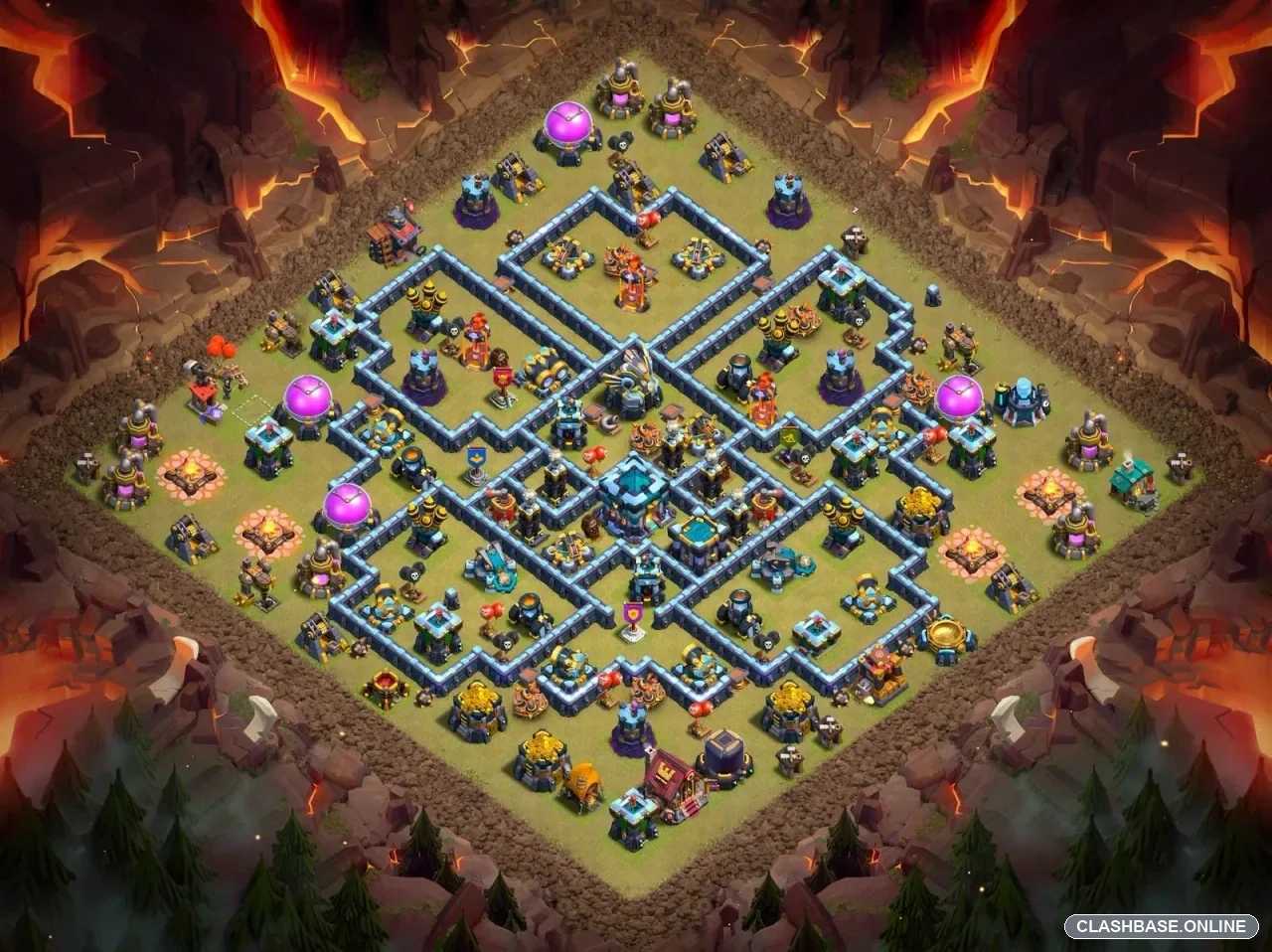
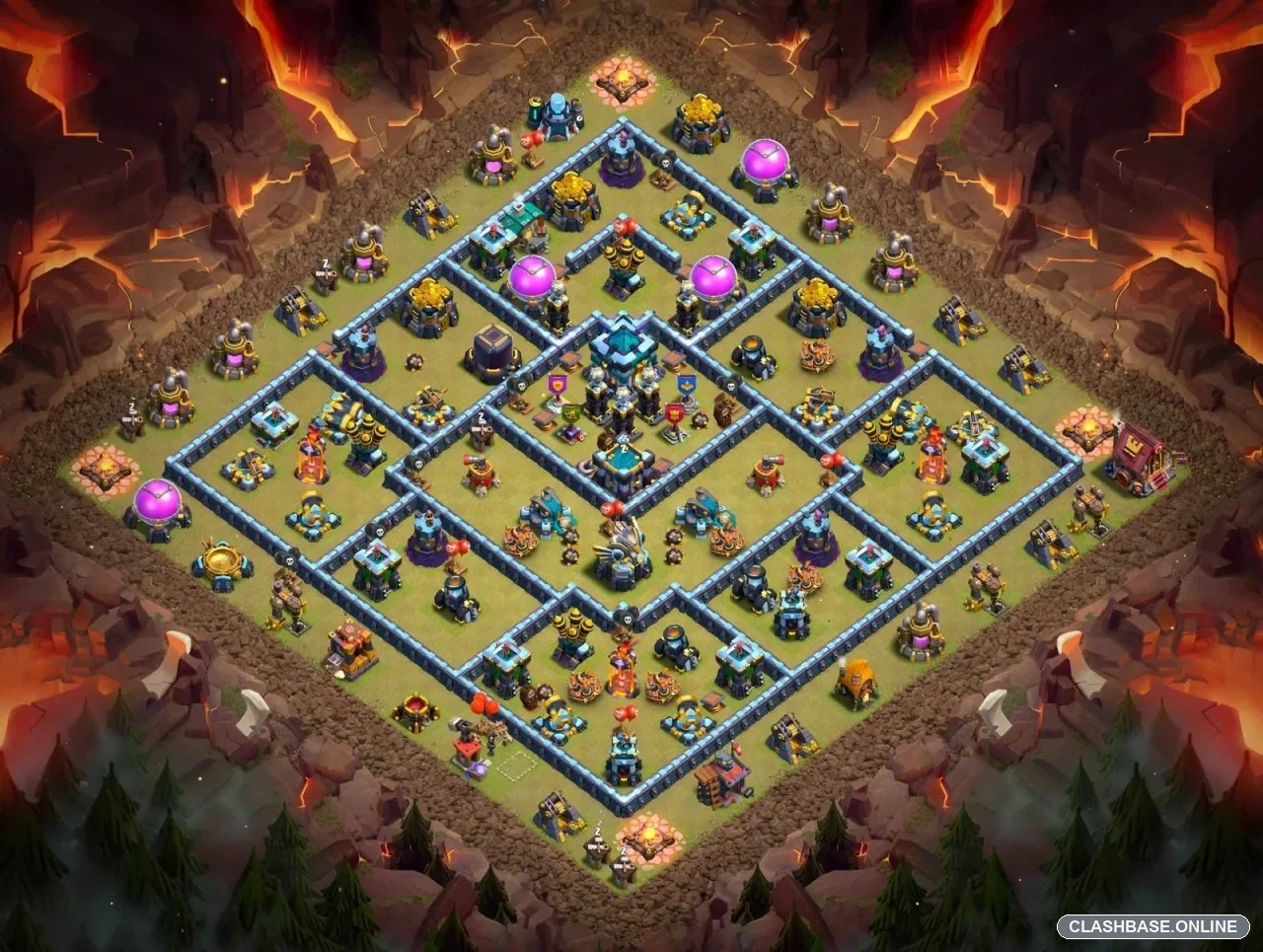
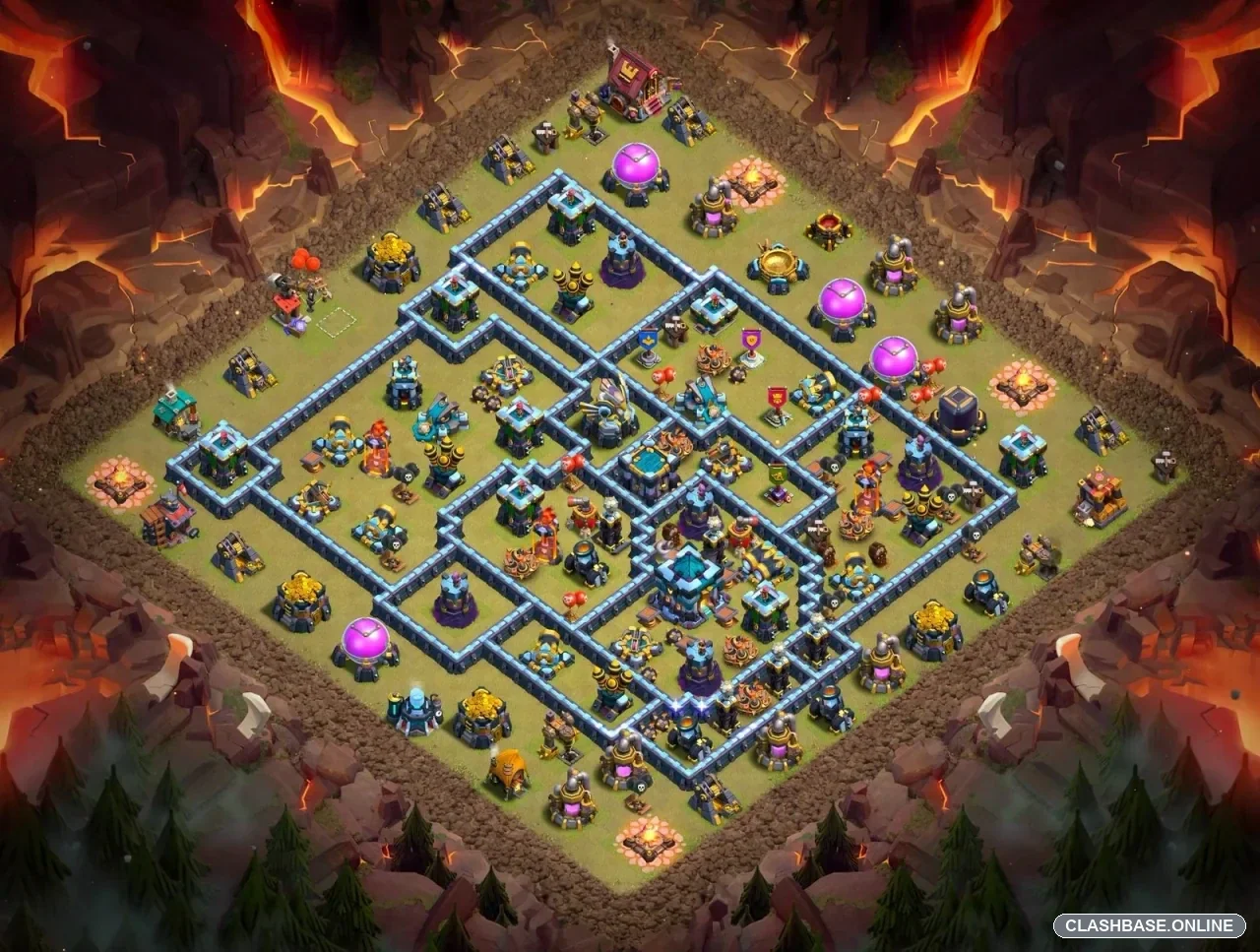
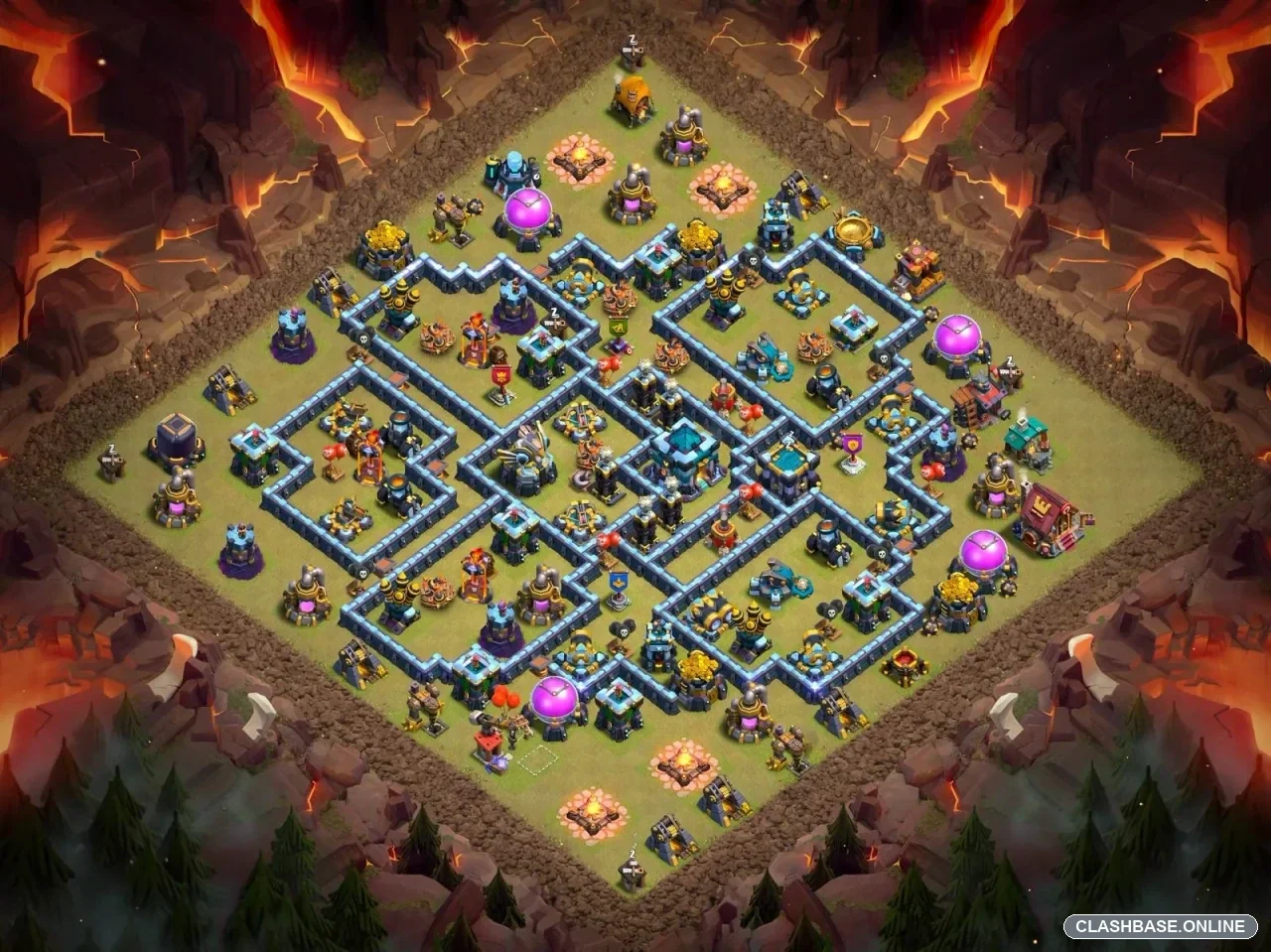
TH13 Clan War Layout #6 uses an open anti-three-star structure with the Town Hall slightly offset toward the upper side of the defensive core. Looking at the actual base first, the design feels intentionally fragmented. Instead of building one huge central fortress, it divides the village into a collection of smaller compartments that force the attacking army to keep changing direction.
That is a sensible Clan War approach. The Town Hall matters, but this layout seems more interested in preserving enough defensive strength to deny the third star than in protecting one building at any cost.
The Town Hall is separated from other defensive value
The Town Hall sits inside the inner network, but several major defenses are positioned in different compartments around it.
This separation is important.
If the Town Hall section falls, Inferno Towers, X-Bows, Air Defenses, and other defensive anchors can remain active elsewhere. The attacker does not receive the entire core simply because one objective has been secured.
From the defender's perspective, that creates a useful trade. The Town Hall may eventually be lost, but if reaching it consumes hero health, abilities, troops, or time, the remaining village becomes much more difficult to finish.
Small compartments create repeated pathing decisions
The wall structure is probably the strongest defensive feature of Layout #6.
Rather than giving troops one clean route from the outside to the center, the base repeatedly presents several nearby targets. One group may turn toward a side compartment while another continues inward.
That kind of separation can quietly wreck an otherwise strong raid.
Yeti or Bowler Smash formations are especially dangerous when heroes, tanks, and support troops stay together. Once different groups begin fighting in separate pockets, spell coverage becomes less efficient and defensive towers get longer firing windows.
The base is not relying on the walls to stop everything. It is using them to break the attacking formation into smaller fights.
Air and Inferno pressure stays active from different angles
The Air Defenses appear to cover different entry lanes rather than stacking heavily on one side. The Inferno Towers are also spaced apart instead of forming one convenient pair.
That gives the defense better staying power.
If one Inferno is controlled, another can continue applying pressure from a separate compartment. Against Dragons or LavaLoon, the same principle applies: clearing one air-defense lane does not automatically create a safe route across the rest of the village.
This distributed coverage is important for an anti-three-star base because it keeps defensive threats alive deeper into the raid.
The lower-right edge carries the biggest responsibility
The lower-right edge appears to be the most accessible side of Layout #6.
The main defensive concern is an opening that secures the offset objective while leaving too much of the main attacking force intact. If that happens, the remaining compartments may not have enough time to wear the army down.
For that reason, the lower-right side needs to create friction. Hidden traps, overlapping fire, awkward target selection, or even a forced hero ability could make a major difference.
The goal does not have to be an immediate stop. Making the opening expensive is enough.
Why Layout #6 works for Clan War
The strongest quality of TH13 Clan War Base #6 is that a safe route to one star does not necessarily create a comfortable route to three.
The Town Hall demands commitment. The open compartments encourage troop separation. Distributed Infernos and Air Defenses preserve pressure, while surviving pockets can turn the final percentage into a cleanup problem.