 CLASHBASE.ONLINEClan War
About this Town Hall 13 base
Copy this base to Clash of Clans
Tap the button below. Clash of Clans will open so you can place this layout in an available base slot.
Copy base to the gameClash of Clans must be installed on this device.Rate this layout
Share a useful, honest experience. One review is stored per visitor for this item.
TH13 Clan War Base #14: Open Anti-Three-Star Defense with Layered Core Pressure
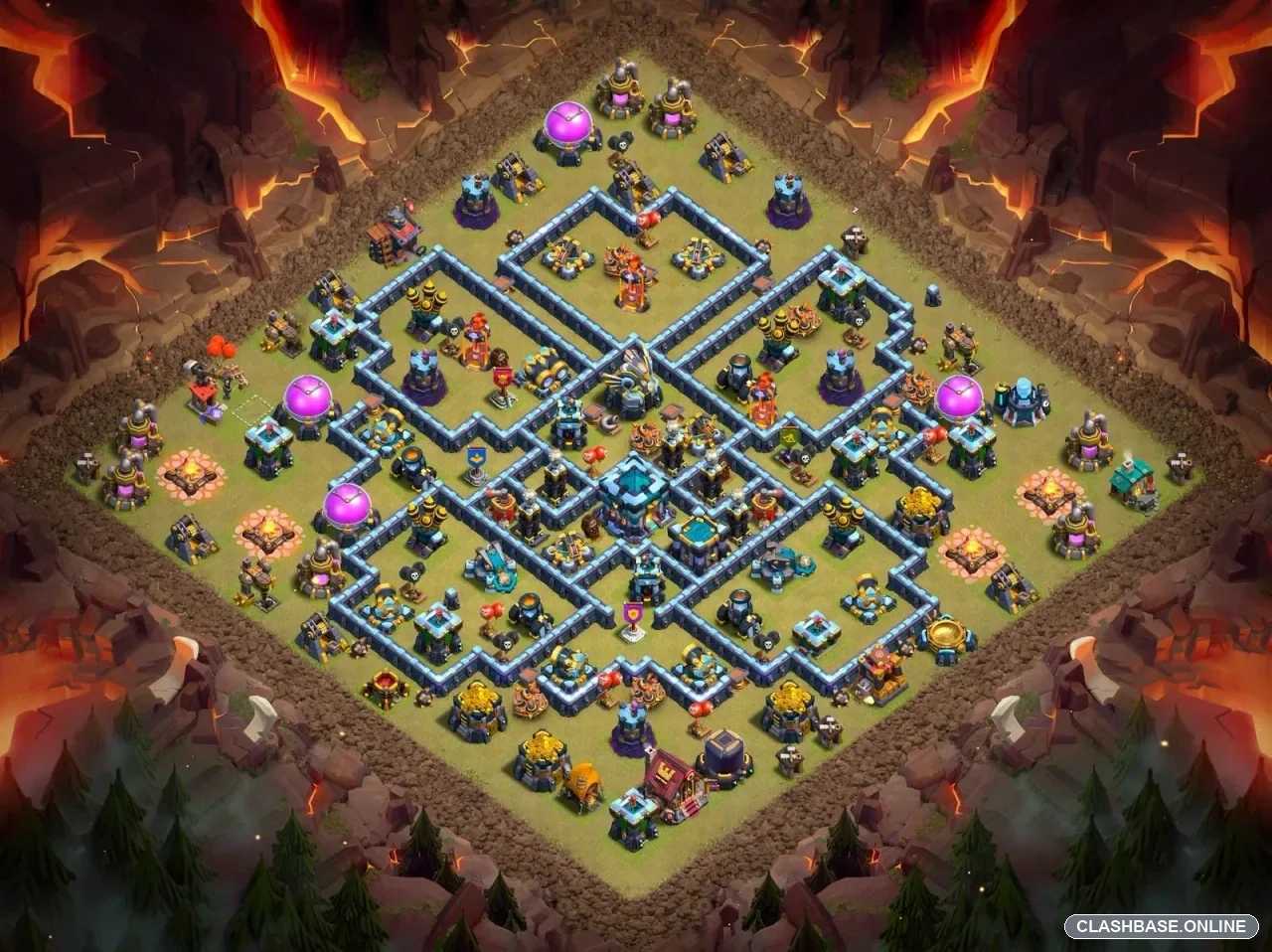
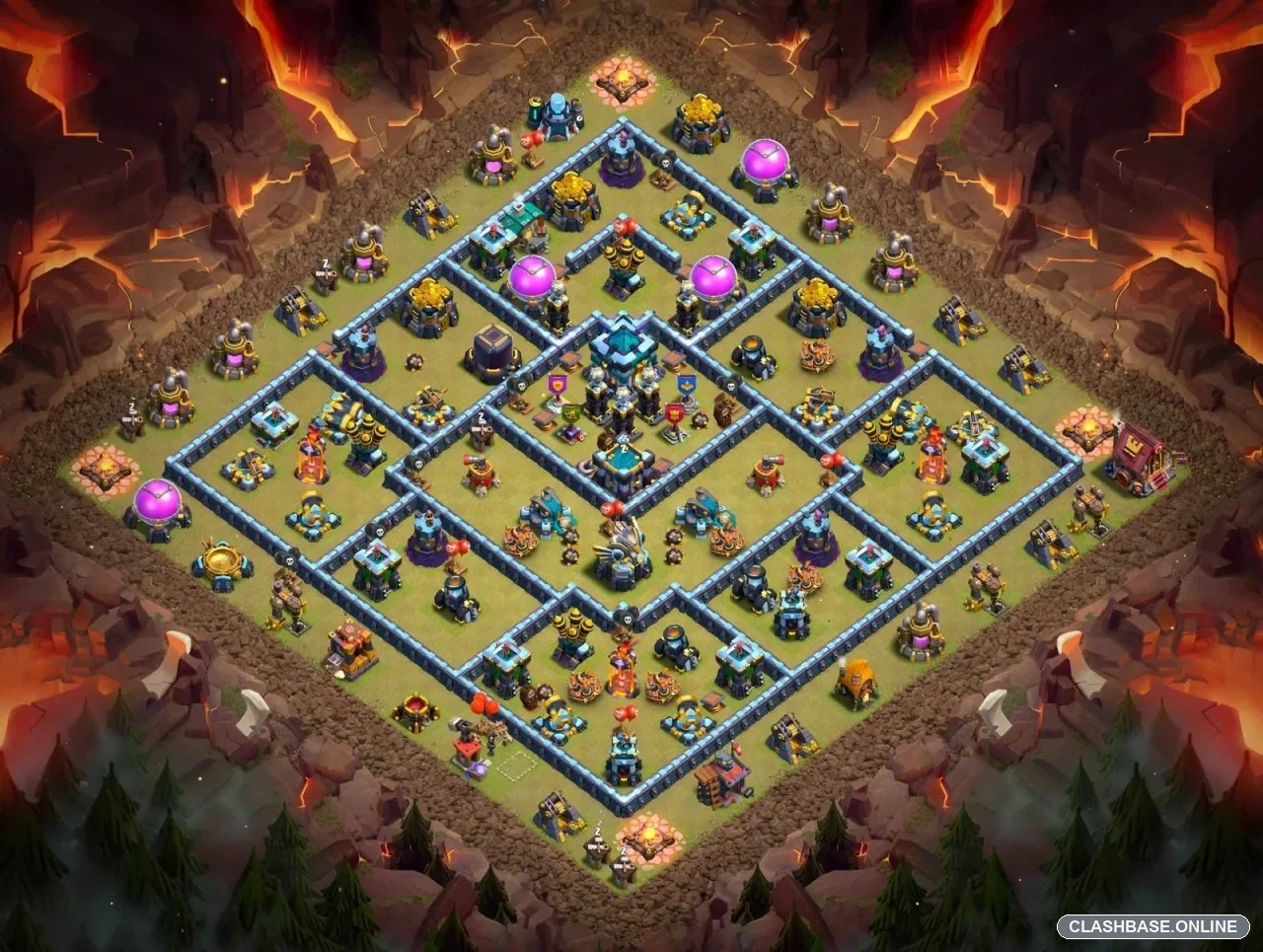
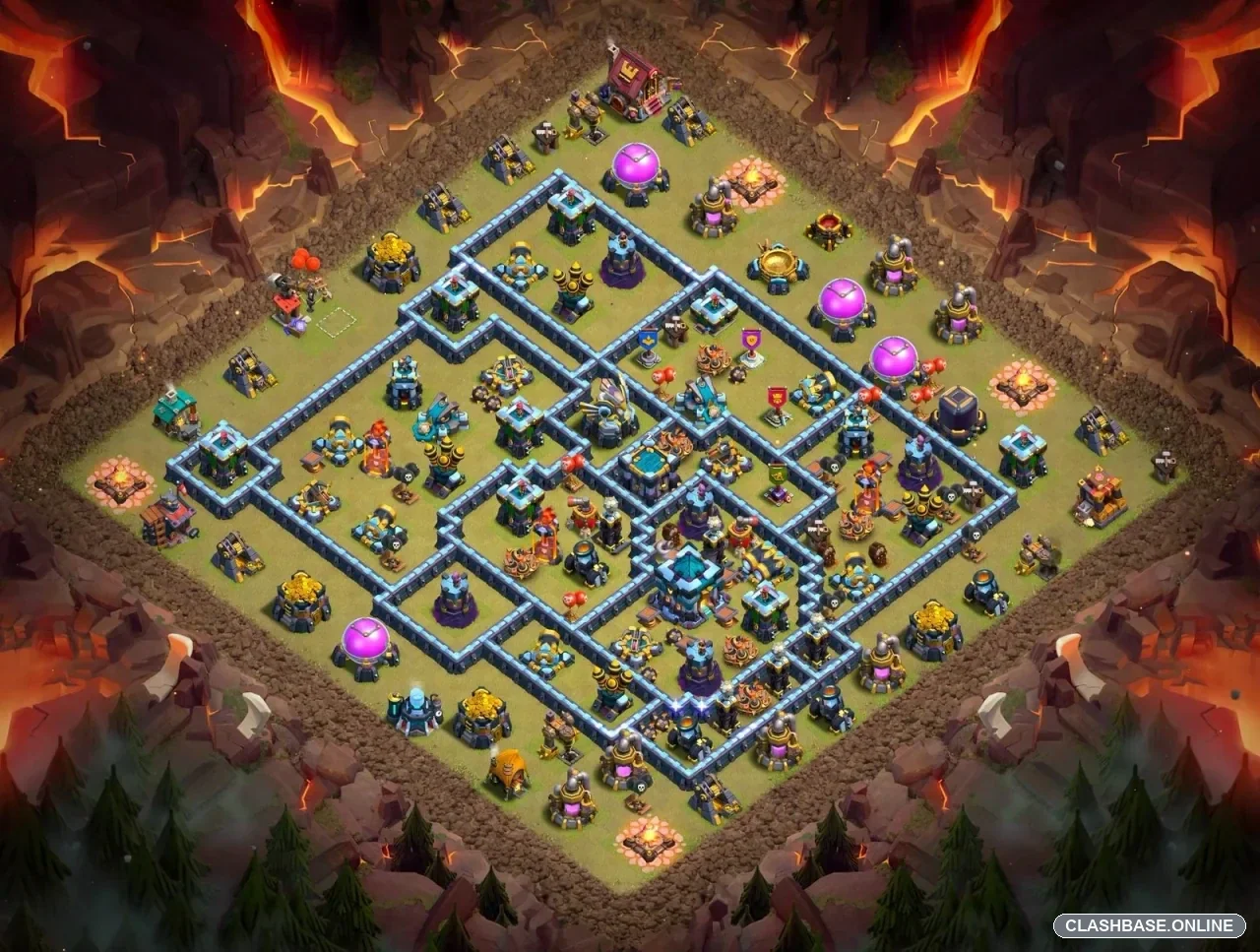
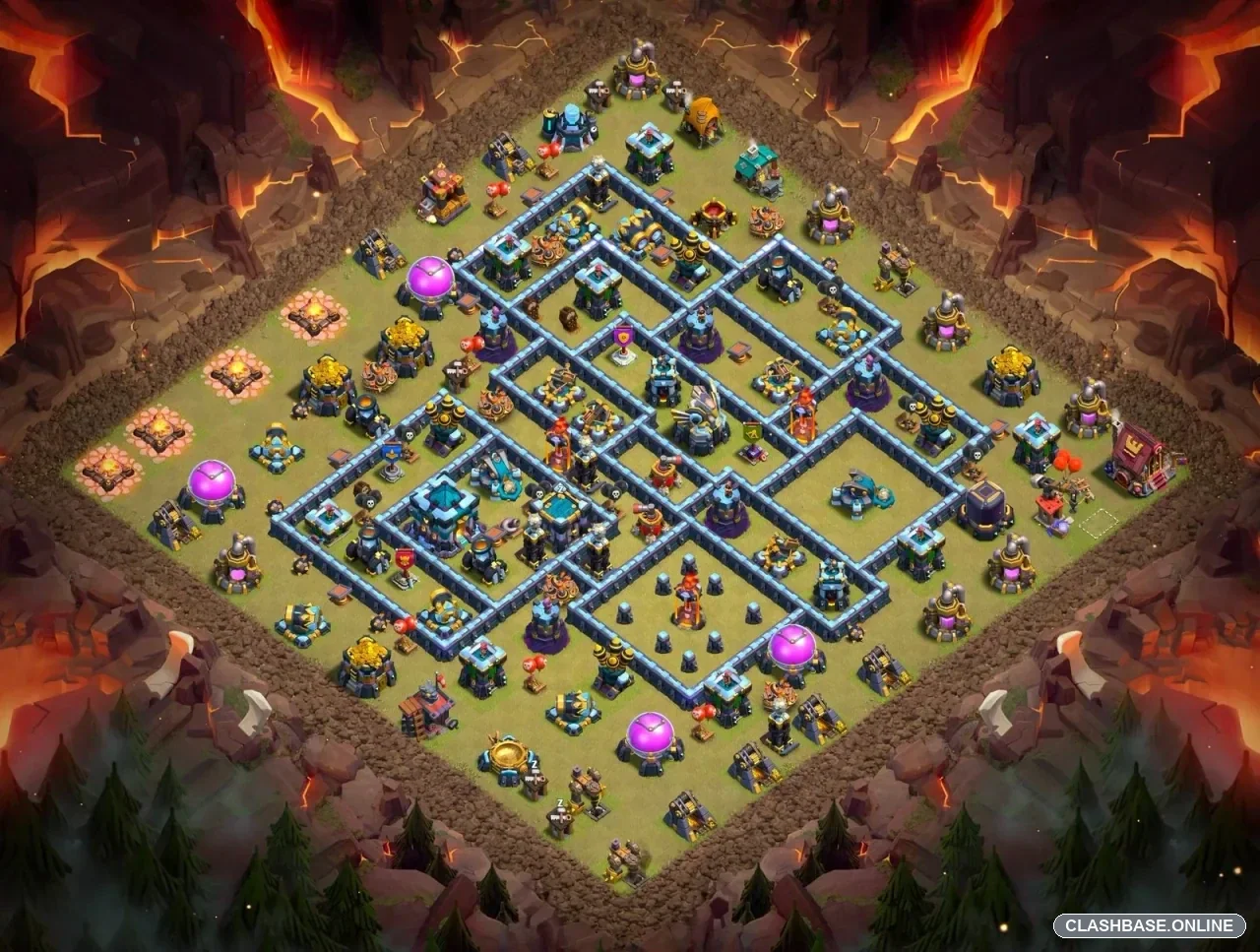
TH13 Clan War Layout #14 uses an open anti-three-star structure with the Town Hall slightly offset toward the upper side of the core. Looking at the base itself, the defensive plan seems less focused on making the Town Hall impossible to reach and more interested in what happens after the first major section falls.
That is an important distinction for a war layout. The Town Hall, Inferno Towers, Air Defenses, X-Bows, and surrounding defenses are separated across several compartments. As a result, losing one part of the village does not necessarily remove the defensive pressure from everything behind it.
The Town Hall creates commitment without holding all the value
The Town Hall sits inside the main defensive network but is not positioned at the exact center.
This offset appears deliberate. Several valuable defenses remain outside the immediate Town Hall compartment, which prevents the whole base from becoming dependent on one central fight.
From the defender's perspective, that is useful. The Town Hall may eventually fall, yet the remaining sections can still threaten the third star. The defensive goal is more about making that objective expensive in terms of time, hero health, troop strength, or abilities.
A strong anti-three-star base does not always need one spectacular stop. Sometimes several smaller losses of attacking strength are enough.
The open core encourages uneven troop movement
The walls form an irregular collection of compartments instead of one tightly sealed center.
That shape gives the defense multiple opportunities to disturb troop pathing. Different defensive targets appear at different angles, so troops may begin spreading across adjacent sections rather than staying together.
This is valuable against Yeti or Bowler Smash-style formations. Those armies are much harder to contain when tanks, heroes, and support troops remain concentrated. Once the formation stretches, defensive towers receive longer firing windows and shared spell value becomes less efficient.
The layout is effectively trying to make the attacking army fight the village section by section.
Air and Inferno pressure is deliberately divided
The Air Defenses are spread through the inner compartments, while the Inferno Towers sit far enough apart to reduce easy single-spell value.
That spacing gives Layout #14 better defensive endurance.
Against Dragons or LavaLoon, one air-defense lane may weaken while another remains active elsewhere. The defense does not rely on one compact group surviving. Instead, separate threats continue working at different stages of the raid.
This same principle helps against ground formations: removing one major defense should not automatically make the next compartment comfortable.
The upper-left edge carries the main risk
The upper-left edge appears to be the most readable side of the layout, so defensively it has an important job.
The biggest concern is an early objective phase that becomes too cheap. If the Town Hall or nearby section is secured while most of the attacking force remains healthy, the layout loses part of its anti-three-star advantage.
This side therefore benefits from anything that creates delay or forces commitment. The purpose is not necessarily an immediate stop; making the opening expensive may be enough.
Why Layout #14 fits Clan War
The strength of TH13 Clan War Base #14 comes from separating the main objective from the defensive value an attacker would ideally remove with it.
The offset Town Hall demands commitment, open compartments encourage troop separation, and distributed Infernos and Air Defenses keep pressure alive after the first phase.