 CLASHBASE.ONLINEFarming
About this Town Hall 15 base
Copy this base to Clash of Clans
Tap the button below. Clash of Clans will open so you can place this layout in an available base slot.
Copy base to the gameClash of Clans must be installed on this device.Rate this layout
Share a useful, honest experience. One review is stored per visitor for this item.
TH15 Farming Base #17: Multi-Compartment Defense Built Around Loot Separation
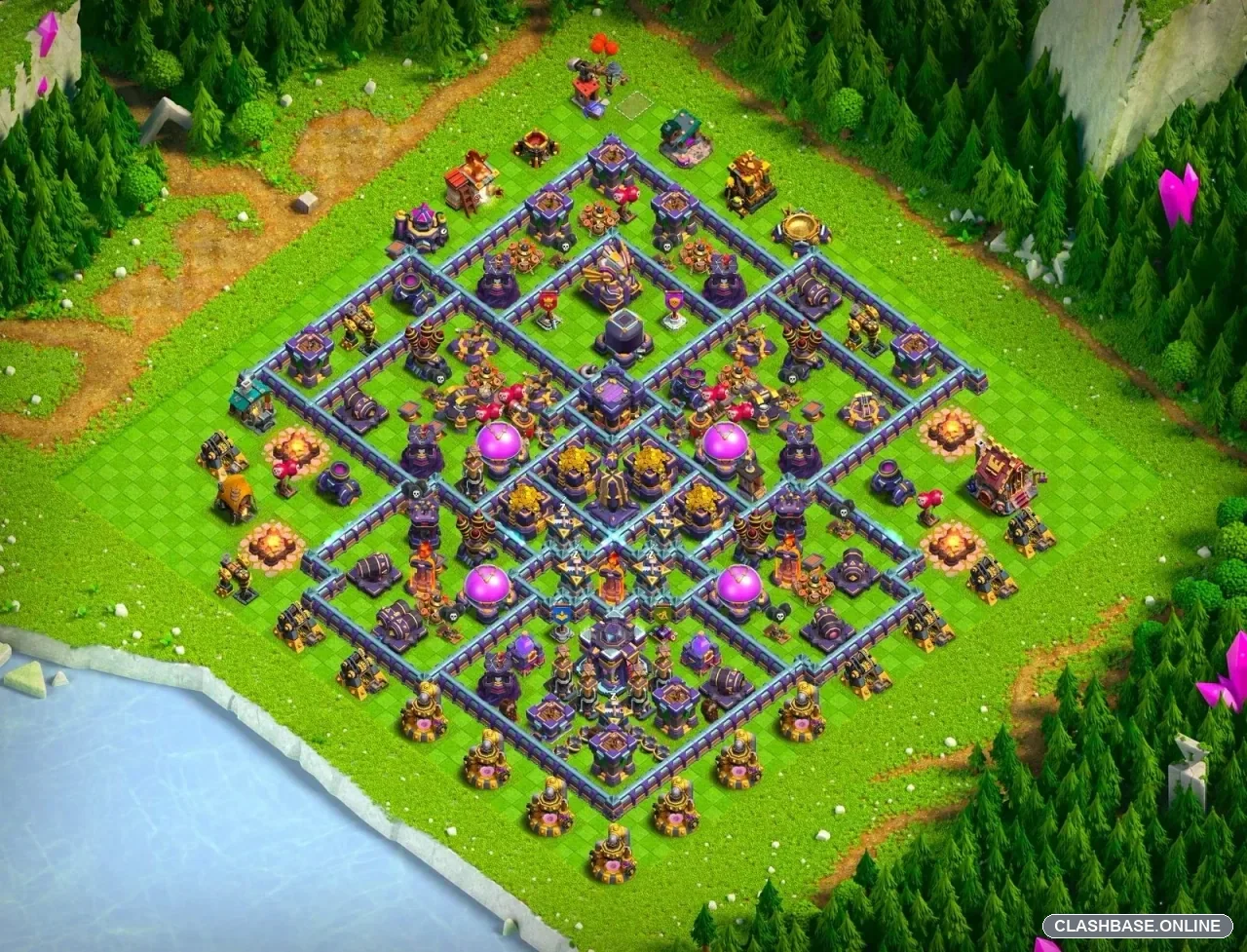
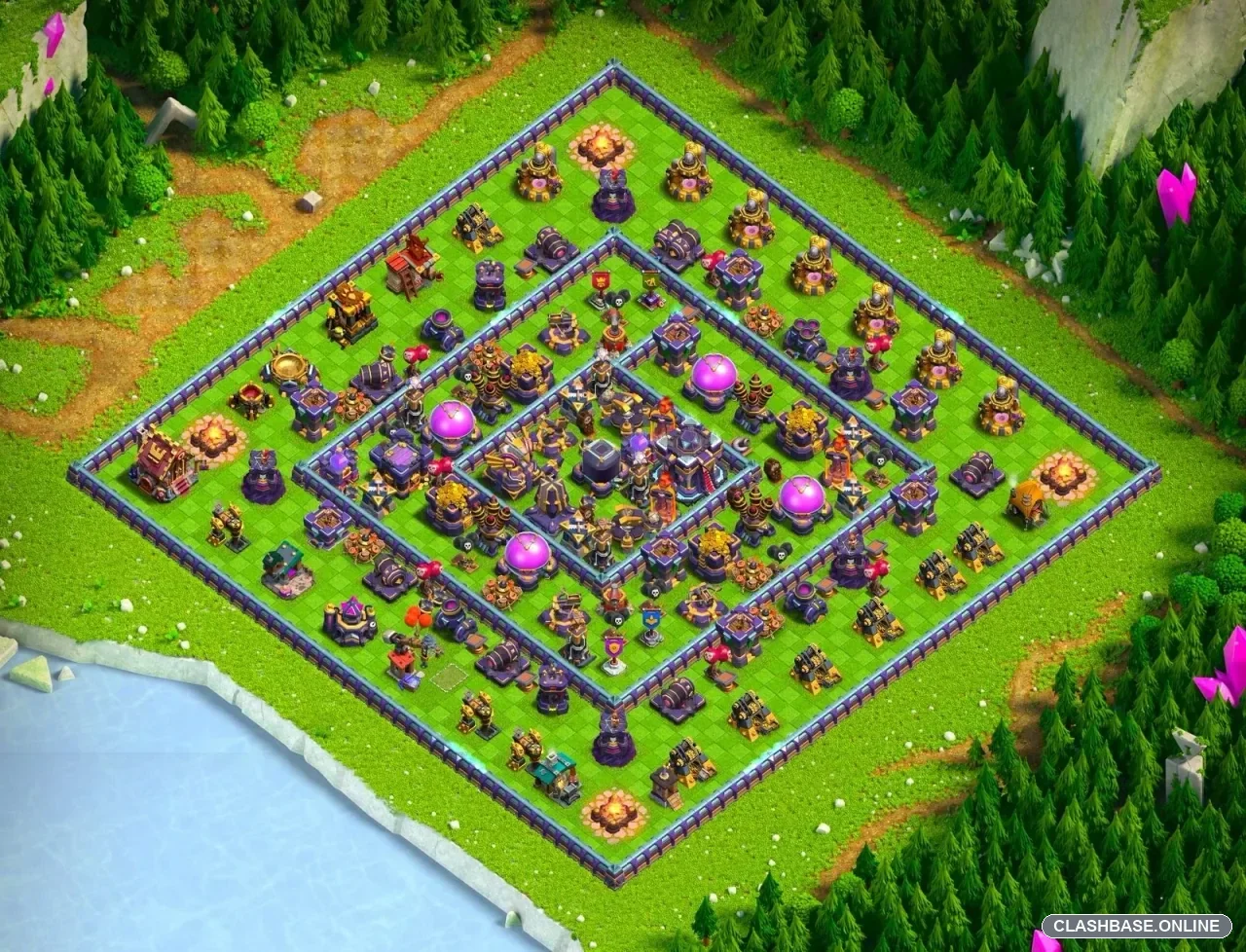
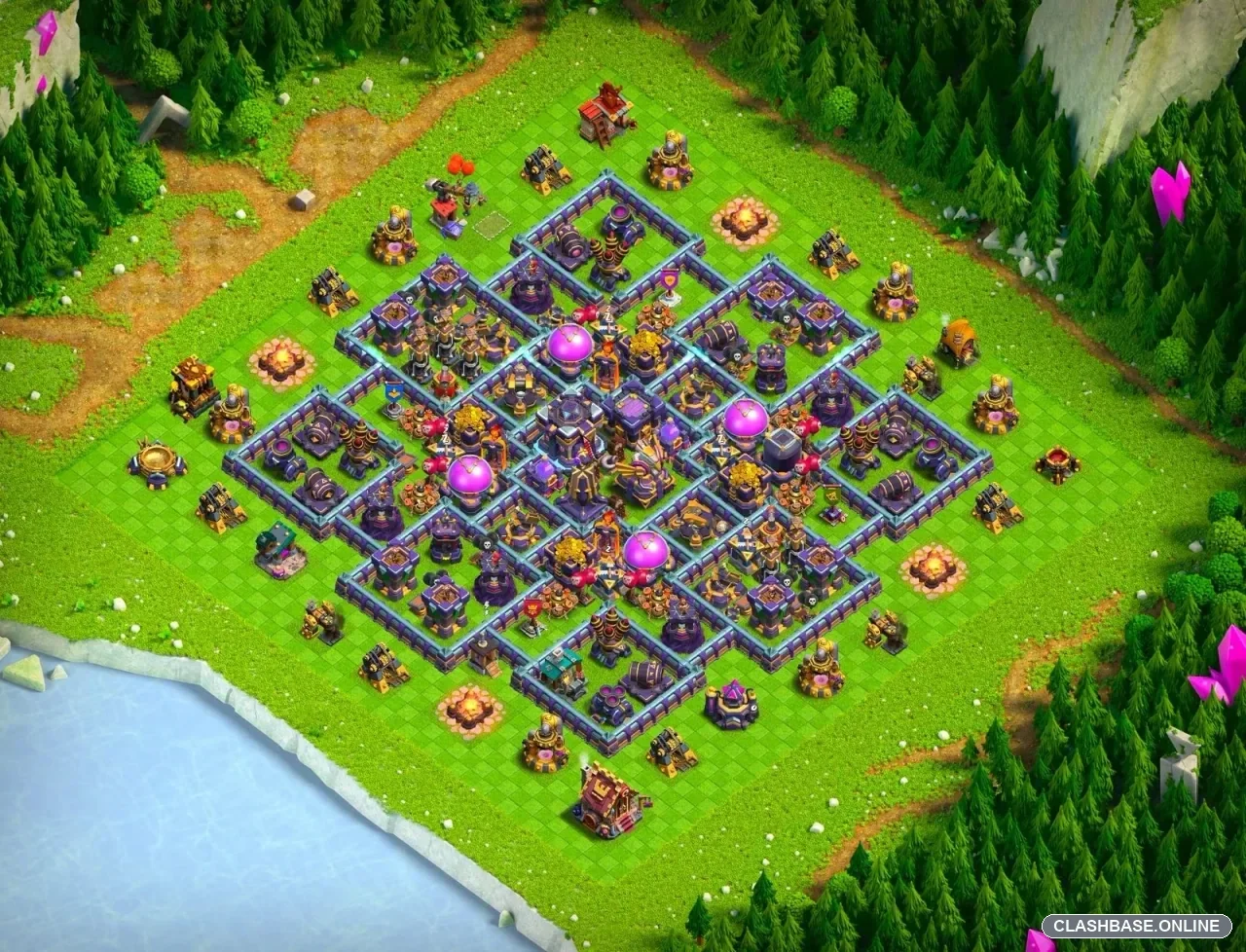
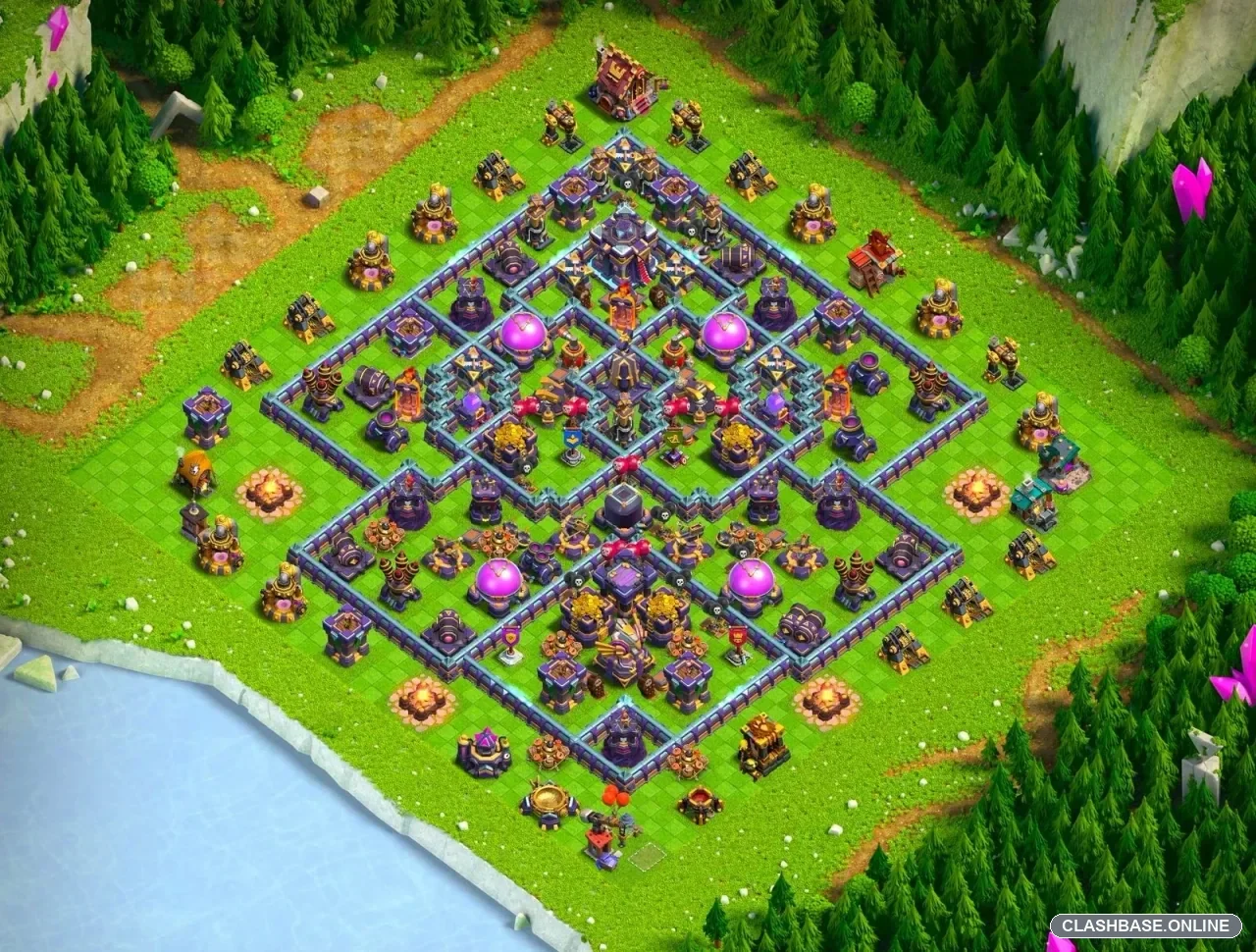
TH15 Farming Layout #17 uses a compact multi-compartment design with the Town Hall slightly offset toward the upper side of the village. After looking closely at the actual layout, the defensive idea is fairly easy to see: valuable buildings are not concentrated in one single pocket. Instead, storages, the Town Hall, Inferno Towers, and other important defenses are separated across several connected sections.
For a farming base, that makes sense. The goal is not necessarily to stop every raid completely. A better outcome may simply be preventing one successful breach from taking most of the available loot.
Resource protection happens in separate stages
One of the strongest features is the way the Gold and Elixir Storages are distributed through different inner compartments.
Several storages sit around the core rather than forming one neat cluster. That means losing one section should not automatically expose every valuable resource building.
The Town Hall also benefits from this arrangement. Its slightly upper position places it behind another layer of defensive structures, while valuable storage pockets remain active elsewhere.
This creates a useful farming tradeoff: some loot may fall early, but the rest still requires another commitment.
The core is designed to slow movement
The walls form several small and medium compartments instead of one oversized box.
Defensively, that structure appears intended to create repeated delays. Troops clearing one section may need to turn, cross another wall line, or choose between neighboring targets before reaching the next storage pocket.
Those small pauses matter.
If the attacking army becomes too wide, different groups can begin moving into adjacent compartments. From the defender's perspective, that is useful because a split army clears the village less efficiently and receives less concentrated spell support.
The base is essentially using travel time as part of the defense.
Air and Inferno coverage is intentionally separated
The Air Defenses and Inferno Towers are not arranged as one tidy cluster.
Instead, they appear to protect different routes around the core. This reduces the chance that one spell sequence removes too much defensive pressure at once.
Against Dragons or LavaLoon, one section of the base can remain protected even if another air lane begins to collapse. Heavy ground armies face a similar issue: they may move through walls quickly, but supporting heroes and troops can still become separated between compartments.
That distributed pressure helps protect the remaining loot deeper into the raid.
The bottom edge is the main defensive concern
The bottom edge looks like the most accessible part of Layout #17, so this area has an important defensive job.
It does not necessarily need to stop troops outright. What matters is forcing the opening to cost something—time, hero health, abilities, or spell value.
If that first section disappears too quickly, the deeper compartments may be exposed while too much of the attacking force is still intact.
Interestingly, a very wide push can also work in the defense's favor. Troops may split between neighboring sections instead of staying together, which increases travel time and makes full loot collection harder.
Why Layout #17 works for Farming
The main strength of TH15 Farming Base #17 is its separation of valuable targets.
Rather than protecting everything with one central defensive cluster, the base uses multiple storage compartments, staggered air coverage, separated Inferno pressure, and layered walls to make resource collection happen in stages.
Overall, Layout #17 is a loot-preservation defense built around storage separation, troop splitting, defensive depth, and time pressure. A strong raid may still take part of the available resources, but collecting nearly everything should require the army to stay organized through several distinct sections.